Viewpoints in Siena: Comparing Free Terraces and Paid Tower Views
Compare Siena viewpoints by cost, climb and view, from the free San Domenico terrace and Medici Fortress grounds to the paid Torre del Mangia and Facciatone.
On this page
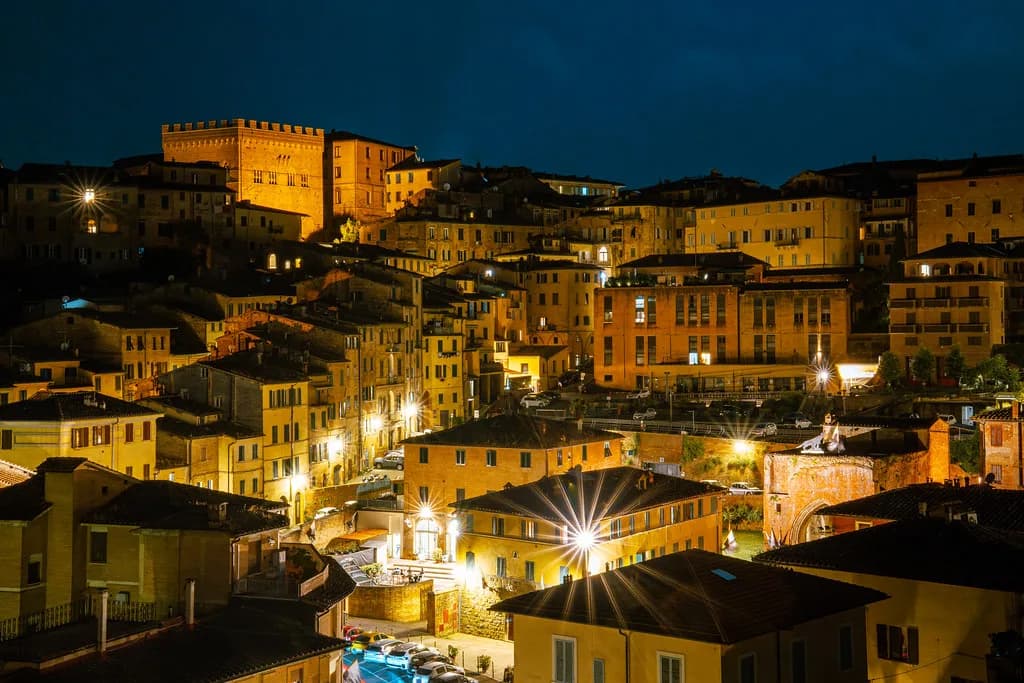
Siena rewards anyone willing to look down. The historic centre climbs and folds across three hills, and its towers, terraces and wall-top gardens give you the shell-shaped Piazza del Campo and the striped marble Duomo from angles the street level never reveals.
The useful distinction is between free and paid viewpoints. Some of the best panoramas cost nothing and require only a walk, while the tower and cathedral climbs sit inside ticketed complexes with their own rules on what one ticket covers. This comparison sorts them by access, effort and what you actually see, so you can decide before you arrive.
Why Siena Rewards Looking Down
Siena's centre is a UNESCO World Heritage site, and much of its drama comes from the way buildings stack along the ridges above steep alleys. Walking the streets is essential, but the city only makes full sense from above, where the terracotta rooflines, the Torre del Mangia and the cathedral dome line up against the hills.
That shape has a practical consequence for planning. Many viewpoints are reachable on foot from Piazza del Campo within a short walk, so you can combine a ground-level morning with one elevated stop rather than treating each panorama as a separate outing. Wear shoes that cope with cobblestones and gradients, because even the free terraces usually involve a climb.
Light changes everything here. Photographers tend to favour early morning and late afternoon, when the sun rakes across the brick and marble instead of bleaching it, and the piazzas are quieter before the day-trip coaches arrive. Treat that as a working rule rather than an official timetable.
Quick Comparison: Free Versus Paid Viewpoints
The free options are the terrace in front of the Basilica Cateriniana San Domenico, which gives one of the classic Duomo skyline views, and the open grounds of the Medici Fortress, a tree-lined space beside the walls where you can watch the sun drop over the city. Piazza del Campo itself is free at all hours and is best appreciated early in the morning, before the crowds fill the shell.
The paid options are vertical. The Torre del Mangia rises above the Palazzo Pubblico and delivers a 360-degree sweep of the city and hills, while the Facciatone, the unfinished façade of the abortive new cathedral, forms part of the Duomo complex and is reached through the museum route. Expect stairs in both cases and check the current situation before committing.
The Medici Fortress is public open ground, not a ticketed monument, according to descriptions of it as a free space used by residents for walks and sunsets. Separate events, interiors or tastings held inside the fortress may have their own arrangements, so treat the grounds as free and verify anything else on site.
Piazza del Campo at Ground Level: Best Early Morning
Piazza del Campo is the natural starting point even though it is not elevated. Its red-brick paving radiates in patterns from the centre, eleven streets feed into the rim, and the Palazzo Pubblico and Torre del Mangia anchor the lower end. Photographers report that before roughly eight in the morning the square belongs to pigeons and a handful of people with coffee.
The fountain at the head of the piazza, Fonte Gaia, is a nineteenth-century replacement for Jacopo della Quercia's original, and the water is recirculated for decoration rather than drinking. For the original sculpture, look to the Santa Maria della Scala complex across from the cathedral, where the earlier marbles are preserved rather than left in the open air.
From the Campo, most of the viewpoints in this guide are within a walk. That makes the square a sensible base for a day that alternates between ground-level wandering and one or two climbs, rather than a spot you dash through on the way to a tower.
Free: The San Domenico Terrace and Its Duomo Skyline
The open terrace in front of the Basilica Cateriniana San Domenico is one of the best free views in Siena, looking east toward the Duomo and the stacked rooftops of the hill below. The basilica also holds the relic of Saint Catherine, so the stop mixes art, devotion and a panorama without a ticket. Sunrise is the photographer's choice here, when light comes from behind you and the marble façade glows.
It is worth distinguishing the free exterior from what lies inside. The terrace and the church itself are open to visitors at no charge according to visitor accounts, but any special exhibitions or timed entries should be checked separately rather than assumed.
Nearby lanes around Via Franciosa, Via Vallepiatta and Vicolo Vallepiatta offer further glimpses of the basilica and the hillside, which makes the walk up rewarding even if the terrace is busy. Combine the climb with a slow loop back toward the Campo through the quieter streets.
Free: The Medici Fortress Grounds for Walks and Sunset
The Medici Fortress sits beside the walls on the northern edge of the centre and is described as an open, free space with trees, ancient ramparts and views that reach the towers and, on clear days, Mount Amiata. Residents use it for walks and evening light, and it works well as a low-effort end to a day rather than a climb.
Because the grounds are open public space, the view is broad rather than carefully framed. You will see rooftops, the Torre del Mangia and the surrounding hills rather than a single iconic composition, which makes it a good spot for a picnic or a breather between sights.
Events and festivals are sometimes held inside the fortress, so the atmosphere can change from quiet garden to busy venue. If you want the grounds to yourself, aim for a weekday morning or an evening outside any programmed event, and verify what is on before you go.
Paid: Climbing the Torre del Mangia
The Torre del Mangia is the tall civic tower on Piazza del Campo, built between 1338 and 1348 and rising roughly 102 metres above the square. The climb is long and steep, with accounts varying between about 300 and 400 steps, so treat the exact figure as something to confirm with the ticket office rather than a fixed number to plan around.
What you get at the top is the broadest panorama in the city: the shell of the Campo directly below, the cathedral, the rooftops and the Tuscan hills beyond. Because it is a ticketed climb, it also filters the crowd, unlike the free terraces where you share the view with anyone who walks past.
Check current opening times, ticket scope and any limits on numbers when you plan. These details change by season, and no reliable information should be assumed from older visitor accounts. The ticket is worth considering if you want one definitive overview of the city and are comfortable with a sustained climb.
Paid: The Facciatone and the Duomo Complex
The Facciatone is the towering unfinished façade of the cathedral extension abandoned in the fourteenth century, and it now forms part of the Duomo museum route. Reaching it means climbing stairs, but the reward is a view that frames the cathedral on one side and the countryside on the other, from a height that puts you almost level with the marble.
The important distinction is ticket scope. The cathedral, the museum with its Facciatone and panorama, the crypt and the baptistery sit within the monumental complex, and the combined pass covers those sites. Nothing guarantees that the same ticket includes every temporary exhibition or separate display, so read the current list of inclusions rather than assuming.
Note that the paid interior complex is separate from the free terraces described earlier. A visit here is an art-and-architecture outing first and a viewpoint second, so it rewards people who want the Piccolomini Library, the marble floor and the museum's Maestà as well as the panorama.
Less Busy: The Porto Salaria and Via Diacceto Lookout
Along Via Diacceto, near the Porto Salaria gate, a lookout gives you a quieter, slightly elevated view toward the Basilica San Domenico and the steep streets falling away below. It is not a major monument, which is precisely its appeal: a small stop where you can pause without queueing.
Treat this as a less crowded viewpoint rather than a secret. It is on the street, free to visit, and best approached as part of a walk that links the northern edge of the centre with the San Domenico terrace. If you are looking for more of these overlooked corners, the guide to hidden gems in Siena is a good next read.
Time of Day: Sunrise, Midday, Golden Hour and Evening
Early morning is the strongest slot for Siena's viewpoints. The Campo is quiet, the San Domenico terrace catches clean light on the Duomo, and the streets are empty enough to move between stops quickly. This is a visitor tactic, not official opening guidance, so check individual sites before relying on it.
Midday flatters interiors and punishes the open terraces, where contrast is harsh and crowds are heaviest. Save the Duomo complex or the Palazzo Pubblico museums for the middle hours and reserve the free viewpoints for the edges of the day.
Golden hour and early evening suit the Medici Fortress grounds and the Fortezza side for sunsets, and the Campo takes on a warm glow as the lights come on. Plan a late stop on an evening walk, which is covered more fully in the Siena evening guide.
Practical Logistics: Walking, Traffic and Shoes
Siena's historic centre is a limited traffic zone, so most visitors arrive on foot from car parks outside the walls or from the railway station just beyond the centre. This matters for viewpoint planning: because you will be walking between stops, the sequence matters more than driving directions.
Comfortable shoes and a little patience with gradients are more useful than any schedule. The streets are cobbled and hilly, and a route that looks short on a map may involve long staircases or steep lanes, so build in extra time rather than rushing between climbs.
Rain changes the plan. The Duomo interiors, museums and covered passages make better wet-day stops than open terraces, and our rainy day in Siena guide covers the alternative itinerary if the panorama is lost for the day.
Where to Stay to Be Near the Viewpoints
Staying inside the walls makes viewpoint timing easier. It lets you catch the Campo before the crowds, reach the San Domenico terrace at sunrise and return to a hotel on foot after an evening at the fortress, all without relying on transport or parking.
Several hotels sit within the historic centre and are used as bases for this kind of walking itinerary, with some offering terrace views of their own. A room with a view is a pleasant extra, but keep the plan focused on public viewpoints rather than treating hotel terraces as the reason for the trip.
Plan Your Viewpoint Day
The simplest approach is to split Siena's panoramas by effort and mood. Start early at Piazza del Campo, walk to the San Domenico terrace for the Duomo skyline, and leave one paid climb for later in the day when the light softens. If you want less queuing, the Porto Salaria lookout and the Medici Fortress deliver views without a ticket.
Check the Duomo complex and the Torre del Mangia for current ticket scope and opening times before you go, because those details change seasonally and should never be assumed from older accounts. With a pair of comfortable shoes and a willingness to climb a little, the city's best views are easy to fit into a single unhurried day. For related planning, see Climbing the Torre del Mangia in Siena. For related planning, see Santa Maria dei Servi Siena: A Visitor Guide.
Frequently Asked Questions
Where is the best free view in Siena?
The terrace in front of the Basilica Cateriniana San Domenico offers one of the strongest free panoramas, looking toward the Duomo and the rooftops below. The open grounds of the Medici Fortress are another free option, with a broad outlook toward the towers and hills.
Is the climb up the Torre del Mangia worth it?
If you want the widest single overview of Siena, the Torre del Mangia delivers it, with the Campo, cathedral and hills in one sweep. The trade-off is a long, steep climb and a paid ticket, so check current access arrangements before committing.
Does the Duomo ticket cover the Facciatone view?
The Facciatone is reached as part of the Duomo museum and panorama route within the monumental complex, and the combined pass covers the main sites including the cathedral, museum, crypt and baptistery. Verify the current list of inclusions, since temporary exhibitions may sit outside it.
Do you need a ticket to see the view from San Domenico?
No, the terrace in front of the basilica and the church itself are free to walk to and enter. Any separate displays or timed entries should be confirmed on site rather than assumed.
What is the best time of day to photograph Siena from above?
Early morning is hard to beat for clean light and thin crowds, especially at the Campo and the San Domenico terrace. Late afternoon and golden hour work well for the fortress grounds and the tower, when the light softens and the stone warms up.
Can I see Siena's viewpoints in one day?
Yes, if you keep the plan tight. Start at the Campo early, take in the San Domenico terrace on foot, and choose one paid climb plus an evening stop at the fortress grounds, leaving time for the hills and cobbles between them.
Sources
Continue exploring
More guides you'll find useful