Torre del Mangia: Tickets, Steps and the Siena Climb
Deciding on the Torre del Mangia climb in Siena: civic ticket bundles with the Museo Civico, roughly 400 steps, seasonal hours to verify and rooftop views.
On this page
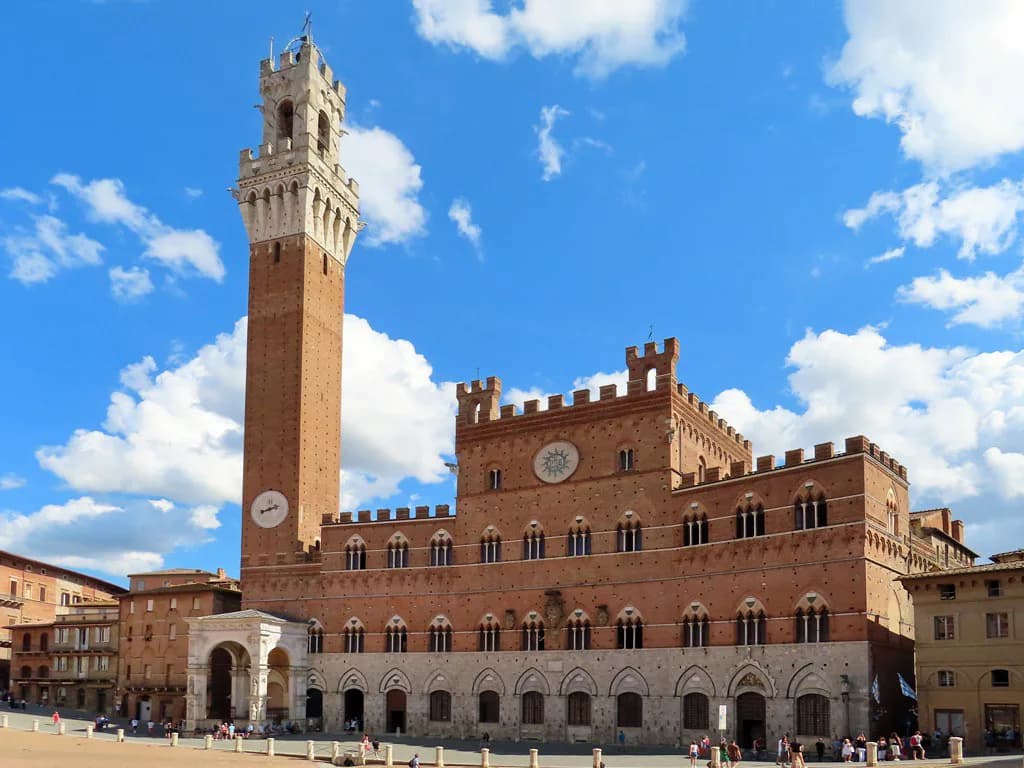
The Torre del Mangia dominates the Piazza del Campo, and the decision it asks of you is straightforward: pay to climb or admire it from the square. It belongs to Siena's civic museums, not the cathedral complex, so its tickets and rules are separate from the Duomo's. For a wider comparison, keep the Siena Attractions hub open as you plan.
Before building a day around it, know that prices, opening hours and day-specific exceptions are published by the operator and can change with the season. Treat every figure below as something to confirm close to your travel date rather than a fixed promise. The square itself is covered in our Piazza del Campo visitor guide if you would rather stay at ground level.
What the Torre del Mangia Is
The tower was built in the 14th century beside the Palazzo Pubblico, the seat of Siena's civic government. Sources describe its height being matched to the cathedral as a statement that church and state held equal authority, which helps explain why it reads as a civic monument rather than a church bell tower.
Its name comes from the first bellringer, Giovanni di Balduccio, nicknamed for supposedly eating through his earnings. The Cappella di Piazza at its base was added in the 1350s as a votive offering after the Black Death, so the ground level rewards a slow look even if you decide against the stairs.
Next door, the Palazzo Pubblico holds Siena's civic art collection and is a separate ticketed visit. Our Palazzo Pubblico Siena museum guide explains what the museum contains, which is useful if the climb sells out or the weather turns.
Ticket Scope: What the Tower Ticket Covers
Third-party sources describe the tower ticket as a civic-museum product sold at ticket offices, bundled with the Museo Civico in the Palazzo Pubblico and with Santa Maria della Scala. Reported combinations include tower plus Museo Civico, and a version adding Santa Maria della Scala.
Those combinations were published some time ago, so read them as an example of how the offer is structured rather than a current price list. Check the Comune di Siena's ticket page for the scope and cost that apply on your dates, and confirm whether any bundle requires starting at the tower.
None of this implies a cathedral pass covers the tower. The Opera della Metropolitana sells its own single ticket for the Duomo complex, so treat the cathedral and the civic tower as two separate purchases unless an operator explicitly says otherwise.
The Climb: Roughly 400 Steps, No Lift
Both travel accounts describe a stairway of roughly 400 steps with no elevator. The lower flights are relatively even, while the upper stretch narrows and the ceiling drops, so taller walkers should expect to duck near the top.
One source describes an average climb of about ten minutes and a visit capped at roughly 30 minutes in total, but both figures are reported estimates rather than official timings. Plan a brisk but unhurried ascent, and remember that cameras and bags are handled under the operator's rules rather than at your own discretion.
Both accounts remark on the character of the ascent itself: light through a narrow window close to the summit, brick and stone underfoot, and a route kept clean despite heavy use. If you enjoy the climb as much as the view, this is the part to savour rather than rush.
Opening Hours and Seasonal Variation
A widely copied third-party listing gives split daily shifts, longer in the warmer months and shorter in winter, with last entry before the ticket office closes. Because the listing is undated and the operator controls the schedule, treat those times as a pattern to verify rather than a timetable to rely on.
The most important caution is Palio season. The same source lists special August reductions and closures around the Palio, and those are historical examples from a specific year, not a forecast for the coming race days. If your visit falls near early July or mid-August, the city's Palio page and the ticket office are where to confirm tower access.
Weather and maintenance can also close the tower at short notice, according to the same reported description. Build your Siena day so the climb is not the only fixed point, and hold a substitute indoor sight in reserve.
What You See From the Top
From the summit the Piazza del Campo reads as a shell-shaped expanse, with people reduced to ant-like figures on the red brick. Beyond the rooftops, the striped cathedral and its bell tower stand out, and the Tuscan hills close the horizon.
The view is best understood as a lesson in Siena's shape: the tight medieval grid one way, the open square directly below. Arriving with that map in your head makes the descent easier to trade against other sights on a short trip.
Restrictions and Safety Before You Queue
Reported rules include leaving bags and large items in lockers, no animals, limited camera equipment and staff checks. The same description warns that visitors with heart or respiratory conditions, vertigo, claustrophobia, diabetes or pregnancy are strongly discouraged, and that under-14s must be accompanied.
Treat these as indications rather than a complete rulebook. Confirm the current conditions with the ticket office before paying, especially if anyone in your group has mobility limitations: reports note no lift, and the narrow upper stairway leaves little room to turn around.
Capacity controls are mentioned in the same source, with sales reportedly stopping once limits are reached. That is not a promise of a queue length or a guarantee of entry, so buy early in the day if the climb matters to you.
Who Should Skip the Climb
Skip it if vertigo, claustrophobia or a tight schedule will make 400 steps stressful rather than memorable. Parents of young children should weigh the low ceilings and the no-turn-back stairway, and anyone uneasy in enclosed spaces may prefer the open square.
A calm alternative is to spend the time on Siena's quieter corners instead. Our hidden gems in Siena guide covers places to go when you would rather stay at ground level and avoid timed tickets.
Pairing the Tower With Siena's Other Sights
The cathedral complex is a separate, ticketed proposition run by the Opera della Metropolitana. Its published schedule varies through the year, with reduced hours on some dates and shorter holiday opening for the cathedral alone, so check the official site rather than assuming a full-day window.
If you want a church visit without ticket pressure, the Basilica of San Domenico in Siena is a short uphill walk from the centre. Our Basilica di San Domenico Siena visitor guide explains what to expect inside; it pairs well with the tower because it uses a different corner of the city.
For a compact third stop, our Battistero di San Giovanni Siena visitor guide covers the baptistery below the cathedral, which belongs to the cathedral complex ticket rather than the tower's civic bundle. Knowing which pass covers which door prevents paying twice for the same step.
Booking and Buying Tickets
Tickets have historically been sold at the civic museum ticket offices rather than reserved online, according to older reporting. Do not assume that still holds: check the operator's current purchase channels before you plan the day around a single counter.
The city's own site is the starting point for opening hours, notices and any booking links it publishes, and it also flags events that can alter access. Read it shortly before you go, since a past page is not proof that today's tickets are on sale.
A Simple Go or No-Go
Climb if you can handle roughly 400 steps, want the shell of the Piazza del Campo laid out beneath you, and can accept a timed, bag-checked visit. Skip it if enclosed stairways or a fixed slot would spoil a slow day in the city.
Either way, verify prices, hours and Palio-period exceptions with the Comune di Siena and the ticket office before you commit, and use the Siena Attractions hub to slot the tower into a wider route.
Frequently Asked Questions
How many steps are there to the top of the Torre del Mangia?
Travel accounts put the figure at roughly 400 steps, with no lift. Counts vary between descriptions, so treat it as an approximate figure and ask at the ticket office if the number matters to you.
How long does the visit take?
One source reports a climb of about ten minutes and a visit limited to roughly 30 minutes in total. These are reported estimates rather than official durations; allow extra time for queueing and bag deposit.
Does the tower ticket include the Museo Civico?
Older listings describe combined tower and Museo Civico tickets, and a version adding Santa Maria della Scala. Confirm the current scope and price with the operator, because bundles change and the cathedral pass does not cover the tower.
What can you see from the top?
The Piazza del Campo directly below, the cathedral and its bell tower, the red rooftops of the medieval centre and the Tuscan hills beyond. The view is clearest in good weather, when the tower is also most likely to be open.
Is the climb suitable for children or people with vertigo?
Reported rules say under-14s must be accompanied and that visitors with vertigo, claustrophobia, heart or respiratory conditions or pregnancy are strongly discouraged. The upper stairway narrows and the ceiling drops, so judge honestly before buying.
Is the tower closed during the Palio?
Sources list special August reductions and closures around past Palio days, but those dates belong to a specific year and are not a forecast. Check the city's Palio page and the ticket office for the days you plan to visit.
Sources
Continue exploring
More guides you'll find useful