Basilica di San Domenico Siena: A Visitor Guide
Plan a visit to Siena's hilltop Dominican basilica: St Catherine's relics, Gothic scale, free church entry, and city views worth timing around.
On this page
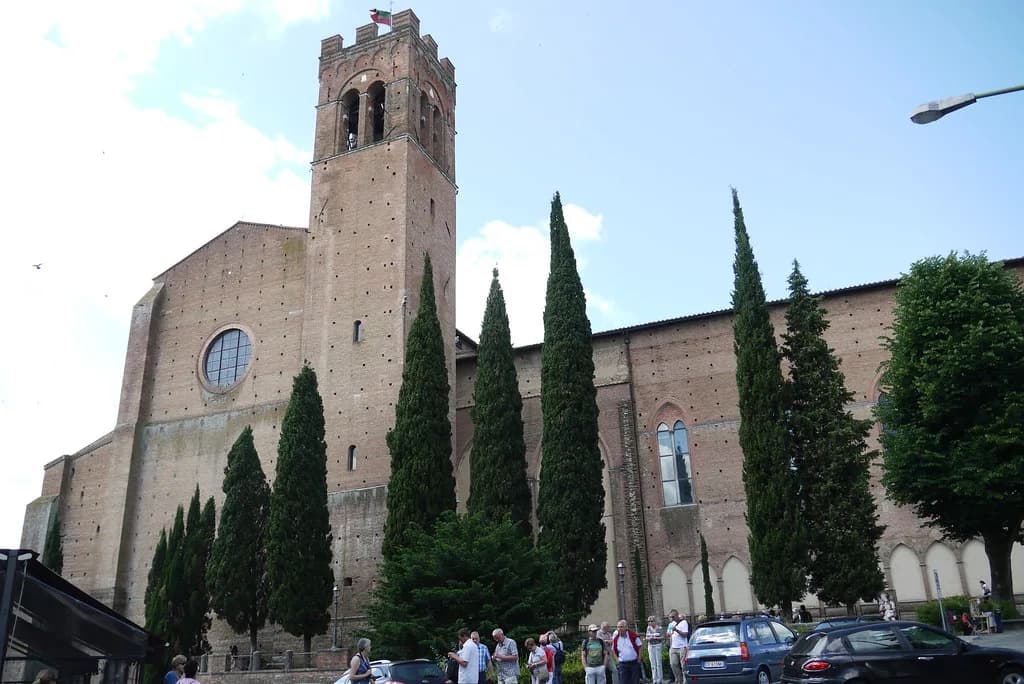
The Basilica of San Domenico rises on the Camporegio hill above Siena, a brick Gothic church better known to many as the Basilica Cateriniana because of its long association with St Catherine of Siena. Its scale is startling from the outside, and the interior is famously austere rather than ornate. It works well as a short, meaningful stop that also gives you one of the better free views across the city toward the Duomo.
Third-party guides describe the church as free to enter, with donations welcomed and optional guided tours that may carry a fee. That is useful working guidance rather than an official price list, so treat the wording as something to confirm on site. What you can rely on is that the basilica is not part of the ticketed Duomo complex. Keep those two experiences separate when you budget your day and your time.
Why This Basilica Matters
Construction of the church began in the 13th century, shortly after the Dominicans established themselves in Siena, and later work gave it the cruciform plan and heightened Gothic character visible today. It sits in Piazza San Domenico, a short uphill walk from the centre. The nickname Basilica Cateriniana is not marketing: Catherine's story is woven through the building, its chapel and the relics kept here.
This is an important civic and religious site, not an overlooked corner, so expect other visitors and worshippers rather than solitude. Its value for a traveller lies in three things at once: the sheer scale of the Gothic shell, the Catherine connection, and the elevated position. If you only see churches with rich marble interiors, this one will feel like a contrast, and that contrast is the point.
For orientation across the wider city, the Siena Attractions guides cover the Duomo, the towers and the museums so you can slot the basilica into a realistic day. Our round-up of hidden gems in Siena is a better fit once you have ticked off the headline sites and want quieter lanes and smaller churches.
Getting There and Orientation
The basilica stands on a rise at Piazza San Domenico, reached by climbing from the lower part of town, and the climb is short but steady. Allow a little extra time if you are carrying luggage or travelling with someone who finds steps and slopes tiring. Walking is the sensible approach, since the historic centre is compact and parking in the middle of Siena is not a casual option.
Arrive facing the church and then turn around: the piazza behind the basilica opens up toward the Duomo and the Torre del Mangia. That is the viewpoint moment, and it costs nothing. Late afternoon light is often kinder for photographs, though the square is a working religious space rather than a viewing platform. Further visitor details appear in The Baptistery of San Giovanni: Extraordinary Mosaics and Frescoes - Hotel Minerva Siena.
If you are building a walking day, the Siena Self-Guided Walk Through the Old Town helps you link the basilica to the rest of the centre without zigzagging. It is a suggestion rather than a fixed route, and it is easy to reverse the direction if you are starting uphill.
What You Actually See Inside
The interior is a single vast brick space that can feel almost empty after the density of Siena's other churches, so give your eyes time to adjust. Look for the chapel dedicated to St Catherine, decorated with frescoes depicting scenes from her life by artists including Andrea Vanni and Il Sodoma. The chapel holds relics associated with her, and it is the focal point for most visitors.
Travellers consistently describe the visit as free and the building as deeply important to Siena's residents, which matches the tone inside: this is a place of devotion first. Keep voices low near the chapel, dress with a church in mind, and step aside when services or prayer are underway. Photography is generally tolerated, but common sense and any posted notices should guide you.
Third-party guides mention that the basilica is accessible to visitors with disabilities, with ramps and lifts helping movement inside. Treat that as general guidance and contact the church administration in advance if you have specific needs, since historic buildings change and equipment can be out of service.
St Catherine of Siena and the Neighbourhood
Catherine was born in Siena in the 14th century and lived much of her life around this Dominican church, which explains why the building and her family's nearby sanctuary are usually visited as a pair. The sanctuary is built around her family home, a short walk downhill, and together the two sites tell a more coherent story than either does alone.
Continue down to Fontebranda, the medieval fountain that supplied half the city and served her father's dyeing trade. The surviving structure keeps three basins that once had separate jobs: drinking water, watering animals, and washing clothes. It is a practical monument to how Siena solved the problem of a city built on dry hills.
This downhill loop through the Terzo di Camollia area is where the Catherine theme clicks into place, and the Siena neighbourhoods guide helps if you want to understand which contrada you are crossing. The fountain lies in the territory of the Noble Contrada dell'Oca, which explains the goose emblems you may notice nearby.
Free Entry and What Is Not Covered
The basilica is described as free to enter, with donations accepted for upkeep, and guided tours potentially costing extra. None of that amounts to an official tariff, so check at the door rather than budgeting from a blog. What is clear is that this is a parish and pilgrimage church rather than a ticketed museum.
Separate the basilica completely from the Duomo complex, which sells its own combined tickets covering the cathedral, the Piccolomini Library, the museum, the crypt, the baptistery and the panoramic facade. Current prices and opening times are published by the Opera della Metropolitana, and they vary by season, so read them there instead of relying on secondhand figures.
One practical quirk of the Duomo complex: the baptistery and crypt beneath the cathedral are reached by stairs and are not wheelchair accessible, whereas the cathedral itself has a dedicated ramp. That distinction matters if accessibility is shaping your itinerary, and a Battistero di San Giovanni Siena visitor guide can help you judge whether to add it.
Timing Your Visit
A church visit here typically takes well under an hour unless you linger in the Catherine chapel or attend a service. The real time cost is the walk and the pause for the view. Build the stop into the middle of a walking day rather than making it a destination in itself.
Pair it with Piazza del Campo, where Fonte Gaia sits at the head of the sloping square in front of the Palazzo Pubblico. The marble fountain you see is a 19th-century replica by Tito Sarrocchi based on Jacopo della Quercia's original, and the original sculptures are now indoors. Do not drink from it: the water is recirculated for display.
The original Fonte Gaia marbles are held at Santa Maria della Scala, the former hospital complex facing the cathedral, which also runs temporary exhibitions and a children's art museum. If you want the fountain's story properly, see the replica in the square and then the originals in the museum. Check the museum's own site for what is on and when it opens.
Practical Caveats Before You Go
Opening times are the weak point in any guidebook entry for this church. Third-party sources give typical daily hours, roughly early morning to early evening, but those are not an official timetable and can shift for feast days or funerals. Check the parish or the Comune di Siena's listings before making a special trip.
Guided tours are often mentioned as available and worth booking ahead, but availability changes, so ask at the church or through the city's official tourism channels rather than assuming a tour will run. The same caution applies to any published accessibility provision: confirm directly.
Etiquette here is ordinary church etiquette. Cover shoulders, keep quiet in the chapel, do not eat or drink inside, and avoid flash near frescoes. If a mass is starting, wait or come back later rather than walking through the service.
A Suggested Half-Day Route
This is a suggestion, not an official itinerary. Start at Piazza San Domenico in the morning, spend time in the basilica, then take the view from the square before walking downhill to the Sanctuary of St Catherine and Fontebranda. That sequence keeps the climb at the start, when you have energy, and ends in the lower lanes.
From Fontebranda, continue toward Piazza del Campo for Fonte Gaia and a coffee, then decide whether to add a ticketed Duomo-complex site. If climbing is your thing, Torre del Mangia tickets and climb details explain the alternative view from the tower itself.
Allow around three hours for the basilica, the sanctuary, Fontebranda and the square without rushing, and add more for any museum. This is a suggested duration, not an official one. The route is short in distance but involves slopes, so wear shoes that cope with Siena's stone streets.
Plan Your Visit
The Basilica of San Domenico is one of Siena's essential stops rather than a quiet detour: free to enter on third-party guidance, tied closely to St Catherine, and blessed with a view that justifies the climb. Go for the Gothic scale, the chapel and the city panorama, and keep your expectations of its bare interior realistic.
Confirm hours, access and any tour arrangements before you set out, since these are the details most likely to change. Then build the rest of the day around Fontebranda, the sanctuary and Piazza del Campo, which together make the Catherine story make sense.
Frequently Asked Questions
Is the Basilica of San Domenico in Siena free to enter?
Third-party guides describe entry to the church as free, with donations accepted toward maintenance, and note that guided tours may involve a fee. This is not an official tariff, so check at the entrance or with the parish before relying on it, especially if you plan to join an organised visit.
What relics of St Catherine are kept in the basilica?
The chapel dedicated to St Catherine holds relics associated with her, and the church is known for preserving parts of her body. Visitors often find this the most affecting part of the building. Treat any specific inventory as something to read on site rather than a fixed list you can count on.
How long should I allow for a visit?
Most visitors spend well under an hour inside the church itself. Add time for the view from Piazza San Domenico and the walk up and down. A suggested half-day covering the basilica, the Sanctuary of St Catherine, Fontebranda and Piazza del Campo is around three hours, though that is our suggestion rather than official guidance.
Is the basilica accessible for visitors with disabilities?
Third-party guidance states that the basilica is accessible, with ramps and lifts to help movement inside. Because this is a historic building, contact the church administration in advance if you have particular requirements, rather than assuming equipment is always working or that every area is reachable.
What can I see near the Basilica of San Domenico?
The Sanctuary of St Catherine, built around her family home, is a short walk downhill, and Fontebranda is nearby. Continue to Piazza del Campo for Fonte Gaia and the Palazzo Pubblico. The Duomo complex is separate and ticketed, so check its official site for current hours and prices.
Where is the original Fonte Gaia sculpture kept?
The fountain in Piazza del Campo is a 19th-century replica by Tito Sarrocchi after Jacopo della Quercia's design. The original marbles are held at Santa Maria della Scala, the museum complex opposite the cathedral, so you can compare the copy outdoors with the originals inside.
Sources
- Homepage | Comune di Siena
- Basilica di San Domenico, Siena: Guida per il visitatore
- Basilica Cateriniana Di S. Domenico, Siena - Tripadvisor
- BASILICA OF SAN DOMENICO - A Gothic Church in Siena
- Fonte Gaia – Siena’s Historic Fountain of Beauty and Symbolism
- Opera Duomo Siena – Siena Opera della Metropolitana
- The Baptistery of San Giovanni: Extraordinary Mosaics and Frescoes - Hotel Minerva Siena
- Fontebranda - Santa Caterina
- Monuments to Visit in Siena: The Wonderful Fontebranda - Hotel Minerva Siena
- Santa Maria della Scala – Museo, Arte e Storia a Siena
- Level IV- Santa Maria della Scala
Continue exploring
More guides you'll find useful