
Palazzo Pubblico Siena Museum Guide: Museo Civico Frescoes
Plan a visit to the Museo Civico inside Siena's Palazzo Pubblico: the frescoes to prioritise, how to check tickets, and how long to allow.
On this page
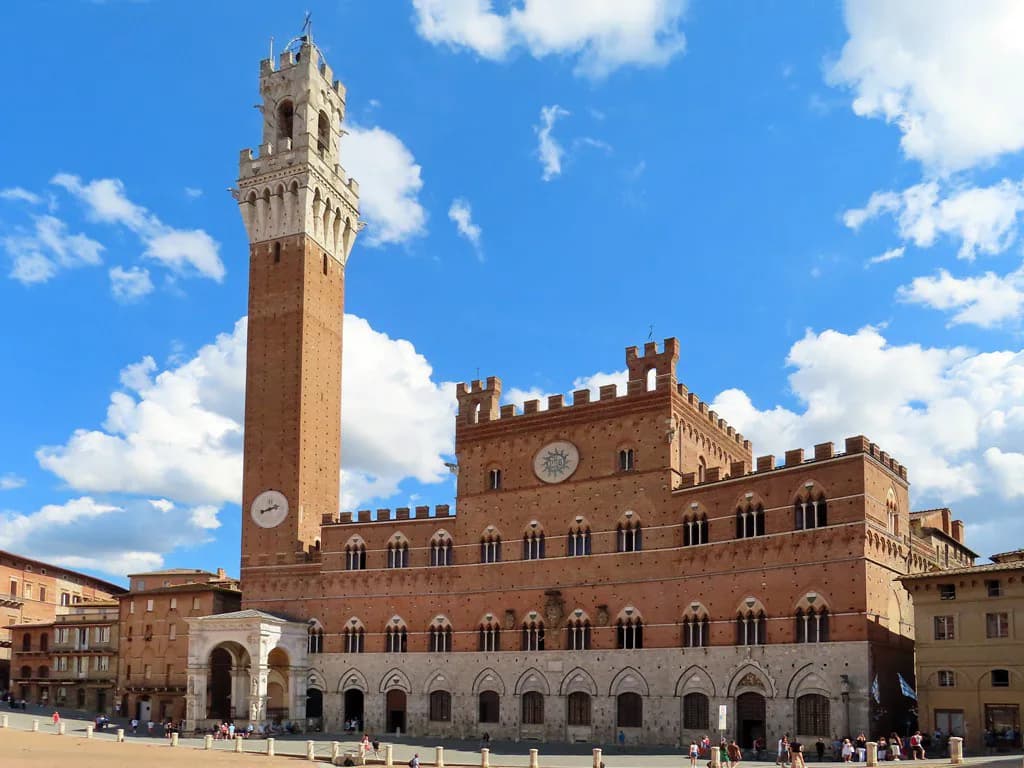
The Palazzo Pubblico is not a palace that stopped working. It faces Piazza del Campo, the shell-shaped square at the heart of Siena's UNESCO-listed historic centre, and it remains the seat of city government today, which shapes how you visit it.
That dual identity is why the building rewards a little preparation. Its museum, the Museo Civico, is a circuit of painted council rooms rather than a neutral gallery, and two fresco cycles justify the trip on their own. Allow roughly 90 minutes to two hours inside as a personal suggestion, then add tower time separately if you plan to climb.
A Working Town Hall, Not a Converted Palace
Siena's civic palace was built to house the government of a medieval commune, and the painted rooms you walk through were designed to remind councillors how to rule well. A tour description notes that the building has been the seat of city government since 1317 and still serves as the town hall, so a visit can feel different from a conventional museum: some spaces belong to the day-to-day running of the city rather than to the exhibition route.
Start with the square outside before you queue for anything. From the pavement you can read the brick facade, the Gothic arches and the Torre del Mangia rising beside it, which makes the interior far easier to interpret. Our visitor guide to Piazza del Campo covers the square's landmarks, including the Fonte Gaia, so you can orient yourself in a few minutes without a detour. For wider planning, see Piazza del Campo Visitor Guide.
If you plan to climb the tower as well, keep our notes on Torre del Mangia tickets and climb open while you decide the order of your day.
What the Museo Civico Is, and What It Is Not
The Museo Civico is the museum housed inside the Palazzo Pubblico, reached from Piazza del Campo. It is not the Duomo, and it is not the Santa Maria della Scala complex near the cathedral. Treat each as a separate visit with its own entry arrangements.
The Comune di Siena links the Museo Civico and Santa Maria della Scala as two separate thematic pages, which is a useful reminder that these are distinct sites rather than wings of one institution. Checking each site's own page before you travel avoids wasted time.
The wider museum landscape is also decentralised: the Fondazione Musei Senesi describes itself as a network bringing together 50 museums across the Terre di Siena, each with its own organisation. Do not assume that one admission unlocks the next.
Room by Room: Simone Martini's Maestà in the Sala del Mappamondo
The touring route through the palace moves through several frescoed halls, and the Sala del Mappamondo is where many visitors stop longest. It takes its name from a world map once painted on the wall, and it holds Simone Martini's Maestà, a large fresco showing the Virgin enthroned among saints and angels.
Look for the detail rather than the overall impression: the canopy, the ranks of figures and the way the Virgin is presented as a protector of the city rather than a private devotional image. Because the painting was made for a council hall, it reads as civic rhetoric as much as religious art.
A tour itinerary for the palace gives the date usually attached to the Maestà as 1315 and lists the Sala del Mappamondo among the rooms on the museum route, which helps you picture the sequence before you arrive. Treat that date as context, not as a booking fact.
Room by Room: Lorenzetti's Good and Bad Government
The Sala dei Nove, also called the Sala della Pace, carries Ambrogio Lorenzetti's fresco cycle on good and bad government. One wall shows a well-run city and countryside; the facing wall shows tyranny, ruined buildings and fear.
The tour itinerary dates the cycle to 1338 to 1339 and describes it as a lesson in what good rule requires: peace, a working economy and citizens devoted to crafts, commerce and construction. Give yourself time to circle the room rather than standing in one spot; the contrast only lands when you compare the two walls.
This is the room most often reduced to a photograph, and it is the room that rewards the longest stay. If you are visiting with limited patience for art, make this your priority and let the rest of the route be secondary.
The Wider Museum Route: Fourteenth to Nineteenth Century
Beyond the two headline cycles, the museum's route covers several centuries of Sienese art and civic decoration. The tour itinerary names the Sala del Risorgimento with its nineteenth-century frescoes, the Sala di Balia with scenes by Spinello Aretino, the Sala del Concistoro, whose ceiling Domenico Beccafumi painted in the sixteenth century, and the Cappella del Podestà.
These smaller halls are where many visitors rush. Slow down instead: the Risorgimento room ties the medieval commune to modern Italian nationhood, and the Beccafumi ceiling is easy to miss if you keep your eyes at fresco height. Look up deliberately.
If your interests lean toward quieter corners of the city, our guide to the hidden gems in Siena pairs well with a museum morning, since the two together balance painted interiors with streets most visitors walk past.
Deciding on a Ticket: Museum Alone or with the Tower
Combined admission covering the Museo Civico and the Torre del Mangia has been offered in the past, and separate tickets exist too, but the current scope of any bundle is something you must confirm rather than assume. Check the palace museum page and the tower page together on the day you plan to book, because terms change.
Do not treat a price you read in a travel blog as fixed. Pricing, reductions and whether a combined option is currently sold are details the operator publishes, and they can differ between the ticket counter and online channels. Sources consulted for this guide quoted older figures that should not be repeated as current.
Also resist the assumption that one ticket unlocks every civic museum in Siena. With a network of 50 separately organised museums across the province, plan admissions site by site rather than expecting a single pass.
How Long to Allow, and Pacing the Tower
As a personal suggestion, budget about 90 minutes to two hours for the Museo Civico if you want to read the frescoes rather than tick them off. A visit of under an hour works only if you go straight to the Sala del Mappamondo and the Sala dei Nove.
One operator sells a private guided tour of the palace and museum listed at one and a half hours, which is a reasonable benchmark for the palace route alone. That is a tour length, not an official visiting time for independent visitors.
If you add the tower, treat the climb as a separate physical effort with its own queue and timing, then decide whether the museum comes before or after. Many travellers find the frescoes easier to absorb first and the stair climb more comfortable afterwards, though that is a matter of preference.
Wear shoes that handle worn stone floors and stairs, and carry water in warm months. The palace interiors are cool, but the climb and the square are not.
Practical Checks Before You Go
Opening hours, closures and ticket prices are the three facts to verify close to your visit, and the Comune di Siena publishes the museum's official page from its own site. Do not rely on a travel blog for a current schedule, since seasonal changes are common in Italian civic museums.
If your stay overlaps with a public holiday or a civic event in the square, check both the museum page and the city's event listings. The palace is an active government building, and the surrounding square can be busy or partly closed off during events.
Accessibility arrangements vary between areas of a historic building with stairs and uneven floors, so ask the museum directly about step-free routes and lift access rather than relying on a third-party listing. One tour description mentions a wheelchair-accessible option for its guided visit, but that is not the same as a guarantee for every part of the palace.
Common Mistakes to Avoid
The first mistake is treating the visit as a photo stop between the square and the cathedral. The frescoes are dense argument, and a rushed pass through two rooms will leave you with impressions rather than understanding.
The second is skipping the smaller halls because you have not heard of them. The Risorgimento, Balia and Concistoro rooms add the political and artistic context that makes the two famous cycles legible.
The third is assuming that the museum and the tower share one simple ticket at one simple price. Verify what each admission covers before you commit, and note that the museum network extends far beyond this one building.
Where the Museo Civico Fits in a Siena Itinerary
The palace is best paired with a slow morning on and around Piazza del Campo, then a separate visit to the Duomo or Santa Maria della Scala in another slot. Trying to see all three properly in one day usually means short-changing two of them. For wider planning, see Siena Attractions: Visitor Guides to 15 Sights.
A self-guided walk through the old town can bookend a museum visit nicely, letting you see the contrade emblems and street layout that the frescoes keep referring to. For wider planning, see Siena Self-Guided Walk Through the Old Town.
If you want a second religious site without cathedral crowds, our visitor guide to the Basilica di San Domenico covers a church associated with Catherine of Siena on the edge of the centre. For wider planning, see Basilica di San Domenico in Siena.
Plan Your Visit
Visit the Palazzo Pubblico for the painting, but understand it as a living civic building: the museum rooms are the point, and the town hall function explains why they were painted in the first place. Prioritise the Sala del Mappamondo and the Sala dei Nove, then let the smaller halls surprise you.
Before you travel, confirm current opening times, any closures and the exact scope of museum and tower admission on the Comune di Siena page and the Fondazione Musei Senesi site. That short check is the difference between a smooth visit and a locked door.
Frequently Asked Questions
What should you see first inside the Museo Civico?
Head for the Sala del Mappamondo to see Simone Martini's Maestà, then move to the Sala dei Nove for Lorenzetti's good and bad government cycle. Those two rooms carry the museum's reputation, and the remaining halls read more clearly once you have seen them.
Is the Palazzo Pubblico still Siena's city hall?
Yes. A tour description of the palace notes that it has served as the seat of city government since 1317 and still functions as the town hall, which is why some spaces are administrative rather than exhibition space. That is also why it feels different from a purpose-built art museum.
Should you buy a combined ticket with the Torre del Mangia?
Combined admission has existed, but its current scope and price need checking with the operator rather than assumed. Look at the museum's page and the tower's page before booking, and confirm whether the bundle covers what you actually want to see.
How long should you allow for the Museo Civico?
As a suggestion, allow around 90 minutes to two hours if you want to engage with the frescoes. A visit of under an hour only works if you focus on the two main painted halls and move quickly through the rest.
Do you need to book Palazzo Pubblico tickets in advance?
Booking rules and any timed-entry arrangements can change, so confirm directly with the museum before your trip. Do not assume a reservation is required or that walk-up entry is guaranteed at a busy time of year.
Is the Museo Civico the same as the Duomo or Santa Maria della Scala?
No. The Museo Civico is inside the Palazzo Pubblico, the Duomo is the cathedral, and Santa Maria della Scala is a separate museum complex. The Comune di Siena lists the museum and the Scala as separate site pages, so plan them as distinct visits.
Sources
Continue exploring
More guides you'll find useful





