Noto Cathedral Visitor Guide: San Nicolò, Piazza & Baroque Rebuild
Plan a visit to Noto's Cathedral of San Nicolò: free entry, modest dress inside, its 1693 destruction and Gagliardi rebuild, and how it fits a walking tour.
On this page
The Cathedral of San Nicolò rises above Piazza del Municipio at the head of a broad staircase, and it is the building most visitors picture when they imagine Noto. General entry for visitors is free, which makes the cathedral an easy stop rather than a budget decision. Allow roughly 30 to 45 minutes inside as a suggested pace, enough to take in the nave, the dome and the side chapels without hurrying.
This guide covers only the cathedral: where it sits, what happened before it was built, which architectural details reward a closer look, and how to behave inside. It deliberately does not give hours, closing days or ticket information, because those details change and are best confirmed with the organisations that run and list the building. The sections below explain where to check.
Where the Cathedral Sits in Noto
The cathedral faces Piazza del Municipio in the heart of Noto's historic centre, close to the line of Corso Vittorio Emanuele. The staircase in front lifts the facade above the square, so the building reads as a stage set at the top of the approach. Most visitors reach it on foot, because the centre is compact and the main sights sit within a short walk of one another.
Treat the cathedral as one decision inside a walkable Baroque centre rather than a standalone excursion. A sensible rhythm is to climb the steps, spend time in the square, and then continue along the corso in whichever direction your energy allows. If you want a structure for that wider wandering, the Noto Baroque self-guided walk sets the cathedral within a sequence of nearby churches and palaces.
Because the cathedral is a working church and a diocesan site, its practical arrangements are managed locally rather than by a single tourism office. The Comune di Noto maintains the city's events calendar, which is useful for spotting feast days and city-wide programmes that affect crowds in the centre.
Before the Baroque Rebuild: The 1693 Earthquake
The cathedral you see today is not the city's original one. The earlier cathedral was destroyed in the earthquake of 1693, the event that reshaped much of south-eastern Sicily and prompted the rebuilding of Noto on its present site. Construction began in 1694 on the location of the older church of San Nicolò and continued into the early 18th century.
Knowing this backstory changes how the building reads. The harmony of the facade and the confidence of the staircase are products of a planned reconstruction rather than centuries of gradual accretion, which is why the centre feels unusually coherent. Noto Antica, the abandoned hill settlement, is the physical reminder of what was lost.
The earthquake is also the reason the Val di Noto is treated as a single architectural story rather than a collection of unrelated towns. If you are travelling through the region, the same logic of destruction and rebuilding applies to the other late-Baroque centres nearby, and seeing two or three of them makes the achievement clearer.
Rosario Gagliardi and the Architecture to Look For
The cathedral is attributed to the architect Rosario Gagliardi, whose work shaped much of Noto's Baroque character. The facade divides into three sections: a central bay with a large rose window, and side sections carrying statues of saints and other religious figures. Step back into the square to see the whole composition at once, then move closer to read the carving.
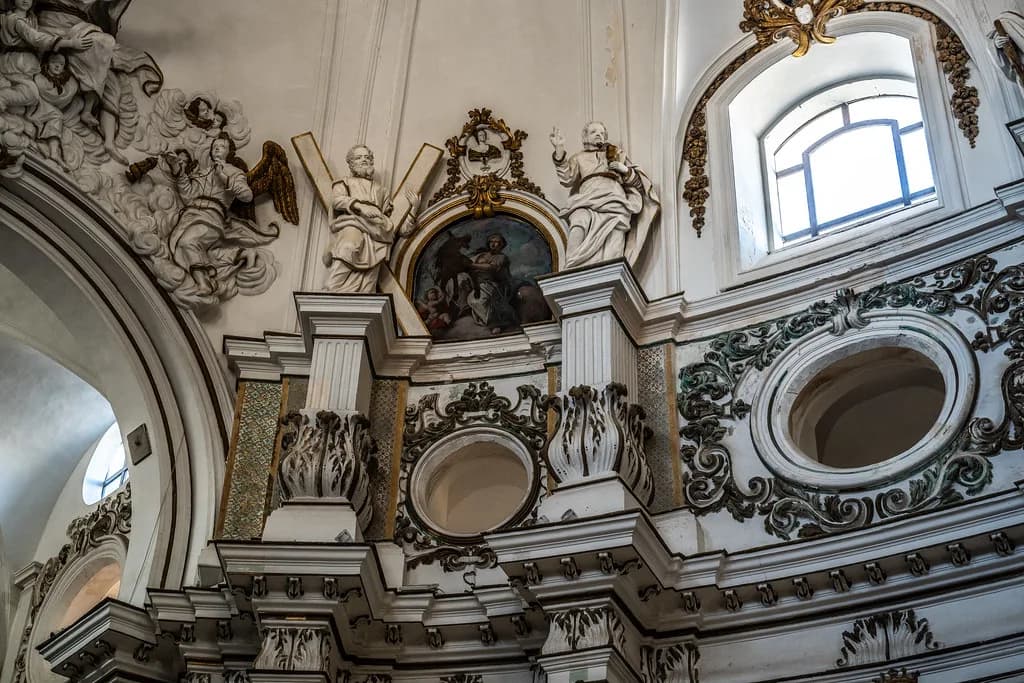
Inside, the plan is a large central nave flanked by side chapels, with frescoes, paintings and sculpture distributed through the space. The dome, carried on four columns and decorated with figures of saints and angels, is the interior's focal point. Look up early, while your eyes are still adjusted to the change in light, and then work back down through the chapels.
The cathedral is frequently described as a highlight of Sicilian Baroque, but the more useful test is comparative. Walk the corso afterwards and notice how Gagliardi and his contemporaries handled curved facades, balconies and thresholds on a smaller scale. The Chiesa di San Domenico Noto visitor guide covers one nearby example worth pairing with the cathedral for that comparison.
Inside the Cathedral: Etiquette and Dress
Entry for general visits is free, and there is no confirmed paid interior section described in the sources consulted here. Visitors should treat the building as a place of worship first: keep voices low, avoid blocking the central aisle, and step aside when services are in progress. Travel writing about Noto notes modest clothing as the expectation inside, so covered shoulders and knees are the sensible default.
Guided tours are mentioned in some visitor material, but availability and terms are not something this guide can confirm. If you want a guided experience, ask at the cathedral itself or through the diocese rather than relying on an older listing. Photography rules may also vary during services, so watch for posted signs.
The wider point is to separate what is confirmed from what is not. Free general entry is well documented; everything about timetables, restrictions and any organised visits should be verified on the day or in advance with the people who run the building.
Confirming Hours and Closures Before You Go
Opening hours, closing times and any Sunday restrictions are not stated here because they are not confirmed by the sources used for this guide. Church schedules in Italy can shift with the liturgical calendar, restoration work or local decisions, so an outdated figure is worse than none. Check before you build your day around the cathedral.
The Diocese of Noto publishes its own news, appointments and parish information, and is the most direct place to start for anything concerning a diocesan church. The city's official site carries events and notices that may explain unusual access in the centre. Neither is a live opening-hours board, so treat them as starting points and confirm by telephone or in person if the visit matters to your plans.
If you find the doors closed, do not assume the building is off-limits for the day. Services, funerals and mid-day pauses are ordinary reasons for a short closure, and a return later in the day is often the simplest response.
Timing Your Visit Around the Feast of San Corrado
San Corrado is Noto's patron saint, and his feast is celebrated in early February with a procession through the city and a special mass in the cathedral. If you are in Noto at that time, expect the square and the surrounding streets to be busier and the atmosphere more ceremonial than on an ordinary weekday.
Outside feast periods, the experience depends mostly on the time of day and the season. Late spring and early autumn are often recommended for milder weather and thinner crowds, which matters in a stone centre with limited shade. Mornings tend to suit a quiet look at the interior before the day's visitors arrive.
For exact feast dates in any given year, consult the Comune di Noto's events pages rather than assuming a fixed day. The city publishes its calendar of events, and that is the most reliable local reference for what is happening during your stay.
Beyond the Cathedral: Keeping Scope Straight
Noto rewards a slower approach, and the cathedral is best paired with one or two nearby stops rather than a rushed checklist. The Chiesa di Santa Chiara Noto visitor guide covers another Baroque church within easy walking distance, and the hidden gems in Noto will fill the gaps between the headline sights.
Some of Noto's best-known attractions are separate entities with their own visiting logic. Palazzo Nicolaci, the Infiorata flower festival and the Vendicari nature reserve each deserve their own planning and should not be folded into a cathedral visit. Treating them separately keeps expectations realistic.
If you are building a wider Sicilian itinerary, grouping Noto with the other Val di Noto towns by architectural theme is more satisfying than sprinting between coast and hill. The region's late-Baroque centres share a history, and the comparisons make each one sharper.
Suggested Pace and Access Questions to Ask Locally
A suggested 30 to 45 minutes inside the cathedral, plus time in the square, is enough for most first visits; this is a suggestion, not an official recommendation. Add longer if you plan to sit with the interior or attend a service. The staircase and the square outside are part of the experience and deserve their own unhurried minutes.
Accessibility details for the staircase, side entrances and interior floors are not confirmed in the sources used here. Visitors with limited mobility should ask directly before travelling, since a Baroque church on a raised platform can present steps that are not obvious from photographs. A quick call to the diocese is the practical route.
The same applies to parking, public transport and drop-off points in the centre. Noto's historic core is compact and pedestrian-friendly once you arrive, but the approach by car is a local question best answered by the Comune or your accommodation.
A Slow Visit to the Cathedral
The Cathedral of San Nicolò is free to enter for general visits, sits at the centre of a walkable Baroque town, and rewards a modest amount of preparation. Confirm the practicalities with the Diocese of Noto or the Comune before you go, dress respectfully, and give the building more than a passing glance.
Then step back into the square, look up at the facade, and let the rest of Noto unfold along the corso at walking pace. One cathedral, one nearby church and one long coffee is a better day than a rushed circuit of every sight.
Frequently Asked Questions
Is Noto Cathedral free to enter?
General entry for visitors is free, according to visitor material on the cathedral. This guide does not state ticket prices, and it cannot confirm whether any paid interior section, guided tour or reserved area exists. Confirm on arrival or with the Diocese of Noto before assuming anything beyond basic entry.
What should I wear when visiting Noto Cathedral?
Treat it as a place of worship and dress modestly, with shoulders and knees covered. Travel writing on Noto notes modest clothing as the expectation inside, but no formal dress code is published in the sources used here. A light scarf is useful in warm months and doubles as cover if needed.
When was Noto Cathedral rebuilt and who designed it?
The earlier cathedral was destroyed in the earthquake of 1693, and construction on the present building began in 1694 on the site of the older church of San Nicolò, continuing into the early 18th century. The design is attributed to the architect Rosario Gagliardi, whose work shaped much of Noto's Baroque centre.
How long should I spend at Noto Cathedral?
About 30 to 45 minutes inside is a reasonable suggestion for a first visit, plus time in Piazza del Municipio to see the facade from below. This is not an official recommendation. Add longer if you plan to attend a service or sit quietly, and allow extra time for the walk along the corso.
What are the opening hours of Noto Cathedral?
They are not stated here because they are not confirmed by the sources used for this guide. Schedules can change with services, restoration and the liturgical calendar. Check with the Diocese of Noto or the Comune di Noto, or simply ask on arrival, before planning your day around a visit.
When is the feast of San Corrado?
San Corrado is Noto's patron saint, and his feast is celebrated in early February with a procession and a special mass in the cathedral. Expect busier streets and a more ceremonial atmosphere at that time. For exact dates in a given year, check the Comune di Noto's published events calendar rather than assuming a fixed day.
What else is worth seeing near Noto Cathedral?
The cathedral sits within a compact Baroque centre, so nearby churches and palaces are easy to add on foot. The Chiesa di Santa Chiara in Noto and the Chiesa di San Domenico in Noto are both close enough to pair with the cathedral. Palazzo Nicolaci, the Infiorata and the Vendicari reserve are separate attractions with their own planning.
Sources
Continue exploring
More guides you'll find useful