Palazzo della Pilotta Guide: What's Inside and How to Visit
Plan a visit to Palazzo della Pilotta in Parma: the museums and theatre inside, what the listing says about tickets and hours, and a suggested order of visit.
On this page
The Pilotta is often described as a palace, but visitors actually enter a cluster of collections gathered around three courtyards in the centre of Parma. Because the components are separate spaces with their own character, the experience depends less on one blockbuster room and more on how you sequence the galleries, the theatre and the library. This guide explains what is inside, which details to confirm before buying anything, and how to shape a half-day or a shorter stop.
Start with one practical anchor: the national tourist board lists the Pilotta at Piazza della Pilotta 3 and gives opening hours of 10:30 to 19:00 from Tuesday to Saturday and on Sunday, with Monday closed. Those are published listing values rather than a permanent promise, so treat them as the first thing to verify on the official site before you travel.
Quick Orientation: A Complex, Not a Single Museum
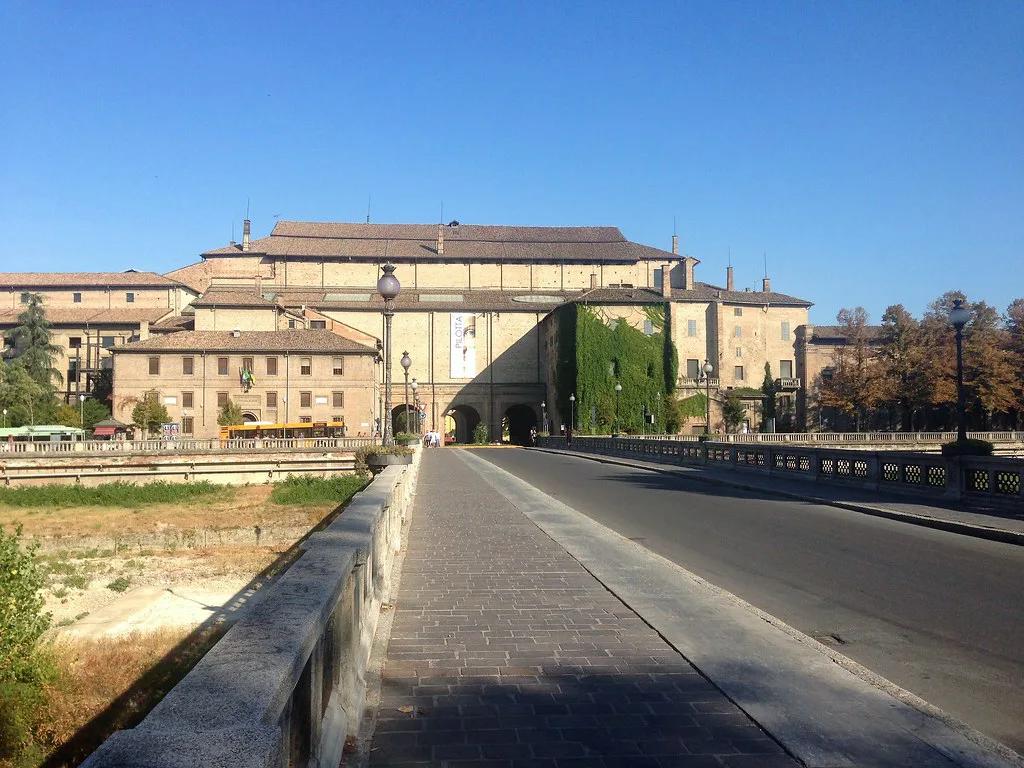
The Farnese family built the Pilotta as a service complex beside their residence, which is why the site feels more like a small district than a palace. Its name is usually traced to the game of pelota played by Spanish soldiers in one of the courtyards, a reminder that this was a working aristocratic compound rather than a purpose-built gallery. Expect to move between buildings and courtyards, so comfortable shoes matter more than a strict route.
The complex is central and sits close to the cathedral quarter, making it easy to combine with Piazza Duomo on the same morning or afternoon. For a wider sense of how the Pilotta fits with the city's other sights, the Parma Attractions hub is the natural starting point when you build your day.
What's Inside: Galleria Nazionale, Teatro Farnese, Archaeology and the Palatine Library
The Galleria Nazionale is the picture gallery and the main reason many art lovers come. Its holdings include works associated with Correggio and Parmigianino, the two painters who defined Parma's artistic reputation in the sixteenth century. If painting is your priority, give the gallery the largest share of your time and see it before your energy dips.
The Teatro Farnese is a vast wooden theatre created in the late 1610s inside a hall originally intended as an armoury. It was badly damaged by bombing in 1944 and later rebuilt from surviving fragments, so what you see combines original design intent with post-war reconstruction. It is a short but memorable stop, and it rewards looking up at the stage architecture rather than rushing through.
The National Archaeological Museum, founded in the eighteenth century, displays finds from the Parma area alongside older collections, while the Palatine Library represents the ducal book collection. Travellers who have written about the complex also mention the Museo Bodoni among the spaces inside, though you should confirm current access to each room on arrival. Treat the library and specialist collections as optional depth rather than compulsory stops.
Does One Ticket Cover Everything? What to Confirm
The national tourist board describes the monumental complex as including the Museum of Antiquities, the Farnese Theater, the National Gallery of Parma, the Palatine Library and the National Archaeological Museum, and its ticket section directs readers to the official site. The most common assumption is that one ticket therefore opens every collection under the roof, but scope can change with temporary exhibitions and room closures. Before you book, check the official ticket page for exactly which spaces are included and whether any section is sold separately.
Some visitor accounts describe admission to the complex as covering several museums, which is consistent with a combined arrangement, but it dates from before current terms and should not be relied on for price or inclusions. Prices are not published in the sources consulted here, so no figure is quoted. Look for the current tariff on the official Pilotta site or at the on-site ticket desk, and ask specifically whether the theatre and library are part of the same admission.
Published Hours and the Monday Closure
The tourist-board listing gives opening hours of 10:30 to 19:00 from Tuesday to Saturday and on Sunday, with Monday closed. These are published listing values rather than a guarantee, and Italian museum schedules can shift around holidays and special events. Re-check the official Palazzo della Pilotta site shortly before your visit and again on the morning itself.
A Monday closure is easy to forget when you are stacking Parma's sights into a short break. Build the Pilotta into a Tuesday-to-Sunday day and keep Monday for the cathedral square, the river walk or a food-focused excursion instead. If your trip is built around a Monday arrival, decide the rest of the itinerary only after confirming which museums are open.
Services on Site: Tours, Info Point, Toilets and Access
The complex lists guided tours that visitors can book, an information desk open during visiting hours, and toilets on site. These services make the Pilotta a comfortable base for a longer museum morning, especially if you want context on the Farnese collections rather than reading every label on your own. Ask at the desk about tour times when you arrive, since availability is not published in the sources used here.
The listing also states that the complex is entirely or partially accessible to people with disabilities, without detailing which rooms or routes are involved. If you rely on step-free access, contact the museum directly before booking and ask about the specific galleries, the theatre and the courtyards you plan to see. That is more reliable than assuming a general accessibility note applies everywhere.
The Teatro Farnese: What Survived and What Was Rebuilt
The theatre's history explains why it looks both raw and theatrical. Created for Duke Ranuccio Farnese, it used a permanent stage design that was unusual for its time, and it could hold thousands of spectators according to one account of the building. A fire and later wartime bombing mean the structure you enter today has been restored and reimagined more than once.
When you step inside, look for the wooden arcades and the stage opening rather than expecting a fully furnished working theatre. Twenty to thirty minutes is enough for most visitors who are not attending an event, and it slots naturally between the picture gallery and the archaeological rooms.
A Suggested Order of Visit and a Rough Duration
This order is a suggestion, not an official route. Begin with the Galleria Nazionale while you are fresh, move to the Teatro Farnese for a change of scale, then take the archaeological museum and Palatine Library at whatever depth interests you. If you are travelling with children or limited stamina, the theatre and a focused gallery visit make a good short version.
For timing, plan on roughly half a day if you want the gallery, theatre and one specialist collection without hurrying. A trimmer visit of about two hours suits travellers who mainly want the theatre and a few gallery highlights. These are editorial estimates, not published durations, so adjust them to your own pace and to any temporary exhibition that catches your eye.
Guided walking tours of central Parma often include the exterior of the Pilotta as part of a broader route through the cathedral square and Piazza Garibaldi. That is useful if you want the building's context and the city's Farnese history without committing to a full museum morning.
Free Versus Paid Nearby: Cathedral and San Giovanni Evangelista
The cathedral and baptistery on Piazza Duomo are a short walk from the Pilotta and belong to a different admission system. One reader-oriented travel guide states that the cathedral has free admission and describes the baptistery and diocesan museum as a combination ticket, but it does not give a reliable current date for that arrangement. Confirm the current terms at the diocesan museum desk rather than assuming the Pilotta ticket covers anything here.
Behind the cathedral, the church of San Giovanni Evangelista holds an earlier Correggio dome and frescoes by Parmigianino, and entry to the church is described as free. The cloisters and the historic monastery pharmacy are managed separately and may have restricted hours, so ask inside if you want to see them. For more overlooked corners of the city, the hidden gems in Parma guide is a useful companion.
Who Should Skip or Trim the Pilotta
If your Parma trip is mainly about food, opera or a single Correggio masterpiece, a full Pilotta day may be more than you need. The Teatro Farnese plus a short gallery circuit gives you the architectural drama and a taste of the collection without committing half a day. Conversely, art historians and museum lovers will find the library and archaeological material justify a longer stay.
For a different view of Parma's ducal past, the Museo Glauco Lombardi in Parma concentrates on Marie Louise and the Napoleonic era in a compact set of rooms. It is a quieter alternative when you want a smaller collection and a change from the Pilotta's scale.
Practical Mistakes to Avoid
The most common error is arriving on a Monday or late in the afternoon without checking the listing. The second is treating every church and palace in the centre as one ticketed circuit, when free church entry and paid museum interiors are managed separately. The third is overpacking the day so that the gallery gets a rushed twenty minutes while lesser stops get an hour.
If you plan to pair the Pilotta with a church visit, remember that Italian churches often pause around midday, which can leave a gap in your schedule. Use that window for lunch or a courtyard break rather than trying to force another museum in. A relaxed two-stop day usually beats a checklist of five.
Plan Your Visit
Treat the Pilotta as a small district of collections and decide in advance which two or three spaces matter most to you. Confirm hours, ticket scope and accessibility on the official site, then build the rest of your Parma day around the cathedral square and a free church stop. That approach keeps the visit flexible and avoids the common Monday and mid-afternoon surprises.
Frequently Asked Questions
What is inside Palazzo della Pilotta?
The national tourist board describes the complex as including the Museum of Antiquities, the Teatro Farnese, the National Gallery of Parma, the Palatine Library and the National Archaeological Museum. One visitor account also mentions the Museo Bodoni. Access to individual rooms can vary, so check the official site for which spaces are open during your dates.
Does one ticket cover all the Pilotta museums?
The tourist-board listing presents the sites as one monumental complex and directs readers to the official site for tickets, but it does not spell out current inclusions. A visitor account describes admission as covering several museums, though that is not a reliable current source. Confirm the inclusions and price on the official Palazzo della Pilotta site or at the ticket desk before you pay.
Is Palazzo della Pilotta open on Mondays?
The tourist-board listing gives a Monday closure and hours of 10:30 to 19:00 from Tuesday to Sunday. These are published values that should be re-checked on the official site before your visit, especially around public holidays.
How long does it take to visit the Pilotta?
No official duration is published. As an editorial suggestion, allow about half a day for the gallery, theatre and one specialist collection, or roughly two hours if you focus on the theatre and a few gallery highlights.
Is the Teatro Farnese included with the Pilotta ticket?
The theatre sits inside the Palazzo della Pilotta complex, and the tourist-board listing names it among the complex's attractions. Because ticket terms can change, ask at the ticket desk whether the theatre is included in the admission you are buying.
What is free to visit near Palazzo della Pilotta?
The church of San Giovanni Evangelista is described as free to enter, though its cloisters and pharmacy are managed separately. A travel guide also describes the cathedral as free to enter, with the baptistery and diocesan museum ticketed separately. The Pilotta's own museum interiors are ticketed, so do not treat nearby churches and the palace as one admission.
Sources
- Pilotta palace: Things to see in Parma - Italia.it
- Discover Parma | Visit to the city and its masterpieces | Artemilia
- Palazzo Della Pilotta, Parma |
- San Giovanni Evangelista, Parma: Correggio's Other Dome
- The Cathedral of Parma: Between Romanesque and Renaissance | Vivere in Italien
- Teatro Farnese - One of the most beautiful wooden theatres in the world | Ita.travel
Continue exploring
More guides you'll find useful