Città Alta Funicular Guide: Riding Up to Bergamo's Upper Town
Plan your ride up to Bergamo's Città Alta: how the funicular works, what fares visitor blogs report, and why ATB should confirm tickets before you go.
On this page
Bergamo splits into two very different cities. Città Bassa spreads across the plain with broad avenues, shops and the railway station, while Città Alta perches on a hill inside kilometres of Venetian walls, reached by funicular, on foot or by bus. A suggested half-day pairing of the funicular ride with Piazza Vecchia, the basilica and the walls is plenty for a first orientation, and the climb itself is part of the experience.
The cable car has been linking the two levels since the late nineteenth century, and one visitor account describes the current style of carriage as dating from the 1910s. Treat that as historical colour rather than a timetable fact. For fares, ticket validity and operating details, the operator ATB is the authority, because blog figures go stale quickly.
What the Città Alta funicular is and where it fits
The funicular is a short, steep cable railway that connects Città Bassa with the edge of the historic upper town. It is public transport rather than a tourist attraction, which matters for budgeting: the ticket logic follows the city network, not a separate sightseeing tariff. Riders get a compact ascent with views over rooftops and the plain opening up behind them.
Its role is practical. Walking up from the lower town involves a genuinely steep climb on stairs and lanes, and many travellers arrive with luggage or tired legs. The funicular shortens that decision to a few minutes in a cabin. For a wider look at what surrounds the upper town once you arrive, the Città Alta Bergamo neighbourhood guide covers the streets, squares and viewpoints in more depth.
Boarding below and arriving above
Visitors consistently describe boarding near Porta Nuova, the monumental gateway that marks the transition between the modern lower town and the road up to Città Alta. The same accounts place the upper arrival close to Piazza Mercato delle Scarpe, a small square just inside the historic centre with a short walk onward to Piazza Vecchia. Use those as orientation points rather than exact station addresses.
Specifics such as which entrance to use, platform layout and signage are not reliably documented, so check signage on the ground or ask at an ATB information point on arrival. One traveller describes walking across Piazza Mercato delle Scarpe on the way to Porta San Giacomo and finding almost no queue for the funicular at that moment, which shows how quickly crowding changes through the day.
Tickets and fares: what to confirm with ATB
Fares change, so this guide does not state a current price. Instead, treat the figures in older trip reports as historical data points. One widely read account records a one-way funicular fare of about one euro seventy, and another mentions a combined city transport ticket valid across buses and funiculars. Neither should be assumed to apply to your travel dates.
The reliable approach is to check ticket options with ATB before you ride, either at a ticket machine or on the operator's own channels, and to confirm whether a funicular ride is included in the day or multi-day pass you plan to buy. If you are combining the funicular with buses, buying one integrated ticket is usually simpler than stacking singles.
Bergamo's tourism board publishes general transport and museum information on its site, including a page on getting around, which is useful for cross-checking what exists even when it does not give current fares.
Paying and validating: what travellers report
Purchase channels described by visitors include ticket machines at the station, the ATB mobile app and buying on board for the airport bus. Validation habits are equally consistent: where a paper ticket is issued, it is validated in a machine on boarding so that its validity window starts. Skipping that step risks a fine.
If you buy through an app, the ticket is activated digitally rather than stamped. Either way, keep the ticket accessible until you leave the last vehicle covered. And if you intend to ride the funicular more than once in a day, price the pass options against single rides before deciding.
The second funicular to San Vigilio
Once in Città Alta, a second funicular climbs from the upper town to the hill of San Vigilio, the highest point in the city and one of its best viewpoints. One account notes it departs from the Colle Aperto end of the historic centre, and another places its opening in 1912, connecting the centre with the castle area above.
The San Vigilio funicular Bergamo guide explains what waits at the top, including castle ruins, a public park and long views across both halves of the city toward the Alps on clear days. Our separate San Vigilio Funicular page goes into more detail on the ride, so read it before deciding whether to add the second leg to your day.
Funicular or on foot: the honest trade-offs
Walking up gives you the medieval lanes and stairways at close range and costs nothing beyond energy. It is the better choice if you have time, comfortable shoes and a taste for slow climbing through stone alleys. It is the worse choice in heat, with luggage, or with small children who tire quickly.
The funicular is faster and lighter on the legs but involves waiting, and queues lengthen in peak season. Several travellers mention long lines at busy times, and one recommends arriving early to avoid them. That is sensible traveller advice rather than any official rule. A practical compromise is to ride up and walk down, or the reverse, so you get both the view and the streets.
Avoiding queues and timing the ride
Mornings tend to be calmer both on the funicular and inside the upper town. Early risers get near-empty squares before the day-trippers arrive, which also makes photographs and church visits easier. Midday and late afternoon in high season are when the waiting is most likely.
Evenings have their own appeal. One traveller notes that after the day visitors leave, the cobbled streets grow quiet and the lamps come on. If you ride up late, remember the Campanone bell in Piazza Vecchia rings one hundred times at ten each night, a tradition recalling the old city gate curfew, so plan your descent afterwards.
What to do once you arrive
Start at Piazza Vecchia, the heart of the upper town, with the Palazzo della Ragione, the Contarini fountain and the Campanone around it. The tower can be climbed by stairs or lift for a wide view, and tickets are sold at the tower. From the square, everything of note is within a few minutes on foot.
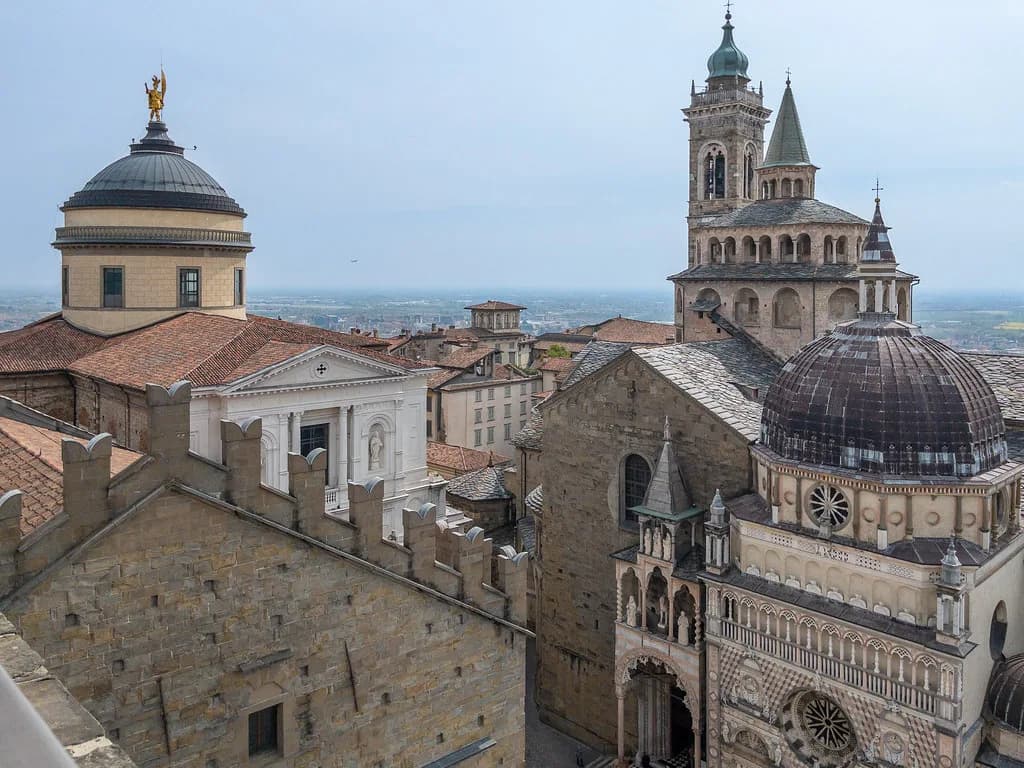
The Basilica di Santa Maria Maggiore, Bergamo comes with a ticketed interior for non-residents according to the tourism board, and the basilica also holds Gaetano Donizetti's tomb, which makes it a stop for opera lovers. The neighbouring Colleoni Chapel is free to enter according to visitor accounts, though photography is restricted inside, and the cathedral nearby is also described as free. Do not assume one ticket covers all three.
Check opening times for ticketed interiors before you commit to a schedule, since hours vary by weekday and season on the tourism board page. The current published times and any reduced ticket categories are best read directly from that page rather than recalled from an older guide.
Beyond the main squares, the quieter corners reward wandering. Travel blogs list the Venetian Walls, the Rocca gardens and the Astino Valley among places worth a slower detour, and the hidden gems in Bergamo guide gathers more of these less-visited spots for readers who want to step off the main route.
Accessibility reality check
Do not assume the funicular cabins or stations are step-free. The tourism board's basilica page, for example, describes the accessible route into the church as involving a downhill cobbled approach and a secondary entrance, which gives a sense of how uneven the upper town can be. For the funicular itself, ask ATB directly about lift access and carriage capacity before relying on it.
If mobility is a deciding factor, an honest plan is to check with the operator first and then design the day around known accessible routes. The tourism board also publishes broader accessibility notes for the city, which are worth reading before booking accommodation on the hill.
Pairing the ride with the wider city
The funicular works best as one piece of a two-level day. Ride up, walk the walls and squares, then descend on foot or by cable car to Città Bassa for the Accademia Carrara and its neighbouring modern gallery, GAMeC. The Accademia Carrara Bergamo visitor guide covers the collection and what to see inside if you want art on the itinerary.
If you have more time, the wider Bergamo Attractions hub collects guides to the main sights and helps you rank them by interest. Bloggers note that one day covers the highlights, while two or three days suit slower exploring and day trips to Lake Iseo or Lake Como.
Plan Your Visit
Treat the Città Alta funicular as transport first and a viewpoint second. Confirm fares and pass inclusions with ATB before you travel, buy and validate your ticket properly, and ride up early if you want to avoid the worst of the queues. Then let the upper town do the rest: the squares, the free chapels, the ticketed interiors and the walls all reward a slow half day.
Frequently Asked Questions
Does the funicular ticket include the San Vigilio funicular?
This depends on the ticket you buy, so confirm with ATB before riding. Some visitor accounts describe a combined city transport ticket covering multiple vehicles, but the terms of passes change. Check the current conditions rather than assuming one ticket covers both funiculars.
How much does a ticket for the funicular in Bergamo cost?
Fares change, so this guide does not quote a current price. Older trip reports cite a one-way fare and a day pass, but those figures may be out of date. Check ATB ticket machines or the operator's own channels for the price that applies to your travel dates.
How can I get from Bergamo train station to Città Alta?
The usual route is to take a city bus from the station area toward the lower town, then ride the funicular up or continue by bus to the upper town. Some visitors walk the whole way. Confirm routes and passes with ATB, since signage and services can change.
Is it better to walk or take the funicular up to Città Alta?
Walk if you have time, comfortable shoes and enjoy medieval stairways and lanes. Take the funicular if you have luggage, limited energy or a tight schedule. Many travellers do one direction on foot and the other by cable car to get both experiences.
What can you see at the top of the Città Alta funicular?
You arrive close to the historic centre, with Piazza Vecchia a short walk away. Around it you will find the Campanone tower, the basilica, the free Colleoni Chapel, the cathedral and the Venetian Walls. A second funicular continues higher to San Vigilio for the widest views.
Can I ride the funicular with a wheelchair or pushchair?
Accessibility details are not reliably documented here, so do not assume step-free access. Contact ATB in advance to ask about lifts, boarding and cabin capacity. The upper town's cobbled surfaces and slopes are also worth planning around once you arrive.
When is the funicular least crowded?
Early morning is generally calmer, and visitors report the upper town becoming quiet again after day-trippers leave in the evening. Peak season and midday bring the longest waits, so arrive earlier than you think you need to if your schedule is fixed.
Do I need to validate my funicular ticket?
If you receive a paper ticket, visitor accounts describe validating it in a machine on boarding so the validity period starts. App-based tickets are activated digitally. Keep your ticket available for inspection until you finish the journey, and follow any on-board instructions.
Sources
Continue exploring
More guides you'll find useful