
San Vigilio Funicular Bergamo Guide: Ride, Views & Walk Down
Ride Bergamo's San Vigilio funicular from Città Alta, then explore the castle remains and Parco dei Colli paths. What the urban ticket covers and what to check.
On this page
Most visitors ride the first funicular up to Città Alta and stop there. The San Vigilio line continues from Piazza Mercato delle Scarpe in the upper city, climbing to a wooded hill with castle remains and the edge of Parco dei Colli. Related guide: Castello di San Vigilio Bergamo: Hilltop Viewpoint Guide.
The useful thing to understand before you go is that this is not a separate attraction with its own admission ticket. Visit Bergamo describes the ride as part of Bergamo's urban transport system, with a ticket that is also valid on city buses. Fares, timetables and journey times change, so ATB is the place to confirm them on the day you travel.
What the San Vigilio Funicular Is and Where It Starts
The San Vigilio funicular is the second of Bergamo's two funicular railways. You board it in Città Alta at Piazza Mercato delle Scarpe, the same upper-city square where the first funicular from the lower town arrives, so the two rides connect without a bus or a taxi in between. It climbs to San Vigilio hill, above the rooftops of the old city.
Visit Bergamo gives the funicular's location as Largo Porta S. Alessandro in Bergamo and names ATB as the operator. If you are planning a day around the upper city, it helps to check ATB's notices first, because service changes on the line or on connecting buses can alter how the ride fits into your route.
Why Take the Second Funicular: 630 Metres and 90 Metres of Climb
According to Visit Bergamo, the line covers 630 metres and overcomes a height difference of 90 metres, with a gradient that varies between roughly 10 and 22 percent. That short, steep profile is the reason the ride is worth doing for its own sake rather than treating it purely as transport. The climb opens a panorama over the hills, the city and the plain beyond.
One travel blog describes the top as a plateau with views in every direction, reached after a short walk from the funicular exit. That makes the funicular a convenient way to combine a city visit with a corner of greenery, without committing to a long hike uphill.
The Ride Itself: One Carriage and a 1912 History
The San Vigilio funicular opened on 27 August 1912, designed by the engineer Alessandro Ferretti, and Visit Bergamo notes that the mechanical parts were built by a Bern company while the original carriages came from Fervet, a Bergamo firm. The line's early operator closed in 1918 and the plant passed to the municipal company until the concession expired in 1976.
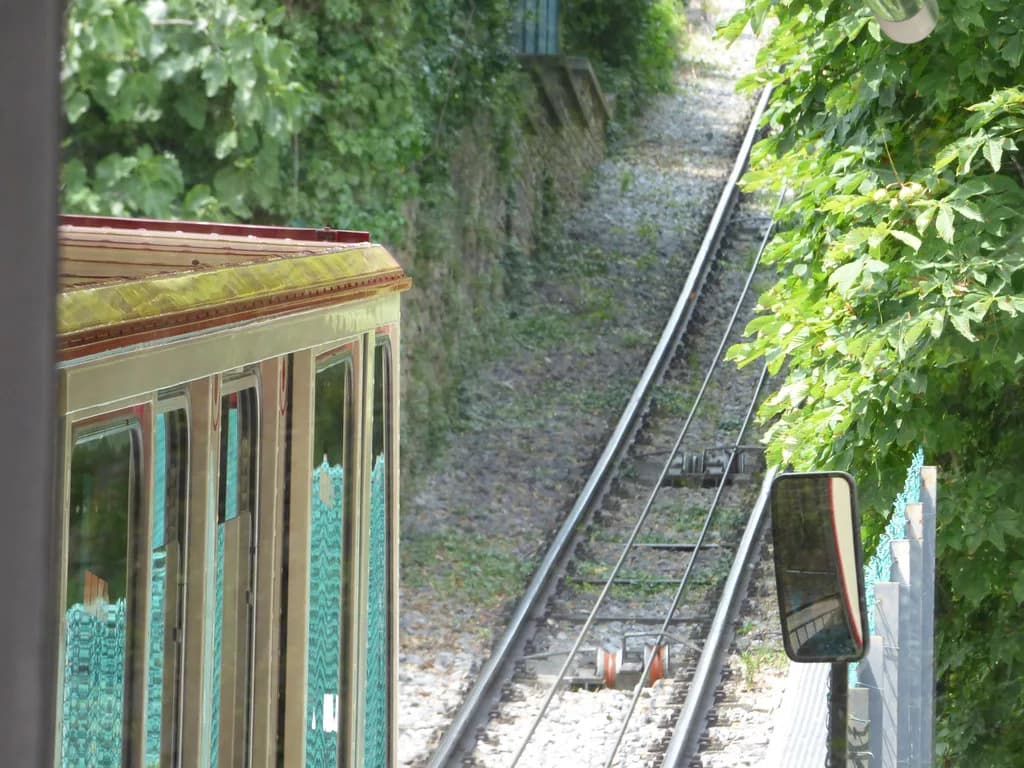
After a renovation decided in 1984, the two original carriages, each able to carry up to 32 people, were replaced in 1987 by a single larger carriage with a maximum capacity of 55. That single carriage is what you ride today, which explains why the experience feels both historic and modern at once.
Tickets and Payment: One Urban Transport Ticket
The most common misunderstanding is that the funicular needs a special ticket. Visit Bergamo states that the ticket is the same as for urban public transport and is also valid for buses, so you are buying a ride on the city network rather than admission to a sight. That distinction matters if you plan to combine the funicular with a bus later the same day.
For current fares, ticket types and where to buy or validate them, check ATB rather than relying on a figure quoted in an older guide. ATB also publishes alerts about route changes and service works that can affect the buses and funiculars in the same network.
Two Funiculars, One City: How San Vigilio Fits the ATB Network
Bergamo's first funicular links the lower town to Piazza Mercato delle Scarpe in Città Alta. The San Vigilio line starts from that same upper square, so a sensible sequence is lower town, Città Alta, then the hill. Visit Bergamo suggests exactly this: if you have already taken the first funicular, continue rather than turning back.
ATB runs the wider network, including buses and the funiculars, and sells tickets through machines, the ATB Point at Largo Porta Nuova and online channels. Rules on ticket validity, zones and season passes are set by ATB and can change, so read the current conditions before assuming one ticket covers everything you plan to do.
At the Top: San Vigilio Hill, Castle Remains and Parco dei Colli
San Vigilio hill is the gateway to Parco dei Colli, a protected area of about 4,700 hectares according to Visit Bergamo. Paths lead through greenery toward the remains of San Vigilio Castle, an old fortress looking over the city. Visit Bergamo describes the castle as remains rather than as a staffed monument, so treat it as a viewpoint and a piece of history rather than a museum with published opening times.
One visitor accounts following signs from the funicular to the castle, then a cobbled path that soon brings the medieval walls into view, with a tower staircase that leads up to an open plateau. If you are building an afternoon in the upper city, this pairs naturally with the quieter corners covered in our guide to hidden gems in Bergamo.
Walking Back Down to Città Alta: Weighing the Path Against the Ride
Walking down is an option, not an obligation. The descent follows paths on the hill toward Città Alta, and the choice depends on your footwear, the weather and how much daylight you have left. The available sources do not publish a distance, a walking time or a difficulty rating for the route down, so check a map at the top or ask at an information point rather than planning around a number you read online.
A practical compromise is to ride up and decide at the top. If the paths look muddy, busy or steeper than expected, ride back down instead. If conditions are good, the walk turns what is described as a short transport link into the main outing of the afternoon; you can check current ATB ticketing if you change your mind.
Practical Tips for a Good Visit
Check ATB for the current timetable and any service notices before setting out, since the funicular's operating pattern is not fixed in the sources used here and can be affected by works. Bergamo's tourism board also publishes an accessibility statement and contact routes, which is useful if you need to ask in advance about step-free access, boarding the carriage or path surfaces.
Weather shapes the experience more than crowds on this route. Clear days reward the climb with the panorama Visit Bergamo describes, while low cloud and rain make the exposed paths and the castle plateau less appealing and the ride less rewarding. Build in flexibility: the funicular is short enough that you can take it when the sky clears.
If your interests run beyond the funicular, Bergamo Attractions covers museums, churches and viewpoints across the city, which helps you slot San Vigilio into a wider plan instead of treating it as a standalone stop.
Plan Your Visit
The San Vigilio funicular is best understood as a short, scenic link in Bergamo's urban transport network rather than a ticketed attraction. Ride it on an ordinary urban ticket, confirm fares and timetables with ATB, and treat the hill, the castle remains and the walk down as choices to make once you see conditions at the top.
It also rewards a slower approach to Bergamo. Pair the ride with Città Alta's smaller corners, keep the timetable flexible, and leave room for the view, which is the real reason the second funicular is worth those extra minutes.
Frequently Asked Questions
Where does the San Vigilio funicular leave from?
It departs from Piazza Mercato delle Scarpe in Città Alta, the same upper-city square where Bergamo's first funicular from the lower town arrives. Visit Bergamo gives the location as Largo Porta S. Alessandro, Bergamo, with ATB as the operator. Confirm current boarding arrangements with ATB before you travel.
How do you pay for the San Vigilio funicular?
Visit Bergamo states that the ticket is the same as for Bergamo's urban public transport and is also valid on city buses, so you buy a normal urban transport ticket rather than a separate attraction ticket. For current fares, ticket types and where to buy or validate, check ATB directly, since pricing and sales channels change.
Are there two funiculars in Bergamo?
Yes. The first connects the lower town to Piazza Mercato delle Scarpe in Città Alta, and the second runs from that square up to San Vigilio hill. Visit Bergamo describes the San Vigilio funicular as managed by ATB, so you can ride both on urban transport tickets.
Is the San Vigilio funicular free?
Nothing in the available sources describes the ride as free, so plan on buying an urban transport ticket. Visit Bergamo describes the ticket as the same one used on city buses, which means it is a paid transport service integrated into the ATB network. Check ATB for fares and any current promotions.
Can you walk down from San Vigilio to Città Alta?
The hill connects to paths toward Città Alta and the surrounding Parco dei Colli, and walking down is an option worth weighing. The sources do not give a distance, walking time or difficulty rating, and conditions vary with weather, so look at the paths at the top or ask at an information point before choosing the walk over the return ride.
Sources
Continue exploring
More guides you'll find useful





