Museo Archeologico Arezzo: Visitor Guide to the Mecenate Museum
Plan a visit to Arezzo's archaeological museum, the Mecenate, near the Roman amphitheatre. A guide to its setting, collections and practical checks.
On this page
The Museo Archeologico Nazionale Gaio Cilnio Mecenate is Arezzo's deep-history stop, holding Etruscan and Roman material in a building that itself belongs to the city's layered past. It is a national museum, not a civic collection, which is the single most useful fact to carry with you: opening arrangements and tickets are managed at national level, not by the local tourism office. If you are weighing this against another church or piazza, this is where the timeline before the Renaissance becomes legible.
This guide separates what is stable from what changes. The address is published and easy to use for navigation. Hours and ticket terms are the details to confirm before you set out, because listings can be out of date. Treat any example time here as a starting point for your own check, not a promise.
What the Mecenate Museum Is
As a national archaeological museum, the Mecenate operates under national rather than civic rules. That distinction matters when you are planning a day of ticketed sights in Arezzo, because it means any city-wide pass or museum card bought elsewhere should not be assumed to include it. The museum's own ticket desk is the place where coverage is settled.
Within Arezzo's attraction landscape, the Mecenate is the counterweight to the Renaissance. Piero della Francesca and Vasari dominate the city's art reputation, and the archaeology museum resets the clock to the Etruscan and Roman settlement beneath everything else. If your itinerary is already heavy on frescoes, this is the stop that changes pace and period. It is also a natural component of a broader Arezzo Attractions plan, which helps you see how the museum fits among the city's other sights.
The Setting: A Monastery Above Ancient Remains
The museum is housed in the former monastery of San Bernardo, and it stands above older remains. Travel Tuscany's description of the site puts the monastery on top of an ancient structure, which is a useful way to picture the visit: you are walking through a building that has been rebuilt over the same ground several times. Look for the layers rather than expecting a purpose-built modern gallery.
Outside, the Roman amphitheatre context is part of what makes this corner of Arezzo feel different from the tight medieval streets. The amphitheatre remains are part of the outdoor cityscape; what you can walk through and what is fenced off can change. Plan to look at them from the street before or after the museum rather than assuming a combined route through both.
Inside: The Etruscan and Roman Collections
The museum's holdings are generally described as Etruscan and Roman, which reflects Arezzo's place on the Etruscan map and its later Roman prosperity. Expect pottery, bronzes, inscriptions and everyday objects rather than a single blockbuster room. The pleasure is in reading the sequence: what local people made, traded and buried before the medieval city took shape.
The Chimera of Arezzo is the name most travellers associate with the city's archaeology. What is less certain is exactly how it is displayed in the museum today. If seeing it is essential to your trip, ask at the entrance or check the museum's own communication before you buy anything, and do not rely on room-by-room descriptions from older write-ups.
Labels and explanatory panels are the thing to watch if you do not read Italian comfortably. Museum displays of this kind often carry Italian text with limited translation, and the objects themselves are not always self-explanatory. Budget extra time for the rooms that interest you most instead of trying to see everything at an even pace.
Practical Orientation: Address and Contact
The museum is listed at Via Margaritone 10 in Arezzo, close to the cathedral end of the historic centre. That address is the one to give a taxi driver or to search for on foot, and it places the museum within a short walk of the city's main sights. A third-party listing from Trip.com records the address and a ticket inquiry telephone number, 0575 20882, which is worth having if you need to ask about access on a specific day.
The same listing shows an example afternoon opening window, 2:00 PM to 6:30 PM, presented as the next day's hours. That is an indication of a pattern, not a rule for any particular date. Museum schedules in Italy shift with seasons, holidays and staffing, so verify the day before you go.
For local orientation and a sense of what else is happening in the city, the Fondazione Arezzo Intour is the destination management body for Arezzo. It publishes events, museum-circuit information and city notices, so it is a sensible first stop when you want to know whether something unusual is affecting your plans. Its site is not the museum's ticket office, but it is a reliable place to start looking.
Ticket Scope: What One Ticket Does and Does Not Cover
Do not assume a single ticket admits you to both the museum and the amphitheatre remains outside. The outdoor remains are part of the cityscape, while the museum is a separate ticketed institution, and the museum has not published a combined arrangement here. Prices and reduced categories change and are not stated in this guide, so ask at the ticket desk or check ahead for the current cost.
If you are planning several paid sights in one day, decide in advance which ones justify the spend. Arezzo's churches, including the Basilica di San Francesco, are the usual anchors for a first visit, and the museum works best as a deliberate addition rather than an afterthought. Check each site's own ticket rules instead of assuming a city-wide pass.
How Long to Allow and a Suggested Route
As a personal suggestion rather than an official figure, allow roughly an hour to ninety minutes inside. The collection is not vast, but the setting rewards slow looking, and the labels take longer if you are working in a second language. If you are short on time, choose two or three themes, such as local bronzes or the Roman inscriptions, and let the rest go.
A sensible order is to begin with the building itself, noting the monastery structure and the ancient layers beneath it, then move to the Etruscan material before the Roman rooms. Finish outside with the amphitheatre remains so the sequence ends in the open air. This keeps the historical arc intact and gives you a natural exit toward the rest of the centre.
Combining the Museum With Nearby Arezzo Stops
The museum's Via Margaritone position puts it near the cathedral area, which makes a natural pairing with the Duomo di Arezzo visitor guide for a half-day loop. The cathedral and its surroundings are a short walk away, and the streets between them pass through the quieter edge of the historic centre. Build the walk in rather than treating each sight as a separate trip.
If your priority is frescoes, the Chiesa di San Francesco Arezzo Piero della Francesca frescoes visitor guide covers the other major artistic draw in the city. Pairing Piero with the archaeology museum gives you two very different views of Arezzo's past on the same day. Check the fresco viewing arrangements separately, because they follow their own rules.
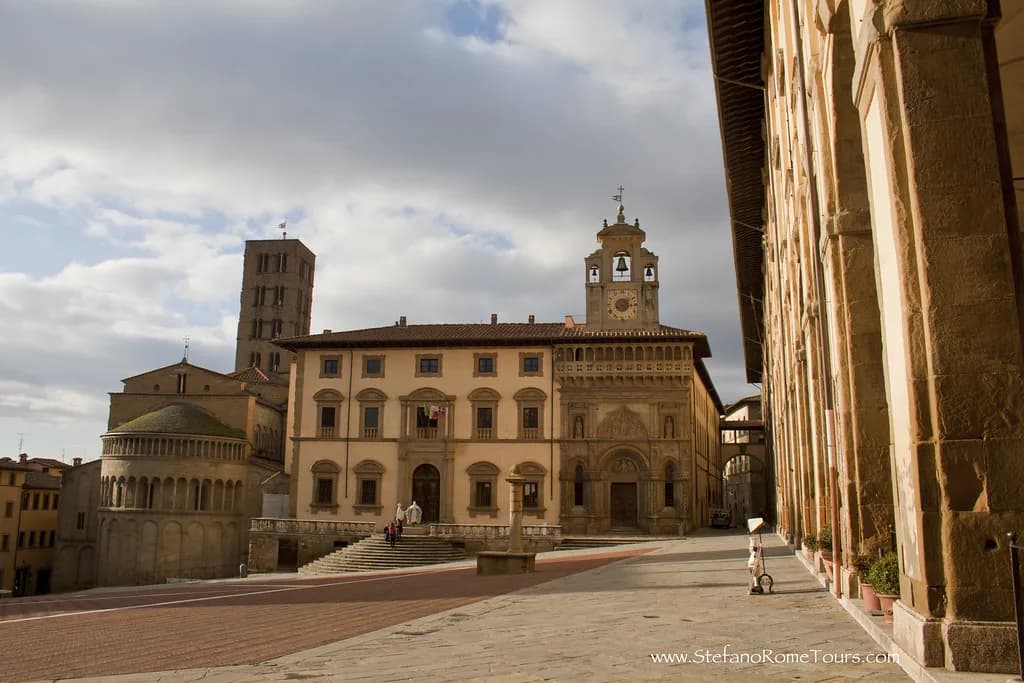
For a slower wander afterward, the hidden gems in Arezzo guide points to corners that reward an unhurried hour, including the atmosphere around Piazza Grande. These are the streets where a museum visit turns into an afternoon rather than a single stop. Keep the walking simple and let the city set the pace.
Mistakes to Avoid
The most common error is arriving without checking the day's hours. A museum that opens in the afternoon leaves a morning free but can also mean a wasted trip if you turn up early. Confirm the schedule the day before and have a backup plan, such as the Badia di Arezzo visitor guide, in case the timing shifts.
The second mistake is assuming one ticket opens every door. Treat the museum, the churches and any temporary exhibitions as separate arrangements until you are told otherwise at the desk. The third is skipping the outdoor remains because you are focused on the galleries, when the amphitheatre setting is part of what makes this corner of Arezzo legible.
Who This Museum Suits
This museum suits travellers who want the deep background of Arezzo rather than another Renaissance highlight, and who are happy to read, look and piece a story together. It is less suited to anyone with a tight schedule who has not confirmed the day's hours. Families with young children may find the galleries slower going than the open streets outside.
Before you go, confirm the day's opening arrangements and the current ticket terms directly, then build the visit into a walk that includes the amphitheatre remains and the cathedral end of town. Used that way, the Mecenate museum adds a layer to Arezzo that the frescoes alone cannot give you. For related planning, see Basilica di San Francesco, Arezzo.
Frequently Asked Questions
What are the opening hours of the Museo Archeologico Nazionale Gaio Cilnio Mecenate?
Third-party listings show example hours, such as an afternoon window, but these are not official operator rules and can change with season and holidays. Check the museum's own communication or call ahead on the day before you visit rather than relying on a listing.
How much does it cost to visit the archaeological museum in Arezzo?
Ticket prices are not confirmed here and change over time. Ask at the ticket desk or check the museum's official information for the current cost and any reduced categories before you travel.
Where is the Museo Archeologico Nazionale Gaio Cilnio Mecenate located?
It is listed at Via Margaritone 10 in Arezzo, in the former San Bernardo monastery near the cathedral end of the historic centre. The address is the one to search for or give a driver.
Is the Chimera of Arezzo in this museum?
The Chimera is closely associated with Arezzo's archaeology, but display details are not confirmed here. If seeing it matters to your trip, ask at the entrance or check the museum's own information before you buy a ticket.
How long does a visit take?
As a personal suggestion, allow about an hour to ninety minutes. That is not an official figure, and readers who study the labels closely will need longer.
Can you see the Roman amphitheatre remains without a ticket?
The amphitheatre remains are part of the outdoor cityscape, so much of the context can be seen from the street. What is accessible on foot can change, and a single ticket covering both the museum and the remains is not confirmed.
Sources
Continue exploring
More guides you'll find useful