Casa Vasari Arezzo Visitor Guide: Vasari's Frescoed Home
A practical guide to Casa Vasari in Arezzo, the artist's own house museum on Via XX Settembre, with its frescoed rooms, picture collection and visit tips.
On this page
Casa Vasari is one of the few artist's houses in Italy that survives largely intact, and it sits quietly on Via XX Settembre in the upper part of Arezzo rather than on a main tourist drag. For anyone tracing Giorgio Vasari's life, it is the place where the architect of the Uffizi becomes a homeowner, a decorator and a collector in his own hometown. A focused stop here works well as a single hour of an art-heavy day.
The house rewards visitors who arrive knowing what they are looking at: frescoed rooms above a cellar and service floor, painted ceilings, and a small gallery of paintings by Vasari and artists of his era. It is not a grand museum, and that is precisely the point. Treat it as an intimate residence rather than a blockbuster exhibition, and the visit becomes far richer.
Quick Answer: What Casa Vasari Is and Why It Matters
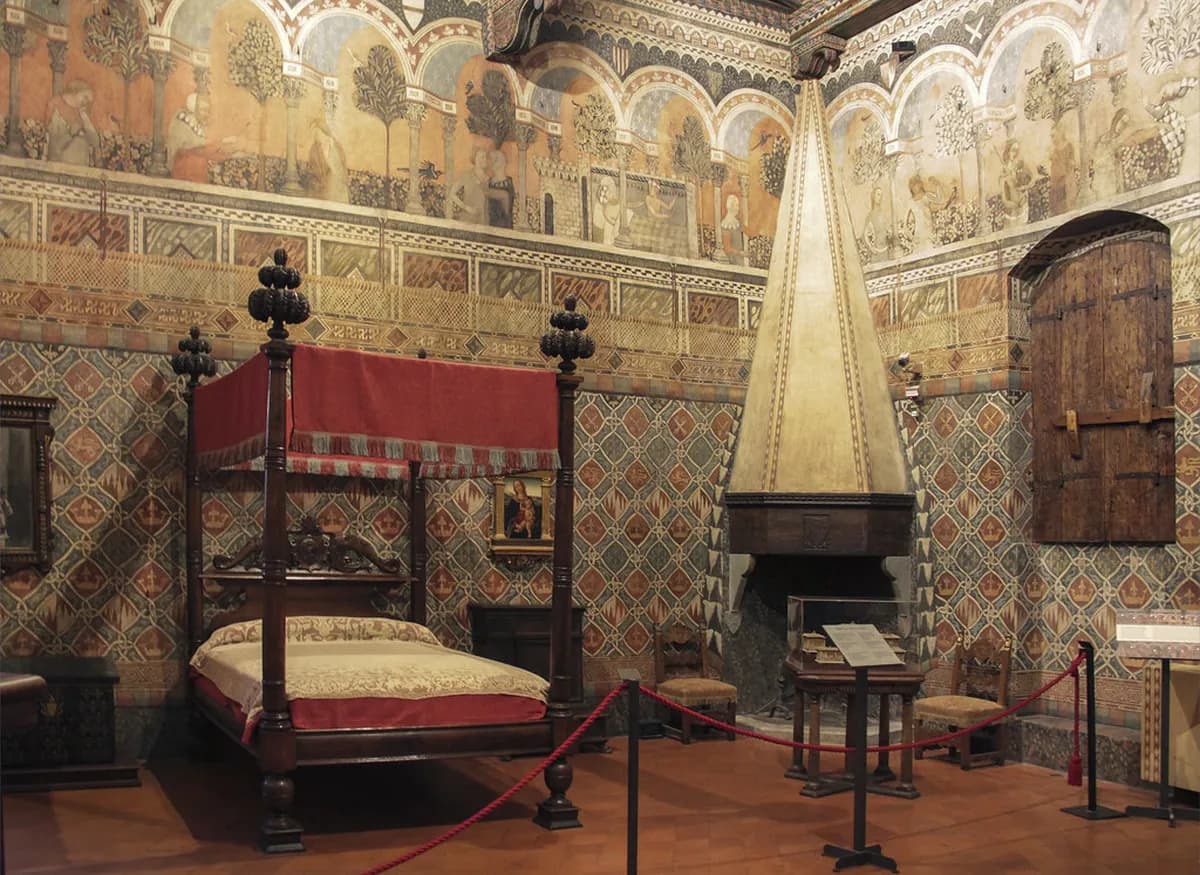
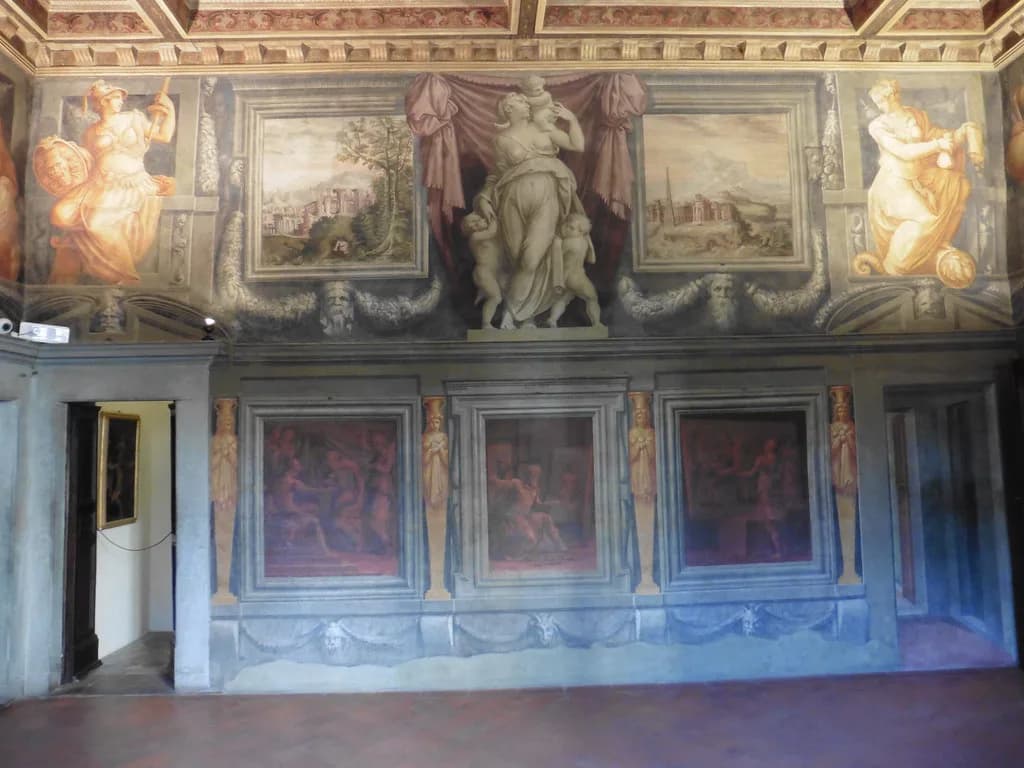
Casa Vasari is the Arezzo house Giorgio Vasari bought in 1541 and decorated himself over the following years, now open as a small museum. The building spreads across three floors, with the main painted rooms on the piano nobile where he lived with his family. Because the decoration was carried out by Vasari rather than commissioned from others, the rooms read as a personal statement about which artists and ideas he admired. Finestre sull'Arte notes that the house is one of the few well-preserved examples of an artist's house and that the walls were frescoed by the painter himself.
For a short Arezzo stop, the trade-off is simple. If you have a single afternoon and want the single most famous artwork in town, the Piero della Francesca cycle in the Basilica di San Francesco wins. If you want to understand the man who shaped so much of Florence's architecture and wrote the Lives of the Artists, Casa Vasari is the more revealing detour. Related guide: Basilica di San Francesco, Arezzo.
Where Casa Vasari Sits in Upper Arezzo
The house stands at Via XX Settembre 55, close to Piazza San Domenico in the upper, medieval part of the city, as both Finestre sull'Arte and To Tuscany confirm. That address places it within an easy walk of the Duomo hill, Corso Italia and the churches that anchor most short itineraries. Arriving on foot from the historic centre is straightforward; coming by car means leaving the vehicle outside the restricted traffic zone and walking up.
Because the house sits in the upper town, it slots naturally between the Basilica di San Francesco and the cathedral. Pairing it with the Corso Italia walk keeps the walking distances short and avoids backtracking. Visitors who start at the basilica can climb gradually towards the Duomo and finish at Casa Vasari, or reverse the order.
The Story of the House: A 1541 Purchase in His Hometown
Vasari bought the property on 7 September 1541 from a kiln owner, Jacopo Nanni dei Cavaceppi, acquiring a building with land on the upper edge of his native quarter. The house was not especially large, but his renovations and decorative schemes turned it into a refined residence. The purchase date matters because it anchors the house in a specific moment, shortly before his marriage to Niccolosa Bacci, who was more than twenty years his junior. Both the date and the seller are recorded in Finestre sull'Arte.
Decoration of the piano nobile occupied him across seven years, roughly 1541 to 1548, squeezed between commissions that kept him moving around Italy. That stretched timeline explains why the rooms feel layered rather than uniform. It also explains why the house is a useful counterpoint to his large-scale works in Florence, where his hand is spread across vast public buildings.
What You Actually See: Frescoed Rooms Painted by Vasari Himself
The core of the visit is the cycle of wall and ceiling paintings Vasari made for his own rooms, drawing on mythological subjects and personal references. To Tuscany records that portraits inside the house include his wife in the Chamber of Apollo and Michelangelo and Andrea del Sarto in the Chamber of Fame, which gives the decorative programme a distinctly autobiographical flavour. Look up as much as you look forward, since the ceilings carry much of the imagery.
This is a house where the architecture and the painting are the same experience, so slow looking pays off more than covering ground. Because the rooms are domestic in scale, details are close to eye level and easy to read without straining.
The Picture Collection: Vasari Among His Contemporaries
Beyond the frescoes, the house holds a small picture collection that includes works by Vasari himself alongside paintings by artists working in the same period, a point Finestre sull'Arte makes when describing the house's present-day use as a museum. The gallery is modest in size, so it functions as a complement to the rooms rather than a separate museum visit. That combination of frescoed interiors and easel paintings in one compact building is what distinguishes Casa Vasari from a conventional gallery stop.
Non-specialists often find the painted rooms easier to enjoy than the pictures, and there is no shame in that. If your time is tight, give the frescoed spaces priority and treat the paintings as a bonus.
Small-Space Expectations: Three Floors and a Domestic Scale
The building was never a palace, and visitors should expect an intimate sequence of rooms rather than long galleries. Its three floors include a basement, the piano nobile and a second floor, plus service rooms that were intended for servants, as Finestre sull'Arte explains. The result is a museum that feels like a home, which is exactly why the experience lingers.
Small scale also means small capacity, and narrow stairs are part of the historic fabric. Visitors with mobility concerns should ask the museum directly about step-free access and lifts before travelling, because reliable public information on those facilities is not consistently published.
How It Fits a Renaissance Day in Arezzo
A sensible Renaissance circuit starts at the Basilica di San Francesco for the Legend of the True Cross, continues to Santa Maria della Pieve and the Duomo, and folds in Casa Vasari along the way. The cathedral, dedicated to Saints Peter and Donato, holds a Piero della Francesca Magdalene on the left nave wall, the Duomo's own site confirms, so the artist appears twice in a single day's walking. Check the cathedral's own published hours and ticket rules before setting out.
Vasari's hand recurs elsewhere in the city, which makes the house a useful key to reading the rest. He remodelled the Badia di SS Flora e Lucilla from 1565, and that church preserves a family altar he designed in 1563 for the Pieve di Santa Maria, moved there in 1865, according to Le Rime Arezzo. Knowing this, a stop at the Badia becomes a natural extension of the Casa Vasari visit rather than a separate errand.
The Piazza Grande loggia, designed by Vasari, closes the loop on the sloping main square, as Arezzo Info's city notes describe. Combining these sites gives a portrait of an artist working across fresco, architecture and urban design within one small city.
Suggested Time and Pacing
As a practical suggestion rather than an official duration, allow around one hour inside Casa Vasari, plus walking time between sites. If you read every panel and linger over the ceilings, add another half hour. If you are squeezing the house into a half-day Arezzo stop, thirty to forty minutes covers the frescoed rooms without rushing.
Building Arezzo's compact historic centre into a two-day stay makes the pacing easier, since the churches and museums sit close together and the walking between them is short. A slower rhythm also lets you return to Casa Vasari when it is less crowded.
Practical Planning: Hours, Tickets and Booking
Casa Vasari's opening days, admission charges and any booking requirement are not consistently published in third-party listings, and some aggregator pages carry outdated times and contacts. For example, Trip.com lists an 8:30 to 18:30 window without stating which season or year it refers to; treat such figures as unverified and confirm current details with the museum itself or with the city's tourism body before you build a day around it. The Fondazione Arezzo Intour office on Via degli Albergotti is a useful starting point for orientation in the city, and its website lists contact channels and visitor information.
Do not assume a combined ticket with the Duomo museum or any other Arezzo site, because each attraction sets its own admission. The Duomo's own site charges separately for its museum, so treat any Casa Vasari figure you see online as unverified until the operator confirms it.
Vasari in Florence vs Arezzo
Most travellers meet Vasari in Florence, through the Uffizi complex and the frescoed interior of the cathedral, and the association is architectural rather than personal. The Arezzo house adds the missing layer: the rooms he chose, the artists he placed on his own walls, and the domestic setting he built for his family. It is a smaller, quieter counterpart to the Florentine landmarks.
If your itinerary runs Florence first, Casa Vasari is a smart follow-up because it turns a name on a plaque into a person. If you see it first, the Florentine works become easier to place.
Nearby: Piazza Grande, Corso Italia and the Antiques Fair
Arezzo's antiques fair, the Fiera Antiquaria, takes over the upper town on the first Sunday of each month and the preceding Saturday, filling Piazza Grande and neighbouring streets with dealers, according to Arezzo Info and To Tuscany. That weekend brings the busiest atmosphere and the tightest walking conditions around the historic centre. If you want a calmer Casa Vasari visit, pick a different day and enjoy the sloping square when it is quieter.
Corso Italia links the lower town with Piazza Grande and works as the spine of any short walk, with shops, cafes and the Pieve along the way. The Roman amphitheatre and the Medici Fortress sit on opposite edges of the centre and reward anyone with an extra hour.
Plan Your Casa Vasari Visit
Casa Vasari is a compact, personal museum best visited with clear expectations: three floors, painted rooms made by Vasari's own hand, and a modest picture collection. Confirm current hours, admission and booking directly with the museum before you travel, and build the house into a walking route that includes the Basilica di San Francesco, the Duomo and the Badia. That combination gives the fullest picture of Vasari's Arezzo in a single day.
If your schedule only allows one Renaissance stop, choose the frescoes in San Francesco; if it allows two, add Casa Vasari for the human side of the story. Either way, walk up through the old town rather than driving, and leave time for the sloping square at the end.
Frequently Asked Questions
Is Casa Vasari worth visiting in Arezzo?
Yes, if you are interested in Renaissance art and the people behind it. The house preserves frescoed rooms painted by Giorgio Vasari himself, plus a small picture collection, in an intimate domestic setting. If you only have time for one major art stop, the Piero della Francesca frescoes in the Basilica di San Francesco are the stronger draw; Casa Vasari is the better choice for understanding Vasari as a person.
How long does a visit to Casa Vasari take?
As a suggestion rather than an official duration, allow about one hour to see the frescoed rooms and picture collection at a comfortable pace. A hurried visit of thirty to forty minutes is possible. Add extra time for walking between the house and the basilica, Duomo and Badia, which are all within the upper town.
Where is Casa Vasari located in Arezzo?
The house is at Via XX Settembre 55 in the upper, historic part of Arezzo, near Piazza San Domenico and within walking distance of the Duomo hill and Corso Italia. Most visitors arrive on foot from the city centre. If you drive, park outside the restricted traffic zone and walk up.
Do I need to book Casa Vasari tickets in advance?
Booking requirements are not consistently documented, so check directly with the museum or the city tourism office before you travel. Do not rely on aggregator listings for current opening days or admission rules. Confirm the details for the dates you plan to visit.
What can you see inside Casa Vasari?
Inside you see the frescoed rooms and ceilings Vasari painted for himself, including mythological and personal imagery, portraits of his wife and of artists he admired, and a small collection of paintings by Vasari and contemporaries. The building spans three floors and retains a domestic, intimate scale rather than a grand museum layout.
When was Casa Vasari decorated with frescoes?
Vasari bought the house on 7 September 1541 and decorated the piano nobile over roughly seven years, between 1541 and 1548. The work was interrupted by commissions that kept him travelling around Italy, which helps explain the layered feel of the interior.
Is Casa Vasari free to enter?
Admission arrangements are not reliably published, so confirm current ticket rules directly with the museum. Do not assume the house shares a combined ticket with the Duomo museum or any other Arezzo site, since each attraction sets its own admission.
What else should I see near Casa Vasari?
Pair the house with the Basilica di San Francesco for the Piero della Francesca cycle, the Duomo, Santa Maria della Pieve and the Badia di SS Flora e Lucilla, which Vasari remodelled. Corso Italia, the sloping Piazza Grande and the antiques fair on the first weekend of the month are all within a short walk.
Sources
- FONDAZIONE AREZZO INTOUR - AREZZO DMO TUSCANY » Fondazione Arezzo Intour - DMO Arezzo ( Tuscany )
- Casa di Giorgio Vasari Tickets [2026] - Promos, Prices, Reviews & Opening Hours | Trip.com
- Vasari House in Arezzo: the history and new life of the museum
- Badia of Sante Flora and Lucilla - Le Rime Arezzo
- Uncover Arezzo: Your Ultimate Insider's Guide to Tuscany's Hidden Gem
- Duomo – Arezzo
- Arezzo tourist information
Continue exploring
More guides you'll find useful