El Carmen Valencia Guide: Street Art, History, and Local Secrets
This el carmen valencia guide covers street art, medieval towers, tapas, and the best times to skip the crowds in 2026.
On this page
El Carmen Valencia Guide: Exploring the City's Bohemian Heart
Last updated July 2026, this el carmen valencia guide covers Valencia's oldest quarter, from its 14th-century gates to the street art layered over centuries-old stone. Barrio del Carmen sits inside Ciutat Vella, Valencia's old town, and it's the most-visited part of the historic center rather than an undiscovered corner. This guide separates the well-known landmarks from the quieter passages worth seeking out, with practical hours, entry costs, and timing tips included.
El Carmen Valencia Guide: Getting Oriented in Ciutat Vella
El Carmen is one of six historic districts inside Ciutat Vella, Valencia's old town. Roman-era street patterns still shape its layout, and the district layers Gothic, Moorish, and Renaissance-era buildings along narrow lanes. The Turia River ran along this edge of the city until a major flood in 1957 led planners to reroute it into a new channel. The old riverbed became what is now Turia Gardens. El Carmen is the best-known part of the old town, not an undiscovered pocket, so the value here is finding the quieter corners inside it. For lower-key spots across the rest of the city, cross-reference the lower-key Valencia spots guide.
- Calle Serranos marks the eastern edge of the neighborhood.
- Calle Caballeros marks the southern edge.
- Guillem de Castro marks the western edge.
- Turia Gardens and the old riverbed mark the northern edge.
Torres de Serranos vs Torres de Quart: Which Gate to Climb
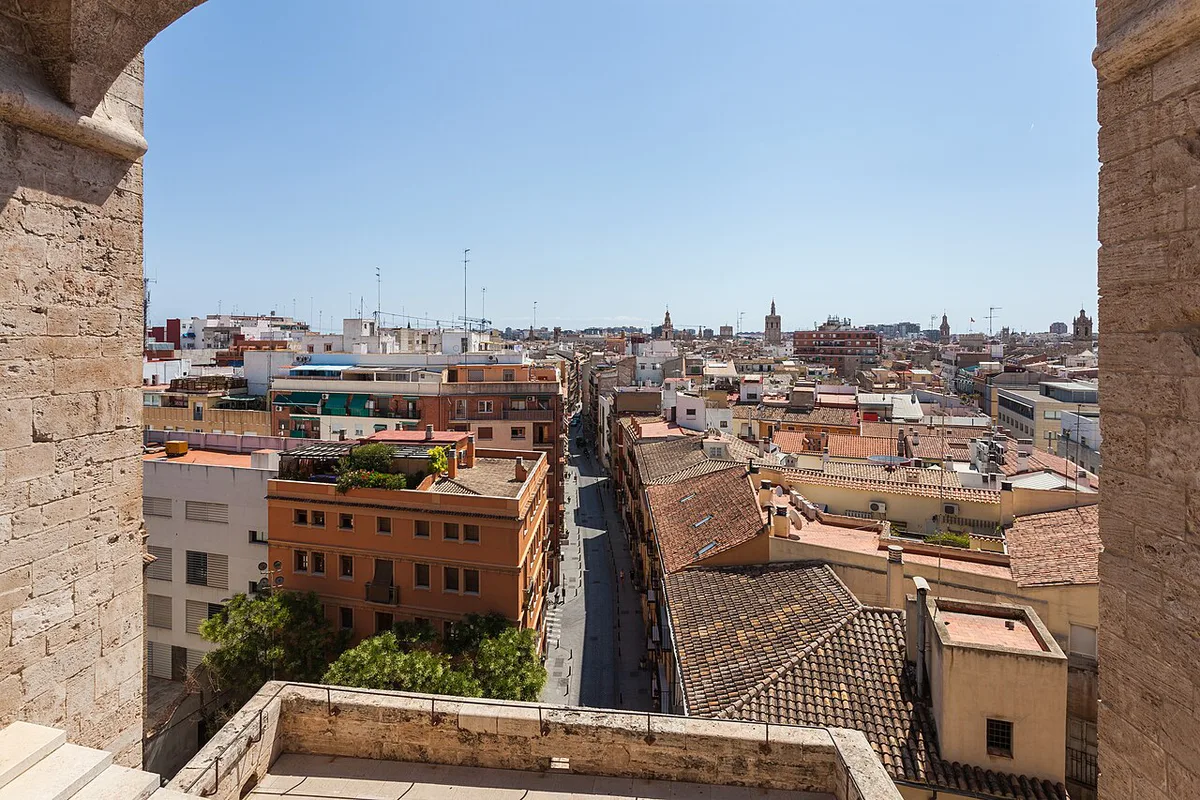
Both gates guarded the medieval walled city, and both are open to climb today. Torres de Serranos, finished in the late 14th century, was the ceremonial northern entrance to the city. The platform at the top looks out over Turia Gardens and the rooftops of El Carmen. Torres de Quart, completed in the 15th century, faces west toward Guillem de Castro and still carries cannonball scars from Napoleon's 1808 bombardment of the city. Both towers also served as prisons in later centuries before taking on their current role as viewpoints and small exhibition spaces. If you only have time for one, Torres de Serranos gives the better wide view of the old riverbed. Torres de Quart is the pick for visible war history, since the marks on its facade are easy to spot from street level. Both climbs involve steep stone stairs with no elevator, which matters if mobility is a concern. Confirm current pricing before you go, since municipal fees can change.
For the best photography light, visit before 10am when El Carmen is quietest. Torres de Serranos gives the superior wide view across Turia Gardens and the surrounding rooftops, making it worth your first tower if time allows.
| Tower | Built | Best For | Entry (2026) |
|---|---|---|---|
| Torres de Serranos | Late 14th century | Views over Turia Gardens | About €2; free Sundays and holidays |
| Torres de Quart | 15th century | Napoleonic cannonball scars | About €2; free Sundays and holidays |

Where to Find El Carmen's Street Art
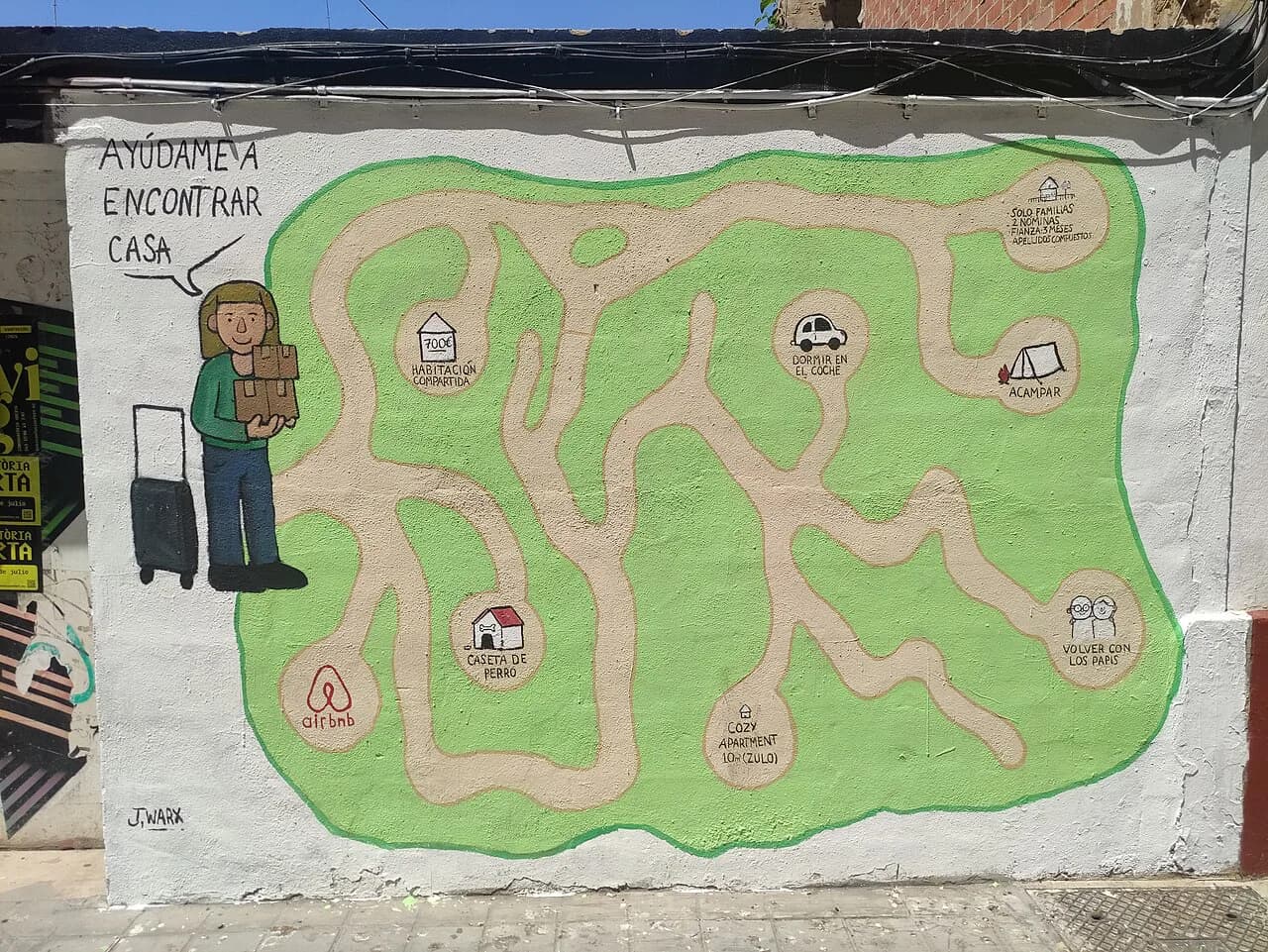
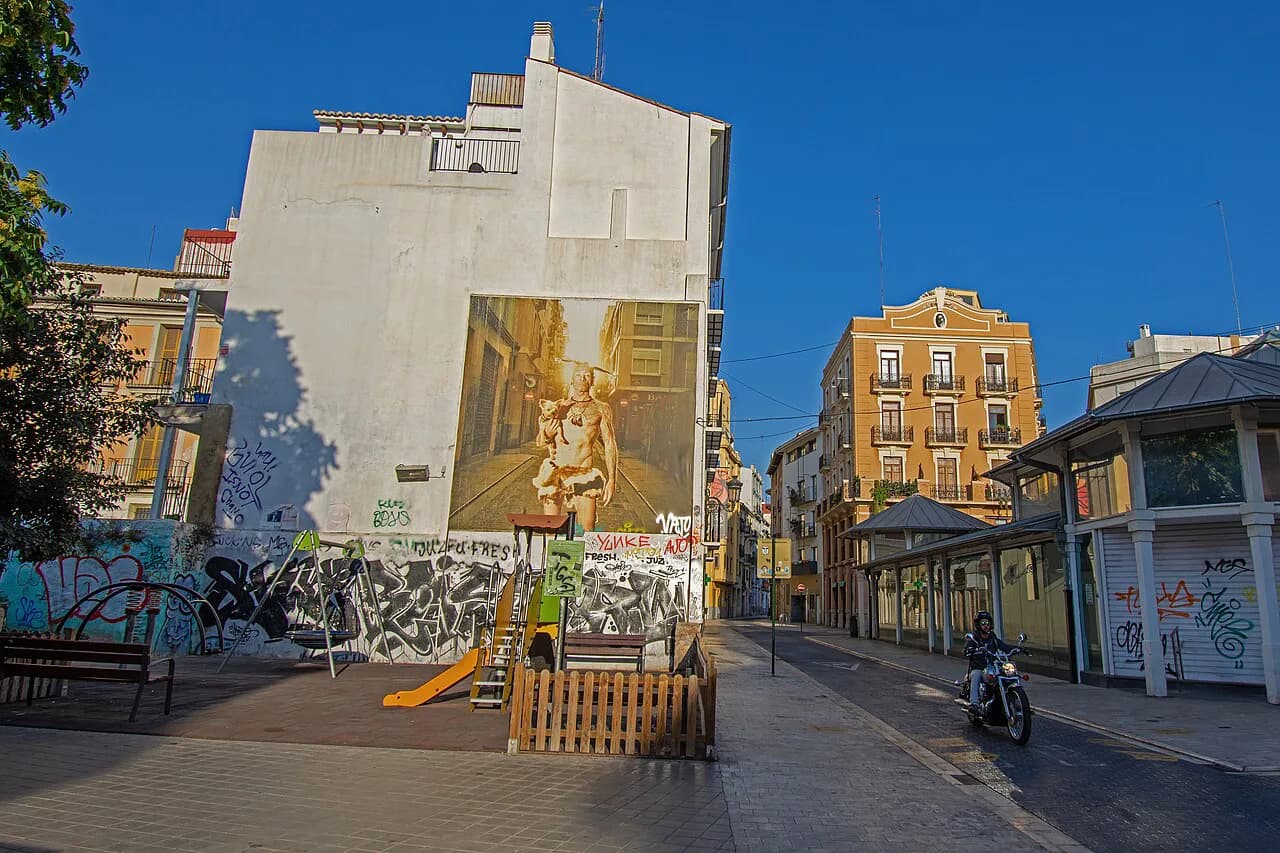
El Carmen functions as an open-air gallery, with murals that shift over time and often respond to current events or pop culture. City-backed restoration over recent decades turned many formerly derelict buildings into the canvases much of this art now covers. Calle de los Colores is one of the best-known spots, and it holds El Beso, a well-known mural by Luis Lonjedo. Calle de Moret and the streets around Plaza del Tossal hold further concentrations of large-scale pieces. Guided street art tours run through the district and add background on individual artists and specific works, though a self-guided walk covers the main pieces just as well. For more experiences beyond standard sightseeing, see the less typical Valencia experiences guide.
Museums and Cultural Landmarks: IVAM, CCCC, and San Nicolás
El Carmen holds several of Valencia's key museums, each with different hours and pricing. IVAM, the Institut Valencià d'Art Modern, is the district's main modern-art museum, with a collection built around 20th-century sculptors such as Julio González. The Centre del Carme Cultura Contemporània, known as CCCC, occupies the former Carmen Convent. Its Gothic cloister and Renaissance courtyard reflect the building's history as a religious complex before its conversion into a contemporary art center. San Nicolás, sometimes described as Valencia's own Sistine Chapel for its painted ceiling, charges more than most local churches because the ticket covers the frescoes. Museu de Prehistòria de València is a quieter stop than IVAM, with a collection of regional prehistoric artifacts. On Sundays, several of these sites drop their entry fee entirely; see the no-cost Valencia activities guide for the fuller list. For more contemporary art outside the old town, Bombas Gens is a further stop worth the trip.
| Landmark | Hours (2026) | Entry |
|---|---|---|
| IVAM | Tue-Sun 10:00-19:00; Fri until 20:00 | €5; free Wed 16:00-19:00 and all day Sun |
| Museu de Prehistòria de València | Tue-Sun 10:00-20:00 | Free |
| San Nicolás | Check current listings | About €10 (frescoes); confirm if an audio guide is included |
| CCCC | Check current listings | Check current listings |
Hidden Corners Inside El Carmen
El Carmen's smaller details reward slow walking more than any single landmark does. At Calle Museo 9, a miniature house is built into a courtyard wall as a shelter for the neighborhood's cats. It has a small tiled roof, a miniature fountain, and curtained windows. Portal de la Valldigna is a gateway built into a former medieval wall, dating to around 1400. The gate originally sat within a Muslim-era wall and once opened onto the residences of noble families. In 1678, the owner of the adjoining house extended the residence over the arch, and the combined structure was restored in 1965. Plaza del Árbol is a small, quiet square a few streets from the busier plazas, worth a stop if you're already walking that side of the district. For more low-key spots across the city, the under-the-radar Valencia picks guide covers more of them. The less-visited corners of Valencia guide covers areas outside the old town entirely.
While the open-air street art gallery draws most attention, the hidden architectural details at locations like Calle Museo 9 offer equally rewarding discoveries for visitors who prioritize slow, purposeful exploration.
Where to Eat and Drink: Tapas and Agua de Valencia
Agua de Valencia mixes cava, gin, vodka, and orange juice, and it drinks far stronger than its color and citrus taste suggest. Café de las Horas is one of the district's known spots for the drink, and it serves it by the pitcher. Sharing a pitcher across a table is a better way to pace it than ordering individual glasses. El Carmen's tapas bars range from standing-room counters to sit-down terraces on the plazas, and prices generally run lower than in the newer parts of the city. Reservations help on weekend nights, when the plaza-side terraces fill early. For a wider spread of tapas bars, see the local restaurant recommendations citywide guide. For market-stall specifics and regional dishes, check the regional Valencia food picks guide.
Nightlife in El Carmen
Plaza del Tossal and Calle Baja are the district's late-night centers, with bars that stay busy well past midnight on weekends. El Carmen also has a handful of small jazz bars along its side streets, a quieter alternative to the plaza scene. The tradeoff is noise: stone streets and open windows carry sound late into the night. Light sleepers may prefer a quieter base in Ruzafa or the Benimaclet neighborhood instead.
Practical Logistics: Costs, Timing, and Getting Around
El Carmen is compact and walkable, with most sights an easy walk from each other. The streets are pedestrian-first, narrow, and paved in uneven cobblestone, which makes the district hard going for wheelchairs, strollers, or anyone with limited mobility. Both towers involve steep stone stairs with no elevator. Vehicle access is restricted through much of the old town, so most visitors arrive on foot from nearby neighborhoods. Mornings before 10am tend to be the quietest window for photographing the towers and murals. For a fuller seasonal breakdown of when to visit, see the seasonal low-crowd timing guide. Combined weekday entry for both towers and IVAM adds up to roughly €9. Sunday visits cost less, since several museums and both towers waive entry that day. If you want to extend the trip beyond the old town, the day-trip options from Valencia guide has ideas. Albufera Natural Park is one of the closer picks. For a smaller, formal garden away from the riverbed park, Jardines de Monforte is a short trip across town.
Common Mistakes to Avoid in El Carmen
A few planning mistakes come up often for first-time visitors to the district.
- El Carmen is the most-visited part of the old town, not an undiscovered corner, so look for its quiet pockets instead of expecting solitude.
- The Central Market and the Cathedral sit on El Carmen's border, not inside the neighborhood itself.
- La Lonja de la Seda, the Gothic silk exchange, also borders El Carmen near the Central Market rather than sitting inside it.
- Agua de Valencia is stronger than it tastes; order one pitcher to share rather than a full glass each.
- Weekend nights near Plaza del Tossal and Calle Baja stay loud into the early hours, so book lodging elsewhere if quiet matters.
- Uneven cobblestones are hard on thin-soled shoes and unstable footwear, so wear something with real support.
El Carmen vs Ruzafa and El Cabanyal: Which Neighborhood Fits Your Trip
El Carmen, Ruzafa, and El Cabanyal each give a different version of Valencia, and picking between them depends on what the trip is for. El Carmen leans on medieval architecture, street art, and old-town landmarks packed into a walkable grid. Ruzafa trades that history for a modern, grid-planned district with a different café and shopping scene. El Cabanyal sits closer to the beach, with an architectural style and pace distinct from the old town. El Carmen and Ruzafa sit close enough to combine in one day. See the Ruzafa neighborhood guide for a fuller picture of that district. The El Cabanyal neighborhood guide covers the beach-side option in more depth.
| Neighborhood | Character | Best For |
|---|---|---|
| El Carmen | Medieval streets, street art, old-town landmarks | History, art, and walkable sightseeing |
| Ruzafa | Modern grid layout, contemporary cafes and shops | A different day-and-night pace from the old town |
| El Cabanyal | Near the beach, distinct architectural style | Combining sightseeing with beach time |
How to Get to El Carmen by Metro, Tram, and Bus
El Carmen has no Metrovalencia station at its center, so every public-transport journey ends with a short walk. The most convenient stop depends on which side of the neighborhood you want to explore first.
- Use Túria station for the western side, IVAM, and Torres de Quart.
- Use Àngel Guimerà for access from multiple metro lines, followed by a walk toward Calle de Quart.
- Use Pont de Fusta tram stop for Torres de Serranos. Cross the former riverbed and enter through the medieval gate.
- From Estació del Nord or Xàtiva station, walk north through Ciutat Vella toward Plaza del Tossal.
EMT Valencia buses stop around Plaza de la Reina, Guillem de Castro, and the Turia Gardens. These edge stops are more useful than searching for transport through the neighborhood’s narrow interior streets. Check the EMT Valencia or Metrovalencia journey planner before departure, since routes and service diversions can change. Taxis should also drop passengers on a larger boundary street, such as Guillem de Castro, because vehicle access inside the old town is restricted.
Further reading: Valencia on Wikivoyage · Valencia on Wikipedia
Frequently Asked Questions
Is El Carmen safe to visit at night?
El Carmen is generally treated as a safe neighborhood after dark, especially near Plaza del Tossal and the main street-art routes. The usual city precautions still apply, like staying aware on quieter side streets and keeping valuables secured.
How much time do you need to see El Carmen?
Plan on half a day to cover the towers and the main street art routes. A full day works better if you add museum stops such as IVAM or the Museu de Prehistòria.
Is San Nicolás worth the entry fee?
San Nicolás charges more than most local churches because the ticket covers its painted frescoes, sometimes compared to Valencia's own Sistine Chapel. Confirm whether the current ticket includes an audio guide when you book.
What is the best time of day to visit El Carmen?
Mornings before 10am tend to be quietest for photos of the towers and murals. Evenings bring the district's nightlife around Plaza del Tossal and Calle Baja, a louder and different experience.
Are the Central Market and the Cathedral part of El Carmen?
No. Both sit on El Carmen's border rather than inside the neighborhood, so treat them as separate stops connected by a short walk.
How much does it cost to see El Carmen's main sights?
Combined weekday entry for both medieval towers and IVAM runs about €9 total. Costs drop on Sundays, when several museums and both towers waive their entry fee.
Continue exploring
More guides you'll find useful