Albufera Natural Park Valencia: A 2026 Guide to Boats, Birds, and Paella
Plan a trip to Albufera Natural Park Valencia: transport options, boat trips, birdwatching spots, and where to eat paella in El Palmar for 2026.
On this page
Visiting Albufera Natural Park Valencia: A Complete Guide for 2026
Last updated July 2026, this guide covers Albufera Natural Park Valencia, the freshwater lagoon about 20 minutes south of the city that grows the rice for the region's paella. Spain's largest freshwater lake sits at the center of a protected wetland with three distinct ecosystems, from open water to pine-covered dunes. This guide breaks down the boat trips, birdwatching hotspots, transport options, and paella traditions worth planning around.
What Is Albufera Natural Park Valencia?
Albufera Natural Park sits about 6 miles south of Valencia city, roughly a 20-minute drive from downtown. It protects Spain's largest freshwater lake, along with the rice fields that supply much of the region's paella. Local farmers around the lagoon are credited with developing the dish, and traditional flat-bottomed boats called albuferenc still ferry visitors across the water today. For a Valencia itinerary built around under-the-radar corners of the city, Albufera works as a half-day extension beyond downtown sights.
- Total park area: 21,120 hectares, declared a natural park on 8 July 1986
- Lake Albufera: about 2,837 hectares, average depth about 4 feet
- RAMSAR wetland of international importance since 8 May 1990
- Special Protection Area (SPA) for birds since 8 June 1994
The Three Ecosystems of L'Albufera
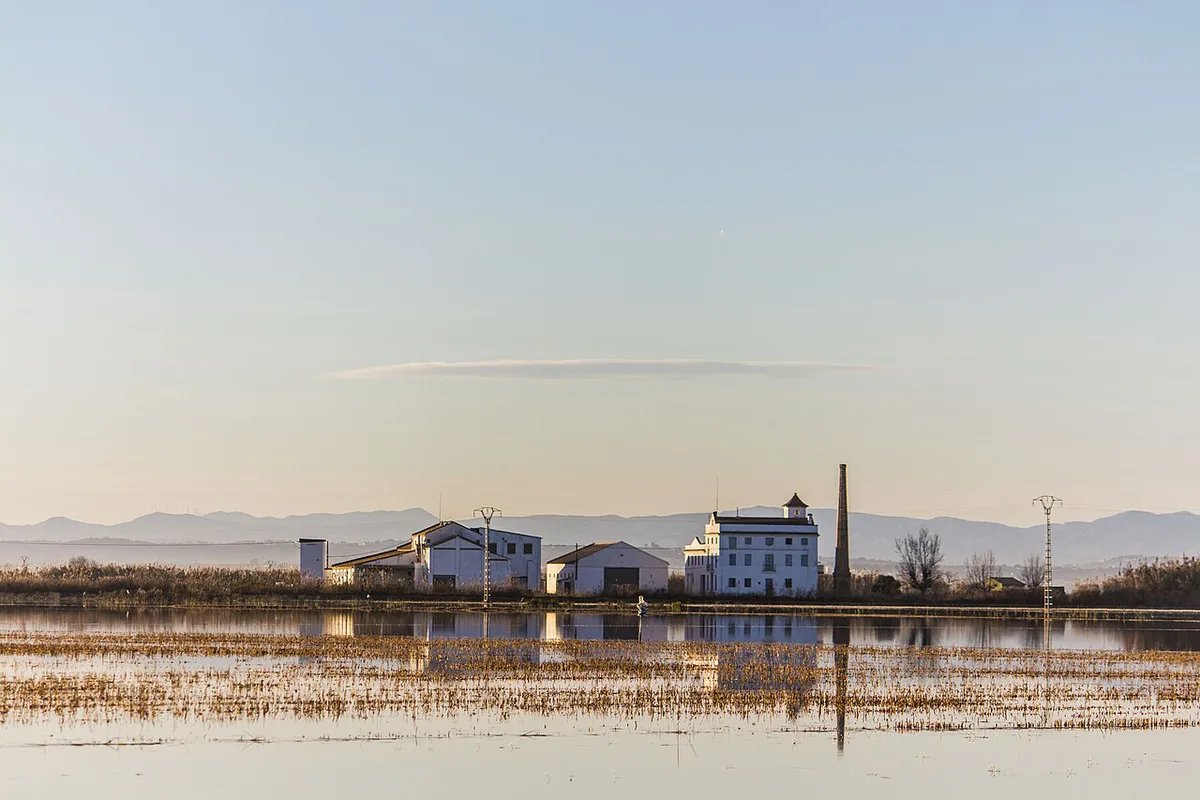
Three distinct landscapes make up the park, and each rewards a different kind of visit. The lagoon anchors the reserve, the marsh and rice fields ring it, and La Devesa separates the whole system from the Mediterranean. Knowing which zone matches your interests helps prioritize a limited amount of time.
- The Lagoon: Spain's largest freshwater lake, about 2,837 hectares with an average depth of about 4 feet. Boat trips and sunset photography happen here.
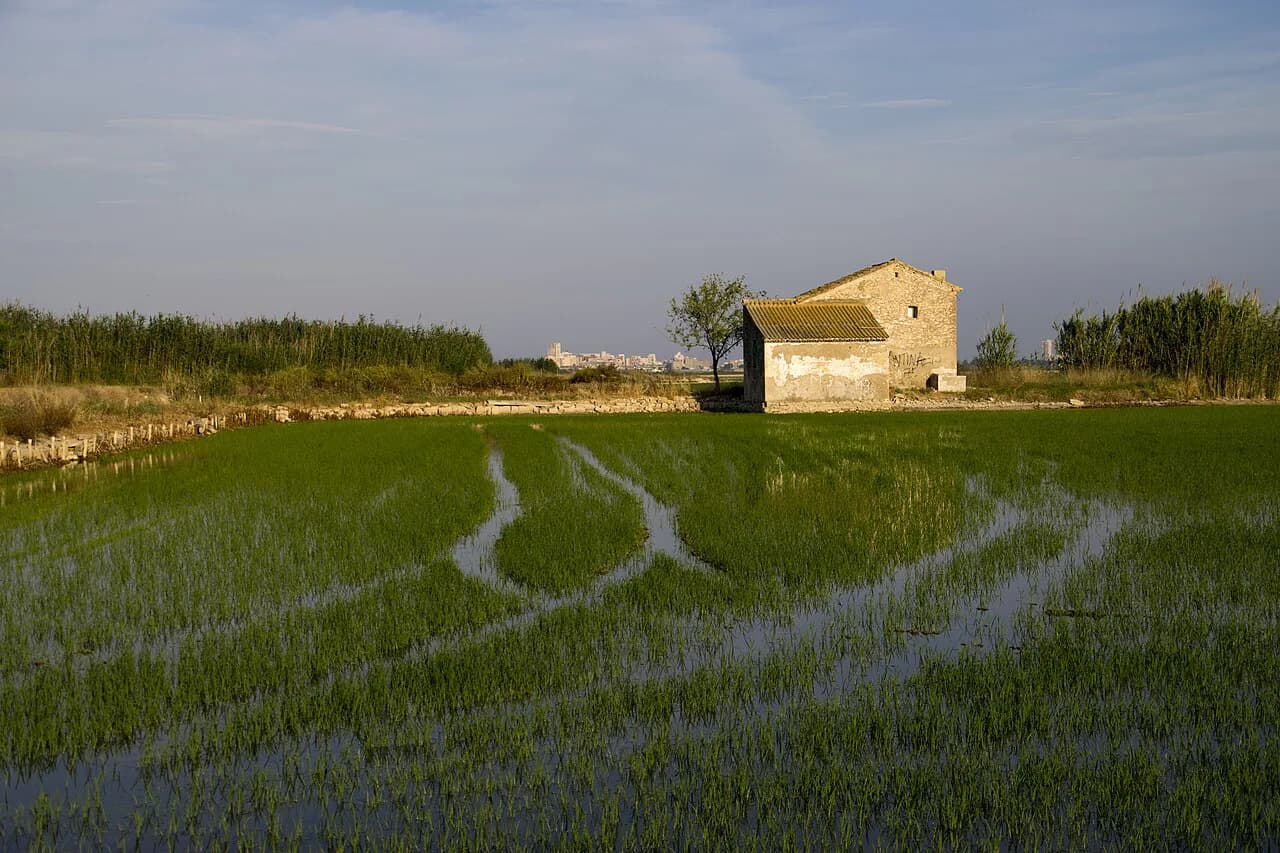
- The Marsh and Rice Fields: roughly 16,000 hectares that shift from green to gold across the growing season. This is where paella's rice actually grows.
- La Devesa: a roughly 22-mile-long strip of pine forest and dunes, a little over half a mile wide, covering about 2,000 hectares. It separates the lake from the sea and hides several beaches.
- Tancat de la Pipa: a 40-hectare former rice field converted into a biodiversity reserve in 2007, open for guided visits booked in advance directly with the reserve.
Top Things to Do at Albufera Natural Park
Most visits combine two or three of the following, since the park rewards slow mornings or golden-hour evenings more than a rushed pass-through.
- Traditional boat trips (albuferenc): 40-minute rides depart from the Gola de Pujol jetty, with quieter alternatives at El Saler, Catarroja, Silla, Sollana, and El Palmar.
- Birdwatching at Racó de l'Olla: viewpoints and observation hides overlook habitat for more than 300 recorded bird species, including herons and flamingos. Autumn brings the highest concentration of birds.
- Cycling the rice fields: routes run out from Valencia city on mostly flat roads, popular with rental bikes and confident riders alike.
- Exploring El Palmar: the fishing and farming village at the heart of the park, worth pairing with a paella lunch.
Where to Eat: Paella, Arroz a Banda, and El Palmar's Table
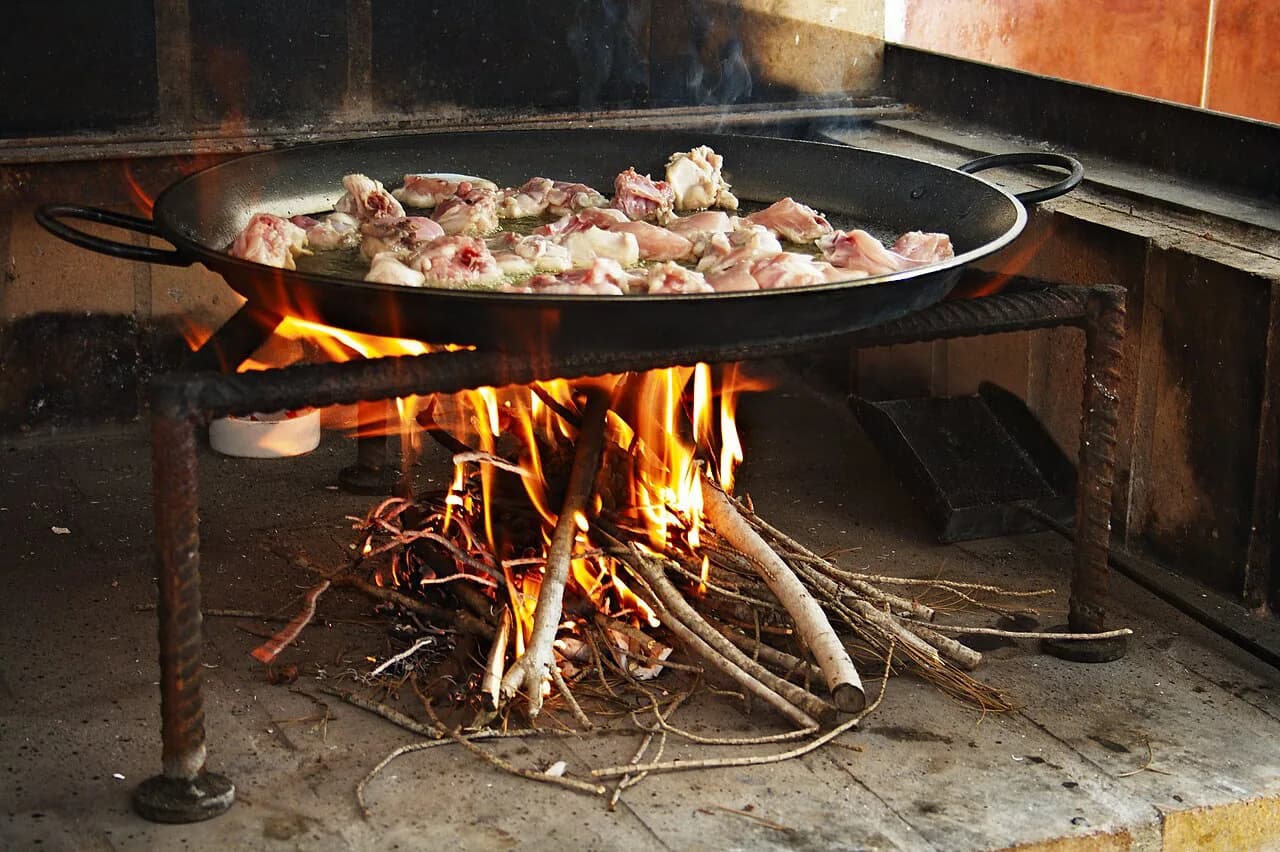
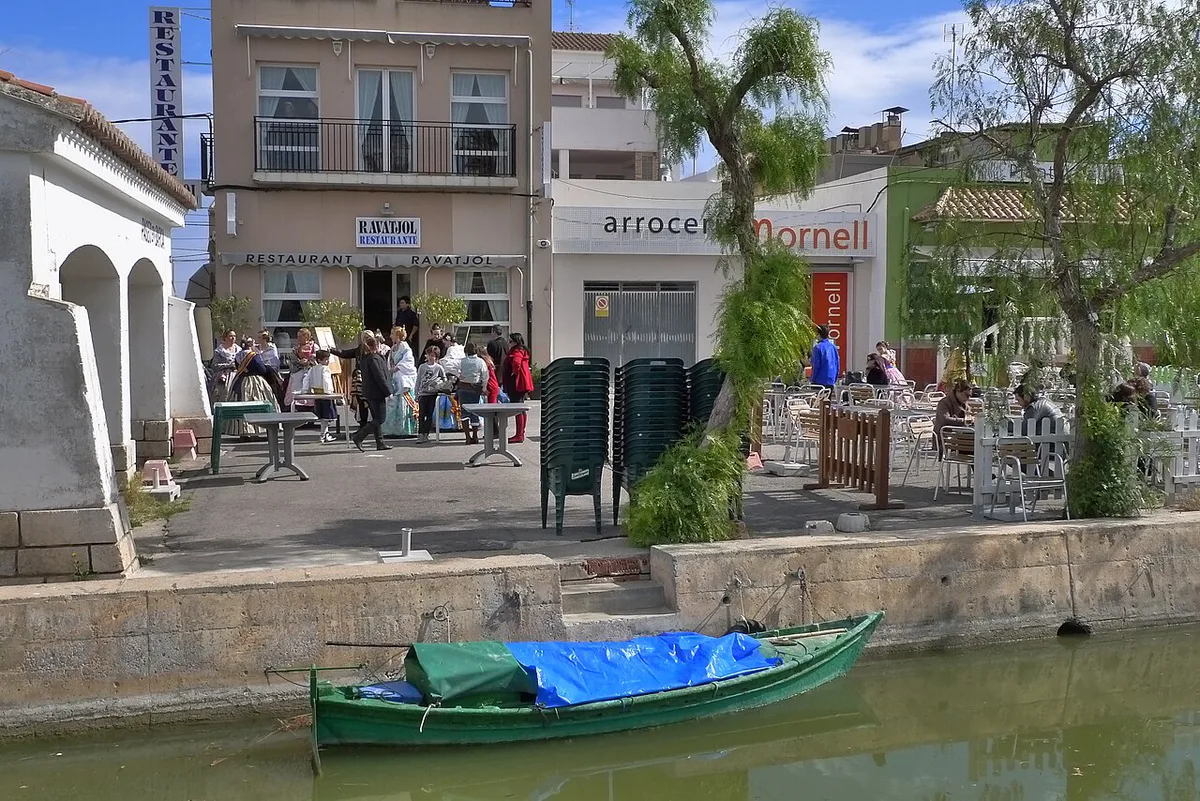
El Palmar is where the park's culinary reputation concentrates, and restaurants across the village trace their recipes to generations of local rice farmers and fishers. Paella Valenciana here typically means chicken, rabbit, and local rice cooked in a wide shallow pan, the dish generally credited to this area. Arroz a banda is a different order entirely. It's rice cooked in fish stock, served as its own course. This style is more associated with the coast than with the rice fields inland. Two local specialties worth trying beyond either rice dish are all-i-pebre, an eel stew, and llisa adobada, marinated mullet. Many restaurants in El Palmar require pre-booking for paella, since the rice is cooked to order and takes time. Without a reservation, expect a wait or a limited menu. If El Palmar tables are full, other local restaurant picks in the city cover paella closer to downtown. For dishes beyond rice, a broader look at Valencia's food traditions covers the rest of the region's cooking.
El Palmar's fish market runs 8:00 AM to 2:30 PM weekdays and until 1:00 PM Saturdays, avoiding Mondays when some restaurants close, making mid-morning weekday visits optimal for combining market exploration with a late paella lunch.
Guided Tours Worth Booking Ahead
Beyond independent boat trips, a few bundled tours cover transport, a boat ride, and food in one booking, useful for a first visit or a tighter timeline.
Boat trips from Gola de Pujol run 40-minute circuits for independent exploration, while bundled tours spanning 3-4 hours including paella cost from €26, with sunset departures filling fast despite advance booking.
- Boat trip and paella combo: 3-4 hours, Spanish-language guide, priced from €26. Visit Valencia's listing for this tour carries a 4.8 rating from 187 reviews, among the highest of the park's bundled tours.
- Albufera Tourist Bus: 2 hours, Monday to Saturday, multilingual audioguide, priced from €22 with a 15% discount on the Valencia Tourist Card. The same listing shows a 4.3 rating from 12 reviews.
- Guided bike tour with horchata and fartons tasting: 4.5 hours, Tuesday and Thursday departures at 9:30 AM, priced from €35 with a 10% Tourist Card discount.
How to Get to Albufera Natural Park from Valencia
Four main ways cover most visitors' needs, and each trades cost against convenience differently.
| Option | Cost | Time | Notes |
|---|---|---|---|
| EMT bus (lines 24 and 25) | Free with the Valencia Tourist Card; otherwise the standard EMT single-ride fare (check EMT Valencia for current pricing) | Under 1 hour | Line 24 runs toward El Palmar, line 25 toward El Perellonet; get off near stop 2169, Pinars-Carretera del Palmar, for Racó de l'Olla |
| Albufera Tourist Bus | From €22, 15% off with the Valencia Tourist Card | 2 hours, Monday-Saturday | Fixed schedule, multilingual audioguide, boat trip included |
| Guided bike tour | From €35, 10% off with the Valencia Tourist Card | 4.5 hours, Tuesday and Thursday, 9:30 AM start | Includes a horchata and fartons tasting stop |
| Driving | Parking near El Palmar | About 20 minutes each way | Most flexible for groups and odd-hour visits |
- The EMT bus is the cheapest route and the one most independent travelers use, though it runs on a normal city schedule rather than a tourist timetable.
- The Albufera Tourist Bus suits visitors who want a fixed schedule and a boat ride bundled into one booking.
- Cycling out is the scenic option. The route connects from Valencia's Turia Gardens bike path through the rice fields, though it covers more than 6 miles each way and suits confident riders best.
- The Valencia Tourist Card, referenced throughout this guide for its transit and tour discounts, is a separate paid city pass covering public transport and attraction discounts.
Planning Your Visit: Hours, Costs, and Best Time to Go
Most of Albufera's paid experiences cluster between €22 and €35 for a bus tour, boat trip, or guided cycling day. The Racó de l'Olla interpretation center is open to visitors, though hours can shift seasonally, so confirm current opening times before building a schedule around it. The El Palmar fish market keeps more reliable hours. It's open Monday to Friday, 8:00 AM to 2:30 PM, and Saturdays until 1:00 PM. Phone orders are taken in advance. For timing the whole trip, autumn brings the densest bird activity. September marks the rice harvest, when the fields turn from green to gold. Sunset draws the largest crowds to the Gola de Pujol jetty. A mid-morning or early-afternoon boat trip trades some of that golden light for a quieter lagoon. Photos are easier too, with fewer boats in frame. Travelers weighing off-peak timing for a Valencia trip can apply the same logic here. Book the sunset slot ahead, or go earlier in the day instead.
Mistakes to Avoid at Albufera Natural Park
A few planning slips repeat often enough to flag.
- Visiting El Palmar on a Monday: individual restaurants sometimes keep different days off. The fish market itself runs Monday to Friday and Saturday mornings. Confirm restaurant hours before planning a Monday paella lunch.
- Trying to swim in the lake: it's a protected wetland, not a swimming spot. Use the Devesa beaches instead: L'Arbre del Gos, La Devesa, El Saler, or La Garrofera.
- Skipping mosquito precautions: repellent matters most on late-summer evenings, especially near the marsh and rice fields.
- Booking sunset boats last-minute: the Gola de Pujol departure is the most popular slot and fills up. Reserve ahead, or shift to a mid-day trip instead.
- Skipping Racó de l'Olla: the interpretation center's exhibits explain what's visible from the hides, useful context before or after birdwatching.
Where Albufera Fits in a Longer Valencia Trip
Most travelers treat Albufera as a half-day or full-day trip rather than an overnight stay, which makes it easy to combine with time in the city itself. It pairs naturally with day-trip options beyond the city if a single park visit doesn't fill the day. El Palmar itself functions as one of the region's quieter, lesser-visited spots, away from the main tourist track downtown. Whichever route or season gets picked, the boat trip, the birdwatching, and the paella tradition are worth building a half-day around.
Further reading: Valencia on Wikivoyage · Valencia on Wikipedia
Frequently Asked Questions
How long does it take to get from Valencia to Albufera Natural Park?
By EMT bus, lines 24 or 25, the trip runs under an hour. Driving takes about 20 minutes each way. The Albufera Tourist Bus tour runs about 2 hours total, including stops.
Can you swim in the Albufera lake?
No. The lake is a protected wetland, not a swimming area. Use the Devesa beaches instead, such as El Saler or La Garrofera, for swimming near the park.
What is the best time of year to visit for birdwatching?
Autumn brings the highest concentration of bird activity around the lagoon and marsh. Racó de l'Olla's viewpoints and hides are the main spot for watching herons, flamingos, and other species.
Do restaurants in El Palmar require a paella reservation?
Many do, since paella is cooked to order and takes time. Book ahead where possible, especially around lunch on weekends.
Is the Albufera Tourist Bus worth it compared to the EMT bus?
The EMT bus, lines 24 and 25, is cheaper and free with the Valencia Tourist Card, but runs on a normal city schedule. The Albufera Tourist Bus costs more, from €22, but bundles a fixed schedule, an audioguide, and a boat trip into one booking.
What's the difference between the lagoon, the marsh, and La Devesa?
The lagoon is the open lake itself, best for boat trips. The marsh is the rice-field belt around it, best seen by bike. La Devesa is the coastal pine and dune strip that separates the lake from the sea, best for beach access and quiet trails.
Is Albufera Natural Park free to visit?
Entry to the park itself is free. Costs come from optional boat trips, bus tours, or guided cycling, which range from about €22 to €35 depending on the option chosen.
Continue exploring
More guides you'll find useful