Restaurants In Alfama Lisbon Travel Guide
Discover the best restaurants in alfama lisbon with our expert guide to traditional spots, seafood, fado, and booking tips. Plan your food adventure today!
On this page
Restaurants In Alfama Lisbon
Finding the best restaurants in Alfama Lisbon is one of the most rewarding parts of any trip to the Portuguese capital. This ancient hilltop district survived the 1755 earthquake almost intact, and its winding cobblestone lanes are still lined with family-run tascas that have been feeding locals for generations. The combination of fresh Atlantic seafood, slow-cooked meat dishes, and spontaneous fado singing makes eating here a genuinely different experience from anywhere else in Europe.
Many travelers get lost in the winding alleys while searching for the perfect dinner spot. Reading a detailed Alfama Lisbon Travel Guide helps you navigate the area with confidence and ease. Our curated list highlights the top culinary experiences to ensure you enjoy every single bite.
Top Restaurants in Alfama
The neighborhood's best dining happens in small rooms tucked behind unremarkable doors. Most of these spots seat fewer than 40 people, so reservations matter — especially from April through September when the district is at peak capacity. Lunch is generally walk-in friendly because local workers fill and empty tables on a predictable schedule, but dinner slots at popular venues can disappear days in advance.
| Restaurant | Type | Fado | Meal Price (est.) | Reservation |
|---|---|---|---|---|
| A Baiuca | Traditional Portuguese | Fado vadio (no cover) | €20–€35pp | Book 1 week ahead |
| O Cartaxeiro | Tasca (lunch only) | No | Under €12 main | Walk-in |
| Farol de Santa Luzia | Seafood | No | €20–€30pp | Recommended |
| A Travessa do Fado | Petiscos + fado shows | Wed & Sat evenings | €25–€40pp | Recommended |
| Bela Vinhos e Petiscos | Wine bar + small plates | Spontaneous | €15–€25pp | Walk-in |
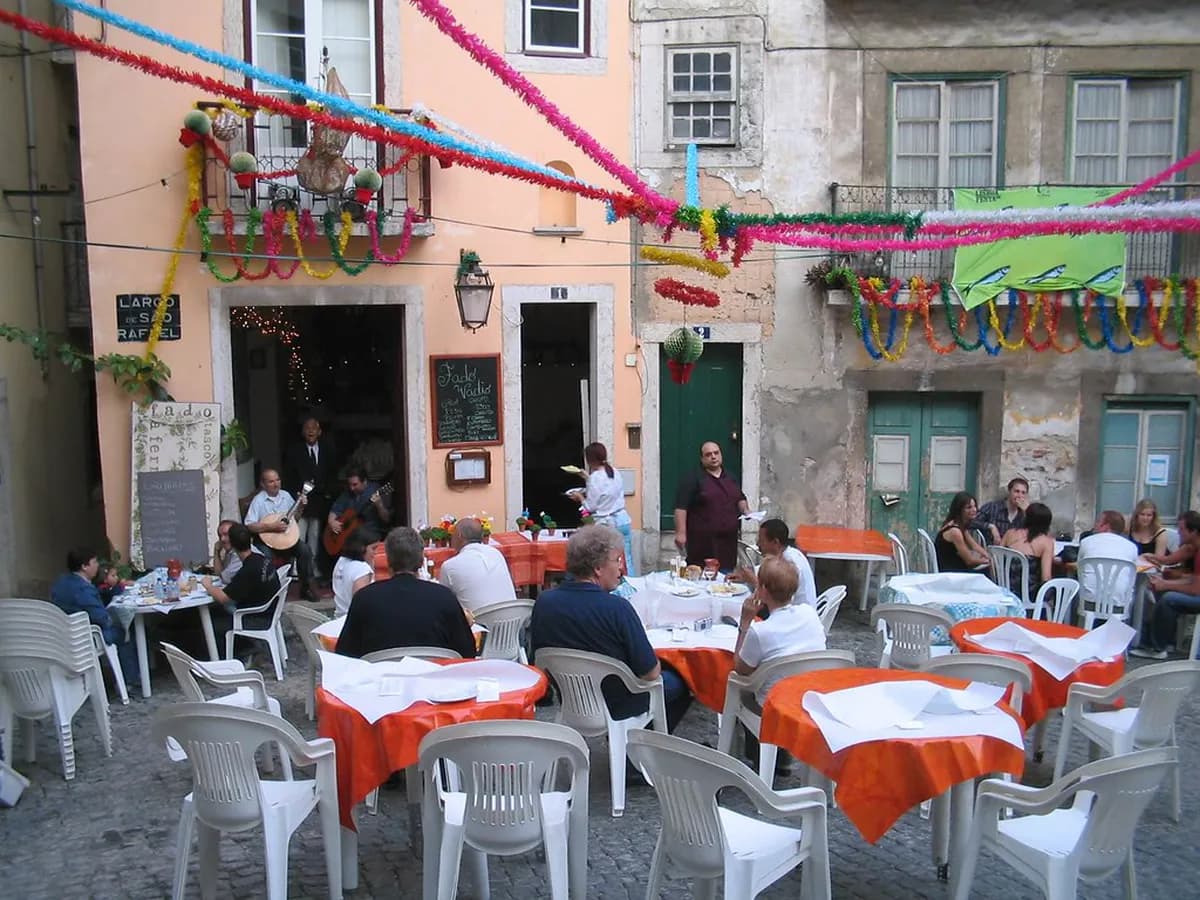
A Baiuca is the most celebrated fado dining room in the area. The food is hearty Portuguese home cooking, but it is the fado vadio — amateur fado sung by guests rather than professional performers — that makes the atmosphere electric. The room holds roughly 25 people and fills every night, so book at least a week ahead during summer. Bela Vinhos e Petiscos takes a more relaxed approach: small plates of regional charcuterie and local wines, with spontaneous fado sets that start when a fadista feels like singing.
O Cartaxeiro is the neighbourhood's most practical tasca. It opens at 08:00 and closes by 18:00 — no dinner service — which makes it perfect for a long, unhurried lunch after visiting the Fado Museum directly opposite. Dishes are simple, portions are large, and prices rarely exceed €12 for a main. A Travessa do Fado, inside the Fado Museum complex, runs fado performances every Wednesday and Saturday evening with petiscos menus from noon to midnight — a rare option if you want culture and food in the same room without hunting for a separate venue.
Cais na Preguiça sits near the Tagus riverfront at the border between Alfama and Baixa. It draws a mix of locals and gallery visitors on Sundays for a slow, brunch-style meal. Cruzes Credo, steps from the Sé cathedral, offers fusion cooking with a Portuguese base — useful for travelers not yet ready for a full traditional menu but unwilling to leave the neighbourhood. Pois, Café rounds out the list as a vintage-styled spot known for Sunday brunches and a genuinely quiet atmosphere during the week.
Fado Dining and the Music Cover Charge
Eating with live fado is one of Alfama's signature experiences, but first-time visitors frequently get caught out by one practical detail: many fado restaurants charge a mandatory music cover (couvert de música) that is separate from the food bill and is not always displayed on the menu board outside. In 2026, this charge typically runs between €25 and €40 per person at dedicated casas de fado, and it is charged regardless of how long you stay or how many songs are performed before you leave.
The cover charge is legal and standard practice, but the surprise can sting if you have budgeted only for the food. Ask directly — "Há couvert de música?" — before sitting down. If the answer is yes, confirm the amount. Some venues fold a minimum food spend into the couvert, meaning your first €15 of food is already included. Others charge it as a flat fee on top of everything you order. Knowing which model applies before you order makes the experience far more enjoyable.
A Baiuca operates on the fado vadio model, meaning the music is amateur and voluntary rather than a ticketed show. No mandatory music cover applies here, which is one reason regulars consider it the most authentic fado dining experience in the neighbourhood. The best local restaurants in Lisbon list distinguishes fado tascas from fado houses — a useful distinction when planning your evening.
Ask "Há couvert de música?" before sitting at any Alfama fado restaurant. The mandatory music cover typically runs €25–€40 per person in 2026 and is charged on top of your food bill — knowing this before ordering avoids a significant surprise.
Lisbon: Food Bucket List Destination
Lisbon has earned genuine international recognition as a food city, not just a pleasant European capital with decent dining. The Atlantic coastline delivers some of the freshest seafood on the continent, Portuguese olive oil and wine are world-class, and the tradition of slow, generous hospitality around the table makes meals here feel substantively different from northern European or US dining. Food writers and chefs have been pointing to Lisbon consistently since the early 2020s, and the quality has kept pace with the attention.
What makes Alfama specifically worth eating in — rather than just passing through — is the concentration of traditional cooking untouched by tourist-menu shortcuts. You will find bacalhau à brás cooked the way it has always been cooked: salt cod shredded fine, scrambled with eggs and thin-cut fried potato, finished with olives and parsley. You will find caldo verde, the kale-and-chorizo soup that is Portugal's most comforting dish, made without a stock cube in sight. These are not curated heritage experiences — they are what the neighborhood has always eaten.
Reading a detailed Lisbon Local Food Guide Travel Guide before you arrive teaches you the vocabulary you need to order confidently. Knowing that petiscos are small shared plates, that prato do dia is the daily special (typically the best-value item on the menu), and that couvert means a cover charge for bread and olives puts you a step ahead of anyone who walked in cold.
Best Seafood Restaurants in Alfama and Beyond
Seafood defines Lisbon's restaurant culture more than any other category. Simple preparations dominate: fish grilled over charcoal with olive oil, garlic, and fresh coriander, or clams steamed in white wine with a wedge of lemon. This minimalism is a statement of confidence in the quality of the ingredients, not a lack of ambition in the kitchen.
Within Alfama, Farol de Santa Luzia is the most accessible starting point for seafood. Open since 1973 and located at Largo Santa Luzia 5, 1100-487 Lisboa, Portugal, it serves grilled fish and shellfish at moderate prices in a room that has changed little in 50 years. The shrimp starter — heads on, split and sucked — is the way to begin. Alfama Cellar on Rua dos Remédios takes a more contemporary approach, offering seafood rice that regulars consider the best version in the neighbourhood, alongside a short, well-chosen wine list.
For a more ambitious seafood meal, Taberna Albricoque near Santa Apolónia station rewards adventurous eaters with a seasonal menu built around unusual preparations — fried moray eel, chickpeas with oxtail, stewed cockles inside pastry. You can find it at R. Caminhos de Ferro nº98, 1100-395 Lisboa, Portugal. Prado Restaurante in Baixa, at Tv. Pedras Negras 2, 1100-404 Lisboa, Portugal, focuses on farm-to-table Portuguese cooking with a fine-dining execution — book weeks ahead for dinner.
Bars in Alfama: Where to Drink
Alfama has fewer dedicated bars than Bairro Alto or Cais do Sodré, but the ones that exist are worth knowing. Memmo Alfama Wine Bar & Terrace is attached to the Memmo Alfama hotel and open to non-guests. The terrace looks directly over the rooftops toward the river — arguably the best view of any bar in the city. Arrive by 18:30 during summer to secure a terrace seat before the sunset crowd arrives.
In June, the neighbourhood transforms entirely for Santos Populares, the festival season celebrating Lisbon's patron saints. Temporary bars set up in every alley, tap beer costs under €2, and grilled sardines are eaten standing up on paper plates. It is chaotic and genuinely local in a way that no indoor restaurant can replicate. If your visit overlaps with mid-June, plan an evening in Alfama specifically for this.
For a quieter drink at any time of year, the wine bars scattered through the neighbourhood's upper lanes offer regional bottles — Douro reds, Alentejo whites, Vinho Verde — by the glass alongside boards of cured meat and local cheeses. These pairings are an efficient way to taste the agricultural breadth of the country in a single sitting. Ask for something from producers outside the major appellations; staff at the better spots are usually happy to suggest a bottle from a smaller region you will not find in a supermarket.
Things to Do After You Eat
An evening meal in Alfama fits naturally into a longer walk through the neighbourhood. The two main viewpoints — Miradouro de Santa Luzia and Portas do Sol — are a few minutes apart and best visited at dusk, after dinner, when the light on the Tagus is at its most dramatic. Both are accessible without a steep climb if you approach from the São Jorge Castle side rather than from Baixa below.
On Tuesday and Saturday mornings, the Feira da Ladra flea market runs from Campo de Santa Clara. It has operated since the Middle Ages and sells everything from antique tiles to vintage postcards. It makes sense to combine a market morning visit with lunch at O Cartaxeiro across from the Fado Museum — both are a short walk from each other. The Museu do Fado itself is worth an hour before or after eating; the permanent collection covers the full history of the genre including a listening booth where you can work through its sub-genres at your own pace.
Tram 28 runs through the neighbourhood and is the laziest way to see Alfama if your feet need rest after a long meal. The route is slow, the tram is often crowded, but the view through the windows of doorways and washing lines and cats on steps is exactly what the neighbourhood looks like from the street. For more post-dinner activity options, Unique Things To Do In Lisbon Travel Guide covers the full city beyond just Alfama.
Other Must-Eat Places in Lisbon
Alfama repays multiple visits, but limiting yourself to a single neighbourhood would mean missing some of Lisbon's strongest food destinations. Ramiro, in the Intendente area northeast of the city centre, is the benchmark for shellfish in Portugal. The order to follow: bread, prawns in garlic sauce, clams in white wine, scarlet shrimp (if available), boiled lobster, then a steak sandwich (prego) as a savoury closer. It is a long, expensive, unhurried meal and worth every euro.
The Time Out Market at Av. 24 de Julho 49, 1200-479 Lisboa, Portugal divides food travellers, but it solves a genuine problem: if your group cannot agree on one restaurant, the market lets everyone eat differently at the same table. The stalls are run by established chefs rather than generic vendors, so quality is consistently above what the format suggests. Pinóquio's Bulhão Pato clams inside the market are considered by many regulars to be the best version in the city.
Bairro Alto and Chiado, both within 20 minutes' walk of Alfama, offer a denser concentration of contemporary Portuguese cooking. Young chefs are reinterpreting traditional recipes with modern technique in small, often loud, dinner-only restaurants that require booking well in advance. Check the Lisbon Neighborhoods Guide Travel Guide to map out which areas suit your appetite for the evening.
Planning Tips for Eating in Alfama
The cobblestone streets are steep and uneven. Comfortable, flat-soled shoes are not optional. Several of the best restaurants are up lanes that cars cannot reach, meaning you will walk the final stretch regardless of where you stay. Build extra time into any dinner plan to allow for getting turned around — it happens to regulars, and wandering is part of the experience.
Carry cash. Small tascas and wine bars frequently operate card-minimum policies or are cash-only, and the nearest ATM can be multiple hill climbs away. A €50 note at the start of the evening covers most meals at traditional spots. Dinner typically starts after 19:30 locally; arriving before 19:00 at a walk-in venue is the most reliable strategy for securing a table without a reservation during summer.
Some venues close on Sunday or Monday — the pattern varies by restaurant, so check opening hours online the day before. Phone reservations still work at most Alfama restaurants even when online booking is not available. If you want to combine your evening with other Portugal travel plans, book transport in advance: late-night taxis and ride-share services are plentiful from the Baixa side of the hill but thin on the upper lanes where the best tascas cluster.
Small tascas and wine bars in Alfama frequently operate cash-only or enforce card minimums — carry at least €50 in cash before heading uphill. ATMs can be multiple steep climbs away from the best dining lanes.
Frequently Asked Questions
Which restaurants in alfama lisbon options fit first-time visitors?
First-time visitors should try traditional tascas like Farol de Santa Luzia for authentic seafood. These friendly venues offer a welcoming introduction to classic Portuguese dishes. Booking a table early helps you secure a spot without waiting in long lines.
How much time should you plan for restaurants in alfama lisbon?
Plan at least two hours for a traditional sit-down dinner in this historic neighborhood. Portuguese dining is meant to be enjoyed slowly with good conversation and wine. Fado music dinners can often last up to three hours or more.
What should travelers avoid when planning restaurants in alfama lisbon?
Avoid walking into restaurants that have aggressive street promoters outside. These spots are often overpriced tourist traps with lower food quality. Instead, wander into quieter side streets to find authentic family-run taverns.
Exploring the historic dining spots in this charming district is a highlight of any Portuguese holiday. Every meal offers a chance to connect with local traditions, friendly hosts, and fresh regional ingredients. Whether you want fresh seafood or cozy wine bars, you will find something special around every corner.
Take your time to wander the steep alleys and discover your own favorite spots. Keep this handy guide nearby to help you make the best dining choices during your stay. Enjoy your culinary journey through the historic and flavor-filled streets of Lisbon.
See our Lisbon hidden gems guide for the broader overview.
Continue exploring
More guides you'll find useful