9 Unique Things to Do in Turin, Italy: Local Experiences & Practical Guide
Skip Turin's generic checklist. 9 unique things to do in Turin, each with cost, time, and access details, so you know what's actually worth a stop.
On this page
9 Unique Things to Do in Turin
Last updated August 2026. Unique things to do in Turin means rituals tied to this specific city, not another stop on Italy's usual palace-and-piazza circuit. This guide ranks nine of those experiences by cost and time, from a bicerin poured where it was invented to a century-old rack tramway most other Italian cities don't have.
What Actually Makes Turin Unique
Turin's fame comes from specific, hard-to-replicate details rather than generic sightseeing. The city holds one of the largest Egyptian antiquities collections outside Cairo. It's also home to a drink recipe invented in one of its own cafés, and roughly 11 miles of covered porticoes most Italian cities never built at that scale. Global brands including Fiat, Lavazza, Martini, and Ferrero all trace their roots to this city, part of why its food and drink culture feels specific rather than generic. Its population runs around 850,000, and the compact historic core puts most of these picks within walking distance of each other. Turin was also Italy's first capital, a role it held from 1861 to 1865. If you're chasing lesser-known corners instead, several sibling guides cover that ground. A dedicated hidden gems guide maps under-visited spots. Insider-only locations get their own secret spots guide. Picks sorted by location live on the off-the-beaten-path guide. Budget-driven picks sit on the free things to do guide.
How to Use This List: Time, Budget, and Crowds
Two filters matter more than any ranking: how much time is available, and whether a pick is free. The table below sorts all nine picks by both. Most of the picks below sit within Turin's flat, walkable center, so combining two or three in one outing rarely requires public transit. Families traveling with strollers can manage the porticoes, piazzas, and viewpoint climbs without much trouble. Multi-hour museum visits are the harder fit for young children, so shorter stops work better than a full Egyptian Museum tour with toddlers in tow. A multi-attraction city card bundles entry to several paid sites here, including the Egyptian Museum and Cinema Museum. It tends to pay off once three or more paid stops are on the itinerary. Confirm current pricing and inclusions on the official tourism site before buying, since terms shift from year to year.
Standing at the counter for bicerin costs significantly less than table service. Even the full ritual set at €16 fits comfortably inside a 2-3 hour layover when time is tight.
| Time you have | Free picks that fit | Paid picks that fit |
|---|---|---|
| 2-3 hours (layover) | Porticoes walk, vintage signage stop, Monte dei Cappuccini viewpoint | Quick bicerin at a historic café |
| Half a day | Add the Quadrilatero Romano at aperitivo hour | Cinema Museum lift, Egyptian Museum |
| A full day or more | Add the Monumental Cemetery | Superga rack tramway |

9 Unique Things to Do in Turin
These nine picks share one thing in common: each ties to a detail specific to Turin, not a generic Italian city experience. Details below cover time, cost, and access, so it's clear what's worth the stop before committing an afternoon to it. Free options appear throughout the list, not just at the bottom, so budget isn't a barrier to hitting several of these in one visit.
- Ride the Rack Tramway to Basilica di Superga
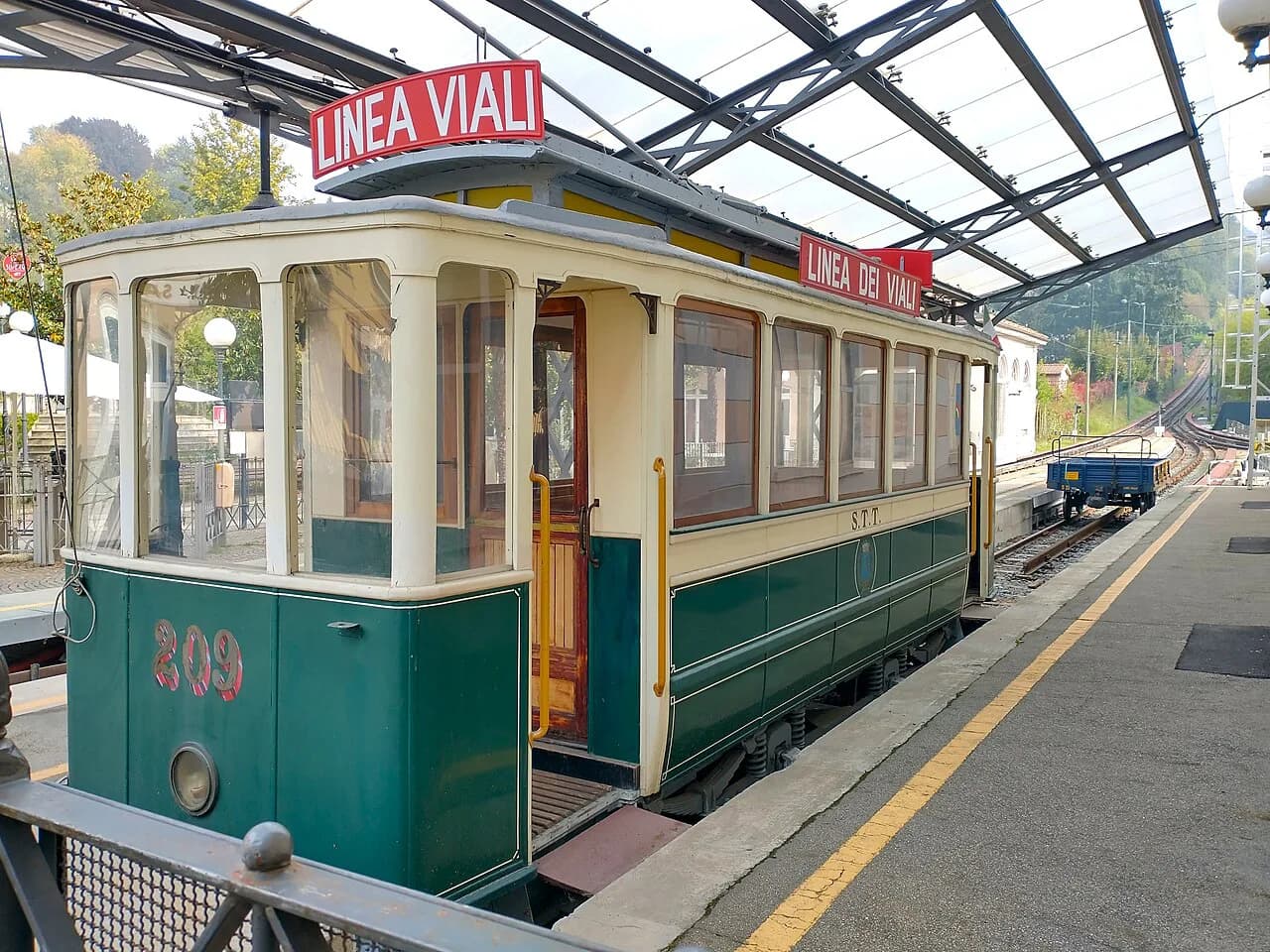
- The tranvia a dentiera is a century-old rack-and-pinion tramway that climbs from the Sassi station to the hilltop Basilica di Superga.
- Confirm current timetables and fares before visiting, since small rack-tramway lines change schedules by season.
- Budget at least half a day once travel time, the climb, and the basilica visit are combined, which makes this a multi-day pick rather than a layover stop.
- Sip a Bicerin at the Café Where It Was Invented
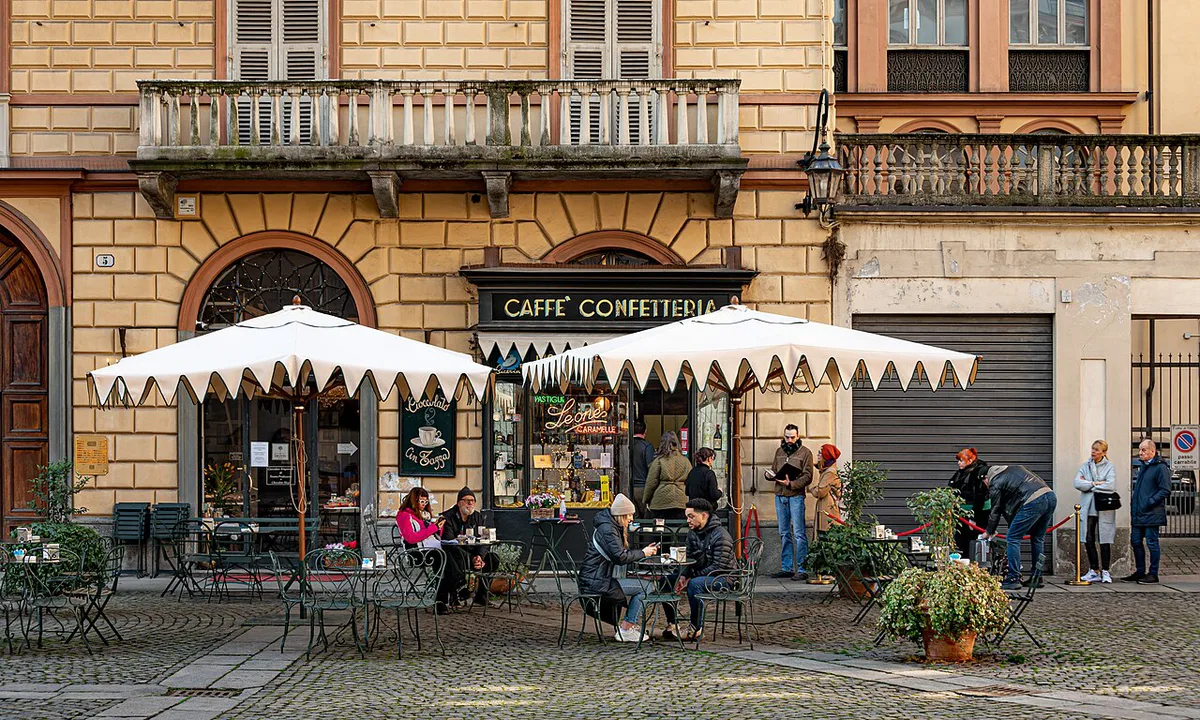
- Bicerin is a layered espresso, chocolate, and cream drink first served in 1763 at a café in Piazza della Consolata, and it's still poured there today.
- A full ritual set with local biscuits and a chocolate liqueur runs €16 at the historic café, and the stop fits easily inside a 2-3 hour layover.
- The dedicated historic cafés guide covers a wider crawl through Turin's other 18th- and 19th-century cafés.
- Take the Lift Inside the Mole Antonelliana to the Cinema Museum
- Built originally as a synagogue in 1863, the Mole Antonelliana now houses the National Cinema Museum and a glass lift that rises to a rooftop viewing platform.
- Museum entry costs €11, and the rooftop viewing platform alone costs €8.
- A combined ticket covering both costs €15, and the whole stop fits inside a 2-3 hour layover.
- Compare Monte dei Cappuccini's Free View Against the Mole's Paid Platform
- Monte dei Cappuccini is a hilltop church across the Po River, with a lookout point facing the Mole Antonelliana and, on clear days, the Alps beyond it.
- Entry to the church is free, making it the no-cost alternative to the Mole's paid viewing platform, and the subject of the view differs: here, the Mole itself is what's in frame.
- This fits a short layover, and the full write-up lives on the dedicated Monte dei Cappuccini guide.
- Spot Turin's Vintage Neon Signage
- The orange neon Martini sign above Caffè Torino's arcade in Piazza San Carlo is one of the city's best-known vintage signs, and the Martini vermouth brand itself began in Turin.
- Cinema Lux's facade inside the Galleria San Federico shopping arcade is another stop on the same short signage walk, a few minutes away on foot.
- This is a free, photo-driven pick that fits inside any layover, since both signs sit within a few blocks of each other in the historic center.
- Walk Turin's Porticoes End to End
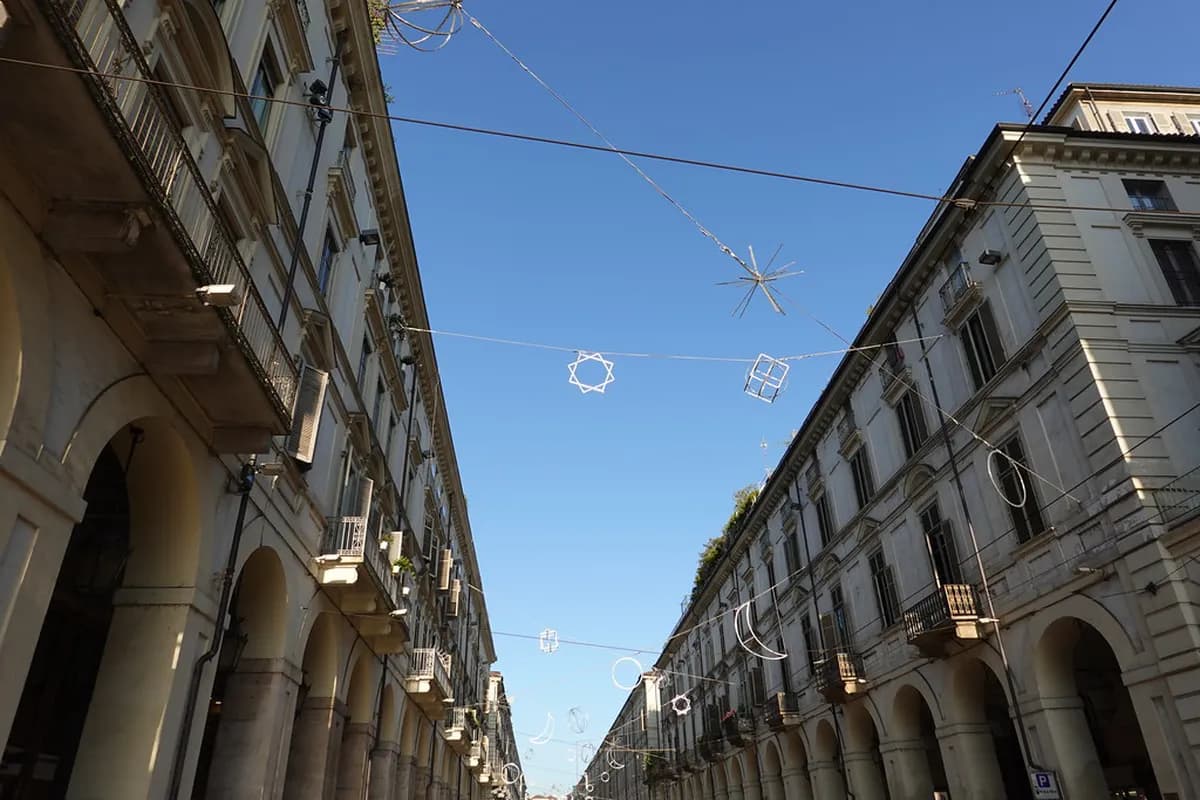
- Turin's covered arcades run for roughly 11 miles across the city, with about 7.5 miles forming one continuous route, a scale most Italian cities don't match.
- The design dates back to the House of Savoy wanting to walk the city without carrying an umbrella, and the porticoes still offer shade in summer and cover from rain in winter.
- This is free and works in any weather, making it a solid layover pick. The dedicated porticoes guide maps the best stretches to walk.
- Wander the Quadrilatero Romano at Aperitivo Hour
- The Quadrilatero Romano sits on Turin's original Roman street grid and turns into an aperitivo district each evening, with bars setting out small plates alongside drinks.
- Wandering the streets themselves costs nothing, and aperitivo and dinner are the only paid part of the visit.
- The quarter works best as a half-day-into-evening stop, and the dedicated Quadrilatero Romano guide maps specific streets and bars worth targeting.
- Take In the Egyptian Museum's Scale
- Museo Egizio holds one of the largest collections of Egyptian antiquities outside Cairo, and the draw here is specific standout pieces rather than a generic museum visit.
- General admission costs €15 and includes an audio guide, with a typical visit running 2 to 3 hours through the main galleries.
- This is a half-day pick rather than a layover stop, and it pairs well on the same afternoon as the Royal Palace and Chapel of the Holy Shroud a few blocks away.
- Walk the Open-Air Sculpture Collection at the Monumental Cemetery
- Cimitero Monumentale is an unusual addition to a sightseeing list, but its open-air galleries of 19th- and 20th-century funerary sculpture make it worth the detour.
- Entry is free, and the cemetery works best as an add-on to a half-day or multi-day visit rather than a rushed layover stop.
- The dedicated Monumental Cemetery guide covers specific sections and notable graves worth seeking out.
Only-in-Turin Food and Drink Beyond the List
Piedmont cooking leans on hazelnuts, Barolo and Barbera wine, and dishes rooted in this specific region rather than generic Italian staples. Agnolotti, a meat-filled pasta served in broth or butter, and bagna cauda, a warm anchovy-and-garlic dip, are both specific to Piedmont rather than found nationwide. Chocolate has deep roots here too: Caffarel began producing the gold-foil-wrapped gianduiotto in 1865, and the city still holds an annual chocolate festival, CioccolaTó, each November in Piazza San Carlo. Other historic cafés extend the ritual beyond the bicerin stop above. Caffè Baratti & Milano has served since 1858 and was once official chocolatier to the Savoy family. Caffè Mulassano has occupied the same spot since 1907. Aperitivo hour typically comes with small plates alongside the drink here, a Piedmont-specific twist on a ritual that's thinner in many other parts of Italy. A full rundown of Piedmontese dishes worth ordering sits on the local food guide. For specific addresses, the best local restaurants guide lists where to eat them.
Streets and Squares Worth a Detour
Via Roma runs in a straight line from Porta Nuova train station through Piazza San Carlo to Piazza Castello, tying together several picks on this list along one walkable route. Piazza Castello anchors the historic center, with the Royal Palace and Palazzo Madama facing onto it from opposite ends of the square. Royal Palace tickets cost €12 and include the Chapel of the Holy Shroud and the royal apartments. Palazzo Madama tickets cost €10 for its Ancient Art museum. Its namesake piazza, Piazza San Carlo, rewards a slower pass beyond the vintage-sign stop above, with matching Baroque facades and twin churches, Santa Cristina and San Carlo Borromeo, framing both ends. The Palatine Gate is a 1st-century Roman gate with twin brick towers, standing within an open-air archaeological park near the cathedral. Its base stretches over 65 feet, and the towers reach nearly 100 feet tall.
Royal Palace entry costs €12 and includes the Chapel of the Holy Shroud, but the famous cloth is shown only on rare occasions. Expect an empty-but-historic chapel rather than the actual relic.
Neighborhoods Worth Exploring on Foot
Turin's central neighborhoods each carry a different flavor, and a full breakdown sits on the neighborhoods guide. San Salvario, south of Porta Nuova station, mixes multicultural restaurants with a dense nightlife scene, and the San Salvario guide covers specific streets worth targeting. Vanchiglia sits near the university with a younger, lower-key bar scene than the center, and the Vanchiglia guide details where to go. Borgo Po runs along the river near Monte dei Cappuccini, quieter and more residential than the historic core, and the Borgo Po guide maps the riverside routes.
Getting Around and Timing Your Visit
The historic core is flat and compact, and most picks on this list are reachable on foot from Piazza Castello. A single tram or bus ticket costs €1.70 and covers 100 minutes of travel, while a full-day ticket costs €4. Tickets are sold at tobacconists, newsstands, and some cafés, and need to be validated on board. A metro line also runs through the city, with tickets sold directly at metro stations rather than the newsstands used for tram and bus fares. Turin-Caselle Airport sits about 10 miles north of downtown, with shuttle service to the Porta Nuova and Porta Susa train stations. For the quietest months to visit, the best time to visit guide breaks down crowd patterns by season.
If You Have More Time: Day Trips from Turin
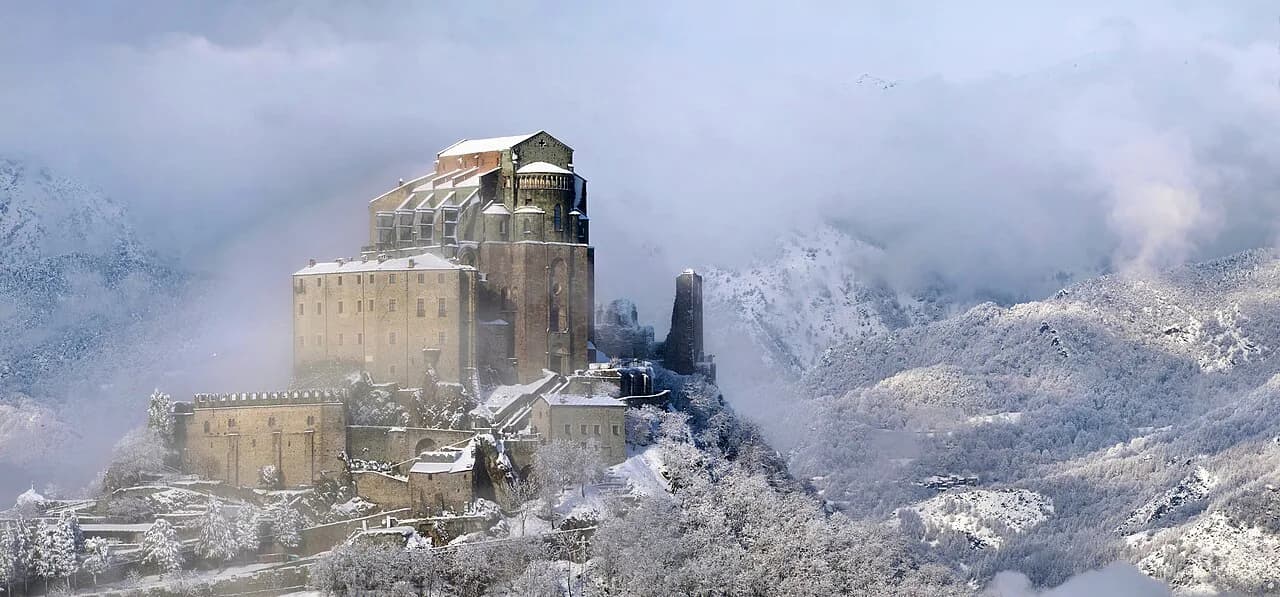
Proximity to the Alps and Piedmont's wine country makes Turin a workable base for day trips beyond the nine picks above. Options range from Alpine abbeys like the Sacra di San Michele in the Susa Valley to lake towns such as Lago d'Orta and Lake Maggiore, plus Piedmont's Barolo and Barbaresco wine country to the south. Milan also works as an add-on stop for travelers continuing on by train. The dedicated day trips from Turin guide covers specific routes, travel times, and which trips work without a rental car.
Mistakes to Avoid If You're Short on Time
A few planning mistakes show up often enough to call out directly. Most trace back to underestimating how long museums take, or overestimating what a city card saves.
- Stacking three major museums into one afternoon
- The Egyptian Museum alone needs 2 to 3 hours.
- Combining it with the Royal Palace and a third stop in one afternoon usually means rushing all three.
- Skipping ticket validation on trams and buses
- A valid ticket needs to be tapped or stamped once on board.
- Inspectors do check, and an unvalidated ticket counts as no ticket at all.
- Assuming a city card pays off on a short visit
- A multi-attraction city card generally only saves money once three or more paid sites are on the itinerary.
- For a single museum stop, a standalone ticket is usually cheaper.
- Sitting down for bicerin when budget is tight
- Table service at historic cafés costs more than standing at the bar.
- For a quick, cheap taste, order at the counter instead of taking a seat.
- Not checking museum hours before arriving
- Major sites here typically close one day a week, and hours shift for holidays and off-season.
- Checking each venue's current hours before building a tight schedule avoids a wasted stop.
- Underestimating how early historic cafés fill up
- Caffè al Bicerin and other landmark cafés fill up by mid-morning on weekends.
- Arriving close to opening avoids the wait for a table.
Understand Turin’s Criminal Anthropology Museum
The Museo di Antropologia Criminale Cesare Lombroso is one of Turin’s most unsettling and distinctive museums. It examines the 19th-century criminologist’s attempt to identify a supposedly “born criminal” through physical traits. Those ideas are now discredited, and the museum presents them as a cautionary history of pseudoscience.
Inside the University of Turin’s Palazzo degli Istituti Anatomici, the collection includes historical instruments, photographs, documents, wax models, prison-made objects, and human remains. It is a serious museum rather than a horror attraction. The visit is best for adults and older teens interested in medical history, ethics, or the history of science.
- Allow about 60 to 90 minutes.
- Find it on Via Pietro Giuria, southeast of the historic center.
- Check current opening times before traveling, as university museum schedules can be limited.
Pair it with a walk through nearby San Salvario, then return to the center for aperitivo.
Frequently Asked Questions
What is unique about Turin that you can't find elsewhere in Italy?
Specific claims here include bicerin, a chocolate-coffee-cream drink invented in one of the city's own cafés, and one of the largest Egyptian antiquities collections outside Cairo. Its covered porticoes also run for roughly 11 miles, a scale most Italian cities never built. Together, these are rituals and details tied to this one city rather than generic Italian sightseeing.
What is the Shroud of Turin and why is it controversial?
The Shroud of Turin is a linen cloth bearing a faint image that many associate with Jesus Christ. Savoy family members acquired it in the 1400s and later built a chapel to house it. Its authenticity has been disputed for years, and the cloth itself is shown only on rare occasions, so most visitors see the chapel rather than the shroud.
How much time do you need to see the unique things Turin is known for?
Two to three hours covers one or two picks, like the porticoes and a bicerin stop. Half a day covers three or four picks, including the Cinema Museum or Egyptian Museum. Multi-day visits allow for the Superga rack tramway, the Royal Palace, and a slower pace through the Quadrilatero Romano.
Is Turin worth visiting on a short layover or stopover?
Yes, several picks on this list fit inside 2 to 3 hours, including the porticoes walk, the vintage signage stop, and a quick bicerin. Sticking to picks near Piazza Castello and Piazza San Carlo avoids losing time in transit between sights. Even a single stretch of portico near Porta Nuova station works if time is limited to under an hour.
What should first-time visitors avoid when planning unique things to do in Turin?
Avoid stacking multiple full museum visits into one afternoon, since the Egyptian Museum and Royal Palace each need 2 to 3 hours on their own. Skip assuming a multi-attraction city card saves money on a short visit. It typically only pays off with three or more paid stops.
What is bicerin and where should you try it?
Bicerin is a layered drink of espresso, drinking chocolate, and whipped cream, first served in 1763 at a café in Piazza della Consolata that still pours it today. It can also be ordered at other historic cafés around the city, including one in Piazza San Carlo. Caffè Baratti & Milano and Caffè Mulassano, dating to 1858 and 1907, are two other long-running options in the historic center.
What's the best area to base yourself for these picks?
Piazza Castello and the streets around Via Roma put most of these picks within a short walk, including the porticoes, Piazza San Carlo, and the Quadrilatero Romano. Staying near Porta Nuova station also keeps the airport shuttle and train connections close.
Continue exploring
More guides you'll find useful