Turin Local Food Guide: What to Eat and Where in 2026
Turin local food guide for 2026: agnolotti del plin, bagna cauda, and bicerin, plus Porta Palazzo market hours, aperitivo timing, and neighborhood picks.
On this page
Turin Local Food Guide: Piedmontese Dishes, Markets, and Cafés
Last updated August 2026, this Turin local food guide points you toward where Piedmontese cooking actually happens. Head to San Salvario trattorias, Quadrilatero Romano piolas, and Caffè Al Bicerin, pouring its layered coffee-chocolate-cream drink since 1763. Turin's food culture also birthed the Slow Food movement in 1986, and its kitchens still favor local sourcing over speed.
Five Piedmontese Staples to Try First in Turin
Piedmontese food diverges from the tomato-and-olive-oil profile associated with southern Italian cooking. Butter, cream, hazelnuts, and egg-rich pasta dominate instead, a product of Piedmont's cooler climate and Alpine dairy tradition. Use the table below as a fast reference before diving into markets, cafés, and neighborhoods.
| Dish | Key Ingredient | Best Neighborhood |
|---|---|---|
| Agnolotti del Plin | Hand-pinched pasta with veal, pork, and rabbit filling | Quadrilatero Romano piolas |
| Bagna Càuda | Anchovy, garlic, and olive oil dip | San Salvario trattorias |
| Gianduiotto | Hazelnut and cocoa paste | Chocolate shops citywide |
| Bicerin | Espresso, chocolate, and cream, layered | Caffè Al Bicerin, Quadrilatero Romano |
| Vitello Tonnato | Cold veal with tuna-caper sauce | San Salvario and Quadrilatero trattorias |
Your Turin Local Food Guide to the Big Three Culinary Pillars
Three culinary traditions define Piedmontese cooking in Turin: chocolate, raw beef, and hand-shaped pasta.
- Gianduiotto: individually wrapped hazelnut chocolates, sold across the city and often paired with a bicerin rather than eaten alone.
- Fassona beef: a Piedmontese cattle breed prized for double-muscling, a genetic trait that produces the lean, tender meat served raw in battuta a coltello and carne cruda.
- Vitello Tonnato: poached veal sliced thin and dressed in a tuna, caper, and anchovy sauce, common on aperitivo boards.
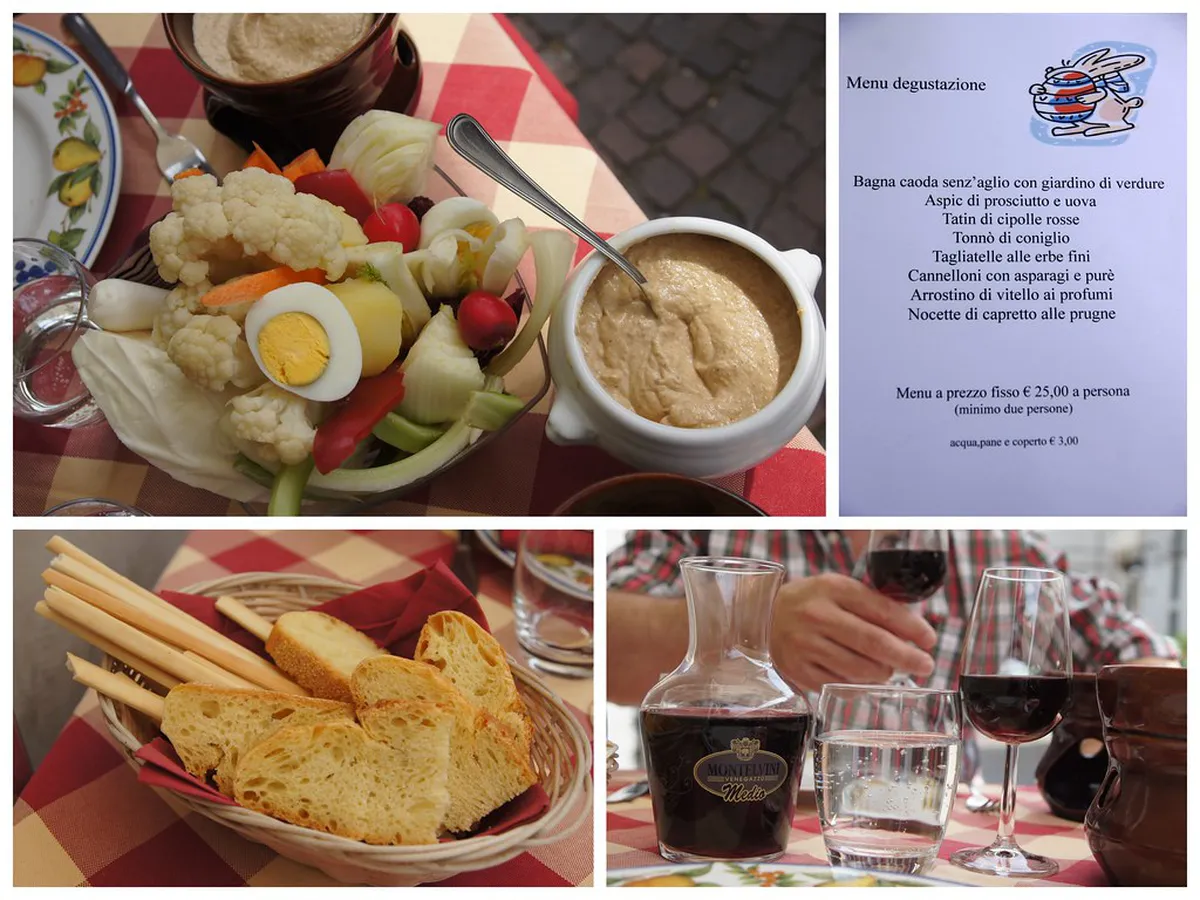
- Bagna Càuda: a warm anchovy, garlic, and olive oil dip, traditionally served with raw and cooked vegetables, and just as often used as a pasta sauce or scrambled into eggs.
- Salsiccia di Bra: a veal sausage tied to the town of Bra, traditionally eaten raw or with a squeeze of lemon as an aperitivo bite.
- Agnolotti del Plin: small pasta parcels sealed with a pinch, plin in Piedmontese dialect, traditionally filled with roasted pork, veal, and rabbit.
- Tajarin: a ribbon pasta made with around 30 egg yolks per batch, often finished with butter and, in season, shaved white truffle.
Historic Cafés vs Local Pasticcerie: The Coffee-to-Chocolate Ritual
Coffee and chocolate work as a ritual in Turin, not a quick stop. At Caffè Torino, sit under gilded mirrors and a carved wooden bar on Piazza San Carlo, near the vintage Martini sign that marks the city's vermouth history.
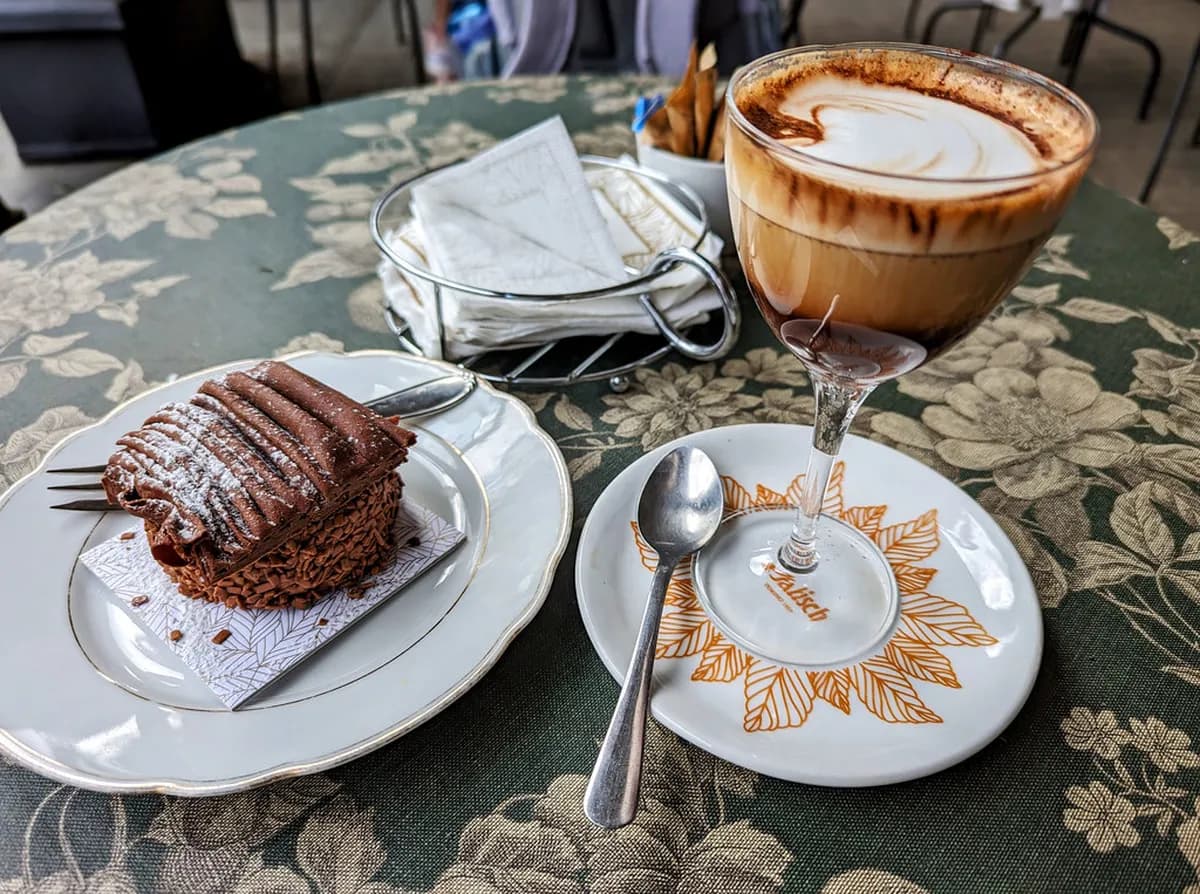
Caffè Al Bicerin, serving since 1763, charges €6–€9 for its signature three-layer espresso-chocolate drink best enjoyed without stirring to taste each component.
- Caffè Al Bicerin: pouring its espresso-chocolate-cream drink since 1763, in a small room where peak hours mean a wait.
- Caffè Torino: a gathering spot since 1903 on Piazza San Carlo, with seating under gilded mirrors and carved wood.
- Caffè Baratti & Milano: a chocolate house since 1858, open 9:00 daily except Monday, with a line forming by 10:00.
- Farmacia del Cambio: the pastry counter tied to the historic Del Cambio group, drawing its own weekend line for coffee and pastries.
Navigating Porta Palazzo and Turin's Food Markets
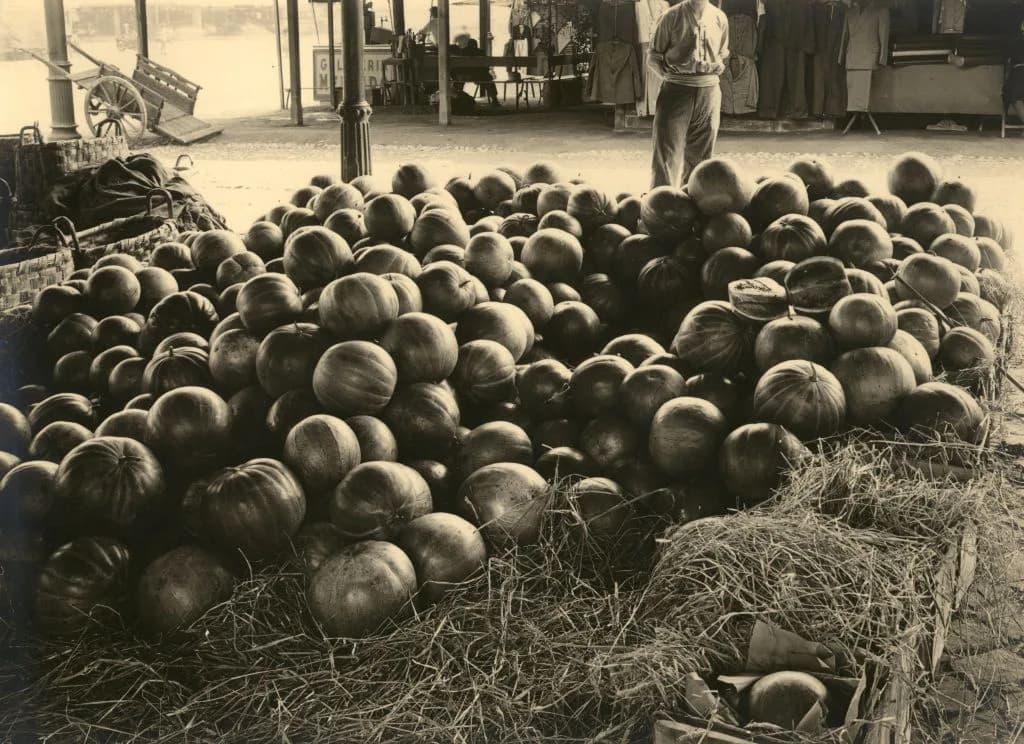
Porta Palazzo, on Piazza della Repubblica, is Europe's largest open-air market. Weekday hours run roughly 7:00 to 14:00, and the market closes entirely on Sunday. It functions as the everyday food market, while Balôn runs on a separate rhythm built around antiques rather than groceries.
- Porta Palazzo: Piazza della Repubblica, open Monday–Saturday, roughly 7:00–14:00, closed Sunday; confirm the exact Saturday closing time locally.
- Balôn Market: Via Vittorio Andreis and nearby streets, Saturdays 7:00–18:00, a flea and antiques market with food stalls.
- Gran Balôn: the second Sunday of each month, 8:00–18:00, a larger version of Balôn with more antique stalls.
Where to Eat by Neighborhood: Quadrilatero Romano, San Salvario, and Vanchiglia
The food scene splits cleanly by district, and each one rewards a different kind of appetite. Quadrilatero Romano is the city's oldest district, built around narrow streets that hold traditional piolas serving hearty, meat-forward menus. Piolas here such as Fratelli Bruzzone serve well-regarded agnolotti at reasonable prices, though seating is limited and reservations matter. San Salvario carries the modern side of the scene, with fusion kitchens, craft beer bars, and strong apericena value. Vanchiglia is where specialty coffee and artisan gelato cluster, including shops like Orso Laboratorio. Expect smaller-format cafés and gelato counters here, built for quick service rather than long seating. Vanchiglia's cafés count among the city's more off the beaten path stops, away from the main tourist routes. For a wider district-by-district breakdown before you pick a base, check the neighborhoods guide. For specific venue picks in each area, the local restaurants guide goes deeper than dish names alone.
The Aperitivo, Apericena, and Vermouth Hour
Turin's aperitivo works differently than in most Italian cities. Order a drink in early evening, and many bars set out a buffet big enough to double as dinner, a habit known locally as apericena. San Salvario carries the city's best apericena value, alongside its fusion kitchens and craft beer bars. Wine bars in the Quadrilatero district, such as Banco near Consorzio, keep the same apericena logic with a heavier wine list.
Practical Planning: Costs, Hours, and Reservations
Budget and timing shape how smoothly a Turin food itinerary runs. Use the figures below as a starting point, then confirm current pricing and hours locally, since both drift year to year.
| Item | What to Expect |
|---|---|
| Bicerin at a café | €6–€9 |
| Multi-course tasting menu | Priced well above a café bill; reserve ahead |
| Typical trattoria closure | Monday; call ahead to confirm |
| Turin Airport (TRN) to center | Roughly 30–45 minutes by car or bus |
Mistakes to Avoid in Turin's Food Scene
A few habits separate a strong Turin food trip from a frustrating one.
- Ordering spaghetti bolognese: it isn't a Piedmontese dish, and ordering it flags you as unfamiliar with the regional menu.
- Skipping the vermouth hour: Turin is the birthplace of vermouth, and an evening without one at a historic bar misses a core piece of the city's drink culture.
- Showing up to Porta Palazzo on Sunday: the market is closed that day, so plan produce shopping for Monday through Saturday instead.
- Assuming pizza in Turin means Neapolitan style: local padellino uses a small pan for a crisp base and soft center, and is common at lunch.
How to Order at Turin’s Historic Cafés
Choose between the counter and a table before ordering. At grand addresses such as Caffè Torino and Baratti & Milano, table service is part of the experience. It also usually costs more than drinking at the bar. Check the menu carefully, since counter and table prices may be listed separately.
For a quick pastry or coffee, follow the local rhythm at a pasticceria. Order and pay at the cash desk if required, keep the receipt, then take it to the counter. Staff will guide you when the system differs. This is the better choice when you want quality chocolate without waiting for a table.
At Caffè Al Bicerin, expect limited space during busy mornings and weekends. A bicerin arrives in distinct layers of coffee, chocolate, and cream. Sip it without stirring if you want to taste those layers separately. Reserve a lingering table stop for a quieter hour, then use standing-room counters for the rest of your chocolate trail.
For trip-planning details, see Bicerin – Wikipedia.
Pair this with our broader Turin tourism attractions guide for the full city overview.
Frequently Asked Questions
What are the essential dishes in a Turin local food guide?
Start with agnolotti del plin and tajarin for pasta, bagna càuda and vitello tonnato for classic antipasti, and a bicerin with gianduiotto for dessert. Together they cover Piedmont's savory, raw, and chocolate traditions in one meal cycle.
When is Porta Palazzo market open?
Porta Palazzo runs Monday through Saturday, roughly 7:00 to 14:00, and closes entirely on Sunday. Confirm the exact Saturday closing time locally, since sources differ on later evening hours.
Do Turin restaurants close on Mondays?
Many traditional trattorias and piolas close on Mondays, and some historic cafés do too. Call ahead or check a restaurant's page before planning a Monday dinner around a specific address.
How much does a bicerin cost in Turin?
Expect to pay around €6 to €9 for a bicerin at a café. Historic addresses like Caffè Al Bicerin sit at the higher end of that range because of the seating and setting.
Which neighborhood is best for an authentic aperitivo in Turin?
San Salvario delivers the strongest apericena value, with buffets substantial enough to replace dinner. Quadrilatero Romano suits a quieter, more traditional aperitivo at a piola instead.
What is Slow Food and why does it matter in Turin?
Slow Food began in 1986 as a reaction against fast food, and Turin remains closely tied to the movement's origins. Expect that philosophy to show up as an emphasis on small producers and seasonal ingredients rather than as a single dish.
What's the difference between Porta Palazzo and Balôn markets?
Porta Palazzo is Turin's daily food market for produce, cheese, meat, and street food, open Monday through Saturday. Balôn runs on Saturdays and focuses on antiques and secondhand goods, with food stalls that support the browsing rather than serve as the main draw.
Is it worth ordering raw beef dishes like carne cruda in Turin?
Fassona beef, prized for its lean, tender texture from double-muscling, is the regional standard for raw preparations. If raw meat doesn't appeal, vitello tonnato and agnolotti del plin cover the same trattoria menus without requiring a raw dish.
Continue exploring
More guides you'll find useful