Quadrilatero Romano Turin: A Local Guide to History, Dining & Nightlife
Discover Turin's Quadrilatero Romano. From Roman ruins and Baroque churches to the best aperitivo spots and historic restaurants like Tre Galline.
On this page
The Quadrilatero Romano: Exploring Turin's Historic Heart
Last updated August 2026, the Quadrilatero Romano in Turin traces its layout to a Roman garrison grid laid out around 28 BC. Narrow lanes inside that ancient grid now hold the city's densest concentration of aperitivo bars, Baroque churches, and restaurants that have operated since the 1500s. This guide separates the neighborhood's Roman-era sights from its Baroque additions and its after-dark dining scene, with practical notes on timing and getting there.
Quadrilatero Romano Turin: Turin's Oldest Neighborhood
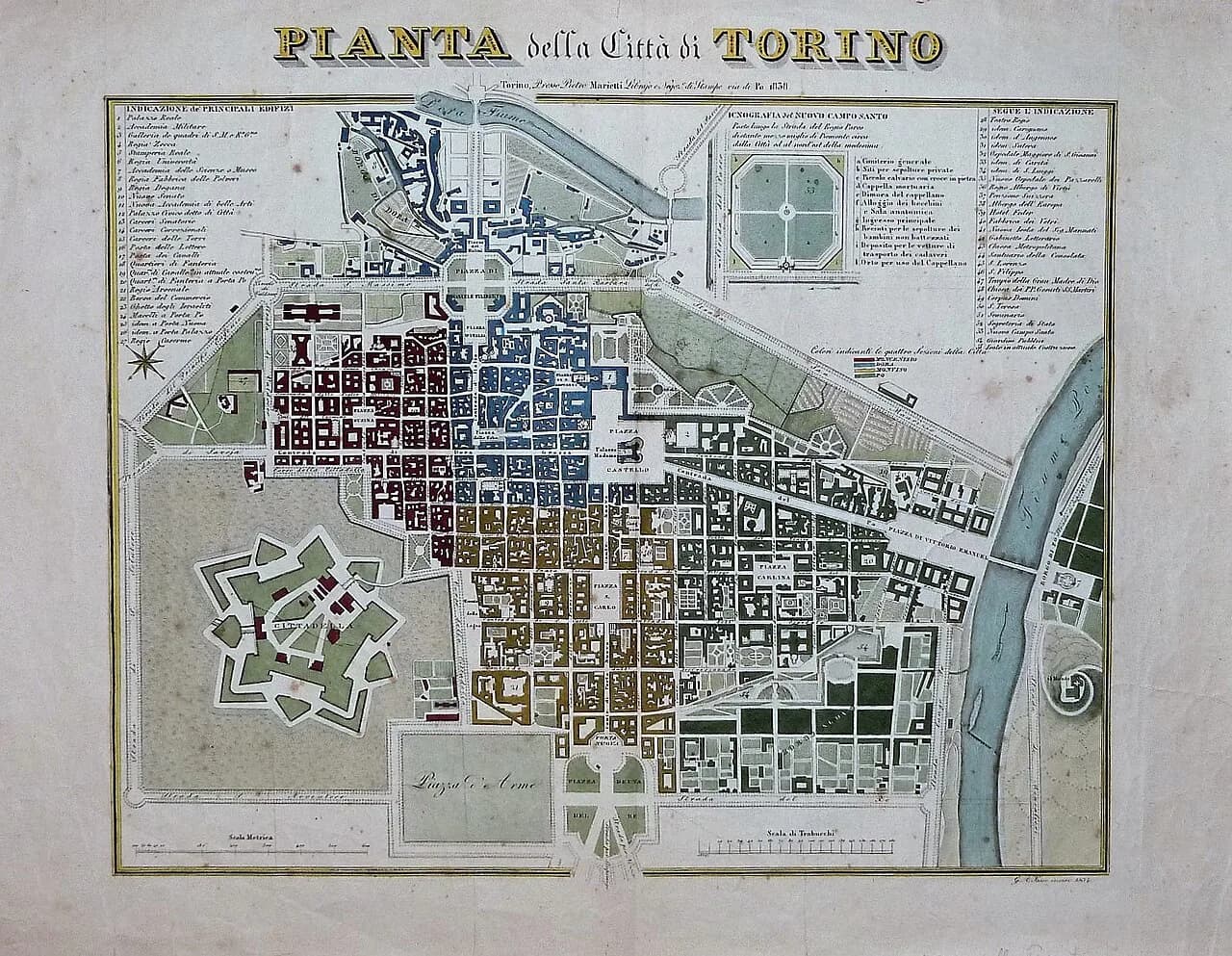
Augusta Taurinorum, the Roman colony founded around 28 BC, gave Turin its start on the site now known as the Quadrilatero Romano. Locals shorten the name to Quadrilatero, and its angled lanes feel tighter and older than the wide, gridded boulevards that define the rest of central Turin. A Roman military camp laid the original grid, and later centuries filled it in with narrower passages and taller buildings. By the late 1980s the quarter had fallen into disrepair; redevelopment since then has turned it into one of Turin's busiest nightlife districts. Any Turin Neighborhoods Guide: Where to Stay in Each District (2026) worth reading puts this quarter near the top of a first visit. Compare it to the San Salvario neighborhood, which trades Roman-era history for a multicultural food scene instead.
A 1996 steel art installation called the Piercing stands alongside the neighborhood's 28 BC Roman foundations, illustrating how creative additions continuously refresh the ancient street grid.
The Roman Roots: Walking the Ancient Castrum
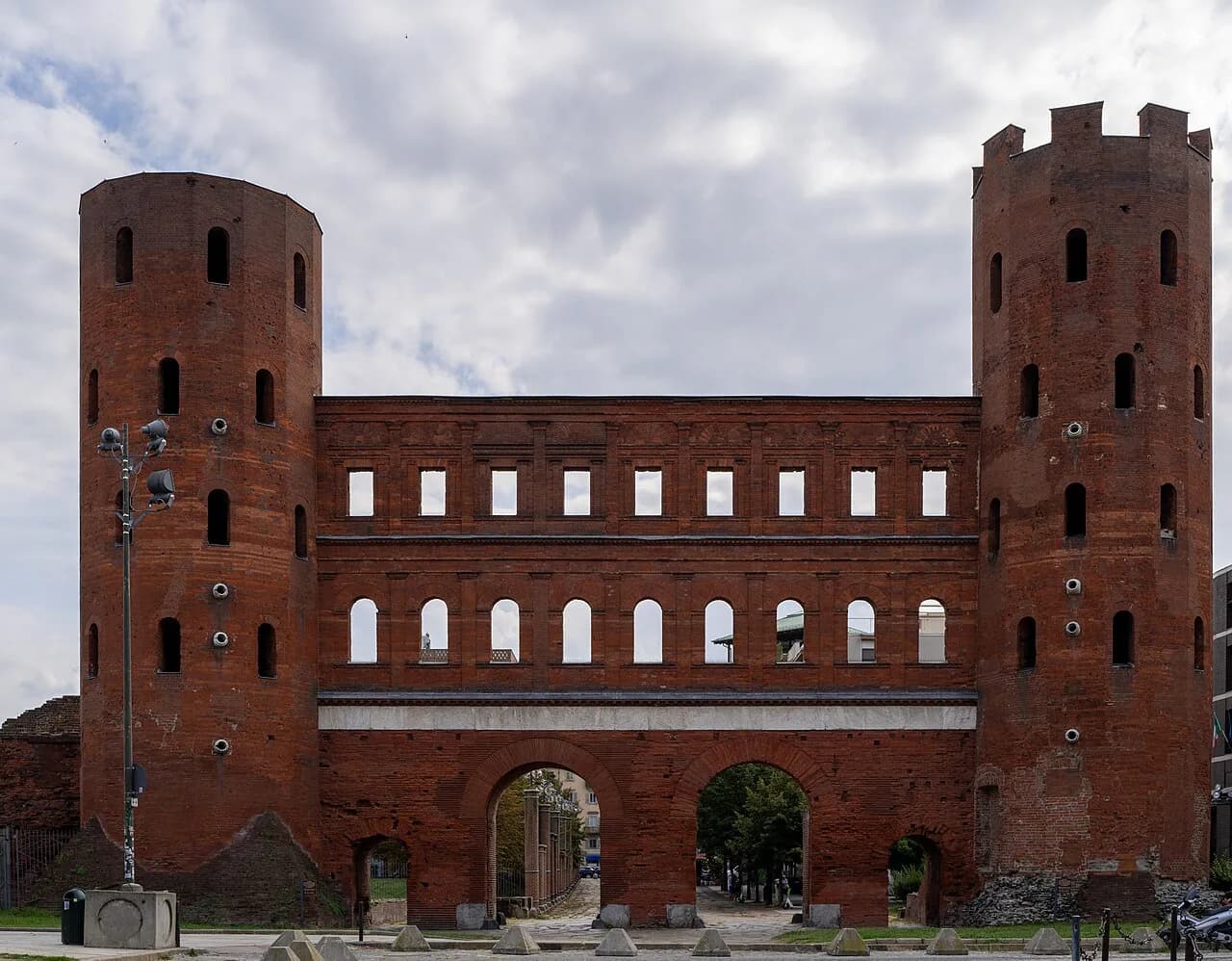
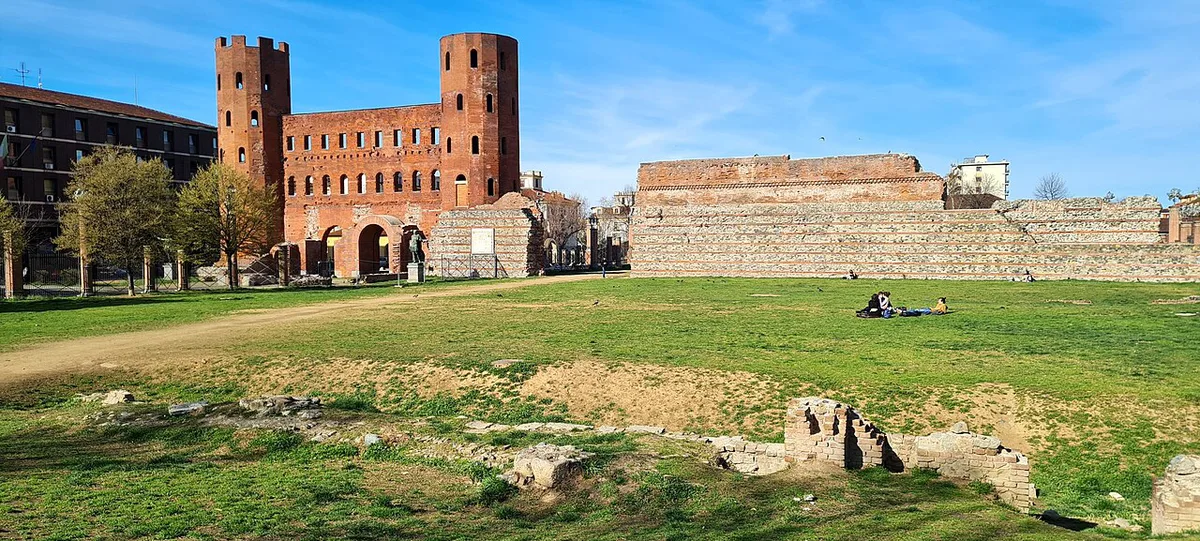
Porta Palatina anchors the northern edge of the Quadrilatero and remains the best-preserved Roman gate in Turin. Viewing it from the park side, in Piazza Cesare Augusto, costs nothing, which makes it one of the simplest Free Things to Do in Turin: What's Free, What's Not (2026 Guide). A short walk south, near the Duomo, an excavated Roman theatre reveals stepped seating, an orchestra floor, and several original pillars. Workers rediscovered the theatre only at the end of the 19th century. Via Garibaldi traces the Roman decumanus maximus, and a perpendicular cardo axis once crossed it, together dividing the castrum into quarters and giving the district its name. Its porticoed sidewalks connect to the wider network covered in the Turin Porticoes Guide: Walking the City's 18km of Covered Arcades. Wandering off Via Garibaldi into the smaller side lanes rewards patience more than a fixed checklist. See the Off the Beaten Path in Turin: Hidden Neighborhoods & Local Picks guide for more routes like it.
- Porta Palatina: 1st-century-BC Roman gate with two ground-level arches and twin polygonal towers, free to view from Piazza Cesare Augusto
- Roman Theatre: 1st-century-AD site near the Duomo, rediscovered in the late 19th century
- Via Garibaldi: follows the Roman decumanus maximus, still the neighborhood's main east-west spine
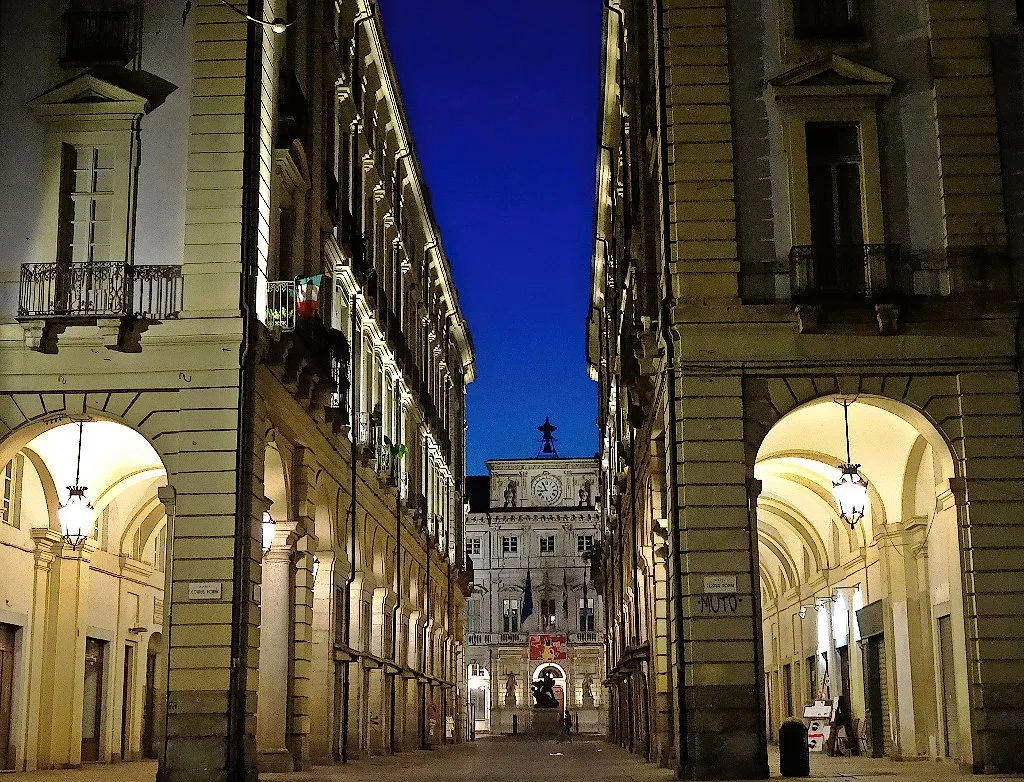
Baroque Splendor and Hidden Curiosities
Baroque work layered on top of the Roman grid over the following centuries. Turin's two star architects, Filippo Juvarra and Guarino Guarini, both left work inside the Quadrilatero. Their combined influence shows at the Santuario della Consolata, where the interior is covered in gold leaf and lined with an ex-voto wall. Survivors of accidents and illness left those ex-voto offerings as thanks, and the wall counts as one of the more overlooked Hidden Gems in Turin: 9 Local Picks With Cost, Access, and Timing (2026 Guide). Cliostraat's architecture studio bolted a steel ring, known locally as the Piercing, to the corner of Via Palazzo di Città and Via della Basilica in 1996. In our editorial assessment, the clearest photo angle looks up from the small square below, catching the ring against the building's roofline without foreground clutter. Along Via Milano, three Juvarra-designed buildings carry carved animal heads. Both curiosities rank among the neighborhood's best Secret Spots in Turin: 2026 Guide to the City's Quiet Corners. Galleria Umberto I connects Via della Basilica to Piazza della Repubblica under a covered 19th-century arcade. That passage once served as one of Turin's hospitals before it became a shopping gallery. For the Duomo itself and the Chapel of the Holy Shroud, both a short walk from Piazza della Consolata, see the 9 Unique Things to Do in Turin, Italy: Local Experiences & Practical Guide guide.
San Domenico, built in the 13th-14th centuries, received an 18th-century Baroque overlay that was stripped away during 1906 and 1911 restoration work, revealing the church's original medieval architecture.
- Bull: the emblem of the city of Turin
- Lion: taken from a former building owner's coat of arms
- Dog: tied to the Dominicans, whose Latin name Dominus canes plays on Dominicans and dogs of the Lord
Other Squares and Landmarks Worth a Detour
Piazza Savoia sits a few blocks from the Consolata and centers on an obelisk commemorating the Siccardi Law of 1850, which abolished separate ecclesiastical courts. Via del Carmine leads off the square to a Juvarra-designed church, worth a look for Claudio Francesco Beaumont's 1755 painting in the apse. On the opposite side of the square, Palazzo Falletti di Barolo is where Silvio Pellico wrote his best-known memoir, Le mie prigioni. Once a produce market known as Piazza delle Erbe, Piazza Palazzo di Città now functions as Turin's Town Hall square. City workers rebuilt the original Town Hall between 1659 and 1665, expanded it in the 18th century, and added statues of Carlo Alberto and Vittorio Emanuele II to the façade in 1858. At the center of the square, a monument by sculptor Pelagio Palagi honors the Conte Verde, Amedeo VI of Savoy. Nearby, Piazzetta Corpus Domini started out as the neighborhood's grain market before the church of the same name gave it its current one. Turin's only Gothic building, the Church of San Domenico, stands at the corner of Via San Domenico and Via Milano and was built by the Dominicans between the 13th and 14th centuries. Restoration work between 1906 and 1911 stripped away an 18th-century Baroque overlay and returned the church to its original medieval look. Inside, 14th-century frescoes survive in the Madonna delle Grazie chapel alongside a painting attributed to Guercino in the Rosary chapel.
The Bicerin Tradition at Caffè Al Bicerin
Piazza della Consolata is home to Caffè Al Bicerin, generally credited as the birthplace of Turin's signature drink. A bicerin layers espresso, drinking chocolate, and cream in a small glass. Versions vary between a clean three-layer pour and a two-layer style that blends the coffee and chocolate together. Ordering one at the historic cafe means joining a queue that can stretch out the door, especially around midday, plus paying a premium versus a standard bar. Several newer cafes nearby serve a competent bicerin with shorter waits and lower prices, which suits travelers on a tight schedule. For a fuller list of where else to sit down with a coffee in the city center, check the Turin Historic Cafes: A Guide to the City's Most Elegant Coffee Houses.
Aperitivo and Dining in the Quadrilatero
Aperitivo hour starts most evenings around 7 PM and defines how the Quadrilatero fills up after dark. Piazza Emanuele Filiberto draws the biggest crowds, with bars spilling onto the square above the old icehouses that once supplied the nearby Porta Palazzo market. Ringed by medieval brick houses with ogival windows, Piazza IV Marzo keeps a quieter, wine-bar-focused pace instead. Turin claims the Americano cocktail and vermouth itself as local inventions, so both show up on most aperitivo menus alongside the Negroni and the regional Barolo Chinato. For dinner, Tre Galline at Via G. Bellezia 37 has operated since 1575 and remains one of the neighborhood's most established Piedmontese kitchens. In winter, order the bollito misto, a mixed boiled-meat dish served with garlic-forward sauces. Year-round, the roughly six-course tasting menu gives a fuller overview of the region's cooking. Expect a higher check than at a standard trattoria. Its wine list, built up over centuries, tends to outperform the food-pairing knowledge found at most other restaurants in town. Service can turn patchy on a packed Friday or Saturday night, so a reservation and some patience help. For more options across price points, see the Turin Local Food Guide: What to Eat and Where in 2026. The 10 Best Local Restaurants in Turin: Where Torinesi Actually Eat (2026) guide covers the wider city.
| Square | Vibe | Best For |
|---|---|---|
| Piazza Emanuele Filiberto | Crowded, high-energy | Groups, bar-hopping |
| Piazza IV Marzo | Quieter, wine-bar focus | Conversation, slower pace |
Logistics: Planning Your Visit to the Quadrilatero Romano
Most visitors reach the Quadrilatero on foot, since it sits an easy walk from Piazza Castello. Nearest metro stops are Porta Susa and XVIII Dicembre, both a short walk from the neighborhood's edge. Mornings suit the Roman and Baroque sightseeing, since streets are calmer and shops are open. Bars and restaurants take over after 7 PM instead. For a broader read on when the whole city is least crowded, see the Best Time to Visit Turin Without Crowds (2026 Season-by-Season Guide) guide.
| Time | Best For | Highlights |
|---|---|---|
| Morning | Roman and Baroque sightseeing | Porta Palatina, Roman Theatre, Santuario della Consolata |
| Evening (after 7 PM) | Aperitivo and dinner | Piazza Emanuele Filiberto, Piazza IV Marzo, Tre Galline |
- Don't drive in: the Quadrilatero sits inside Turin's ZTL restricted traffic zone, and its streets are too narrow for comfortable parking
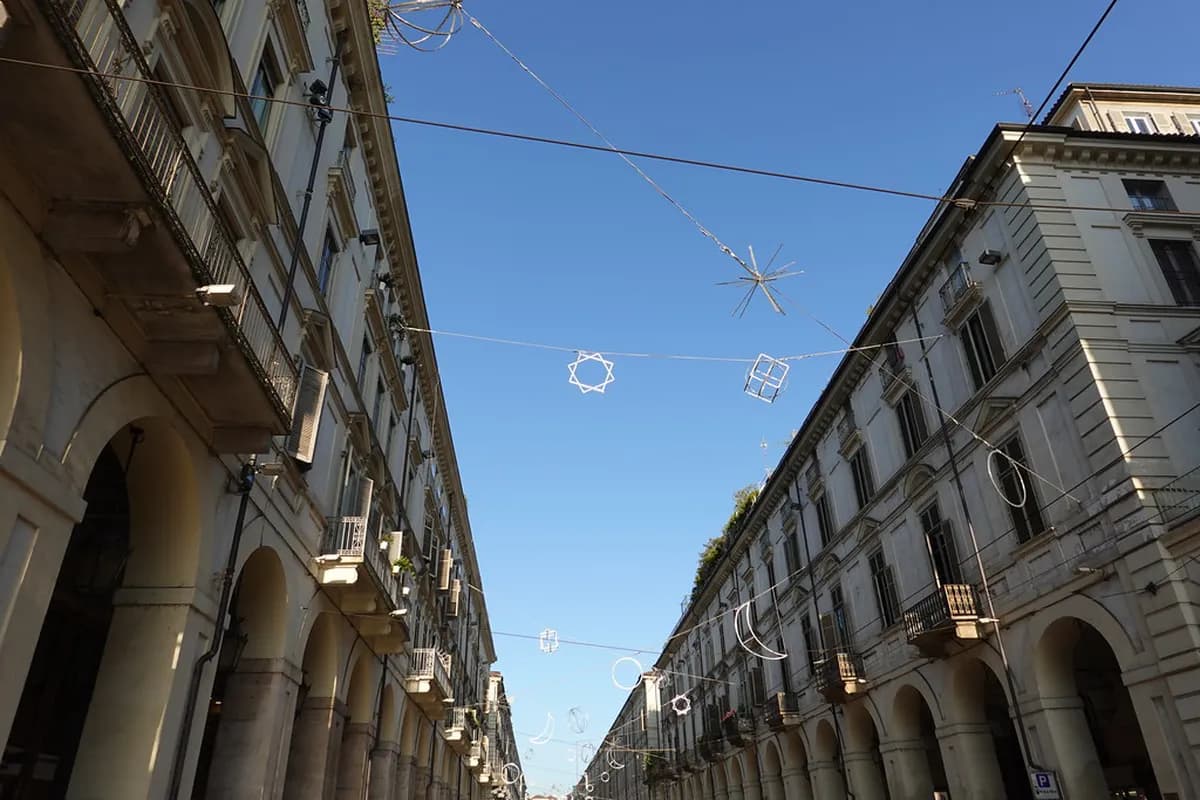
- Don't skip Contrada dei Guardinfanti: the banners overhead mark the old district of merchants who sold guardinfanti, the hoop-skirt frames worn under wide dresses
- Don't expect Rome-style ruins: the Roman history here survives as a street grid and a handful of preserved sites, not a standalone archaeological park
Frequently Asked Questions
What is the Quadrilatero Romano in Turin?
It's Turin's oldest neighborhood, built on the site of the Roman colony Augusta Taurinorum, founded around 28 BC. Its street grid still follows the original Roman castrum, bounded by Via Garibaldi, Via della Consolata, Corso Regina, and Via XX Settembre.
Is the Quadrilatero Romano safe to walk at night?
The neighborhood is one of Turin's busiest nightlife hubs, with bars and restaurants around Piazza Emanuele Filiberto and Piazza IV Marzo staying open well past 10 PM. That level of foot traffic keeps the main squares populated late, though standard city precautions still apply on quieter side lanes.
How much time should you budget to see the Quadrilatero Romano?
A focused morning covers the three main Roman sites: Porta Palatina, the Roman theatre near the Duomo, and the Santuario della Consolata. Add an evening return for aperitivo and dinner, since the neighborhood functions differently by day and by night.
Where can you park near the Quadrilatero Romano?
Avoid driving directly into the neighborhood, since it falls inside Turin's ZTL restricted traffic zone and its lanes are too narrow for casual parking. Park in a garage outside the ZTL perimeter and walk in, or take the metro to Porta Susa or XVIII Dicembre instead.
What is a bicerin, and where should you try one?
A bicerin is a layered drink of espresso, drinking chocolate, and cream, served in a small glass. Caffè Al Bicerin on Piazza della Consolata is the historic option, though it draws long queues, and several newer cafes nearby serve a comparable version with a shorter wait.
Continue exploring
More guides you'll find useful