Turin Porticoes Guide: Walking the City's 18km of Covered Arcades
A Turin porticoes guide to the 18km covered-arcade network, with walking routes, key museums, cafes, and 2026 planning tips.
On this page
Turin Porticoes Guide: How to Walk 18km of Covered Arcades
Last updated August 2026, this Turin porticoes guide maps the 18km of covered arcades that let you cross the city center without an umbrella. King Victor Emmanuel I commissioned the first stretch so the royal court could walk from the palace to the Po River without getting wet. Twelve of those kilometers run continuously, linking major piazzas, museums, and historic cafes into one weatherproof route.
The Turin Porticoes Guide to 18km of Covered Arcades
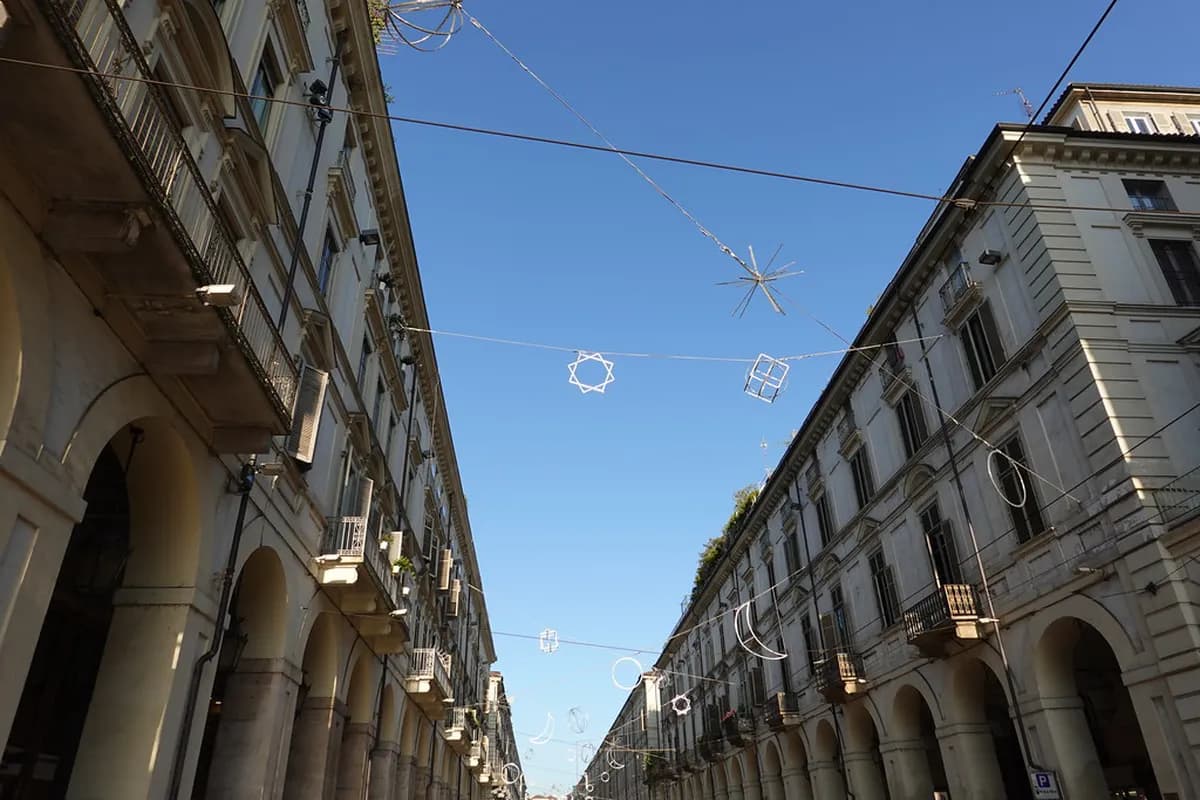
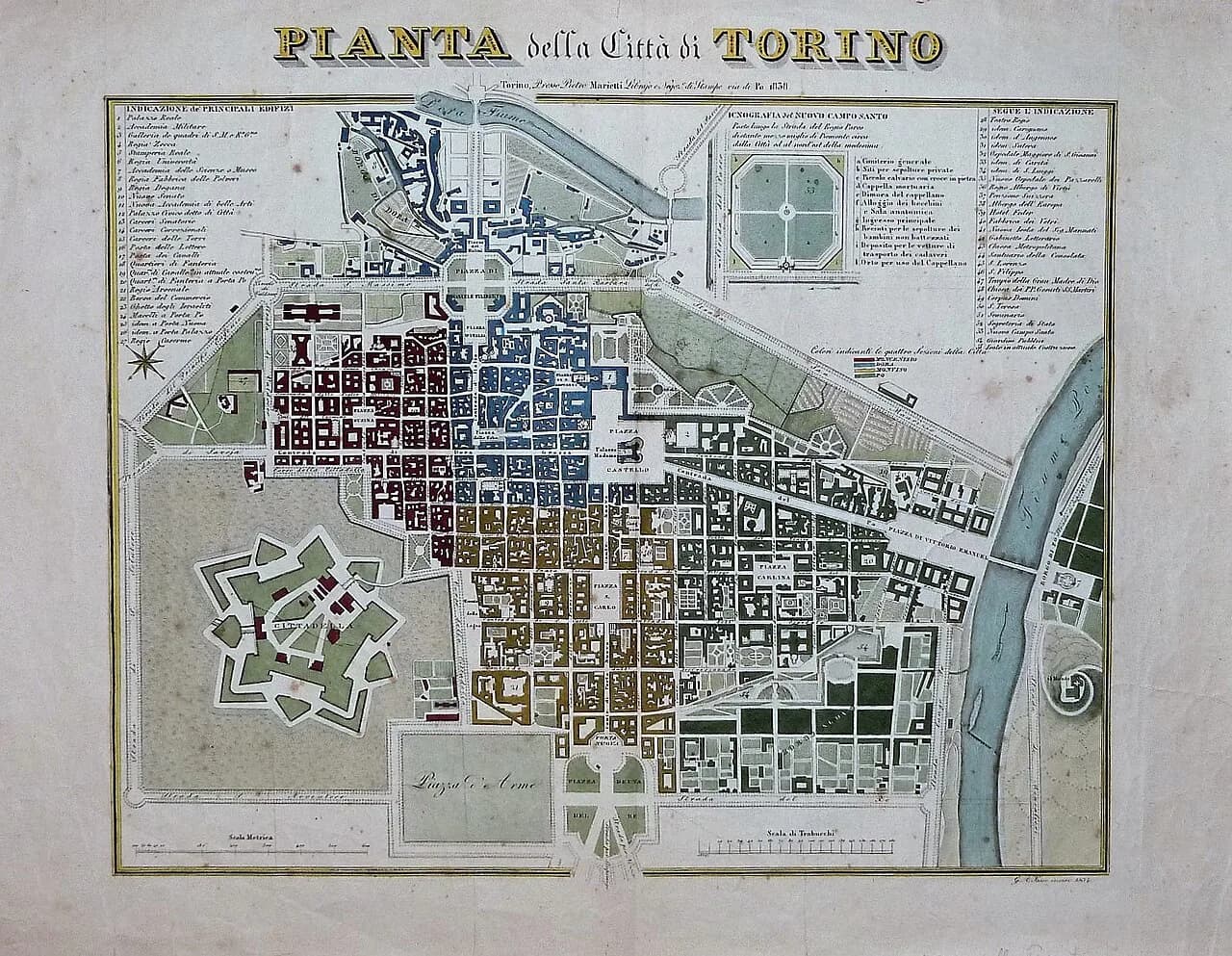
Turin's covered arcades stretch for roughly 18km across the historic center, with 12km of that network fully continuous. Construction began in Piazza Castello during the 17th century, where the Royal Palace and Palazzo Madama still anchor the square today. The very first porticoes, built in the Middle Ages, run between Via Garibaldi and the Porta Palazzo market, an area covered in more depth in the Quadrilatero Romano guide. Builders extended the network through Via Po, Via Roma, and Via Cernaia as the House of Savoy expanded the city toward the Po River. Piazza Carlo Felice, facing the Porta Nuova station, and Piazza Statuto gained their own porticoes in the 19th century, extending covered walking almost to the station doors. Legend credits King Victor Emmanuel I with requesting the route. He wanted the royal court to walk from the palace to the river without carrying an umbrella. That story explains the tone of the whole network: wide, level, and built for unhurried walking rather than quick transit. Walking the arcades costs nothing, which makes them one of the simplest Free Things to Do in Turin: What's Free, What's Not (2026 Guide). For more on how the Quadrilatero's medieval lanes give way to the royal center's grand squares, see the Turin Neighborhoods Guide: Where to Stay in Each District (2026).
What Sets Turin's Porticoes Apart
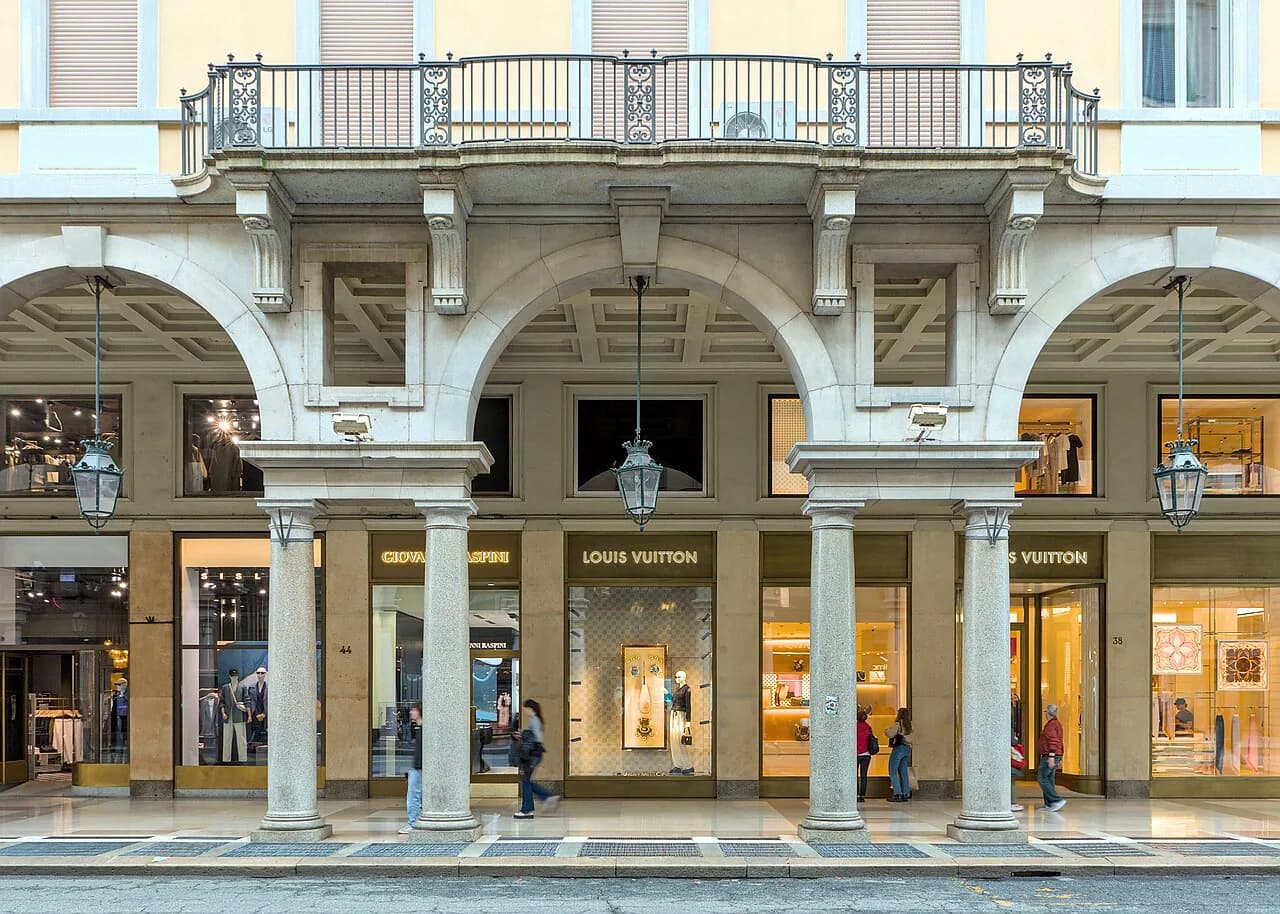
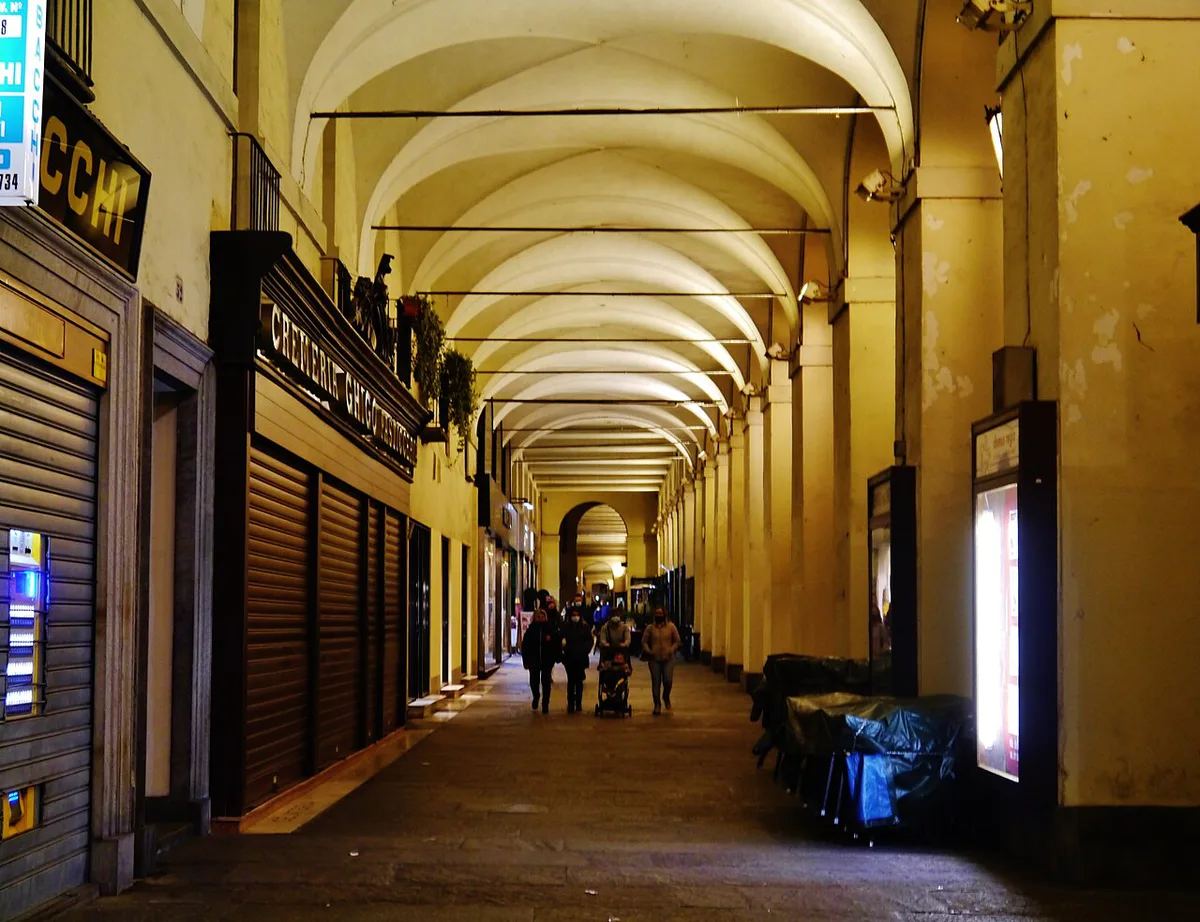
Turin's arcades differ from those in other Italian cities in scale, not just length. Many stretches rise two, and in a few places three, floors above street level, giving the walkways a heavier, more monumental feel than the single-story porticoes common elsewhere in Italy. The same cover that keeps out rain and snow in winter also provides shade in summer, so the network earns its keep in every season. Light changes constantly under the arches through the day, one more reason locals return to the same stretch of Via Po at different hours. Locals also use the network for everyday errands, not just sightseeing, treating the arcades as sidewalks rather than attractions.
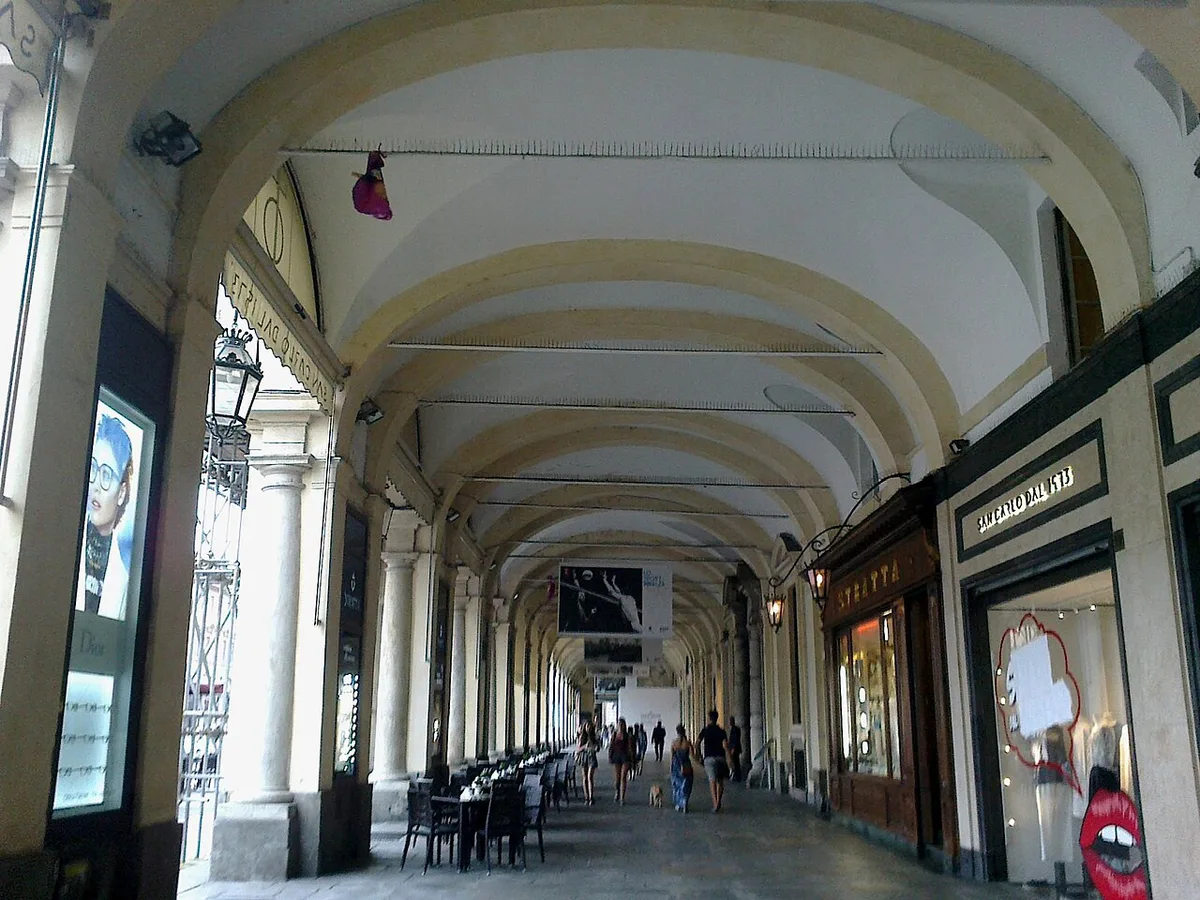
Three Main Portico Routes to Walk
Three routes cover most of what first-time visitors want to see under the arches. Each has a distinct character, shaped by the century it was built. Boutiques and cafes line most of Via Roma's arcade, some of which have operated there for well over a century. Walk all three routes in one afternoon, or split them across two shorter outings if you plan to stop inside museums along the way.
- Via Po: 18th-century grey-stone arcades from Piazza Castello to the Po River, with continuous colonnades on one side reserved for the royal family's unbroken route to the water.
- Via Roma and Piazza San Carlo: the luxury shopping spine, leading into the square where the twin churches of Santa Cristina and San Carlo Borromeo face each other.
- Via Cernaia and Via Pietro Micca: 19th-century arcades leading toward the Porta Susa station area, quieter than the shopping streets and lined mostly with residential and office facades.
The Continuous 12km Route: Piazza Castello to Piazza Vittorio Veneto and Back
Follow one loop to experience the core of the network without backtracking. It starts at Piazza Castello and returns near Piazza San Carlo, covering the two busiest stretches of arcade in about two to three hours on foot. This loop leaves room to extend the walk toward Via Roma or Via Cernaia afterward, since both connect back into the same continuous network. Photographers often repeat the same stretch at two different times of day, since the low morning and evening light changes how the colonnades look.
- Start at Piazza Castello, under the porticoes fronting the Royal Palace, and head east onto Via Po.
- Walk the full length of Via Po, past bookshops and the university, to Piazza Vittorio Veneto.
- Cross into Piazza Vittorio Veneto, Turin's largest arcaded square, with views of the Gran Madre di Dio church across the river.
- Turn back through the side streets north of Via Po toward Via Roma.
- Finish under the arcades of Piazza San Carlo, then continue north on Via Roma to close the loop at Piazza Castello.
Museums and Cultural Stops Under the Arches
Several major museums sit directly on or just off the porticoed streets, so a rainy day can become a museum crawl without much walking in the open. Trade-offs vary by museum, from crowd levels to which day it closes. Crowd levels and closing days both affect how much you can realistically fit into one day. Many of these museums close on Mondays, so avoid building a Monday itinerary around them. The Torino+Piemonte Card bundles entry to several of these sites, including Musei Reali and the Egyptian Museum. As of 2026, published rates for the card range from about €29 for 24 hours to €49 for 120 hours. Weigh that cost against how many museums are actually on your list before buying it.
The Torino+Piemonte Card costs €29 for 24 hours to €49 for 120 hours, yet the core 12km loop requires no museum entry and finishes in two to three hours.
| Museum | Best For | Practical Note |
|---|---|---|
| Egyptian Museum | History buffs | Described as one of the largest Egyptian collections outside Cairo, with more than 30,000 artefacts on display. Pre-booking is worth it, since crowds build fast on weekends. |
| National Museum of Cinema (Mole Antonelliana) | Families and first-time visitors | Take the panoramic lift for 360-degree views. Museum and lift tickets were listed separately at around €12 and €9, or €17 combined. Confirm current 2026 pricing before visiting. |
| Civic Gallery of Modern and Contemporary Art (GAM) | Art lovers seeking fewer crowds | A quieter alternative to the Royal Museums complex, with 19th- and 20th-century works, including pieces by artists such as Modigliani and De Chirico. |
| Museum of Human Anatomy | 19th-century science | Founded in 1739, with a collection built around 19th-century wax anatomical models. Check limited opening hours before planning a visit around it. |
| National Automobile Museum (MAUTO) | Fiat and motoring history | Farther from the main arcades. The collection spans close to 200 cars from around 80 brands across eight countries. |
The Social Portico: Bicerin, Cafes, and Piazza Vittorio Veneto
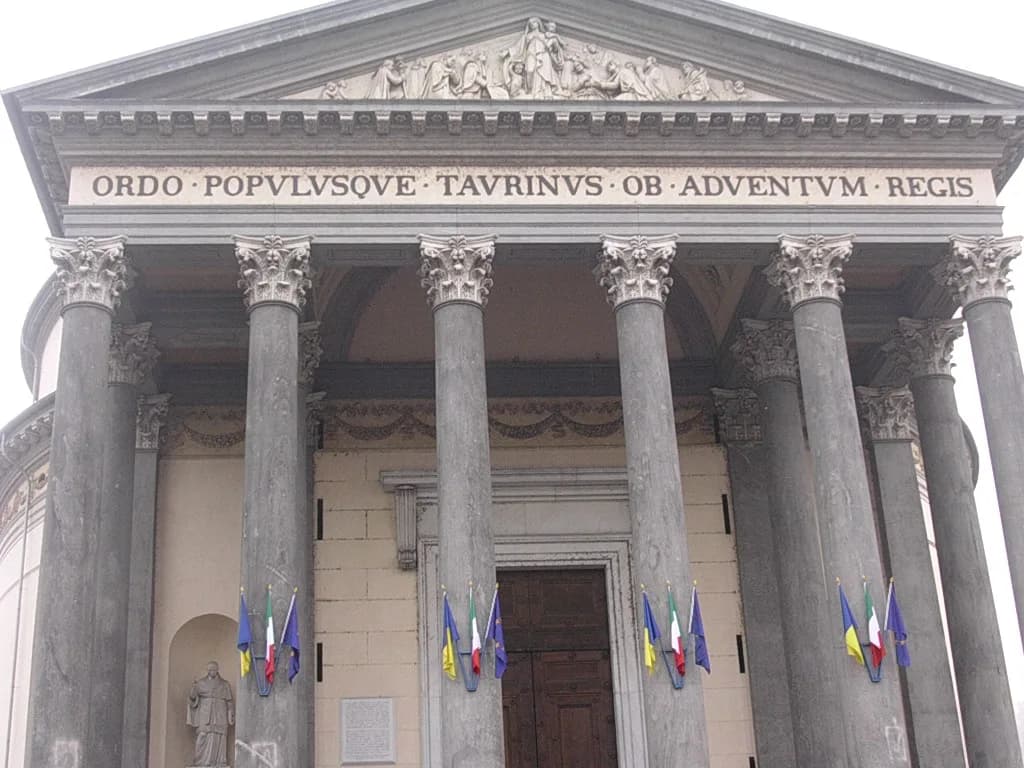
Piazza San Carlo is often described as the city's drawing room. Locals use the surrounding porticoes the same way, walking, sitting, and meeting there as they would in a living room. Historic cafes under the arcades serve bicerin, a layered drink of coffee, chocolate, and cream that originated in Turin. The historic cafes guide lists specific addresses along these routes. Pair a cafe stop with local dishes from the Turin Local Food Guide: What to Eat and Where in 2026. In the evening, Piazza Vittorio Veneto becomes the main social hub, its arcades lit and facing the Gran Madre di Dio church across the Po River. Renovated for the 2006 Winter Olympics, the piazza today hosts markets by day and fills with diners and bar-goers by night. Built in the early 19th century to mark King Victor Emmanuel I's return after Napoleon's fall, the Gran Madre di Dio church was designed with its own portico, supported by tall columns. From Piazza Vittorio Veneto, the walk up to Monte dei Cappuccini makes a natural next stop, with views back over the piazza and the river.
Practical Planning: Best Times, Accessibility, and Parking
Timing and mobility questions come up often for a network this size. A few practical notes cover most of them.
- Evenings bring the best light and match the best time to visit without crowds under the arcades.
- Weekday mornings avoid the worst of the Via Roma shopping crowds, which build up by early afternoon.
- Most porticoes are level and wheelchair-friendly, though some older stretches near the Quadrilatero have uneven paving.
- Both Porta Nuova and Porta Susa train stations connect directly into the portico network.
- You can start walking under cover right outside either station.
- Driving into the center is worth avoiding.
- If you need a car, the underground lot at Piazza Vittorio Veneto is an option, though weekend rates run high and it fills quickly on weekend evenings.
Mistakes to Avoid Along the Porticoes
Small planning errors show up again and again.
- Skipping side streets: the arcades are the main arteries, but many Hidden Gems in Turin: 9 Local Picks With Cost, Access, and Timing (2026 Guide) sit one block off the arches.
- Assuming everything is open on Monday: several museums along the route close that day, so check hours before building a Monday itinerary.
- Underestimating the distance: 12km of continuous walking adds up, so plan tram or bus overlaps if mobility or time is limited.
- Treating Piazza Vittorio Veneto parking as guaranteed: the underground lot fills quickly on weekend evenings, so arrive early or use transit instead.
- Rushing through Piazza San Carlo: locals treat it as a place to slow down, not just pass through, so budget time to sit under the arcades rather than only photographing them.
Frequently Asked Questions
Are Turin's porticoes free to visit?
Yes, the porticoes are public walkways with no entry fee, and walking them is one of the simplest free activities in the city.
Can you walk the porticoes in the rain?
Yes, the 12km continuous stretch was designed specifically for all-weather walking, so a rainy day does not have to change your plans.
How long does it take to walk the main circuit?
A brisk walk of the central loop, from Piazza Castello to Piazza Vittorio Veneto and back, takes about two to three hours. Add museum stops and a full day runs closer to five or six hours.
Which train station connects directly to the porticoes?
Both Porta Nuova and Porta Susa stations connect into the portico network. You can start walking under cover right outside either station.
Are the porticoes accessible for wheelchairs and strollers?
Most stretches are level and wheelchair-friendly. Some older sections, particularly near the Quadrilatero Romano, have uneven paving, so budget extra time there.
Is there a cost to see the museums along the route?
Individual museum tickets apply, though the Torino+Piemonte Card can reduce the combined cost across several sites. Published 2026 rates range from about €29 for 24 hours to €49 for 120 hours.
When is the best time of day to photograph the porticoes?
Early morning and early evening light works well under the arcades. The illuminated piazzas after dark make a different, equally strong subject.
Continue exploring
More guides you'll find useful