Syracuse with Kids: Family-Friendly Activities and Tips
Plan Syracuse, Sicily with kids: outdoor ruins at Neapolis, the Ear of Dionysius, Ortigia walks and practical tips on heat, shoes and pacing a family day.
On this page
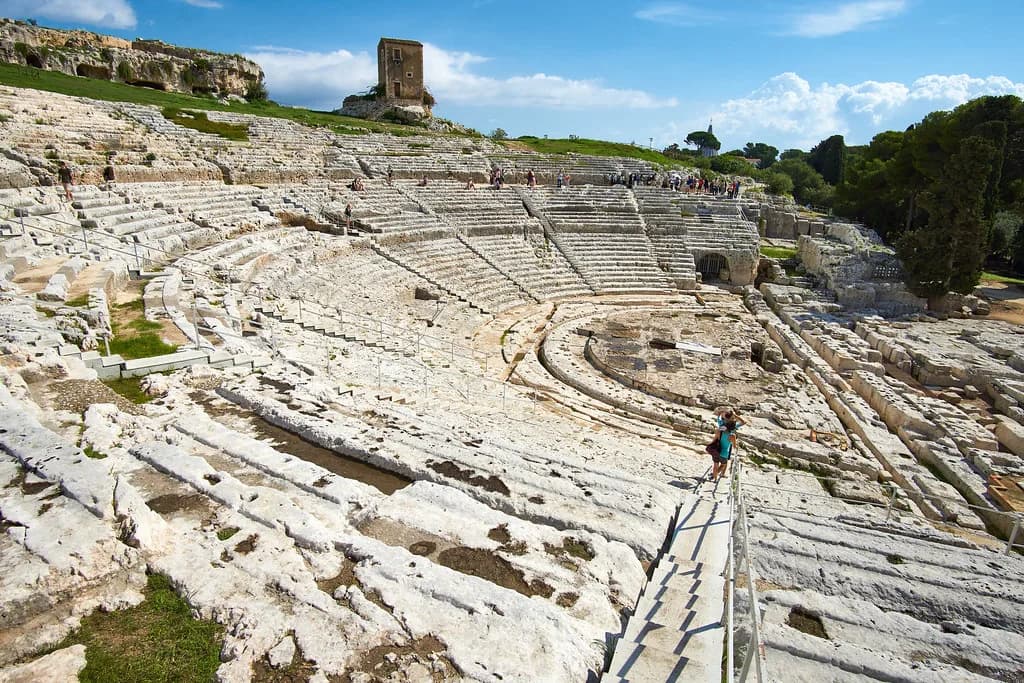
Syracuse rewards families who like to move between open-air ruins and car-free lanes rather than queue indoors. The Neapolis Archaeological Park holds the Greek Theatre, the Roman Amphitheatre and the Ear of Dionysius within one large site, while Ortigia's Piazza Duomo and seafront give younger children room to run.
This guide treats the park as an outdoor excursion with uneven ground and limited shade, not a checklist to rush. It separates free outdoor spaces from ticketed interiors and tells you which details, from opening hours to family reductions, need confirming with the official operator before you rely on them.
Why Syracuse Works Well for Families
Syracuse has two complementary halves for a family day: the archaeological zone on the mainland and the island of Ortigia, connected by short walks. The city's tourism pages list the Neapolis park, the cathedral and the Fountain of Arethusa among its cultural highlights, so you can build a route around a handful of well-known stops. Further visitor details appear in Comune di Siracusa.
The main advantage is that much of the experience is open air and self-paced. Children can move between the Greek Theatre, the quarry gardens and the cave without the formality of a museum interior, and you can shorten or extend the visit as energy allows.
If you want to add quieter corners beyond the headline sights, our guide to hidden gems in Syracuse suggests where to slow down without turning the day into a long transfer. Treat those as optional extras rather than must-dos.
Start with the Neapolis Archaeological Park
The Neapolis park is the natural first stop because it concentrates the biggest ancient monuments in one place. The Greek Theatre, the Roman Amphitheatre and the Ear of Dionysius sit within the same archaeological area, which makes it easy to explain the site's scale to children as you walk between them.
Measured descriptions help set expectations. One travel account describes the Ear of Dionysius as roughly 23 metres high, about 65 metres deep and between 5 and 11 metres wide, which is enough to explain why the space feels dramatic without overpromising. Further visitor details appear in The Ear of Dionysus, in Syracuse: between legends and nature.
A reasonable family strategy is to choose two or three highlights rather than attempt every path. The theatre and the cave usually hold children's attention longest, while the Roman Amphitheatre and the Altar of Hieron work well as shorter stops on the way through.
The Ear of Dionysius: Legend and Acoustics
The cave's name comes from a story that suits children: the tyrant Dionysius I supposedly used its acoustics to overhear prisoners. The same account notes that the painter Caravaggio coined the name in 1608 after the cave's ear-like shape reminded him of the legend. For wider planning, see Ear of Dionysius, Syracuse.
The geological explanation is just as interesting and more accurate. The unusual S-shape is linked to an ancient aqueduct above the cavity that guided how the rock was cut, so the echo is a product of quarrying rather than a purpose-built prison.
Children often enjoy testing the echo with a whisper or a clap, but keep it brief and step aside for other visitors. The cave is a natural amplifier, so a calm demonstration carries further than a shout.
Ortigia on Foot: Piazza Duomo and the Cathedral
Ortigia is compact enough for a family walk, and Piazza Duomo is the obvious centrepiece. The square has a semi-oval shape lined with baroque palaces, with the cathedral as its focal point, and it stays lively into the evening when the lights come on.
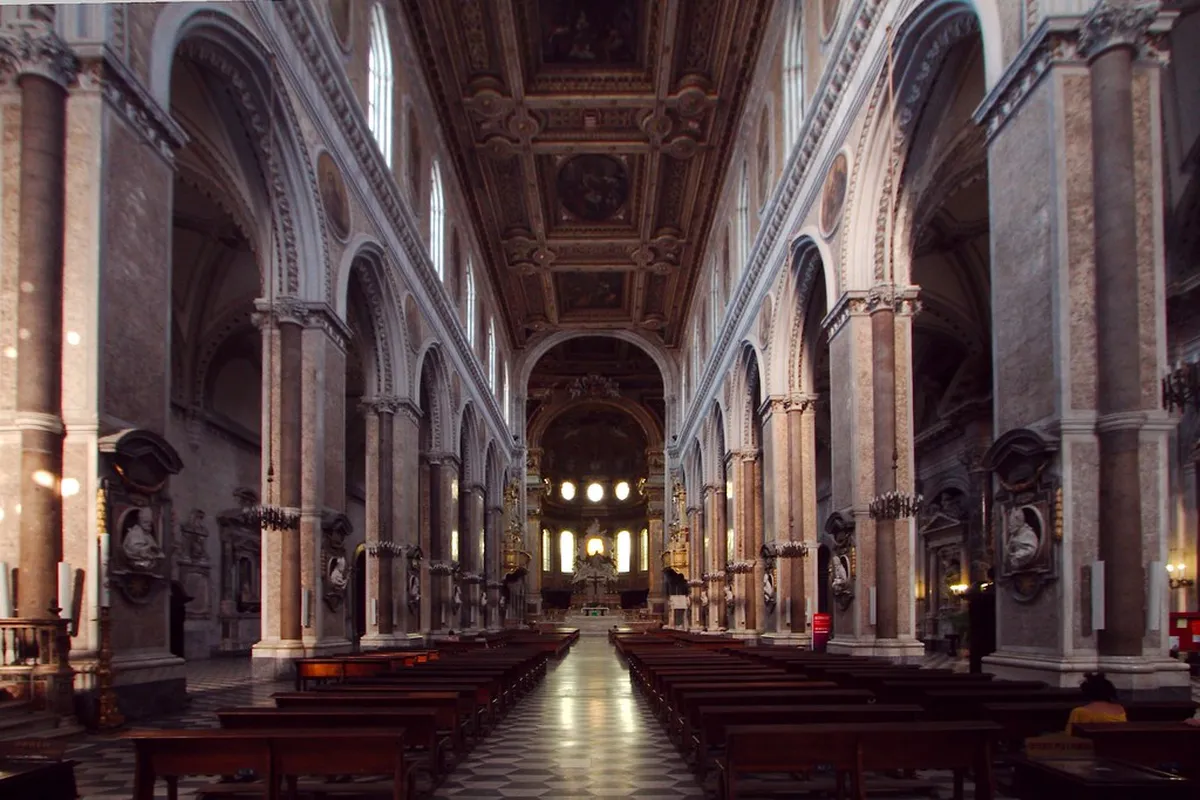
The cathedral itself is a useful history lesson in one building. It began as a temple to Athena, was converted into a church, later became a mosque and returned to Christian worship, and the Doric columns of the original temple are still visible in the left nave.
Walking the lanes around the square is free, while entering the cathedral interior is a separate decision. Check the notice at the door for current visitor arrangements rather than assuming access at any hour.
Castello Maniace and the Southern Tip
At the southern end of Ortigia, Castello Maniace gives children a fortress to circle from outside. Built in the 1230s under Frederick II of Swabia, it has four cylindrical corner towers and walls that meet the sea on three sides, making the approach as memorable as the interior.
The walk from Piazza Duomo toward the castle passes the Fountain of Arethusa and the seafront, which gives younger children space to move between stops. Treat the castle as a viewpoint and a landmark first, then decide at the entrance whether to go inside based on current opening times.
Published hours and ticket figures for the castle vary between sources, so confirm them with the site or the city's tourist information before planning your day around them.
Heat, Shade and Timing
The archaeological park is exposed, and the quarries offer only pockets of shade. A morning visit is usually more comfortable for children than midday, and one travel account recommends going early before the Sicilian sun becomes intense. Further visitor details appear in Syracuse... The Archaeological Park.
Carry water, hats and sunscreen even on shoulder-season days, and plan a shaded break in Ortigia after the park. The city's official site is the place to check for any local notices that might affect access or services on the day.
If the heat is severe, swap the order: walk Ortigia in the morning and save the park for a cooler slot later in the day. The route matters less than keeping the outdoor block short.
Shoes, Strollers and Uneven Ground
The park's paths, quarry floors and ancient paved areas are uneven, so closed shoes with grip are more practical than sandals for children. A carrier is easier than a stroller in the quarry sections, where steps and rough stone are common.
Inside Ortigia the going is gentler, with flat lanes and squares that suit a stroller. Use the island for the relaxed part of the day and treat the archaeological park as the active, supervised segment.
Keep children close near the cave and theatre edges, and agree a meeting point before you enter crowded areas. A short briefing at the gate saves repeated negotiations later.
Pacing a Family Day
A realistic day pairs one substantial outdoor site with one relaxed area. Visit the Neapolis park in the morning, take a long lunch, then walk Ortigia in the late afternoon when the squares are lively and the light is softer.
Avoid stacking the park, the castle interior and a museum on the same day. Two anchored stops plus a meal and an ice cream are usually enough for younger children, and a slower pace leaves room for the unplanned discoveries that make the trip memorable.
If you have a full day, add the Fountain of Arethusa and the seafront as a free, low-pressure finish. If you have only a few hours, choose the park or Ortigia rather than trying to cover both.
What to Verify Before You Go
Ticket prices and opening hours for the Neapolis park and Castello Maniace are the details most likely to change. Some published figures come from secondary sources and dated listings, so check the official operator or the city's tourism pages before you budget.
Family reductions and free-entry rules vary by site and by season, and they are not uniform across Syracuse's monuments. Ask at the ticket office or check the operator's site rather than assuming a child rate applies.
The city's official site publishes service notices and event listings, which is useful if your visit coincides with a public holiday or a local commemoration. Use it to confirm what is open rather than relying on old blog posts.
Plan Your Family Visit
Syracuse works for families when you treat it as an outdoor city: one big archaeological morning, a shaded lunch and an afternoon of wandering Ortigia. The Neapolis park supplies the scale and the stories, while Piazza Duomo and the seafront supply the breathing room.
Before you travel, confirm current tickets, hours and any family reductions with the official operators, and check the city's notices for local disruptions. With those details settled, the rest of the day can stay flexible and child-led.
Frequently Asked Questions
What can I do with my kids in Syracuse, Sicily?
Start with the Neapolis Archaeological Park for the Greek Theatre, Roman Amphitheatre and Ear of Dionysius, then walk Ortigia's Piazza Duomo and seafront. The combination gives children outdoor space, big monuments and a relaxed square without long transfers.
Is the Neapolis Archaeological Park suitable for young children?
It can be, if you keep the visit short and supervise closely. Paths and quarry floors are uneven, shade is limited, and the site is large, so plan two or three highlights rather than a full circuit and carry water and hats.
How long should a family spend at the Ear of Dionysius and the Greek Theatre?
Allow roughly an hour to ninety minutes for both, depending on how long children want to test the echo and climb the theatre steps. Add time for walking between areas and a shaded pause, and shorten the visit if energy drops.
Are there free things to do in Syracuse with kids?
Walking Ortigia's lanes, Piazza Duomo and the seafront costs nothing, and the exterior of Castello Maniace is visible from the approach. Cathedral interiors and ticketed monuments are separate, so check current arrangements at each entrance.
What should I know before visiting the archaeological park in hot weather?
Go early, carry water and sun protection, and expect little shade in the quarries. A morning visit is usually kinder to children than midday, and you can move the Ortigia walk to the cooler late afternoon.
Sources
Continue exploring
More guides you'll find useful