Syracuse Evenings: An Ortigia Night Stroll Guide
Plan a Syracuse evening in Ortigia: a lit-up Piazza Duomo, a seafront walk to Maniace Castle and the Neapolis park, with what to check yourself on the day.
On this page
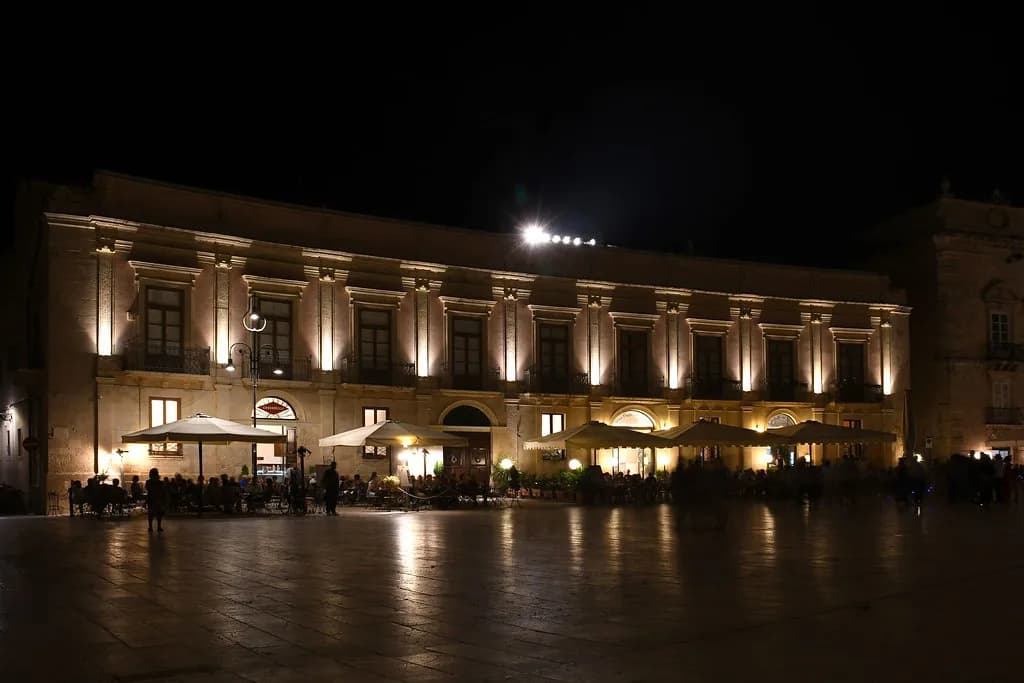
An evening in Syracuse, Sicily, belongs to Ortigia, the old-town island where the city began. Piazza Duomo, the square at its heart, is described as particularly beautiful at sunset and after nightfall, when the surrounding Baroque palaces and the cathedral front are lit up. That single image is the anchor for a night out here: you walk, you look, you sit down, and you walk again.
This guide sticks to what the available sources support and stays honest about the rest. There are no named bars, no quoted closing times and no invented ticket prices, because reliable current details change too often to publish blind. Instead you get the shape of the evening, the geography that makes it work on foot, and the questions to ask at the door.
Orientation: The Island That Holds the Evening
Ortigia is a small island linked to the mainland city, and its compactness is what makes an evening stroll practical. Piazza Duomo sits roughly at the middle, the cathedral and the city hall face each other across it, and the streets narrow again as you head south. Maniace Castle occupies the southern tip, so a simple loop runs from the square down to the sea and back. Our Ortigia Neighbourhood Guide covers the district's layout in more depth if you want to orient yourself before dark.
Because everything sits within walking distance, an evening here needs no transport planning of the kind this guide can confirm, which is also the reason not to over-schedule it. Pick one anchor for the night, either the square or the castle, and let the streets between them fill the time. If you only have one day in the city, an evening walk is a good use of it rather than a museum slot.
Stop One: Piazza Duomo After Dark
Piazza Duomo has an unusual shape, slightly rounded on the side facing the cathedral, and it is ringed by Baroque palaces. The two most imposing façades are Palazzo Beneventano del Bosco and, opposite, Palazzo del Senato, which now serves as the city hall. In the evening the square works as public open space: you can walk its perimeter, look up at the façades and sit on a terrace without buying a ticket to anything.
The cathedral itself is the reason to look closely rather than photograph once and move on. The site held a temple to Athena from the fifth century BCE, and the building passed through Byzantine church, mosque and Norman phases before the earthquake of 1693 brought down its façade; the Baroque front you see today dates from 1713. Doric columns from the temple are still visible inside, on the cathedral's left side, a detail worth knowing before you decide whether to return in daylight for the interior.
Treat the square itself as free and the interiors as a separate decision. Churches and their visiting windows vary, so check the notice on the door or the parish's own information rather than assuming a late opening. The same applies to the church of Santa Lucia alla Badia, whose Sicilian Baroque façade is worth seeing from outside on any evening.
Stop Two: The Walk South to Maniace Castle
Heading south from Piazza Duomo, the obvious route passes the Fountain of Arethusa and then follows the seafront along Lungomare Alfeo to the castle gate. Castello Maniace stands at the very end of the peninsula, surrounded on three sides by water, which makes the approach as good as the destination. For an evening, treat it as an exterior viewpoint first: the walls, the sea light and the walk itself need no booking.
The fortress was built from 1232 at the order of Frederick II of Swabia as part of a coastal defence system, and it later served as a royal residence, a prison and a military base. Its plan is quadrangular with four cylindrical corner towers, and the carved ogival entrance portal is the detail to look for as you arrive. Interior access and its purposes have changed over the centuries, so do not build the evening around getting inside.
If you do want to go in, verify the current timetable and ticket arrangements on the day through the city's official channels rather than relying on secondhand figures. The Comune di Siracusa portal is the starting point for municipal information, though its cultural pages are not always easy to navigate. A daytime return is the safer plan if the interior matters to you.
Walking back, the route naturally curves inland toward the cathedral quarter again, which makes the loop easy to shorten or extend depending on how the evening is going. The Syracuse Attractions hub gathers the major sights together if you want to compare visiting patterns before committing.
The Ancient Layer: Neapolis Park and the Ear of Dionysius
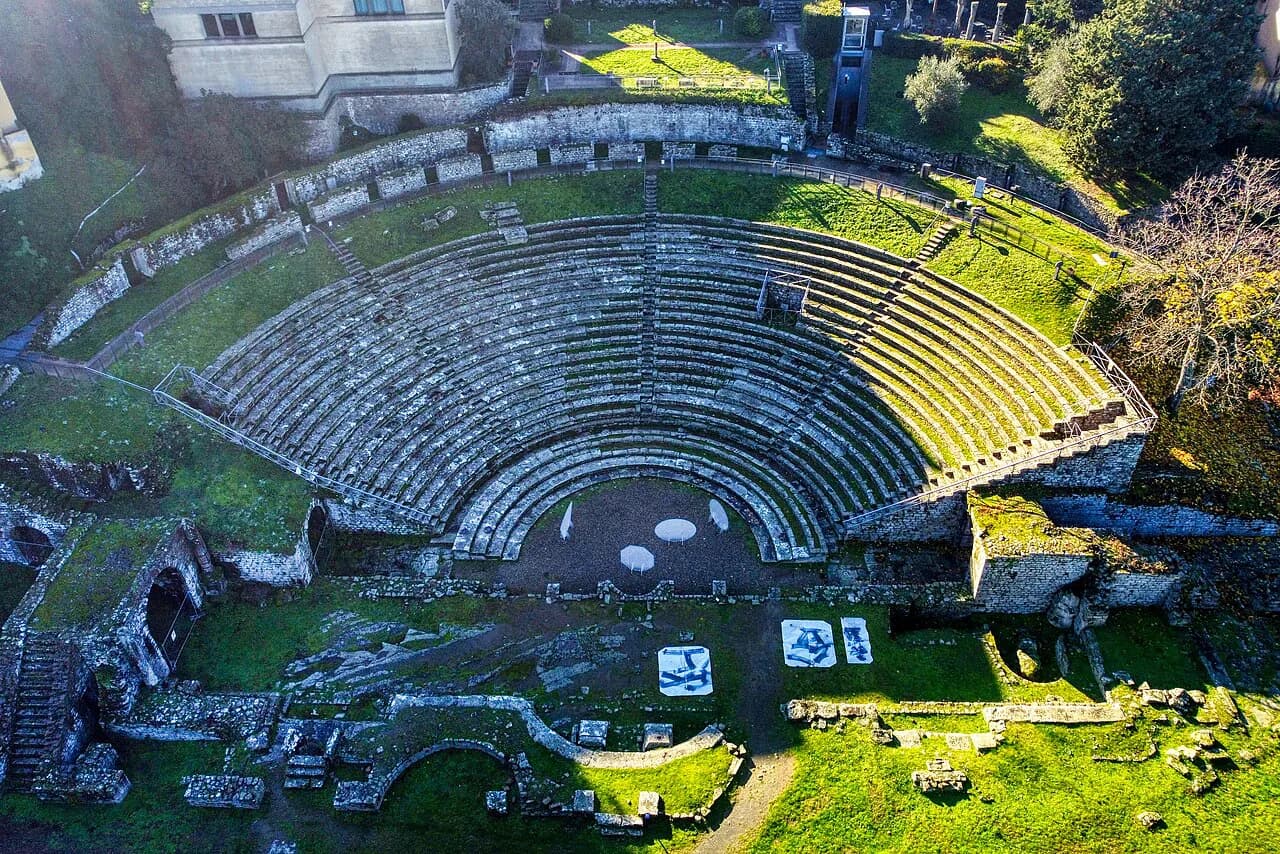
The Neapolis Archaeological Park lies on the mainland side of the city, not on Ortigia, and holds the Greek Theatre, the Roman amphitheatre and the quarry known as Latomia del Paradiso. It is not an evening stroll in the same sense as the island; it is a large, ticketed site best given daylight. Evening access and any performance programme at the Greek Theatre are not confirmed by the sources behind this guide, so check the park's own information before building a night around it.
The Ear of Dionysius, the tall S-shaped cave inside the quarry, is the park's most famous feature and the one most often described wrongly. The story that the tyrant Dionysius I carved it out to eavesdrop on prisoners is a legend, and the cave's distinctive shape is more plausibly explained by the line of an ancient aqueduct above it guiding the quarrying. The name itself is credited to Caravaggio, who saw an ear in its outline during a visit in 1608.
The acoustics are real enough to test for yourself, and the cave sits in a quarry that is now a planted garden of citrus and bay. Allow time for the walk between the theatre, the quarry and the amphitheatre rather than treating the cave as a quick stop. Current entry rules and any free-admission days should be confirmed with the operator, since published ticket conditions are dated and can lapse.
For a closer look at the cave before you go, the dedicated Ear of Dionysius guide covers what the sources do and do not support. Then leave the park for daylight and keep the evening on the island.
Aperitivo and Terraces, Without Guessing
Piazza Duomo is lined with bars and restaurants that set out outdoor terraces, and sitting at one of them to watch the lit square is the most reliable evening pleasure the sources describe. What this guide will not do is name a venue or quote its hours, because those details shift with the season and with the individual business. Judge on the night: read the menu board at the entrance and check that the posted hours match the current evening.
An aperitivo in Sicily generally means a drink with small snacks rather than a full meal, so decide in advance whether you want a light stop before dinner or the main event. If food is the priority, the Syracuse Local Food Guide sets out what to eat and what to look for on a menu. Prices, cover charges and any minimum spend are exactly the kind of detail to confirm at the table before ordering.
One caution about searching for nightlife here: results mix in Syracuse, New York, whose listings have nothing to do with this city. Keep the island's name, Ortigia, in mind as a filter, and ignore pages that reference American neighbourhoods or dollar pricing. If a venue's own page is unclear, walking past the door settles it faster than any aggregator.
Two Evening Shapes to Choose From
The short version is an editorial suggestion, roughly two hours: start at Piazza Duomo as the light drops, walk south via the Fountain of Arethusa to the castle walls, and return for a single drink on the square. This suits a first night when you are tired, or an evening squeezed between other plans. No advance booking is required for the outdoor route.
The longer evening stretches the same loop with more sitting and more wandering into side streets, and perhaps a second stop for food. Add time rather than distance: the island is small enough that extra minutes are better spent at a table or on the seafront than covering ground. Both shapes work entirely on foot, which keeps the risk low if a terrace looks too busy or a church is shut.
What to Check Before You Go
Three things are worth verifying on the day: whether the castle interior is open, whether any church you want to see keeps evening hours, and whether the Neapolis park has special events that affect access. None of these should be assumed from a hotel blog or an old listing, however detailed. The evening atmosphere around Piazza Duomo needs no checking at all, since the square is open public space.
If the evening walk is only part of a longer trip, the one-day Syracuse itinerary can help you fit the daylight sights around it. If the weather turns, the same loop shortens comfortably to the square alone, with a long look at the cathedral front and an early dinner.
Plan Your Evening in Ortigia
The best evening in Syracuse is not a checklist but a route: Piazza Duomo at dusk, the walk south along the sea to Maniace Castle, and a terrace on the way back. Everything sits within easy walking distance, so the plan can bend with the weather, your appetite and how crowded a given bar looks.
Leave the ancient park for daylight, treat the Ear of Dionysius prison story as a legend rather than a fact, and confirm any interior visit, timetable or ticket on the day. That way the evening stays what it should be: a slow walk through a lit-up Baroque island. For related planning, see Hidden Gems in Syracuse, Sicily.
Frequently Asked Questions
Is Ortigia where the evening action is in Syracuse?
For a stroll-and-terrace evening, yes. Ortigia holds Piazza Duomo and the seafront walk to Maniace Castle, and the two are within easy walking distance of each other on the island. The Neapolis Archaeological Park sits on the mainland side and is better treated as a daytime, ticketed visit.
Is Piazza Duomo in Ortigia worth seeing at night?
It is described as particularly beautiful at sunset and after dark, when the square and its Baroque façades are lit. The square is open public space, so you can walk it without a ticket. Cathedral interiors are a separate matter, so check the posted visiting arrangements on the day.
Can you walk to Maniace Castle in the evening?
You can walk to the castle at the southern tip of Ortigia and see its walls and the sea around it from outside. Whether the interior is open depends on the current timetable, which should be confirmed through official channels rather than taken from secondhand listings.
Is the Ear of Dionysius open at night?
Evening access to the Neapolis park is not established in the sources behind this guide, so do not plan around it. Treat the park as a daylight, ticketed site and check the operator's current information for opening times, entry rules and any special events.
What is the story behind the Ear of Dionysius?
Legend says the tyrant Dionysius I used the cave's acoustics to listen in on prisoners. A more plausible explanation is that the cave's S-shape follows the line of an ancient aqueduct above it. The name is credited to Caravaggio, who saw an ear in its outline in 1608.
How long does an evening stroll around Ortigia take?
A short loop from Piazza Duomo to Maniace Castle and back, with one terrace stop, fits comfortably into about two hours, as an editorial suggestion rather than official guidance. Extend it by adding a second stop or more time in side streets rather than more distance.
Do you need tickets for Syracuse's evening sights?
Not for Piazza Duomo or the exterior walk to Maniace Castle, which are open public space. Interiors, the Neapolis park and any ticketed collection require checking current arrangements and prices with the operator on the day, since published conditions can change.
Where do you go for aperitivo in Ortigia?
The terraces around Piazza Duomo are the natural setting, but venue details are not fixed enough in the sources to recommend any by name. Read the menu board, check the posted hours and see whether the seating looks comfortable before committing.
Sources
- Comune di Siracusa
- The Ear of Dionysus, in Syracuse: between legends and nature
- Maniace Castle in Syracuse: Discover the Majestic Bastion on the Sea
- Duomo Square - Syracuse (Siracusa), Sicily - Italy - ItalyGuides.it
- Piazza Duomo, a beauty by day or by night
- Tickets for Neapolis Archeological Park with Audioguide | musement
Continue exploring
More guides you'll find useful