Best Time to Visit Syracuse, Sicily: Weather, Crowds and Timing
Plan when to visit Syracuse, Sicily, around heat, crowds and site logistics. Ortigia by day and night, cooler-hour tips for Neapolis Park, and what to verify.
On this page
Syracuse sits on the south-east coast of Sicily, and the real answer to when you should go depends less on a calendar chart than on how much standing in the sun you plan to do. The same trip pairs the exposed Neapolis archaeological zone with the compact, shaded lanes of Ortigia, and those two halves behave very differently on a hot afternoon. This guide treats timing as a set of decisions rather than a single best month.
Note that the seasonal crowd evidence for Sicily is genuinely thin. Several sources circulating for "Syracuse" describe Syracuse, New York, a different city in a different climate, and autumn-is-best reasoning drawn from New York does not transfer to Sicily. Where this guide names a month, it explains the basis and what you should check yourself.
One concrete anchor is worth knowing before you choose dates. The Ear of Dionysus inside the Neapolis park is an artificial cave in the Latomia del Paradiso quarry roughly 23 metres tall and about 65 metres deep, whose S-shaped profile produces unusual acoustic resonance. Knowing that, it makes sense to reach it fresh and early rather than after hours of walking in the heat.
Quick Answer: Which Seasons Suit a Walking-Heavy Syracuse Trip
For most visitors, the most comfortable windows for long walking days are late spring and early autumn, when temperatures moderate but daylight is still generous. That is a planning rule of thumb, not a locally verified ranking of months: a travel site summarising Syracuse seasonality points to late spring and mid-autumn as the most pleasant, balanced windows, but no Sicily-based source here supplies a month-by-month temperature or rainfall table. Treat any confident best-month claim, including one borrowed from another city's guide, with caution.
The practical split is this: put the exposed archaeological park in the coolest hours you can manage, and keep Ortigia's piazza time for later in the day when the light softens. Midsummer suits early starts and indoor breaks, while the cooler months reward people willing to layer up and accept shorter daylight. Whichever season you choose, decide the order of your days before you book accommodation.
If your dates are fixed, build the itinerary around the constraint rather than mourning it. A July trip with two mornings at outdoor sites and afternoons in museums will feel far better than the reverse. The attraction guides for each sight are the best place to check what is currently open before you commit. For wider planning, see Syracuse Attractions: Visitor Guides to 14 Sights.
How to Think About Syracuse Weather: Coast, Quarry and Morning Light
Syracuse has a Mediterranean coastal climate, which in practice means bright, warm days for much of the year and a sea that moderates the edge of the heat on Ortigia. Inland and inside the archaeological park you lose that sea breeze and much of the shade. The distinction matters more than any average figure: a pleasant afternoon on the waterfront can sit in the same day as a glaring hour among stone ruins.
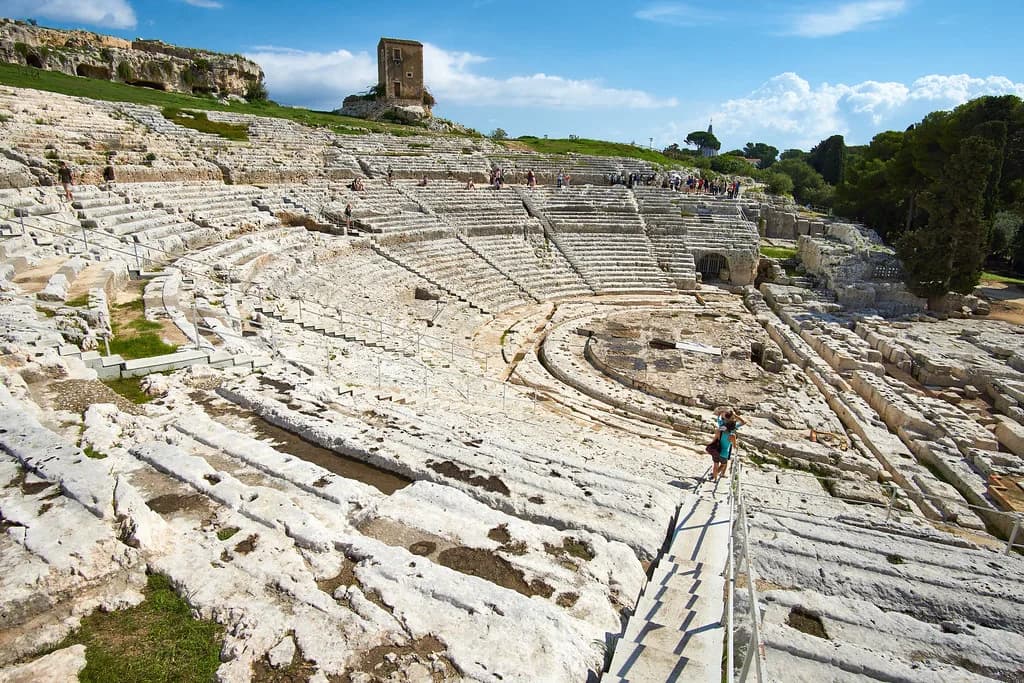
The Neapolis park is the part of the trip where heat planning pays off. It is an open archaeological complex rather than a shaded garden, and the walk between the Greek Theatre, the Roman Amphitheatre and the quarry caves adds up. One Sicily-focused blog recommends a morning visit before temperatures rise, a sensible suggestion rather than an official rule.
Inside the Latomia del Paradiso, the quarry that holds the Ear of Dionysus, tall rock walls and planted greenery give some relief, but do not plan on continuous shade. Carry water, wear a hat and treat the cave as a cool pause rather than an air-conditioned room. The acoustic effect is best appreciated when you are not rushed and not overheated.
Spring and Early Summer: Longer Days, Kinder Temperatures
Spring into early summer is when the balance tips in your favour: warmer but rarely punishing days, longer evenings and enough light to spread outdoor sightseeing across the morning. If you want to combine the park with a walk along Ortigia's waterfront in the same day, this is the season that makes that feel easy rather than heroic.
Late spring is a reasonable target for a first visit, but avoid treating it as a guaranteed quiet period. Cruise calls, Italian school holidays and long weekends can all change how busy Ortigia feels on a given day, and published data on Syracuse-specific seasonal volumes is scarce. Instead, check whether anything major is happening in the city during your dates and plan around it.
High Summer: Managing Heat Rather Than Avoiding It
Summer is hot, bright and busy, but it is also when the sea is at its most inviting and the evenings are long. The workable strategy is to invert the usual rhythm: outdoor archaeology first thing, a proper lunch and indoor time in the middle of the day, then Ortigia on foot once the light softens. Build in one air-conditioned or underground stop per day so the heat never becomes the story of the trip.
For the park itself, arrive as close to the start of the day as you reasonably can and do the Ear of Dionysus, the Greek Theatre and the Roman Amphitheatre as one continuous circuit rather than three separate outings. Ticket scope and inclusions at the park have changed over time, so confirm what is currently bundled and what reductions apply at the official ticketing channel rather than budgeting from a cached resale figure.
The park's fame has grown partly through film: the Dial of Destiny storyline brought the Ear of Dionysus and the Cordari Cave to a wider audience. Expect that association to draw visitors in high season, another argument for going early rather than counting on a quiet moment.
Autumn: Warm Sea, Softer Light, Unconfirmed Discounts
Autumn is appealing on paper: sea temperatures stay pleasant into the season, daylight shortens in a way that makes late afternoons feel gentler, and the summer peak eases. The same seasonality summary that favours late spring also names mid-autumn as a comfortable window. What you should not assume is that autumn automatically means lower prices or confirmed low-season rates in Syracuse. Some of the autumn-is-best advice circulating online is written about New York, where the seasonal economics are entirely different.
Practical planning works better than assumptions. Compare accommodation rates directly for your exact dates, check whether museums or sites have reduced seasonal hours, and confirm anything you are counting on. The city's own events listing is the place to start for current notices, openings and public information that could affect a visit.
Winter and the Cooler Months: Indoor Alternatives
Winter in Syracuse is mild by northern European standards but not reliably beach weather, and shorter days reward a plan built around interiors. The Basilica and Catacombs of San Giovanni are an obvious cooler- or wetter-day choice, pairing an above-ground church with an underground route. Underground spaces also offer a genuine temperature contrast to the summer street.
The Paolo Orsi regional archaeological museum and the Papyrus Museum give you a second indoor axis, useful when the weather turns or when you simply want more context before visiting the park. Museum opening patterns in Sicily can change by season, and the details published on travel sites are not always current, so verify hours with the museum or the city before you go.
Ortigia by Day Versus by Night: Reading Piazza Duomo Twice
Piazza Duomo is worth visiting twice, because the same square reads quite differently across the day. By day you can see how the cathedral absorbed an earlier temple: the Doric columns of the Athena temple are still visible inside, and the Baroque facade dates from the early eighteenth century after the 1693 earthquake. The surrounding palaces, including the Palazzo del Senato that now houses the city hall, frame the space.
After dark the effect changes again: the square is lit, the bars and restaurants set out terraces, and the piazza becomes the evening anchor for an Ortigia wander. A French travel guide makes the same point, noting that the square is particularly beautiful at sunset and after nightfall when it is lit up, and that terraces line its edges. Plan your cathedral interior visit for daylight hours and save the floodlit circuit for after dinner; the piazza itself can be walked without buying a ticket, though any interior visit has its own arrangements to check. Further visitor details appear in Piazza Duomo, a beauty by day or by night.
Beyond the main square, the smaller lanes and waterfront walks are where slower travellers tend to spend their evenings. If that is your priority, the hidden gems guide covers the quieter corners worth building an hour around. For wider planning, see Hidden Gems in Syracuse, Sicily.
Timing the Neapolis Park as One Cooler-Hours Visit
Treat the Greek Theatre, the Roman Amphitheatre and the Ear of Dionysus as a single outing rather than three separate trips. The theatre is the headline monument, the amphitheatre sits closer to the entrance, and the quarry caves lie further along the route. Doing them consecutively in the cooler part of the day keeps the walking manageable and lets you linger where you most want to.
For the cave itself, the pleasure is the scale and the acoustics rather than a long list of exhibits. Listen for how sound carries, and note that the name is commonly attributed to Caravaggio, who saw the ear-like shape in the early seventeenth century. The legend of Dionysius eavesdropping on prisoners is a story, not a confirmed historical function; the S-shape likely resulted from quarrying along an upper aqueduct.
Ticket scope at the park has repeatedly changed, and listings that reference a validity period ending in 2025 should not be used as current budgets. Check the official ticketing channel for what is currently included, whether any temporary exhibition is bundled and whether reductions apply to you, rather than budgeting from a cached figure.
Maniace Castle and the Seafront Walk
Castello Maniace anchors the southern tip of Ortigia, a Swabian fortress begun in the thirteenth century under Frederick II and later adapted as a residence, prison and military base. It is a natural late-afternoon stop after a morning in the park: you walk the seafront, reach the castle walls and get the open-sea views without standing in the midday glare.
Access here is not always complete: one source notes the castle can only be visited partially because part of it remains a military property, so check current visiting arrangements, any partial closures and ticket details with the site or the city's tourism pages before you build the day around it.
If you want a route that links the seafront to the archaeological zone on foot, a self-guided walk gives you a structure you can shift earlier or later depending on the heat.
Rain Contingencies and What to Verify Before Booking
Sicily is generally dry in summer, but rain is possible in the cooler months and can make exposed ruins slippery and unappealing. Keep a short list of indoor substitutes, such as the catacombs or a museum, ready to swap in at short notice. That flexibility is more useful than a detailed hour-by-hour schedule in any season.
Before booking, verify three things: current opening days for the sites you care most about, any ticketing change at the Neapolis park, and whether local transport or access rules differ on your dates. The city publishes notices, including a dedicated ZTL page for the limited-traffic zone in Ortigia, that can affect how you move around the historic centre.
For museum hours and what is inside each collection, cross-check the museum's own information rather than a third-party listing, which may quote outdated timings. The Papyrus Museum, for instance, is tied to the fact that this area is one of the few places in Italy where papyrus grows naturally, so its collection has a specific local rationale worth planning time for.
A Suggested Two-Day Shape for Any Season
Day one: start early at the Neapolis park, working through the Roman Amphitheatre, the Greek Theatre and the Ear of Dionysus before the heat builds. Spend the afternoon indoors or resting, then walk Ortigia's lanes and end in Piazza Duomo after dark. Day two: a museum or the catacombs in the morning, a seafront walk to Castello Maniace later, and a slow evening by the water. This is an editorial suggestion, not an official schedule.
If you have longer, stretch the same logic across three days: one archaeological morning, one underground or museum morning, and one day for the coast or a nearby Baroque town. The fuller itinerary sets out how to distribute the stops without doubling back. For wider planning, see Syracuse in 3 Days.
Plan Your Visit
The best time to visit Syracuse is the window that matches your tolerance for heat and your appetite for early starts. Moderate seasons make long walking days easier, but even in high summer a well-ordered plan, with the park first and Ortigia later, keeps the trip enjoyable.
Skip generic best-month charts built for other cities, and instead verify the handful of facts that genuinely change: current opening days, what the park ticket includes, and any city notices affecting your dates. Everything else can be decided on the ground.
Frequently Asked Questions
What is the best time of year to visit Syracuse, Sicily?
There is no single window that suits everyone, and the crowd and weather data specific to Syracuse is limited. For most people, late spring and early autumn give the most comfortable conditions for walking between the archaeological park and Ortigia, while midsummer works if you start outdoor sightseeing early and keep afternoons indoors or in the shade.
Is Syracuse too hot to visit in summer?
Summer is hot and bright, but it is manageable with the right rhythm. Visit the exposed Neapolis park as early as you can, carry water and a hat, and save Ortigia's squares and lanes for the evening, when the light softens and the terraces fill. Plan at least one indoor or underground stop each day so the heat does not dominate.
When are crowds lowest in Syracuse and Ortigia?
Reliable Syracuse-specific crowd data is scarce, so avoid assuming a particular month is guaranteed quiet. Cruise calls, long weekends and school holidays all shift how busy Ortigia feels. Check the city's event notices for your dates and plan the archaeological park for early morning, which helps regardless of the overall visitor volume.
Is Ortigia better at night or during the day?
Both have their purpose. In daylight you can study the cathedral's mix of ancient temple columns and Baroque facade, and see the surrounding palaces clearly. After dark the same piazza is lit and lined with terraces, making it a natural evening anchor. Visiting twice, once by day and once after dinner, is the simplest way to get both.
Do I need to book Neapolis Park tickets in advance?
That depends on the season and the operator's current arrangements, so check the official ticketing channel for your dates rather than relying on an old partner listing. That is also where you confirm what the ticket currently includes and whether any reductions apply, since bundled exhibitions and prices have changed over time.
How long do you need in Syracuse for a first visit?
Two full days cover the essentials: one morning for the Neapolis park and one for a museum or the catacombs, with evenings in Ortigia. Three days let you slow down, add the seafront and Castello Maniace, or take a day trip. Anyone planning a single day should focus on either the park or Ortigia rather than trying to do both in detail.
Sources
Continue exploring
More guides you'll find useful