Getting Around Syracuse, Sicily: Ortigia to Neapolis on Foot
A walking-first guide to Syracuse, Sicily, linking Ortigia's Piazza Duomo and Maniace Castle with the Neapolis park, catacombs and museums.
On this page
Syracuse is easier to navigate once you stop thinking of it as one downtown. The historic core sits on Ortigia, a small island where the cathedral square and the sea-facing lanes are best explored on foot, while the major archaeological sites cluster on the mainland around the Neapolis park and Villa Landolina. Treating the city as two walking zones, joined by one deliberate crossing, removes most of the guesswork from a visit.
Inside the Parco Archeologico della Neapolis, the Greek Theatre, the Roman amphitheatre and the Ear of Dionysius sit within a large archaeological landscape, and the cave itself is roughly twenty-three metres high and about sixty-five metres deep. That size explains why the walk between monuments takes longer than a map suggests; plan a generous block of time rather than a quick dash between highlights.
Quick Orientation: Two Halves of One City
Ortigia is the compact island at the southern tip of modern Syracuse, and it holds the densest concentration of walkable sights. Piazza Duomo, with the cathedral and the surrounding baroque palaces, makes the natural starting point, and from there the streets run south toward the sea and Castello Maniace. Almost everything here is reached on foot within a single morning or afternoon.
The second half lies on the mainland. The Parco Archeologico della Neapolis holds the Greek Theatre, the Roman amphitheatre and the Ear of Dionysius, while a short distance away sit the Basilica and Catacombs of San Giovanni and the Paolo Orsi archaeological museum in the Villa Landolina area. Plan these as a separate block, because each stop has its own entrance and its own access rules.
The gap between the two halves is the one part of a Syracuse visit that genuinely benefits from planning. Historic Ortigia and the Neapolis zone are close enough that many travellers walk or take a short taxi ride, but the exact route, any local bus and the time it takes should be confirmed locally on arrival rather than assumed from a guide.
Arriving in Syracuse: What to Confirm Before Booking
Syracuse is served by rail and road connections from Catania and other Sicilian cities, and the city is the final authority on local services. The municipality publishes transport and mobility information, including a local public transport service page, and that is the sensible place to start when you need to know how to reach the centre or move between zones. Check it close to your travel date, because service arrangements change. Further visitor details appear in Comune di Siracusa.
Be careful with search results. Many pages about getting around "Syracuse" describe Syracuse, New York, including its airport bus routes and regional transportation centre, and those have no bearing on the Sicilian city. If a page mentions Hancock International Airport, Centro buses or a New York regional hub, close it and look for Sicilian operators instead.
For flights, trains and buses into Sicily, confirm schedules and tickets directly with the airline or the transport operator rather than relying on aggregator summaries. Airport transfer arrangements in particular should be checked with your accommodation or the official airport site, since private shuttle offerings change frequently. Build in buffer time rather than cutting a connection fine.
On the Ground in Ortigia: Piazza Duomo to Castello Maniace
Start in Piazza Duomo and give the square time. The cathedral incorporates the columns of an ancient temple to Athena, and the surrounding palaces include the city hall in Palazzo del Senato. The square is public ground and free to wander, so it works well as an early stop before ticketed sites open.
From the square, head south through Ortigia toward the sea and follow the waterfront toward Castello Maniace at the island's tip. The fortress was built in the thirteenth century under Frederick II, and the approach along the lungomare is a walk in its own right. Opening hours and admission for the interior have varied over time, so check the castle's official information before planning your day around a visit inside.
Ortigia's lanes, the Fountain of Arethusa and the sea walls make this half of the city easy to enjoy without any transport at all. Wear comfortable shoes, because the surfaces are often stone and uneven, and keep an eye on the time if you intend to reach the mainland sites the same day.
Suggested Order: Crossing to the Mainland
Treat the following as editorial advice, not an official route. A practical sequence is to finish Ortigia in the morning, cross to the mainland, and spend the afternoon at the Neapolis park and its neighbours. That order puts the busier archaeological sites in the cooler part of the day's second half and leaves the evening free to return to Ortigia for dinner. For wider planning, see Neapolis Archaeological Park Visitor Guide: Greek Theatre, Tickets & Tips.
For the crossing itself, ask at your accommodation or check the municipality's transport pages for the current options. The distance is modest, and walking, a local bus or a taxi are all plausible depending on the heat and your mobility. Do not rely on an unpublished timetable; confirm the return leg as well, since the sites close in the late afternoon and you do not want to be stranded.
If you prefer to stay on the mainland side, basing yourself near Neapolis shortens the second day considerably. The trade-off is losing the atmosphere of sleeping on the island, so weigh convenience against the pleasure of an evening in Ortigia.
Inside the Neapolis Park: Theatre, Amphitheatre and the Ear
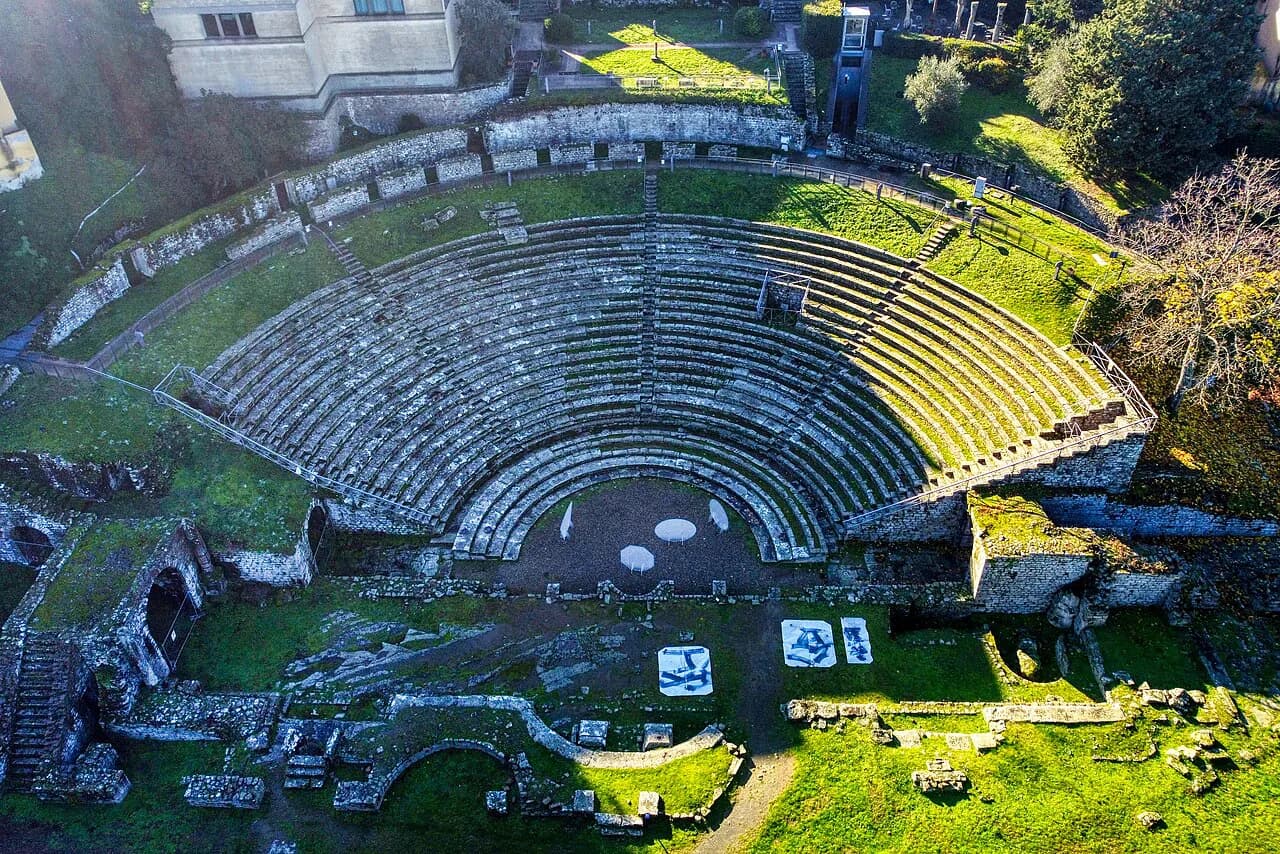
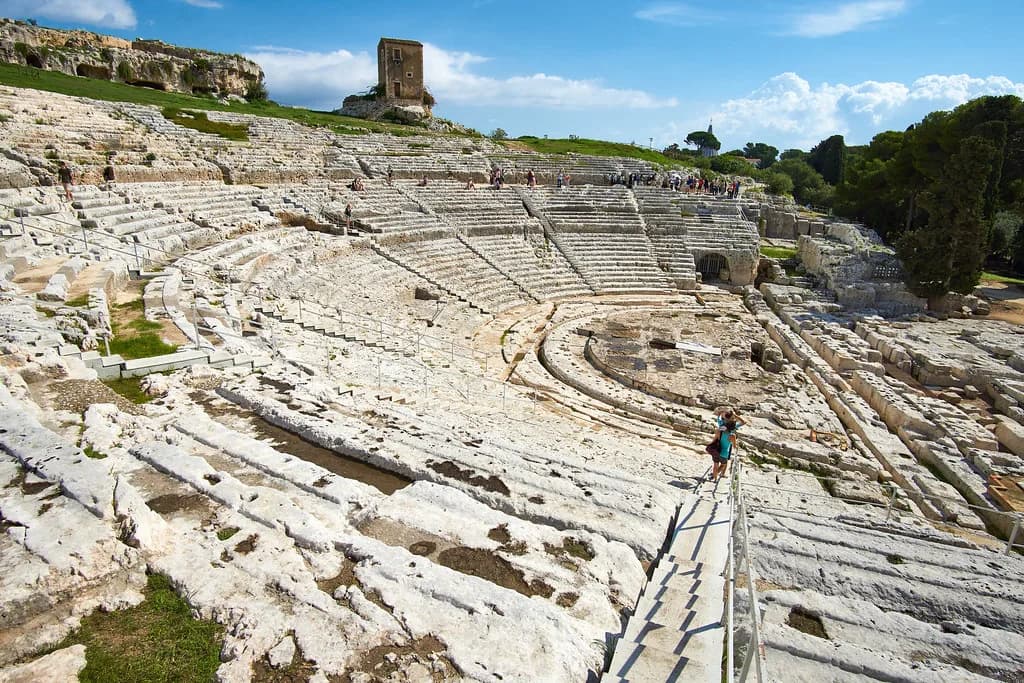
The Greek Theatre is the park's centrepiece, cut into the hillside and once among the largest in Sicily. Above it run the nymphaeum and the so-called Street of Tombs, and nearby stands the base of the enormous Altar of Hieron II. Give the theatre and its surroundings a proper block of time rather than rushing through to the famous cave.
The Ear of Dionysius sits in the Latomia del Paradiso, a former quarry now softened by citrus and other planting. The cave is roughly twenty-three metres high and about sixty-five metres deep, and its S-shaped profile produces the echo that gave rise to the legend of the tyrant Dionysius eavesdropping on prisoners. That story is legend; the shape owes more to the quarrying above.
The latomia itself is a shaded pocket, which makes it a good place to slow down after the exposed theatre. Photography and group numbers can be regulated inside the park, and ticketing arrangements may change seasonally, so check the managing body's current ticket information rather than budgeting from old figures you find online.
Beyond the Park Gates: Catacombs and the Paolo Orsi Museum
The Basilica and Catacombs of San Giovanni are a separate stop with their own arrangement. Access has historically been by guided tour rather than free wandering, and the catacombs themselves are extensive, with thousands of niches and round burial chambers. Confirm current tour arrangements at the ticket office or with the operator before you build them into a tight schedule.
The Museo Archeologico Regionale Paolo Orsi, set in the Villa Landolina area, holds finds from Syracuse and eastern Sicily from prehistory through the classical and Roman periods. Its collections complement what you see outdoors, especially the smaller objects that no longer sit in their original settings. Opening hours and admission should be checked with the museum, as published times have varied over the years.
Do not assume one ticket covers the park, the catacombs and the museum. They are managed separately, which means separate queues and separate prices. Group them geographically to save walking, but budget and book each on its own terms.
Practical Walking Habits for a Sicilian Day
Start early. The Neapolis park is largely open and hot, and the quarry, though shaded, offers little relief on the walk between monuments. An early slot at the park followed by a leisurely return to Ortigia is gentler than the reverse, especially in summer, when midday sun makes the exposed stretches hard going.
Carry water, a hat and something to cover your shoulders if you plan to enter churches. Wear shoes with grip, since stone paving in Ortigia and uneven ground in the park both punish smooth soles. Keep some cash for small purchases, and do not count on card machines working everywhere.
Keep a paper or offline map on your phone. Signage between the two halves of the city is not continuous, and the route between the island and the archaeological zone is not obvious on the ground. A self-guided route can help tie the pieces together.
What Not to Assume Before You Travel
Ticket prices, opening hours and free-entry days for Sicilian sites change, and older articles often quote figures that are years out of date. The Neapolis park's published rates have been revised more than once, and free-admission dates in past listings do not guarantee anything in 2026. Check the official ticketing or the managing body's website in the week before you go.
Similarly, do not assume that Castello Maniace's interior is fully open. The fortress has served military purposes in the past, and accessibility has varied. Check the current status through the municipality or the castle's own information before making it the centrepiece of a day.
Finally, verify arrival logistics independently of this guide. Flight, rail and bus schedules, plus any airport transfer options, are best confirmed directly with the operator or the Sicilian airport authority rather than from a summary written months earlier.
Plan Your Visit
Syracuse works best as a walking city, provided you split your plan into the island and the mainland and accept that one crossing links them. Begin in Piazza Duomo, follow the waterfront to Castello Maniace, then give the Neapolis park its own block of time and treat the catacombs and the Paolo Orsi museum as separate, separately ticketed stops. For wider planning, see Syracuse in One Day.
Before you travel, confirm what changes: current opening hours, admission arrangements and local transport. Use the municipality's pages and each site's own information rather than old articles, and leave slack in the day so a late opening or a slow bus does not ruin the schedule.
Frequently Asked Questions
How do you get between Ortigia and the Neapolis Archaeological Park?
The two are close enough that many visitors walk, take a local bus or use a short taxi ride, but the specific options and timings should be confirmed with the Comune di Siracusa or your accommodation on arrival. Plan the return leg as well, since the park closes in the late afternoon.
Is Syracuse walkable for a day of sightseeing?
Yes, if you treat it as two zones. Ortigia's square, lanes and the waterfront walk to Castello Maniace fill a morning comfortably, and the Neapolis park with its nearby catacombs and museum fills an afternoon. Aim for an early start and carry water.
How much time should you allow at the Neapolis park?
Allow a generous block of two to three hours as a working suggestion, not an official timing. The park contains the Greek Theatre, the Roman amphitheatre and the Ear of Dionysius across a large site, and the walk between them takes longer than the map suggests. Confirm current hours with the park before fixing your day.
Do you need a guided tour for the catacombs of San Giovanni?
Access has historically been by guided tour rather than independent wandering, and tours have been described as departing from the ticket office. Arrangements can change, so confirm with the site or its operator before you go, especially if you need a specific language.
What should you confirm before travelling to Syracuse in 2026?
Check current opening hours and admission arrangements for the Neapolis park, Castello Maniace, the San Giovanni catacombs and the Paolo Orsi museum, each managed separately. Also confirm your arrival transport and any transfer options directly with the operator, and do not rely on old published prices or free-entry dates.
Sources
- Comune di Siracusa
- Public Transportation - Syracuse Hancock International Airport
- The Ear of Dionysus, in Syracuse: between legends and nature
- Maniace Castle in Syracuse: Discover the Majestic Bastion on the Sea
- Duomo Square - Syracuse (Siracusa), Sicily - Italy - ItalyGuides.it
- Piazza Duomo, a beauty by day or by night
- Tickets for Neapolis Archeological Park with Audioguide | musement
- Syracuse ... The Archaeological Park
- Basilica & Catacombe di San Giovanni | Syracuse, Italy | Attractions - Lonely Planet
- Siracusa's Museums - Love Sicily
Continue exploring
More guides you'll find useful