Alter Elbtunnel Hamburg: Complete 2026 Visitor Guide, Free 24/7
Free access to this 426-meter tunnel under the Elbe runs day and night — plus lift hours, photo spots, and the Steinwerder harbor view, updated 2026.
On this page
Alter Elbtunnel Hamburg: The Complete Visitor's Guide
Last updated August 2026, the Alter Elbtunnel Hamburg remains one of the city's few landmarks you can visit for free, any hour of the day or night. Built in 1911 to move dock workers under the river Elbe, the 426-meter tunnel now carries pedestrians and cyclists between St. Pauli's Landungsbrücken and the industrial south bank at Steinwerder. It pairs well with a stop on free Hamburg activities, since the walk itself costs nothing.
What Is the Alter Elbtunnel Hamburg?
Officially the St. Pauli Elbtunnel, the Alter Elbtunnel Hamburg is a 426-meter tunnel running about 24 meters below the river Elbe. It opened on 7 September 1911 to link the docks at St. Pauli with the shipyards on Steinwerder, on the harbor's south side. Two parallel tubes, each about 6 meters across, run the full length side by side. Pedestrians and cyclists cross free of charge, 24 hours a day. As of 2026, the tunnel remains closed to motor vehicles, a restriction the Hamburg Port Authority lists as in effect until further notice.
Here's the 30-second version:
- Length: 426 meters, in two tubes about 6 meters in diameter
- Depth: roughly 24 meters below the Elbe
- Opened: 7 September 1911
- Cost: free for pedestrians and cyclists, always
- Motor vehicles: closed until further notice
- Access points: Landungsbrücken (north) and Steinwerder (south)
How to Visit the Old Elbe Tunnel
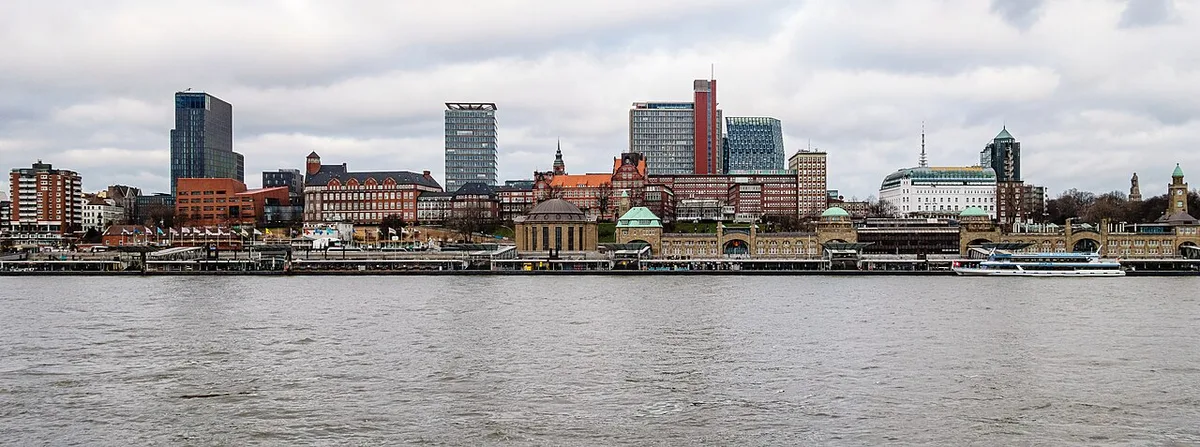
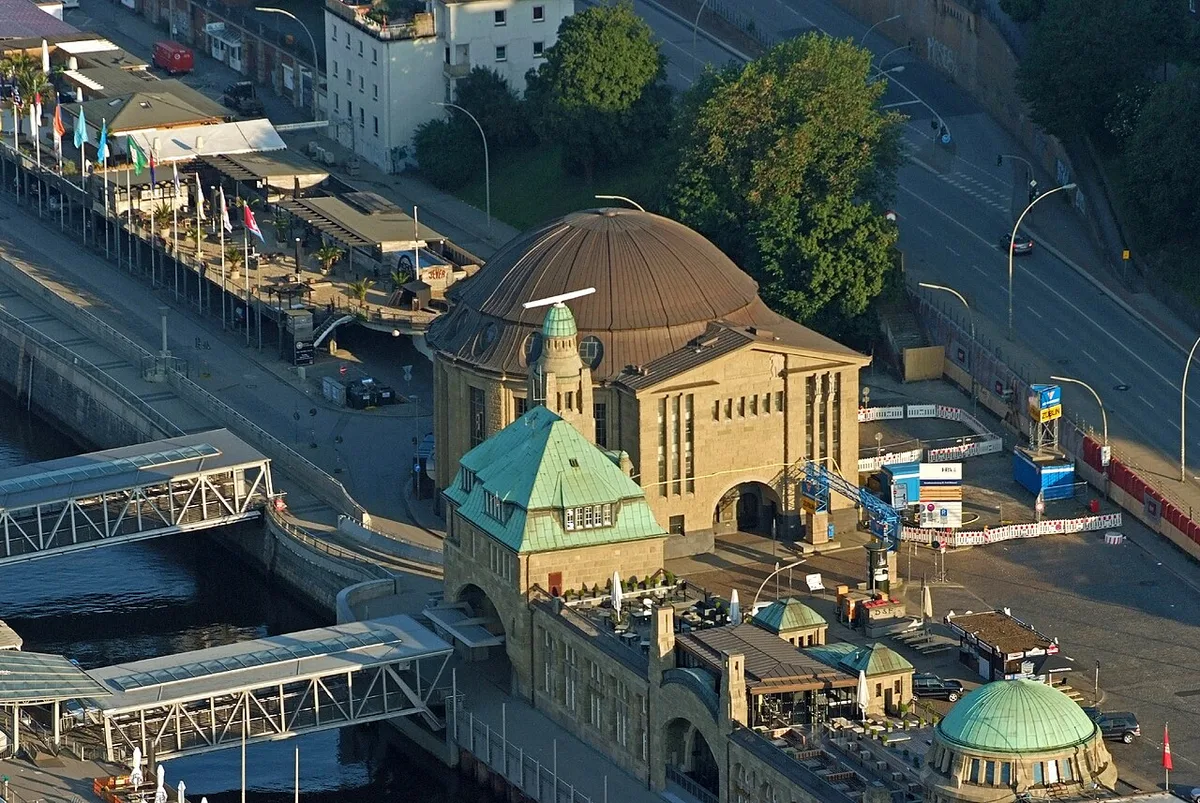
North-side access starts at the Landungsbrücken piers, inside the St. Pauli neighborhood. A green-domed entrance building stands a short walk from the platform. Here's how to reach it and time the lifts:
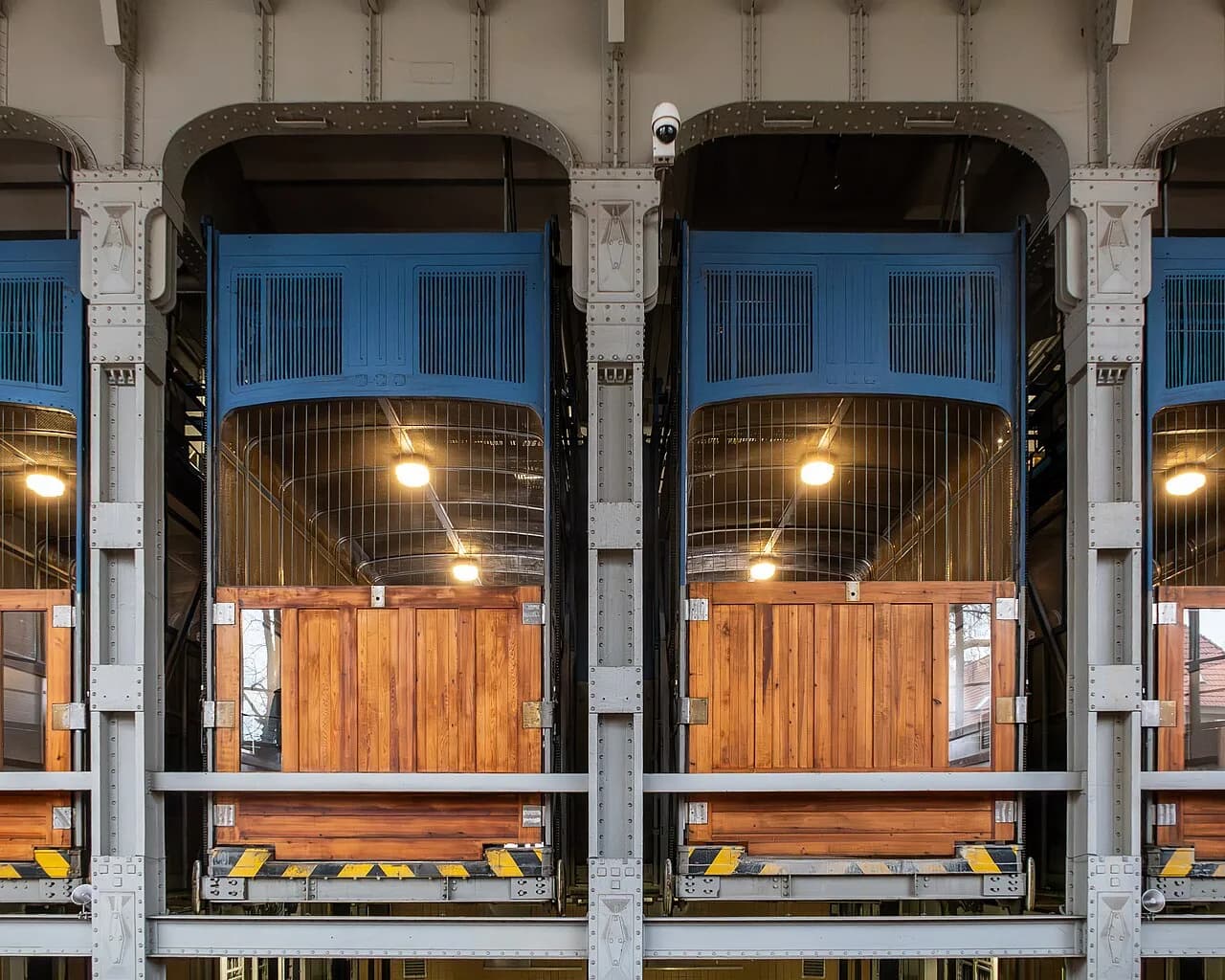
Two ways get you to the bottom. Historic freight lifts carry cyclists and larger groups, but only during the hours above. The glass passenger lift and staircase run around the clock, so early or late visitors always have a way down. Since the west tube's renovation finished, the east tube carries both cyclists and pedestrians, while the west tube is reserved for foot traffic only. Keep to the marked lane and give cyclists a clear line through the east tube. The Hamburg Port Authority also asks visitors to stay considerate of others, since weekend crowds can get heavy. Locals also use the tunnel to reach Wilhelmsburg or Altes Land beyond the harbor, both covered in our regional day trips guide.
- U3 line, or the S1 and S3 suburban trains, to Landungsbrücken station
- Buses 111, 112, and 610 also stop nearby
- Freight lifts: Monday-Friday 5:30am-8:00pm, weekends and holidays 10:00am-6:00pm
- December 24-26: freight lifts run a shorter 10:00am-4:00pm schedule
- Stairs and a glass passenger lift stay open 24/7, including outside freight-lift hours
Photography and Architecture Inside the Tunnel
Glazed terra cotta tiles line both tubes, each stamped with a different creature from the Elbe. Look along the curved walls for these recurring motifs:
Most visitors walk straight past the rat tile, which turns spotting it into a short scavenger hunt for anyone bringing kids. Stand at either portal and aim down the tube's centerline. Round lamps and tile bands form a long vanishing-point line down the tube, well suited to a wide-angle lens. Outside, the north entrance building's green dome is worth its own frame before you head underground; soft early-morning or evening daylight photographs it best.
- Fish tiles, mostly plaice and sturgeon
- Crabs set at regular intervals along the walls
- One rat-and-boot tile hidden among the more common designs
The Steinwerder Payoff: What's on the Other Side
Most day-trippers turn around at the south portal without stepping outside, which skips the best part of the walk. Climb up to the Steinwerder viewing platform for a panoramic view back across the water. From that platform, the Landungsbrücken piers, the Elbphilharmonie's glass roofline, and the tall ship Rickmer Rickmers all line up in one frame. Late afternoon through sunset gives the clearest light for that shot, since you're facing north across the water toward the skyline. Steinwerder itself is working harbor, not a tourist promenade, so expect industrial scenery, cranes, container stacks, and working freighters, rather than cafés.
Catch the HADAG ferry, line 62, from Steinwerder to reverse the journey via water instead of walking back through the tunnel. The ferry loop takes 15–30 minutes—longer than the 10–15 minute walk but offers a moving harbor perspective.
Back at Landungsbrücken, the Speicherstadt warehouse district counts among the area's other nearby sights. Nearby, the Elbphilharmonie, the museum ship Rickmer Rickmers, and the cargo ship museum Cap San Diego cluster around the same stretch of harbor. For more on the surrounding districts, see Hamburg's neighborhood breakdown.
Skip walking back through the tunnel and catch the HADAG ferry, line 62, from the Steinwerder landing instead. Ride it back to Landungsbrücken and turn a there-and-back walk into a one-way underground crossing plus a harbor loop on the water.
History and Engineering of the 1911 Tunnel
Construction began on 22 July 1907, led by contractor Philipp Holzmann. Crews needed a way to move more than 20,000 dock workers across the Elbe without relying on ferries. Workers built the tubes using pressurized caissons, sealed chambers that kept river water out of the excavation. That high pressure came at a cost: roughly 4,400 people worked on the project, and 74 of them suffered lasting effects from decompression sickness. Three workers died. Opening day came on 7 September 1911, and Hamburg's tourism board lists the tunnel as a protected historic site since 2003.
74 of them suffered lasting effects from decompression sickness during the tunnel's 1907–1911 construction, and three workers died. Today's free 24/7 access reflects both historical sacrifice and modern engineering safety standards.
Vehicle traffic ended in 2019, and a later renovation reopened the west tube as a pedestrian-only visitor and event space. The tunnel still hosts occasional public events, including a long-distance race called the Elbtunnel-Marathon; check current listings for dates. Film crews have used the tubes as a location more than once, including scenes in The Odessa File and The American Friend, and German band Scooter shot part of a music video inside them.
Alter Elbtunnel vs HADAG Ferry: Which to Choose
Both routes cross the same stretch of river, but they suit different visits. Free entry and any-hour access set the tunnel apart. The ferry runs on a set schedule and needs a standard HVV ticket, the same fare system used across Hamburg's buses and trains. Check current HVV fares before boarding, since ticket prices are reviewed annually.
Pick the tunnel for photos and shelter. Choose the ferry instead if you would rather sit and watch the harbor go by.
| Feature | Alter Elbtunnel | HADAG Ferry (Line 62) |
|---|---|---|
| Cost | Free | Standard HVV ticket required |
| View | Skyline from the Steinwerder platform | Moving river view of both banks |
| Time | 10-15 minute walk each way | 15-30 minute loop |
| Vibe | Historic, underground, fully sheltered | Classic harbor commute |
Essential Tips and Mistakes to Avoid
Some GPS apps still route cars toward the tunnel entrance. Motor vehicles remain barred from the tunnel, with no confirmed reopening date. A few practical notes keep the visit smooth:
This crossing costs nothing and takes under half an hour round trip, which makes it easy to fit alongside other stops. The offbeat Hamburg activities guide covers several nearby options for the rest of the day. It also ranks among the lesser-known Hamburg spots worth building a free afternoon around.
- Ignore GPS driving directions here. The tunnel has been pedestrian and bike only since vehicle traffic ended.
- Visit early morning or after dinner for a quieter tunnel. Weekends peak around midday; see Hamburg's quieter travel windows for more on timing.
- Pack a light layer. The tunnel stays cool underground even in summer, which makes it a solid rainy-day plan.
- Use the glass passenger lift rather than the historic freight lifts if mobility is a concern; the freight lifts can back up during peak hours.
- During major events like the Harbor Anniversary, Elbjazz, or the Dockville Festival, freight-lift hours run longer than the usual schedule.
Frequently Asked Questions
Is the Alter Elbtunnel wheelchair accessible?
Yes, the tunnel is accessible by lift. Stairs and a glass passenger lift operate 24/7, even outside the freight-lift hours. One exception applies: the tunnel closes on New Year's Eve, from 9:00pm to 4:00am.
Can you bring a bike through the tunnel?
Yes, cyclists cross free of charge, the same as pedestrians. Use the east tube, since the west tube is reserved for foot traffic only after the recent renovation.
How long does it take to walk through the Alter Elbtunnel?
Walking the 426-meter tunnel takes about 10 to 15 minutes one way. Cycling through is faster, typically just a few minutes once you are past the lifts.
Can you still drive through the tunnel?
No, the tunnel has been closed to motor vehicles, and the Hamburg Port Authority lists no confirmed reopening date. Some GPS apps have not caught up with the closure, so do not plan a driving route through here.
When is the best time to visit to avoid crowds?
Early morning or evening visits are quietest, since weekend midday hours draw the heaviest foot traffic. Freight lifts also get congested near closing time, so plan around 5:30am to 8:00pm on weekdays if you want to use them.
Are guided tours available at the Alter Elbtunnel?
Some local operators run guided tours covering the tunnel's history and construction. Check current listings before your visit, since schedules and operators change.
Continue exploring
More guides you'll find useful