Petite Ceinture Paris: Walkable Sections & Route
The Petite Ceinture is Paris's disused railway, and only some of it is open to walk. Learn which sections to pick, how long to allow, and what to avoid.
On this page
Petite Ceinture Paris
Last updated October 2026. The Petite Ceinture Paris walk follows a disused inner-ring railway, and only some stretches are legally open to visitors. Start with the 15th-arrondissement promenade run by the city, then decide whether to add the 14th-arrondissement section. This guide helps you choose a section, plan the time, and avoid closed areas.
What the Petite Ceinture is (and what you can actually walk)
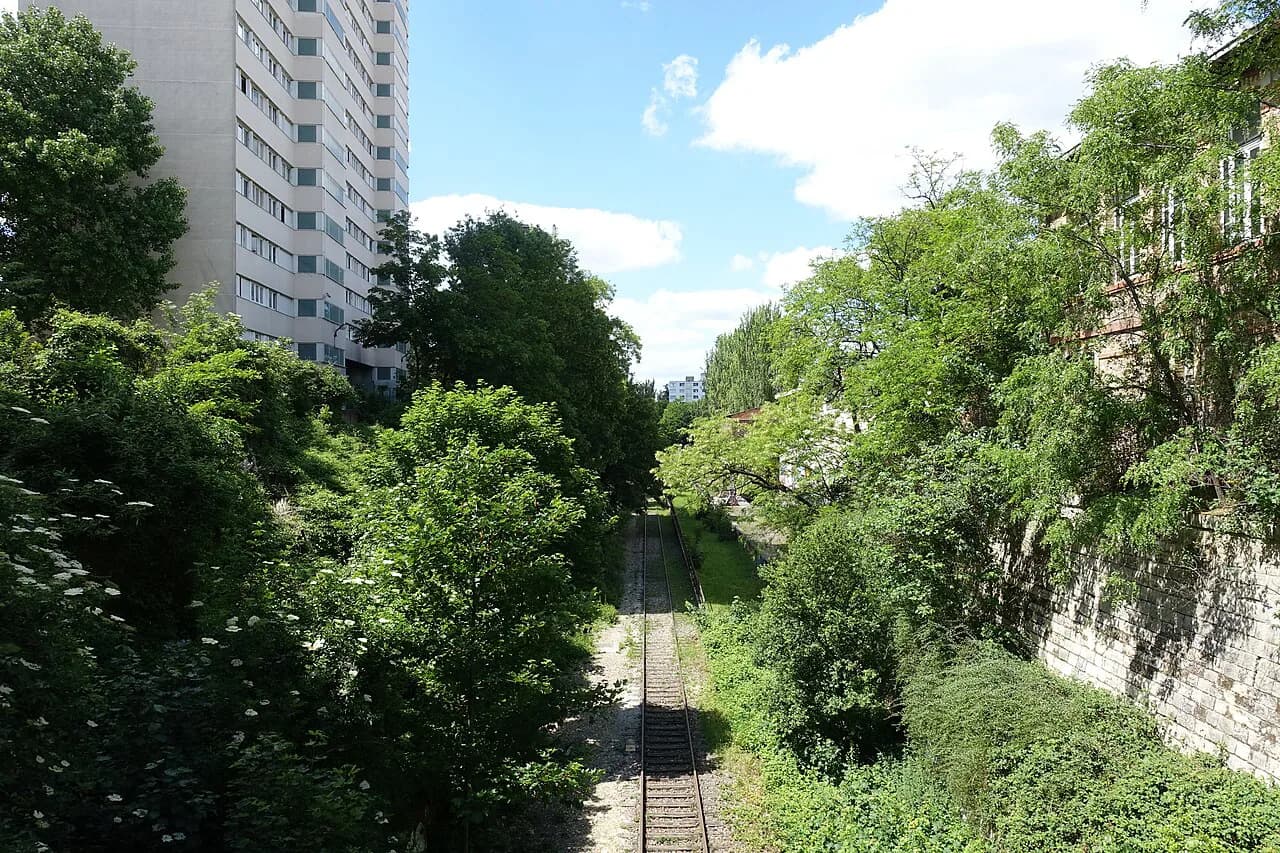
Petite Ceinture means "little belt". It is the old railway that once ran around the edge of Paris. Competitor route notes say it left service in the late 1970s and that the 15th-arrondissement section opened to the public at the end of 2013. Confirm those dates on the official city page before you quote them.
Only designated sections are open. The city lists the 15th-arrondissement stretch on its Petite Ceinture du 15e page. A separate 14th-arrondissement stretch is also reported as open. Most of the ring is closed, and that includes the tunnels and embankments next to the open paths.
Stay on the marked path. Route notes say access to the embankments is prohibited on the open sections. This guide does not recommend unofficial urban-exploration walks on closed stretches. If a gate is shut or a sign says no entry, treat the line as closed.
For the wider picture of lesser-known neighbourhoods, see our guide to lesser-known Paris. The Petite Ceinture is one of the easiest ways to see a quieter side of the city on foot.
Which section should you walk? (comparison table)
Three options cover most visits. Pick based on how much time you have and whether you need step-free access. Treat the cells as planning leads and check the official page for current closures.
| Option | Effort | Step-free access | What you see | Best for | Skip it if |
|---|---|---|---|---|---|
| 15th-arrondissement stretch | Easy, flat path | Gravel or wooden decking; lifts reported at Place Balard, Rue Olivier de Serres and Rue Desnouettes | Elevated old railway, information boards, plants growing between the tracks | First visit, short outing, wheelchair users who confirm lifts first | You want a loop or a destination at the end |
| 14th-arrondissement stretch | Easy, includes steps down into a cutting | Reported entry by a large metal staircase, so check before relying on it | Cutting between two streets, bridges, lit tunnel on Rue Friant | Walkers who want a more enclosed feel | You dislike tunnels or want a lively setting |
| Combined Balard to Porte d'Orléans | Easy, about 2.77 miles (about 4.5 km), +115 ft of climb per route notes | Mixed, with steps in the connecting sections | Both stretches plus Parc Georges Brassens | Half-day walkers who like variety | You have under 90 minutes or need ramps throughout |
The Balard to Porte d'Orléans walk: route, time, and access
The suggested route is point-to-point. It starts at Place Balard and ends at Porte d'Orléans. It is not a loop, so plan how you will get home from the far end.
Route notes put the full walk at about 2.77 miles (about 4.5 km). Allow about 1h20 without stops. Add time for the park and a meal. Verify distance and timing against the current official information.
The route has four parts:
- Climb to the 15th-arrondissement section from Place Balard. Route notes put the first stretch of old railway at about 1.3 km. - Leave the railway at the end of the open stretch near Rue Olivier de Serres. - Cross the connecting streets to Parc Georges Brassens. - Continue through the connecting streets to the 14th-arrondissement stretch, then finish near Porte d'Orléans.
The connecting sections are ordinary streets and paths, not railway. Some require steps. If you only want the railway itself, do one stretch and stop. If you want a continuous walk, bring a map, because the junctions between sections are easy to miss.
Opening hours, cost, and seasonal timing
Check hours before you set out. Sources conflict on the 14th-arrondissement section. One reports a morning opening time that differs between weekdays and weekends. Another shows different hours entirely. This guide states no hours as fact, so use the seasonal schedule on the official Paris page.
Expect closing times to move with the season. One competitor reports closing anywhere from 16:45 to 20:30. If that is correct, a late-afternoon winter visit leaves a very short window. In December, aim for a morning start.
Cost: sources suggest no entry fee for the open sections. Confirm that on paris.fr before you rely on it. Organised visits through associations may exist, and Études et Chantiers Île-de-France says it welcomes visitor groups. Ask them for current details and prices.
For timing, read our guide to the Best Time To Visit Paris Without Crowds: 2025 Guide. Our winter in Paris guide explains why short days matter on this walk. Parc Georges Brassens keeps its own hours, so check them separately.
Getting there, step-free access, and facilities
For Place Balard, route notes list Metro line 8 and Tram T3a. For the Porte d'Orléans end, they list Metro line 4 and Tram T3a. Check the Paris Tourist Office site and the transit operator for current service.
The route includes +115 ft of climb, but the railway surface itself is flat; connecting sections involve steps and elevation.
Pick your direction by where you sleep and where you want to finish. Starting at Balard puts the railway first and ends near the Metro at Porte d'Orléans. Starting at Porte d'Orléans reverses that and finishes in the 15th. One reviewer reports walking it in reverse with no problem.
Step-free access depends on the entrance. Route notes list these access points on the 15th section:
- Place Balard: steps and a lift. - Rue Olivier de Serres: steps and a lift. - Rue Desnouettes: ramp and lift. - Place Robert Guillemard: steps. - Rue de Vaugirard: steps.
Lifts go out of service, so verify before you travel with a wheelchair or pushchair. The railway surface is described as flat gravel or wooden decking. A good pair of trainers is enough.
Parc Georges Brassens is reported to have toilets and drinking fountains. Cafés and shops are reported along the route. Confirm opening times locally.
Nature on the line
Plants and animals have taken over parts of the old track. This is deliberate. Route notes say the railway infrastructure was left in place and the area is being allowed to be reclaimed by plants and animals. Information boards appear at points along the route.
Études et Chantiers Île-de-France describes managing the site as a wild space using differentiated green-space techniques. It also presents the line as an ecological corridor. Its page says the project has supported 120 workers since 2005 and lists SNCF Réseau among its partners. Verify those figures before repeating them.
In practice, expect uneven plant growth, not clipped lawns. That is the point of the walk. If you want formal planting, Parc Georges Brassens is a better fit. If you like wild edges and old rails, the 15th-arrondissement section suits you.
What to pair it with nearby
Parc Georges Brassens is the natural middle stop. Route notes say it sits on the former Vaugirard abattoir site. They also mention a vineyard, a central bandstand and a former horse market now used for second-hand and antiquarian books. Check market days before you plan around them.
If the book market is running, our 11 Best Paris Flea Markets: The Ultimate 2026 Guide covers other places to browse. For a meal, see our local restaurant picks and choose a stop near your finish.
For another former railway, compare the Promenade Plantée walk. For a different green space, try Parc des Buttes-Chaumont. For more ideas away from the main sights, browse off-the-beaten-path Paris.
Mistakes to avoid and who should skip it
Most problems come from timing and assumptions. Avoid these:
The 2.77 miles combined route isn't straightforward: connecting sections include steps, the Montparnasse passage may be closed, and stay on marked paths.
- Arriving after the seasonal closing time. - Assuming every stretch of the ring is open. - Treating the walk as a loop. It is point-to-point. - Relying on the narrow passage under the Montparnasse tracks near Rue Jacques Baudry. - Entering closed embankments or tunnels.
On the passage, several reviewers report it is closed. One suggested detour runs along Boulevard Lefebvre and Rue Vercingétorix. This is review-sourced and may be outdated, so check before you go.
Some visitors report that tunnels can feel gloomy at certain times of day. One reviewer found the area near the ring road in the 14th uncomfortable for solo walkers. Walk in daylight and keep to busier stretches if that worries you.
Who should skip it? Skip it if you want landmarks, shops or a polished garden. The 15th section suits families, photographers and nature-minded walkers. Wheelchair users can use it if lifts are working. If you need a lively, scenic route, it may feel underwhelming. For a wider list of unusual outings, try 10 Unique Things to Do in Paris (2026).
For related deep-dives, see our Literary Paris Walking Tour: Self-Guided Routes by Writer and Small Museums in Paris: 10 Quiet Picks Worth the Detour guides.
Frequently Asked Questions
Can you walk the Petite Ceinture in Paris?
Yes, but only on designated open sections. The 15th-arrondissement stretch is the best-documented one, and a 14th-arrondissement stretch is also reported open. Stay on the marked path and stay out of closed embankments and tunnels.
Is the Petite Ceinture free to visit?
Sources suggest there is no entry fee for the open sections. Confirm that on the official Paris page before you go. Organised visits through associations may carry their own conditions.
How long does the walk take?
Route notes estimate about 1h20 for the 2.77-mile (about 4.5 km) walk from Place Balard to Porte d'Orléans. That excludes stops. Add time for Parc Georges Brassens and a meal.
Is the Petite Ceinture accessible with a wheelchair or pushchair?
The railway surface is described as flat gravel or wooden decking. Lifts are reported at Place Balard, Rue Olivier de Serres and Rue Desnouettes. Lifts can be out of service, so check first. The connecting streets between sections include steps.
Which part is best for a first visit?
Start with the 15th-arrondissement stretch. It is the one the city lists officially, and it is easy to do on its own. Add the park and the 14th section if you have time.
Is it safe to walk alone?
Some visitors report that tunnels feel gloomy and that the 14th-arrondissement ring-road area is uncomfortable for solo walkers at certain times. Walk in daylight. Choose the 15th-arrondissement stretch if you want a more open setting.
Continue exploring
More guides you'll find useful