Paris In Winter Travel Guide & Cozy Tips
Plan your dream trip to Paris in winter with top local picks, neighborhood context, timing tips, and practical booking advice for a smoother winter getaway.
On this page
Your Complete Guide to Paris in Winter
Visiting Paris in winter offers a side of the city that summer tourists rarely see: quieter museums, lower hotel rates, and a pace slow enough to actually enjoy a two-hour lunch. The crowds thin out dramatically in January and early February, making this the most practical time to tick off the Louvre, the Musée d'Orsay, and other high-demand sights without spending half your day in queues.
The tradeoff is cold, grey, often rainy weather from December through February. Paris does not transform into a snowy postcard city in winter — snow is rare and melts fast when it does arrive. What you get instead is crisp air, golden late-afternoon light, and the kind of atmosphere that makes the city feel like it belongs to locals again. This is the when to visit Paris, and knowing how to use that window makes a real difference.
Paris Weather in Winter: Month by Month
December sits at average highs of 7°C and lows around 3°C. Rain is common — expect roughly 50 mm spread over the month — but snow is genuinely rare. The city is busy in December because of Christmas markets and holiday decorations, so do not expect the quiet streets that define January and February.
January is the coldest month. Highs hover around 6°C; lows dip to 2°C. Snowfall is possible but typically produces a light dusting that melts within hours. Rain falls on around 15 days across the month. This is the quietest period for tourism and the time when hotel prices drop the furthest.
January and early February offer the clearest value window: the fewest tourists, the lowest hotel prices, and the government-regulated Soldes sales running from the second Wednesday of January for four weeks. Discounts of 30–70% are real across clothing and homewares at major department stores.
February is slightly warmer than January, with average highs near 8°C. Days are short but growing, and by late February sunshine begins to return with more consistency. Valentine's Day weekend brings a short spike in visitors and prices, so book accommodation a few weeks ahead if you are traveling around that date.
March is unpredictable — you can get brisk wind and drizzle one day and genuinely pleasant warmth the next. Average highs reach 12°C by mid-month. This is shoulder season: crowds start building again but remain well below summer levels.
| Month | Avg High | Avg Low | Rain Days | Crowd Level |
|---|---|---|---|---|
| December | 7°C | 3°C | ~50 mm/month | High (Christmas) |
| January | 6°C | 2°C | ~15 days | Very low |
| February | 8°C | 3°C | Moderate | Low (spike Valentine's) |
| March | 12°C | 5°C | Variable | Low–moderate |
December in Paris: Christmas Markets and Holiday Lights
Paris does not rival Strasbourg or Cologne for Christmas markets in scale, but the city does the holiday atmosphere extremely well. Most markets run from mid-November through late December or early January. The largest one, La Magie de Noël in the Tuileries Garden between the Louvre and Place de la Concorde, includes a ferris wheel, an ice rink, food stalls, and a champagne bar.
In Montmartre, the Place des Abbesses Christmas Market is smaller but worth combining with a walk up Rue Lepic and a visit to the Sacré-Coeur. Out at La Défense, the Marché de Noël is the biggest in the Paris region — over 200 wooden chalets set against the glass towers of the financial district. Smaller pop-up markets also appear near the Eiffel Tower, the Hôtel de Ville, and Gare de l'Est.
Food at these markets skews Alpine and Alsatian: raclette scraped off a giant cheese wheel and piled on potatoes, tartiflette, choucroute garni, marrons chauds (roasted chestnuts), and vin chaud. The Champs-Élysées Christmas decorations are worth seeing in December — it is one of the few times of year the street is actually enjoyable to walk.
New Year's Eve centres on the Champs-Élysées, which closes to traffic for a street party leading up to midnight fireworks and a video mapping show on the Arc de Triomphe. Prices for accommodation and restaurants spike sharply over New Year's weekend, so factor this into your budget if you are travelling in late December.
January Sales: The Soldes You Should Plan Around
One reason January deserves serious consideration as a Paris travel month — beyond the low crowds and cheap hotels — is the soldes. These government-regulated sale periods happen twice a year, in January and July, and are the main window when French retailers are allowed to deeply discount existing stock. The winter soldes typically start on the second Wednesday of January and run for four weeks. Official Paris sales dates are strictly regulated by the French government, so retailers cannot extend or shift these windows.
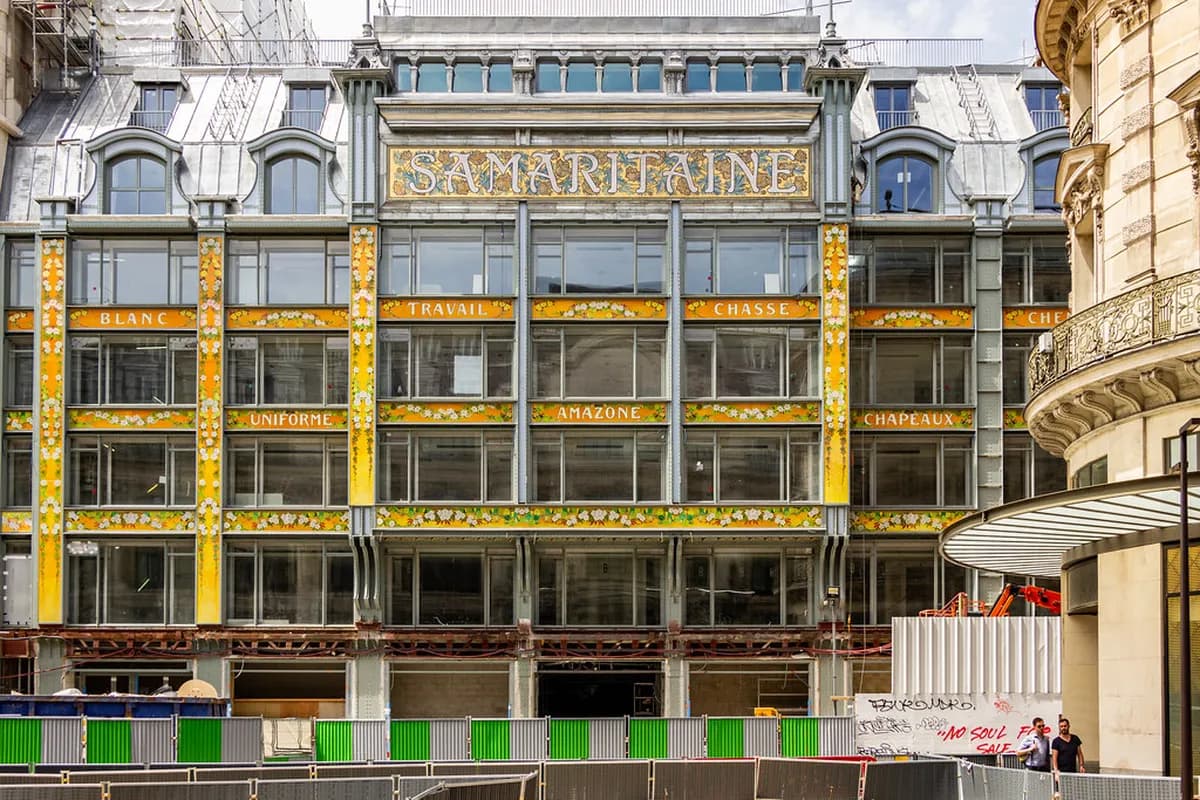
The discounts are real and significant — 30 to 70 percent across clothing, accessories, and homewares. The big department stores are worth visiting: Galeries Lafayette on Boulevard Haussmann, Printemps in the 9th (which also has a rooftop with Eiffel Tower views), and Le Bon Marché on the Left Bank. French brands worth seeking out include Sézane, Maje, Sandro, and Ba&sh for clothing; Polène and A.P.C. for bags; and Carel and Repetto for shoes.
If you are combining a shopping day with sightseeing, the 9th arrondissement puts you close to the Opéra Garnier and a short walk from Montmartre. The Marais in the 3rd and 4th arrondissements has excellent independent boutiques alongside the flagship stores.
Museums and Indoor Culture
Winter is the strongest argument for Paris as a museum destination. The Louvre and Musée d'Orsay are still crowded by any other European city's standards, but they are markedly calmer in January and February than at any other time of year. Book timed-entry tickets online regardless of season — walk-up queues remain long even in winter. The Paris Museum Pass covers both, plus dozens of other sites, and typically pays for itself within two full days of visiting.
One practical update for 2026: the Centre Pompidou, one of the city's most popular modern art institutions, is closed for a major renovation and will not reopen until 2030. Plan your itinerary around this gap and substitute the Fondation Louis Vuitton in the Bois de Boulogne or the Musée Picasso in the Marais if contemporary art is a priority.
The Centre Pompidou is closed for major renovation and will not reopen until 2030. Remove it from your itinerary and substitute the Fondation Louis Vuitton in Bois de Boulogne or the Musée Picasso in the Marais for contemporary art.
Two more are worth booking specifically for the cold months. The Musée Jacquemart-André on Boulevard Haussmann pairs a collector's mansion with a tea room in the former dining room, which is a genuinely good place to be in January. The Musée Gustave Moreau in the 9th is small, dim and vertical — the artist's own house, with a spiral staircase between studio floors — and it suits a grey afternoon better than any blockbuster hang.
Smaller museums repay visits in winter particularly well. The Musée de l'Orangerie near the Tuileries has Monet's water lily rooms — large, calm spaces where you can actually stand still and look. The Musée Carnavalet in the Marais covers the history of Paris for free. The Musée des Arts Forains near Bercy is an eccentric gem: a private collection of vintage carnival rides and fairground attractions that visitors can actually use, bookable in advance and worth every minute. Many travelers find unique Paris experiences like this far more memorable than another loop through the mainstream institutions.
Classical music and performance are also strong in winter. The Palais Garnier and Opéra Bastille run full schedules of opera and ballet. Sainte-Chapelle on the Île de la Cité hosts intimate classical concerts inside its extraordinary Gothic chapel — the stained glass alone justifies the ticket price. The Moulin Rouge runs year-round and is easier to book in winter than in summer.
What to Eat and Drink in Paris in Winter
French cuisine does not need a season, but several dishes feel right in cold weather in a way they do not in July. Soupe à l'oignon — French onion soup, covered in melted cheese and arriving steaming — is on menus across the city and genuinely excellent at a good bistro. Boeuf bourguignon, a red wine beef stew cooked with lardons and root vegetables, is another staple. Cassoulet, the slow-cooked white bean and duck confit stew from southwest France, appears on Left Bank restaurant menus through the winter months.
For hot chocolate, Angelina on Rue de Rivoli is the well-known standard: thick, almost molten chocolate served in a small jug. It is touristy and expensive, but the quality is genuinely high. Less crowded alternatives include Le Voltigeur in the Marais or any of the Ladurée locations, which pair hot chocolate with their macarons.
Outdoor cafe seating is more viable in winter than visitors expect. Most Paris cafes run heat lamps over the terrace, and many Parisians continue to sit outside regardless of temperature — partly because indoor smoking is banned. Grab a seat at a terrace along Boulevard Saint-Germain or in the Marais and watch the neighbourhood move past. It is one of those free things to do in Paris, effectively, since a coffee at a cafe is an experience in itself.
Hammams: The Winter Activity Most Guides Skip
Paris has a substantial North African community, and one practical consequence for visitors is an excellent network of hammams across the city — traditional steam baths rooted in North African and Ottoman wellness traditions. A hammam session in January after four hours of walking in the cold is genuinely restorative in a way that a hotel spa rarely matches. The experience typically includes a eucalyptus steam room, soaking pool, body scrub (kessa), and optional massage.
Most hammams are single-sex, though a handful run mixed-gender sessions on specific days. O'Kari in the 2nd arrondissement is women-only and well-regarded; a full package including steam, scrub, and massage runs about €80–100 and lasts two to three hours. Book at least a few days ahead in winter, as weekday afternoon slots fill up. Bring a swimsuit — loose shorts for men, bikini or swimsuit for women — as you will need it for the pool areas.
Budget travellers can skip the hotel spa and book a hammam session instead; the per-hour cost is typically lower, the cultural experience is richer, and you leave genuinely warm.
Major Sights in Winter: What Changes and What Doesn't
The Eiffel Tower is open year-round, though high winds occasionally close the upper platform. Winter queues are shorter than summer, but timed-entry booking in advance is still worth doing for the lift. The views on a clear cold day are exceptional — the lower humidity means Paris spreads out in sharp focus toward the horizon.
The Arc de Triomphe observation deck gives the most dramatic view of the Champs-Élysées, especially in the late afternoon when the street lights are on by 17:00 in December. Père Lachaise Cemetery is one of the most atmospheric winter visits in Paris: bare trees, misty mornings, and genuine quiet. Map the graves of Chopin, Oscar Wilde, Edith Piaf, and Gertrude Stein before you go.
Seine river cruises run heated indoor boats throughout winter. A one-hour Bateaux Mouches or Vedettes du Pont Neuf cruise at dusk is a practical way to see the riverbanks lit up without standing in the cold. A daytime stroll along the river remains free and worthwhile — the perspective of Notre-Dame from the Pont de l'Archevêché on a grey winter morning is one of the best unchanged views in the city.
Parks and Outdoor Walks Worth Making in Winter
The Jardin du Luxembourg in the 6th arrondissement takes on an entirely different quality in winter. Fountains are off, the flower beds are bare, and the famous green metal chairs are scattered in clusters where locals still sit to read and drink coffee. The geometric gravel paths and bare plane trees make for some of the best architectural photography in Paris.
The Tuileries Garden provides a pleasant route between the Louvre and Place de la Concorde. Wear waterproof shoes — the gravel paths become muddy after rain. The Promenade Plantée, an elevated garden walkway running through the 12th arrondissement, stays open year-round and gives a completely different urban perspective. Few tourists make it there in winter, which makes it one of the better Paris hidden gems guide during the quieter months.
Père Lachaise Cemetery merits its own visit during winter, separate from monument-checking. Allow at least two hours and pick up a map at the entrance. The atmosphere in the mist and bare branches is genuinely compelling, and the east side of the cemetery sees almost no visitors even in peak seasons.
Practical Tips for a Winter Trip to Paris
Daylight in December runs from roughly 08:30 to 17:00 — about eight and a half hours. Plan outdoor sightseeing for 10:00–16:00 when temperature and light are at their best, then shift to indoor activities and restaurants in the evening. In January and February, sunset moves past 17:30 and conditions improve noticeably.
The Paris metro is the most efficient way to move in winter. Individual tickets cost €2.15; a carnet of 10 costs around €17 (or use a Navigo Easy card to load tickets). A weekly Navigo pass covering zones 1–5 costs approximately €30 and includes RER trains to the airport. Metro stations are heated and covered, which matters on rainy days.
For packing: a thermal base layer, a mid-layer sweater, and a waterproof coat covering all cases. Waterproof ankle boots are more useful than fashion shoes — Paris pavements are uneven and get wet. A compact umbrella takes up no room and will be used. Le Marais remains lively in winter with boutiques, bakeries, and galleries, making the the Marais district a useful read when planning where to base yourself. Hotels in the Marais, Saint-Germain, and the 9th arrondissement offer the most walkable access to the main winter sights and shopping.
Frequently Asked Questions
What is the typical weather in Paris during winter?
The typical weather in Paris during winter is cold and damp, with average temperatures ranging from 3°C to 8°C. Rain is common, so packing layers and waterproof boots is highly recommended for daily exploration.
Planning your trip to Paris last minute?
If you are planning your trip to Paris last minute, winter is the best time because hotels have more availability. You can find excellent flight deals and easily book top attractions without months of advance planning.
Which paris in winter options fit first-time visitors?
First-time visitors should focus on top indoor sights like the Louvre, Notre-Dame, and the historic Paris hidden gems guide. These iconic locations offer shelter from the cold while showcasing the city's rich history.
Paris in winter is a practical choice for any traveller who wants more city for less money and less time standing in queues. January and early February offer the clearest window: the fewest tourists, the lowest hotel prices, and the Soldes sales running through the shops. December is busier and more expensive but gives you Christmas markets, lights on the Champs-Élysées, and New Year's Eve on the Arc de Triomphe.
Come with waterproof layers, an appetite for slow meals and long museum afternoons, and a willingness to sit at a heated cafe terrace in the cold. The city does not ask much more than that, and it returns a great deal in kind.
Continue exploring
More guides you'll find useful