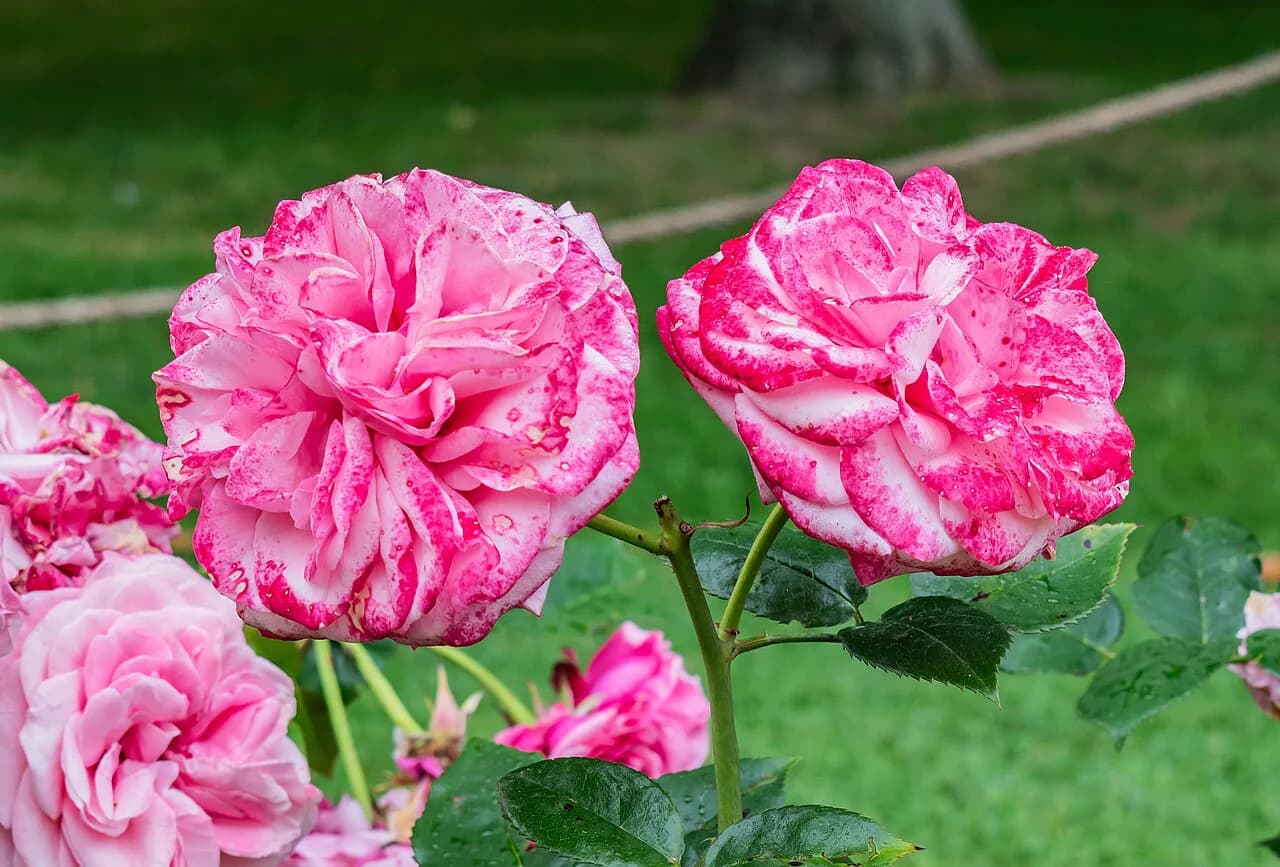
Lyon Local Food Guide: Authentic Bouchons, Markets & Must-Eat Dishes
A lyon local food guide to authentic bouchons, Les Halles Paul Bocuse, the mâchon breakfast tradition, and the dishes worth planning a 2026 meal around.
On this page
Lyon Local Food Guide: Bouchons, Markets, and Must-Eat Lyonnais Dishes
Last updated July 2026. This lyon local food guide covers what to eat, where locals go, and how to spot a certified bouchon in Lyon. Expect quenelle de brochet, cervelle de canut, and the pink praline tart, plus the 9 a.m. mâchon tradition and the markets behind each dish.
Lyon Local Food Guide: Why the City Earned Its Gastronomic Reputation
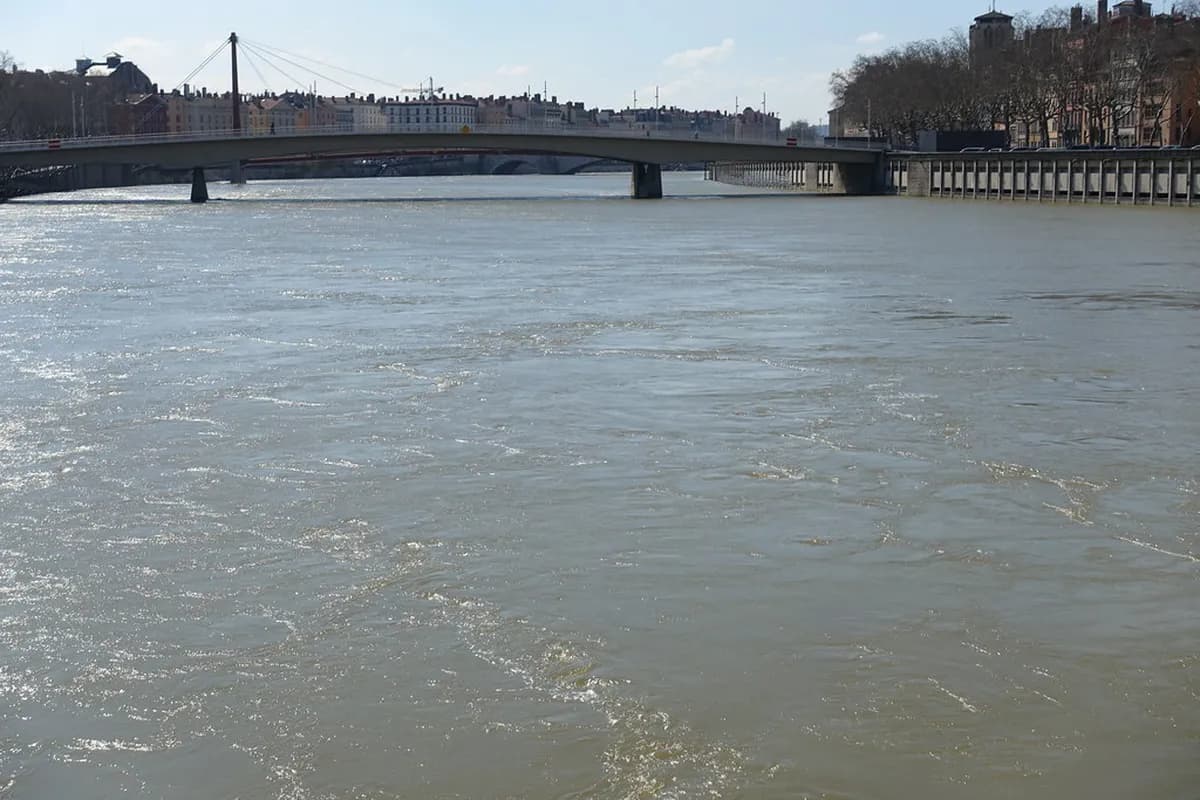
Lyon's food reputation was not built by marketing. It grew from a lineage of cooks called the Mères Lyonnaises, women who left work as private chefs for bourgeois families and opened dining rooms of their own in the early 20th century. La Mère Fillioux built the first following, and La Mère Brazier opened two restaurants after her. In 1933, Eugénie Brazier, known as La Mère Brazier, became the first person to hold three Michelin stars at each of those two restaurants at the same time. Paul Bocuse apprenticed under her after World War II, then built the network of bouchons and brasseries that still anchors Lyon dining today. Location helps too. Bresse poultry, Charolais beef, and crayfish and freshwater fish from the Dombes region all reach Lyon's kitchens quickly, feeding the charcuterie and sauce traditions covered below. The Presqu'île peninsula sits between the Rhône and Saône rivers, with Vieux Lyon and the Croix-Rousse hill framing it on either side. For a fuller map of the districts referenced throughout this guide, see the Lyon Neighborhoods Guide 2026: Where to Stay in Every District.
In 1933, Eugénie Brazier became the first person to hold three Michelin stars simultaneously at two restaurants. Paul Bocuse apprenticed under her and later built the bouchon network that still anchors Lyon's dining scene today.
The Bouchon Experience: How to Spot an Authentic One
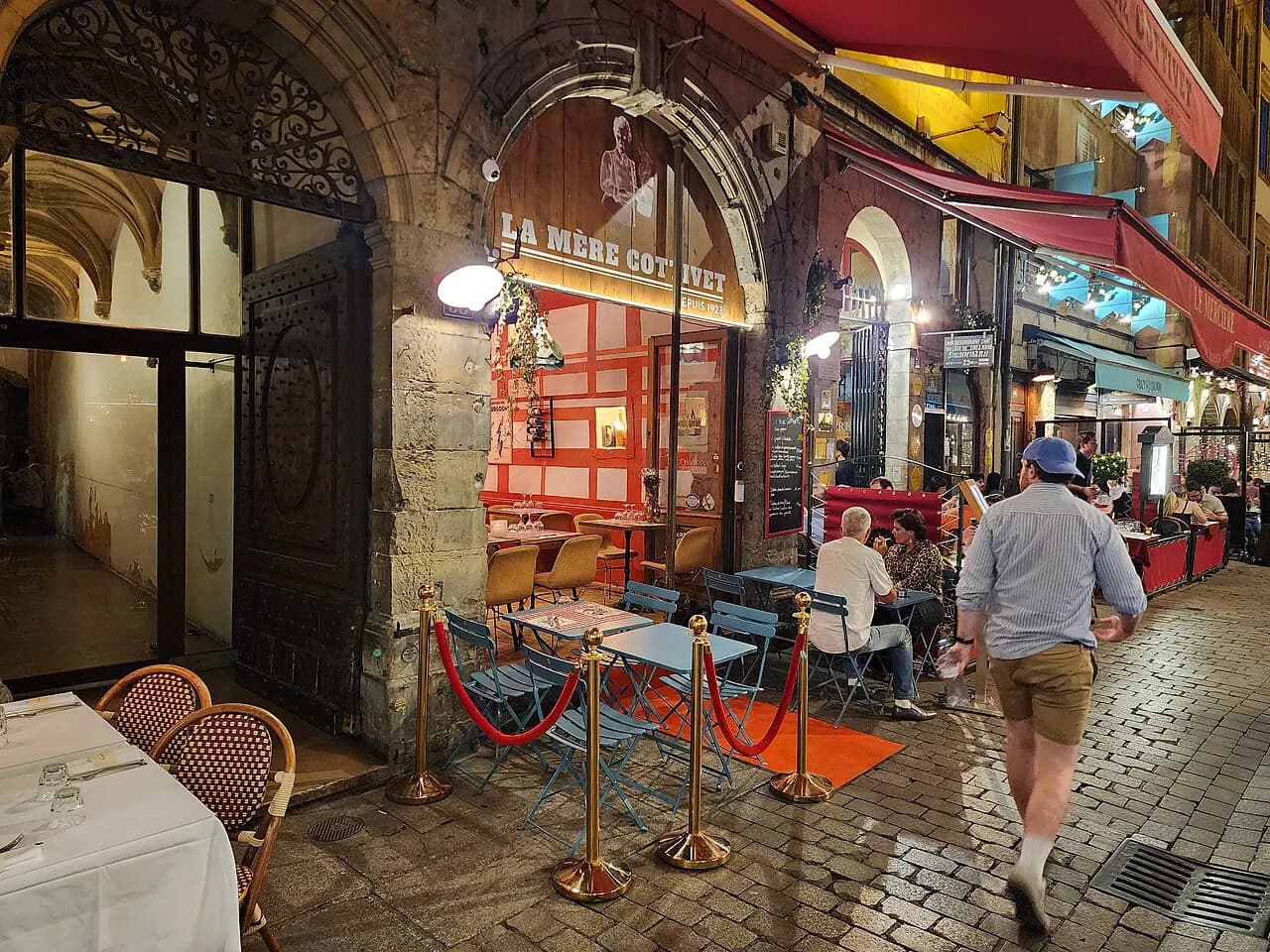
A real bouchon looks different from a restaurant built for passing tourists. Red-and-white checkered tablecloths, a short handwritten or chalkboard menu, and communal, elbow-to-elbow seating are the baseline signals. Certified addresses also carry an official sticker near the entrance featuring Gnafron, the mustachioed puppet linked to Lyon's Guignol puppet tradition, which dates to 1808. Confirm the current sticker design on-site, since certification branding gets updated periodically. Wine gets poured by the pot lyonnais, a distinctive 46cl bottle, rather than a standard 75cl bottle or single glasses. Apéritif customs matter too. Many bouchons open with grattons, crisp bits of fried pork fat, alongside a glass of Beaujolais or Côtes du Rhône before the meal starts. Some wine bars also pour the Communard, a Beaujolais-and-cassis apéritif, as an alternative starting point. Vieux Lyon holds the highest concentration of both certified bouchons and imitators, so use these signals together rather than relying on just one. The Vieux Lyon Guide: Traboules, Landmarks, and Bouchon Etiquette (2026) covers the district's full layout beyond food. For vetted names beyond this list, the 7 Best Local Restaurants in Lyon (2026): Bouchons, Markets & Modern Tables guide profiles specific bouchons and bistros by neighborhood.
Wine is poured by the pot lyonnais, a 46cl vessel. This size—less than a standard bottle—explains why expecting a full liter is a common mistake at bouchons.
The Lyon Food Bucket List: Must-Try Dishes
These dishes appear on almost every bouchon menu in some form, though richness and preparation vary by kitchen. A typical bouchon meal follows a fixed order: starter, main, cheese, and dessert. Two charcuterie items get confused often. Rosette de Lyon is a dry-cured, air-dried sausage sliced thin and eaten cold, closer to a salami. Saucisson de Lyon, by contrast, is a fresh sausage meant to be poached or simmered, then served warm with potatoes. Both show up on the same charcuterie boards at Les Halles de Lyon Paul Bocuse, so read the label before ordering if you want one and not the other.
- Quenelle de brochet: a light, egg-based pike dumpling served in Nantua sauce, a crayfish-based sauce named for Lac Nantua, a lake in the region.
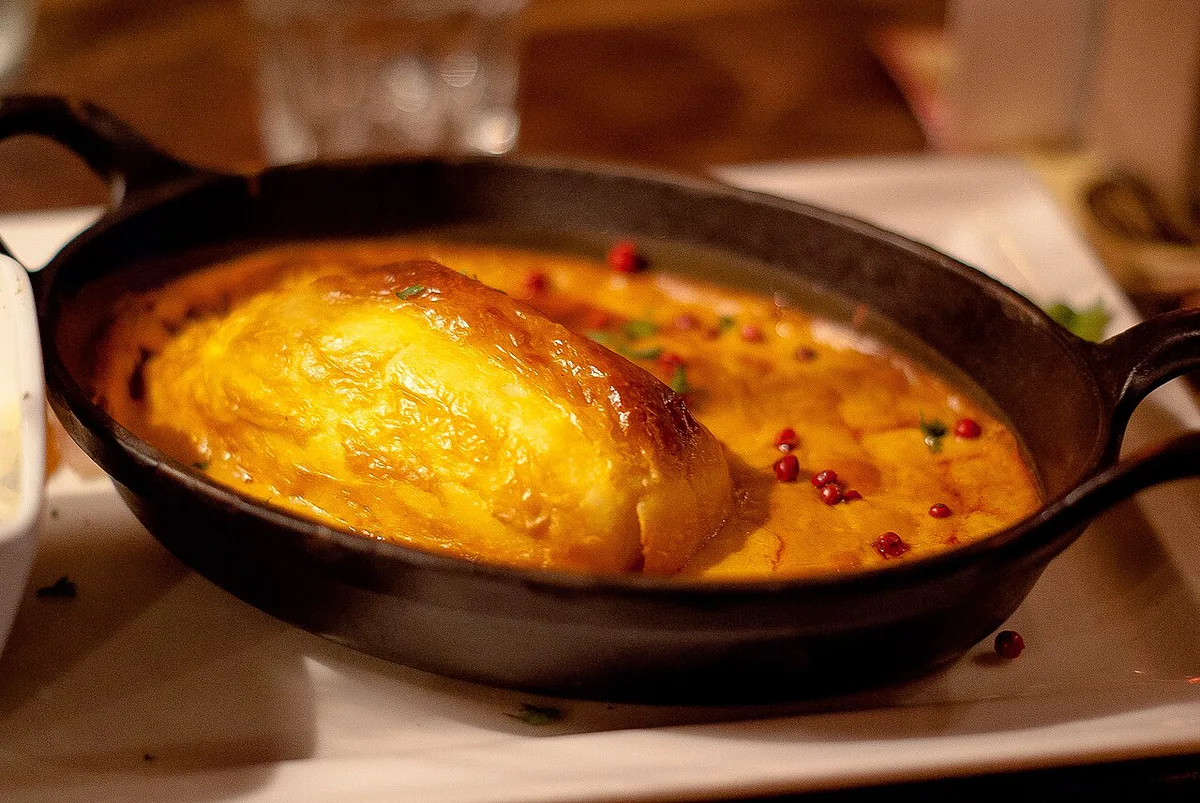
- Saucisson brioché: a warm pork sausage baked inside a lightly sweetened brioche dough that soaks up the sausage's juices as it bakes.
- Salade Lyonnaise: frisée and often dandelion greens topped with thick-cut lardons, croutons, and a poached egg, dressed with a mustard vinaigrette.
- Pâté en croûte: a cold, sliced terrine of seasoned meat and liver baked inside a buttery pastry crust with a thin layer of jelly.
- Cervelle de canut: a herbed fresh-cheese spread, its name translating to silk worker's brain, made from fromage blanc, shallots, herbs, and vinegar.
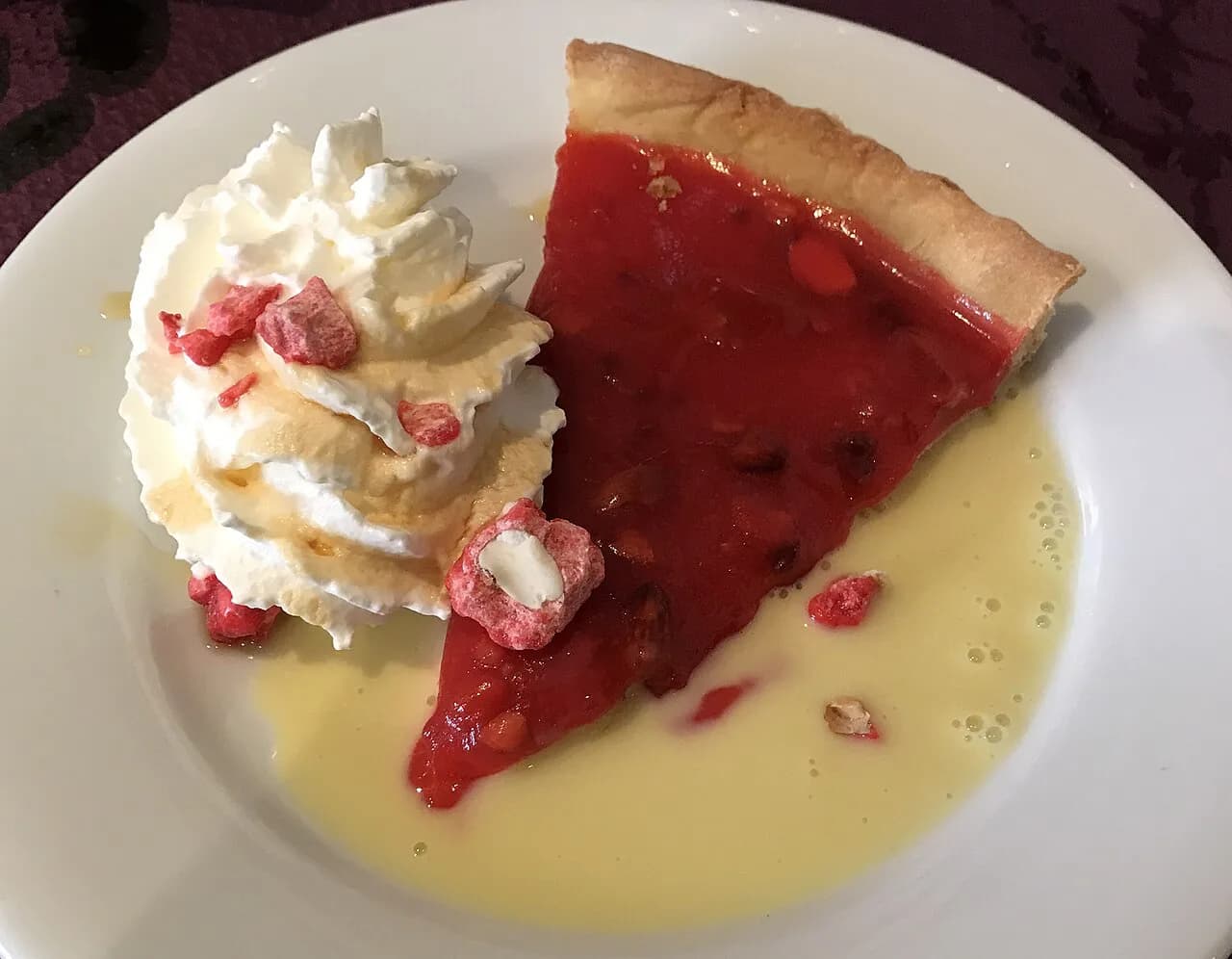
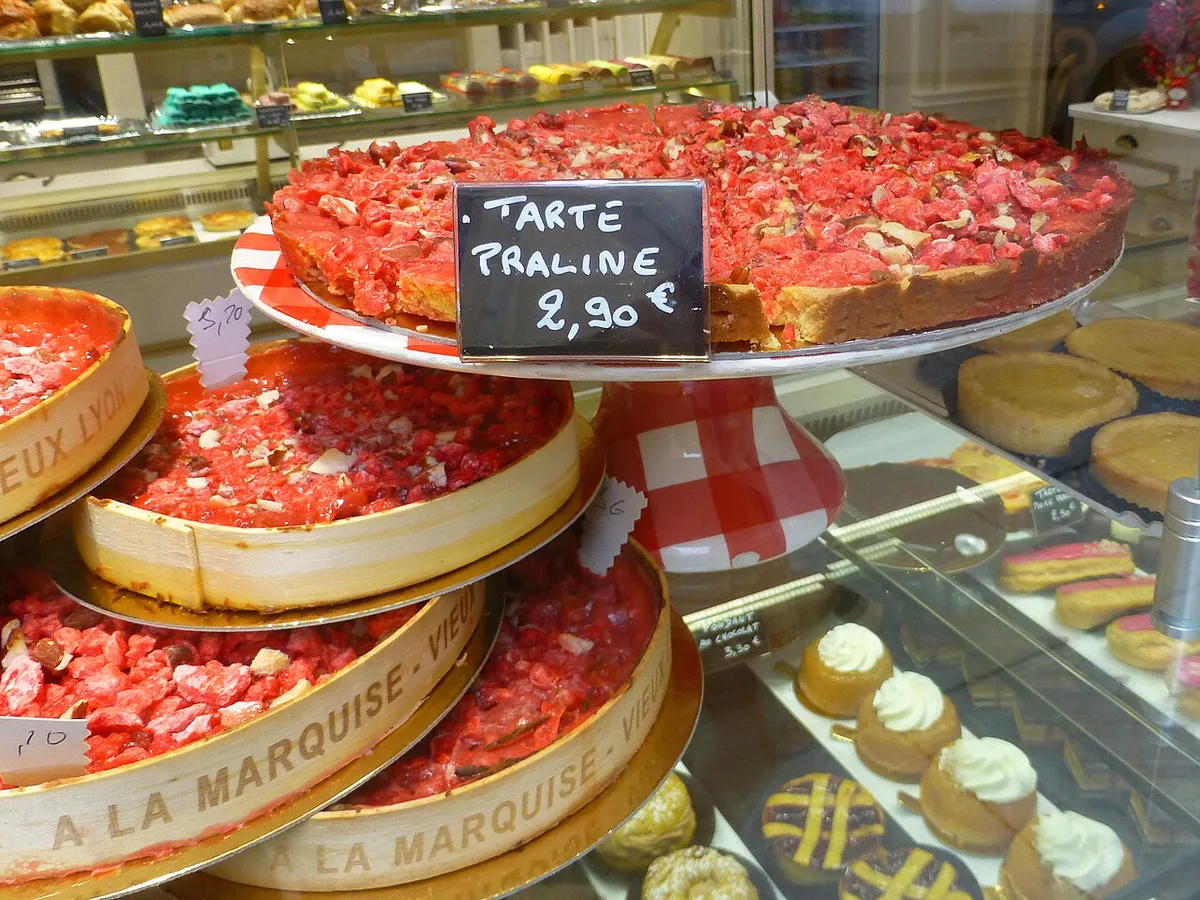
- Tarte aux pralines: a shortcrust tart filled with a caramel-cream base and topped with crushed pink sugar-coated almonds.
- Coussin de Lyon: a small, green marzipan-and-chocolate confection invented in the 1960s and filled with almond paste.
Adventurous Eating: Andouillette and Tablier de Sapeur
Not every Lyonnais specialty eases you in gently. Andouillette is a coarse sausage made from pork intestine, with a strong, distinct smell that some diners love and others cannot get past. Tablier de sapeur breads and fries a piece of tripe flat; its name translates to fireman's apron for its shape. Sabodet goes further still, made from the whole pig's head and seasoned with red wine, garlic, and nutmeg. A glass of Morgon or another Beaujolais cru cuts through the richness of any of these three. If either sounds like too much for a first bouchon meal, order the quenelle or salade Lyonnaise instead, then save the tripe dishes for a second visit once you know the kitchen's style.
The Mâchon Tradition: Lyon's Silk-Worker Breakfast
Lyon's answer to breakfast is not a croissant and coffee. The mâchon is a late-morning meal historically eaten by the canuts, Lyon's silk workers, roughly between 8:00 and 10:00 in the morning, before or during a shift. A traditional plate centers on cold charcuterie, bread, and a glass of Beaujolais rather than pastry. Silk weavers built this tradition on the Croix-Rousse hill through the 19th century. The Croix-Rousse neighborhood guide covers the district in full. Rue d'Ivry holds the Maison des Canuts silk museum, where Jacquard looms demonstrate the weaving history behind the meal. Nearby, the Mur des Canuts mural sits within the same hillside walk. Just beyond it, the Jardin Rosa Mir garden is a short walk further. Travelers who want the fuller silk-weaving story alongside the food should see 12 Unique Things to Do in Lyon: Traboules, Murals, and Local Flavors for a pairing itinerary.
Where to Eat: Lyon's Key Food Hubs
Four areas cover most of what a food-focused visit to Lyon needs. Les Halles de Lyon Paul Bocuse spreads across more than 50 stalls, so plan an hour or more to see it properly. Weekday mornings suit an oyster-and-wine stop best, before lunchtime crowds build. Vieux Lyon rewards a slow walk more than a reservation. Smaller neighborhood markets round out the list, including Marché de la Croix-Rousse and Marché Monplaisir in the 8th arrondissement. Lyon and its surrounding area host roughly 260 markets in total, per local food writers, so a different one operates within reach on most days of the week. South of the Presqu'île, the Confluence district guide covers a newer wave of casual bistros and wine bars, worth a stop if a heavier bouchon meal does not fit that day. History-minded travelers often add Institut Lumière to the same day out. Wine drinkers who want to see where the Beaujolais on bouchon wine lists comes from can extend the trip. The 12 Best Day Trips From Lyon: A Local Logistics Guide guide covers the Beaujolais route.
| Food Hub | Best For | Practical Note |
|---|---|---|
| Les Halles de Lyon Paul Bocuse | Oysters, wine by the glass, charcuterie and cheese counters | More than 50 stalls under one roof. Confirm hours directly, since covered markets often trim Sunday evening and Monday service. |
| Vieux Lyon | Praline brioche, pralines, boulangerie snacks | Good for grazing on foot. Be more selective with sit-down bouchon meals, since the Rue Saint-Jean corridor draws the heaviest tourist traffic. |
| La Croix-Rousse | Traditional mâchon breakfasts, the neighborhood market | Known locally as the hill that works, tied to the canut silk-weaving history. |
| Marché Saint-Antoine Célestins | Riverside produce, cheese, charcuterie, flowers | Runs along the Saône. Good for building a picnic to eat by the river. |
Practical Planning: Hours, Costs, and Reservations
Plan around Lyon's closing days before booking anything else. Many bouchons, specialty shops, and cafés close on Sunday, Monday, or both. Confirm each restaurant's website for its actual weekly schedule before making plans around it. If a favorite spot is shut, the 12 Hidden Gems in Lyon: Secret Spots Beyond the Tourist Trail (2026) guide lists smaller addresses that keep different hours. August is another common closure window for many traditional bouchons, so brasseries and larger restaurants become the more reliable option that month.
Costs split roughly into two tiers. A bouchon's fixed-price lunch or dinner menu costs noticeably less than a tasting menu at one of Lyon's Michelin-starred restaurants, which number around a dozen across the city as of recent guides. Confirm current pricing directly with each restaurant, since bouchon set menus are typically revised each season. Balance a splurge dinner with a free afternoon. The Free Things to Do in Lyon: The 2026 Budget Guide guide lists no-cost ways to fill the rest of the day.
Reservations matter more than casual travelers expect. Well-known bouchons and bistros fill up days or weeks ahead, especially on weekend evenings. Book before arriving rather than planning to walk in.
Market and festival timing shifts by season too. Outdoor markets thin out and some seasonal stalls disappear in the colder months. Cross-check timing against the best time to visit Lyon guide before locking in dates.
Mistakes to Avoid in Lyon's Food Scene
A handful of avoidable mistakes shape a lot of disappointing meals in Lyon.
- Do not expect a full liter from a pot: the pot lyonnais holds 46cl, noticeably less than a standard 75cl bottle.
- Do not skip the cheese course. Saint-Marcellin, a creamy cow's-milk cheese from the Rhône-Alpes region, is treated as close to mandatory on a bouchon menu.
- Do not sit down at the first checkered-tablecloth restaurant on Rue Saint-Jean without checking for the Gnafron sticker. This tourist corridor in Vieux Lyon has certified bouchons and imitators side by side.
- Do not schedule a heavy bouchon lunch right before a lot of walking. Work it off first with a stroll through the Vieux Lyon traboules, the covered passages that connect the old town's streets.
- Do not assume every district works the same way. The Off the Beaten Path in Lyon: Where Locals Actually Go guide points to food-adjacent spots away from the main tourist routes.
For trip-planning details, see Lyonnaise cuisine – Wikipedia.
Further reading: Lyon on Wikivoyage · Lyon on Wikipedia
Frequently Asked Questions
What exactly is a bouchon in Lyon?
A bouchon is a small, traditional Lyonnais restaurant serving rustic dishes like quenelle de brochet, cervelle de canut, and saucisson brioché, usually under red-and-white checkered tablecloths. Look for the official sticker featuring the Gnafron puppet near the entrance as one signal of a certified address, alongside a short menu and communal seating.
How much wine comes in a pot lyonnais?
A pot lyonnais holds 46cl, less than a standard 75cl bottle. Bouchons pour Beaujolais and Côtes du Rhône by the pot rather than by the glass, so order accordingly when sharing between two people.
What is a mâchon and when do locals eat it?
A mâchon is a mid-morning meal historically eaten by Lyon's silk workers, roughly between 8:00 and 10:00 in the morning. It centers on cold charcuterie, bread, and a glass of wine rather than coffee and pastry, and it stays tied to the Croix-Rousse district.
Are Lyon's bouchons expensive?
A bouchon's set-price lunch or dinner menu costs noticeably less than a tasting menu at one of Lyon's Michelin-starred restaurants. Exact prices shift by season, so check each restaurant's current menu directly before booking.
Do you need reservations for a Lyon bouchon?
Yes, for any well-known address, especially on weekend evenings. Many traditional bouchons and specialty shops also close on Sunday, Monday, or both, so confirm hours in advance rather than planning to walk in.
What is the easiest Lyon dish for a first-time visitor to order?
Quenelle de brochet and salade Lyonnaise are approachable starting points, both widely available and milder than the offal-based dishes. Save andouillette, tablier de sapeur, and sabodet for a second meal once you know a kitchen's style, since they lean toward stronger, more adventurous flavors.
Continue exploring
More guides you'll find useful