Croix-Rousse Lyon Guide: Silk Heritage, Traboules and Local Tips
Plan your visit with this Croix-Rousse Lyon guide: silk-worker traboules, the Mur des Canuts mural, market days, and the Metro C route up the hill.
On this page
The Croix-Rousse Lyon Guide: Exploring the Hill That Works
Last updated July 2026, this croix rousse lyon guide untangles two facts every visitor mixes up. The flat Plateau at the summit is a residential village, while the steep Pentes below hide traboules and covered stairways. Locals call the district the hill that works, a working counterpart to Fourvière, the hill that prays, across the Saône.
Croix-Rousse Lyon Guide: Plateau, Pentes, and the Hill That Works
Locals split Croix-Rousse into two zones, and confusing them wastes a half-day. Croix-Rousse's Plateau sits at the hill's top and functions as a self-contained village, reached by Metro C at the Croix-Rousse station. Below it, the Pentes form a network of steep lanes and traboules that end near the Presqu'île, reached by Metro C one stop earlier, at Croix-Paquet station.
Lyon has two emblematic hills, and each earned its nickname from local history. Croix-Rousse is the hill that works, home to the silk weavers who built the district. Fourvière, across the Saône, is the hill that prays, crowned by its basilica. Croix-Rousse joined the city of Lyon only in 1852, well after the canut revolts began, and kept its village identity even after annexation.
Travelers choosing between historic districts often default to Vieux Lyon, so that comparison is worth making directly. Vieux Lyon sits inside Lyon's UNESCO World Heritage zone and centers on Renaissance façades and traboules built for merchants. Croix-Rousse borders that zone rather than sitting inside it, and Boulevard de la Croix-Rousse marks the UNESCO sector's northern edge. Its own traboules were built for silk workers moving fabric downhill, not merchants moving goods. Read the full Vieux Lyon's UNESCO district comparison before you plan a route. For the wider district map, see Lyon's full district breakdown.
The Canuts' Legacy: Silk, Traboules, and Murals
Croix-Rousse takes its identity from the canuts, the silk weavers who worked Jacquard looms here for more than a century. Their frustration over piece rates triggered France's first major labor uprisings, in 1831 and 1834, both centered on this hill. The Maison des Canuts, at 10-12 rue d'Ivry, traces roughly five centuries of Lyon's silk expertise and demonstrates a working Jacquard loom. Guided visits run several days a week, but posted hours have shifted between sources, so confirm the current schedule at maisondescanuts.fr before you go. Plan for roughly 30 to 45 minutes inside.
The Maison des Canuts takes 30 to 45 minutes and usually operates Tuesday-to-Saturday—as the district's sole paid stop, many visitors skip it for the free murals and passages that tell the same working-class history.
Boulevard des Canuts holds the district's largest mural, the Mur des Canuts, often cited as one of Europe's largest painted murals at around 1,200 square meters. CitéCréation painted it in the 1980s and has repainted sections periodically since, so the scene changes across visits. For the full story behind the artwork, see the dedicated Mur des Canuts deep dive.
Nearby, the old Condition des Soies buildings once served as the warehouses where merchants inspected silk before sale, part of the 19th-century Grande Fabrique system. Several have been converted into housing or cultural space, though their industrial scale is still visible from the street.
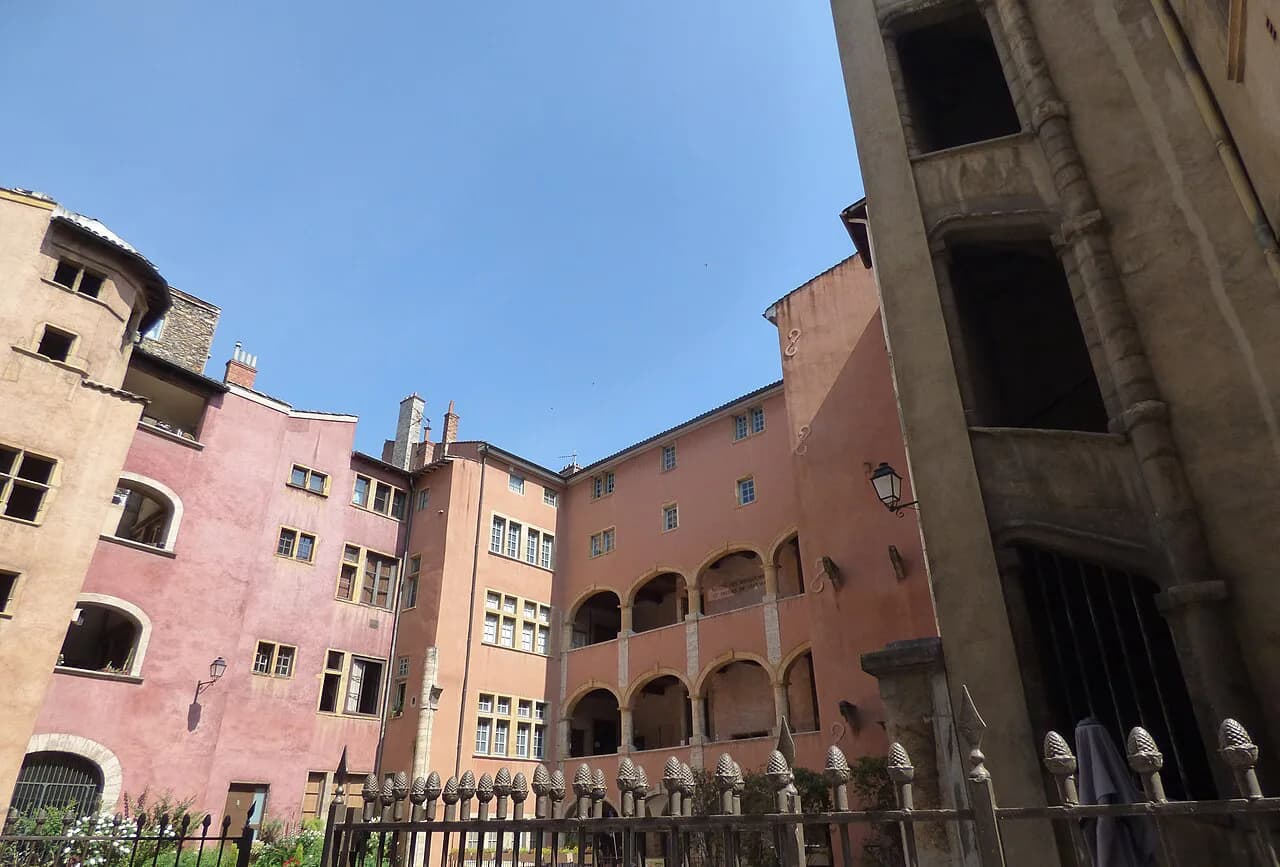
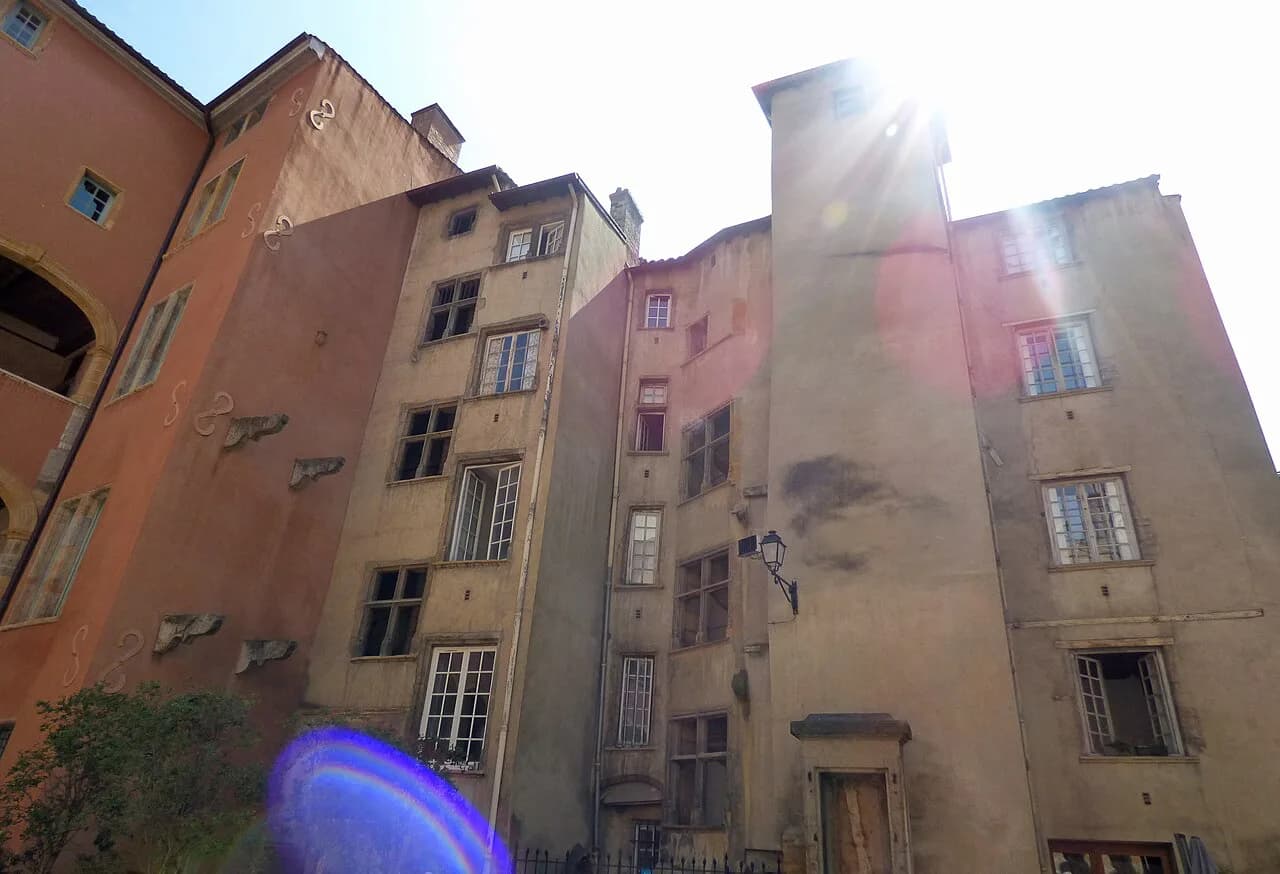
Cour des Voraces, entered near Place Colbert, is the hill's best-known passage. Its six-story staircase connects several streets inside one open courtyard, though it is technically a courtyard rather than a covered traboule. Workshop leaders known as the Voraces met here from 1846 and briefly proclaimed a Republic in 1848. The space also served the French Resistance during the German occupation of Lyon. For a map of this and the district's other passages, use the traboules of Lyon. Most of them remain private residential entrances, not public attractions.
Top Things to Do on the Plateau
Beyond the silk sites, a handful of stops round out a Plateau walk.
- Amphitheater of the Three Gauls — Roman ruins near Place des Terreaux at the foot of the hill, built in the 1st century AD to host spectacles for Roman Lugdunum.
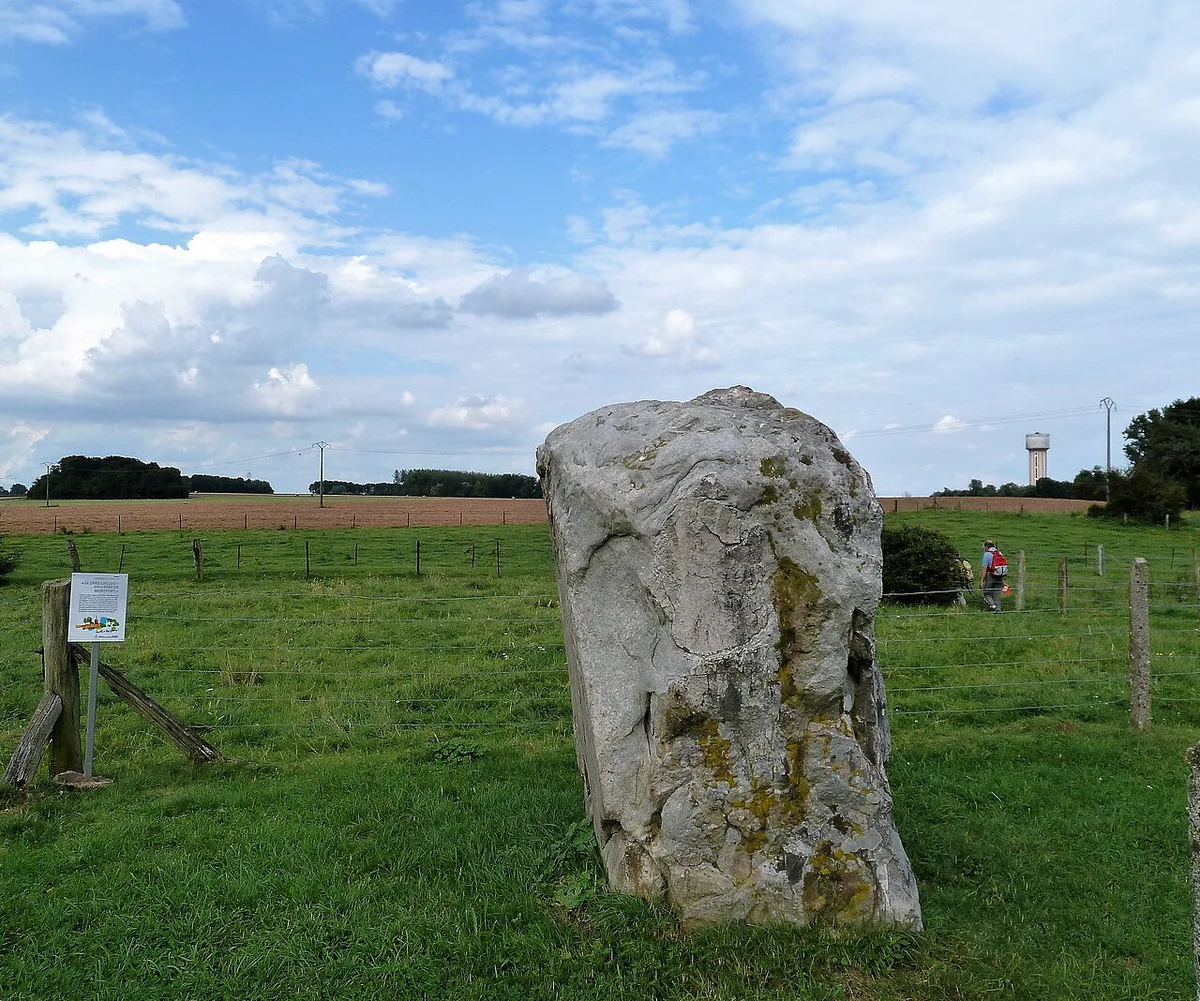
- Esplanade du Gros Caillou — a Triassic metaquartzite boulder carried from the Alps by glacier, unearthed during the 1862 construction of the Croix-Paquet funicular. Views on clear days reach the Alps, and a nearby plaque commemorates Jean Moulin, the Resistance leader who passed through here via the Croix-Paquet funicular in 1943, shortly before his arrest.
- Jardin Rosa Mir — a small mosaic garden behind a residential building, traditionally open Saturday afternoons from around April to October. Check the Jardin Rosa Mir page for current dates. Its low profile also earns it a place among lesser-known Lyon locations.
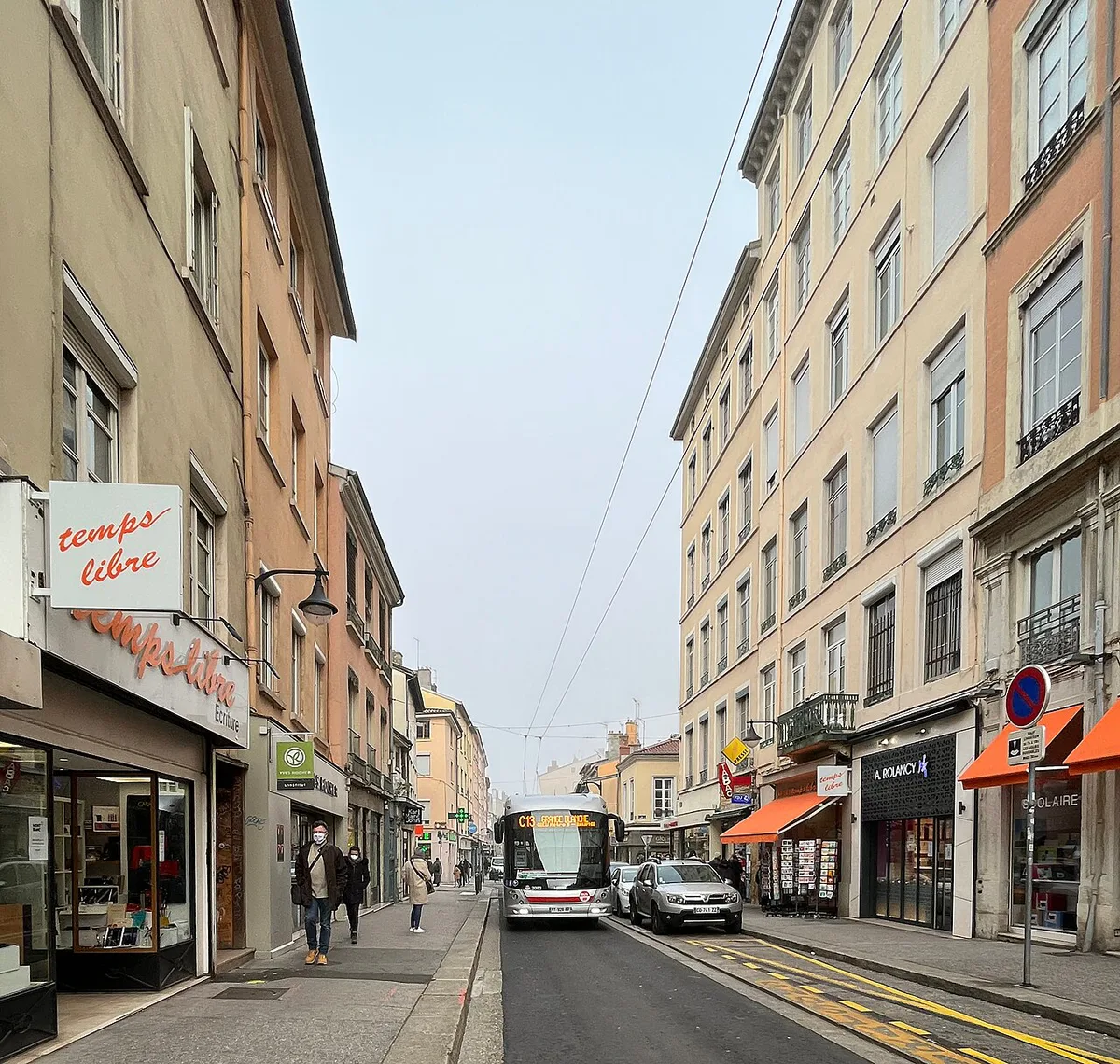
- Place de la Croix-Rousse — the plateau's main square, home to a stone statue honoring Joseph Marie Jacquard (1752-1834), who patented his mechanical loom in 1801, plus several stairways down into the Pentes.
- Grande Rue de la Croix-Rousse — the plateau's main commercial street, lined with food shops and bakeries open most days of the week.
Walking the Pentes: Montée de la Grande-Côte and the Passages
The Montée de la Grande-Côte was the historic route silk merchants used to move fabric between the workshops above and the markets below. Silk workers broke off the first clashes of the 1831 canut revolt right along this street, demanding fairer piece rates from merchants below. Today the street runs partly pedestrian, lined with small shops, cafés, and artist studios. The top offers a view over Lyon that stretches to the Alps on a clear day. The Montée de la Grande-Côte ends at Place des Terreaux, framed by the Hôtel de Ville on one side and the Musée des Beaux-Arts on the other. In 1831, striking silk workers briefly took control of this square and the city hall behind it. Its Bartholdi fountain, added in 1891, makes a natural finish line for the downhill route.
The canut uprisings of 1831 and 1834 broke out on specific sites you'll walk—the Montée de la Grande-Côte and Place des Terreaux—making these streets a living timeline of France's earliest major labor movements.
Two passages branch off the same slope. Passage Mermet has a wide, color-painted staircase and street art that connects the Montée de la Grande-Côte to Boulevard de la Croix-Rousse. Passage Thiaffait, a former industrial passage, now houses the Village des Créateurs, a cluster of independent fashion and design workshops. It's one of the more unconventional Lyon activities for anyone tired of chain shopping streets.
Near the river at the base of the hill, the Fresque des Lyonnais on Quai Saint-Vincent depicts more than 30 historic Lyonnais figures across roughly 800 square meters, including the Lumière brothers and chef Paul Bocuse. Both passages and the mural sit inside the wider network that Lyon's under-the-radar guide covers if you want to keep exploring past Croix-Rousse.
Getting There, Timing, and Costs
Metro line C is a rack railway, a crémaillère, built to handle the hill's steep grade. It boards at Hôtel de Ville station in the Presqu'île and climbs toward the Plateau.
Two routes work, depending on energy level. Riding Metro C to Croix-Rousse station at the top, then walking downhill through the Pentes toward Croix-Paquet or further into the Presqu'île, makes the lazy route. Climbing the Montée de la Grande-Côte on foot from the bottom makes the active route instead, adding effort but retracing the silk merchants' original path in reverse.
Set aside three to four hours for a full loop covering both the Plateau's sights and the Pentes' passages. Most museum-style stops, including the Maison des Canuts, keep something close to a Tuesday-to-Saturday schedule, so a Monday visit means murals and traboules only. Boulevard de la Croix-Rousse's market runs six days a week and closes only on Mondays. A Lyon visit timed to avoid crowds should put this market on a Sunday morning, when trade is heaviest and stalls are fullest. None of the outdoor sights require booking ahead. Only the Maison des Canuts benefits from checking the schedule in advance, since it runs as a guided, timed visit rather than a walk-through space.
Most of the district's sights cost nothing. Mur des Canuts, Gros Caillou, and every traboule on the standard route are free to see, which makes Croix-Rousse a strong stop for free activities across Lyon. Maison des Canuts is the one paid stop on this route. Its exact rate isn't listed here, so check maisondescanuts.fr for current pricing before you go, and budget it as the day's single ticketed expense against an otherwise free itinerary.
| Detail | Where to find it |
|---|---|
| Metro boarding point | Hôtel de Ville station |
| Plateau exit | Croix-Rousse station |
| Pentes exit | Croix-Paquet station |
| Full walking loop | 3-4 hours |
| Market days | 6 days a week, closed Mondays |
| Museum-style hours | Roughly Tuesday to Saturday |
Where to Eat: Bouchons on the Hill vs Cafés on the Slopes
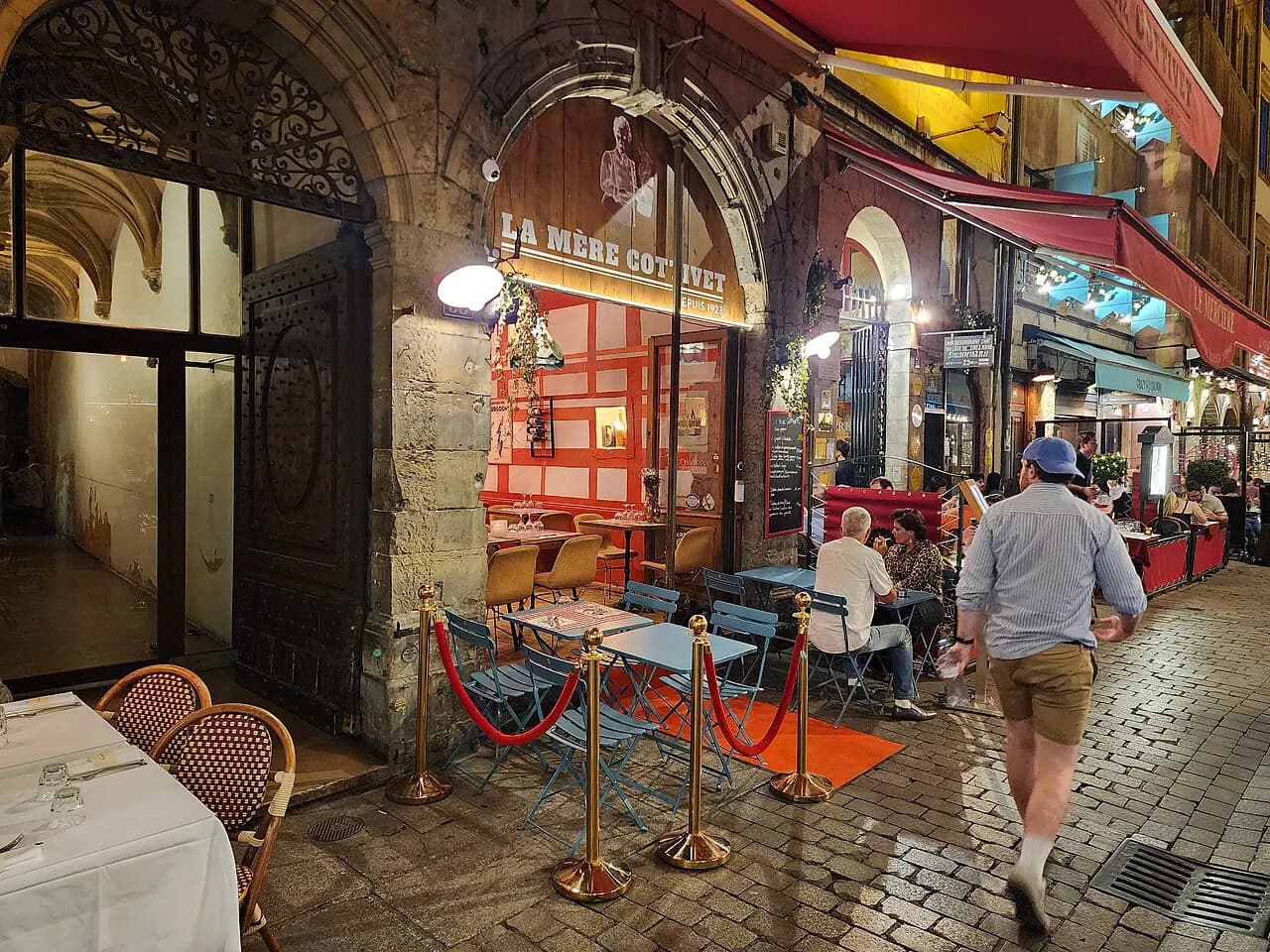
Croix-Rousse splits its food scene the same way it splits its geography. Up on the Plateau, a cluster of traditional bouchons, the working-class restaurants that once fed silk workers, serves quenelles, Lyonnaise salad, and tablier de sapeur, a breaded tripe dish. Order cervelle de canut for the signature local dish. Despite the name, it's a fresh herbed cheese spread, not an organ dish. Bouchons are not exclusive to this hill either. The same style operates across Old Lyon and the Presqu'île, so this district is a starting point, not the only source.
Down in the Pentes, a newer coffee-and-brunch scene mixes independent cafés among the fashion workshops near Passage Thiaffait. Either way, save room for brioche aux pralines, a pink, sugar-flecked pastry sold in several Croix-Rousse bakeries. For dish-by-dish detail across the whole city, see the Lyon food specialties guide. For specific restaurant picks near this route, browse curated Lyon restaurant picks.
Mistakes to Avoid in Croix-Rousse
A few adjustments make the visit smoother.
- Skip the uphill climb if mobility is a concern. Ride Metro C to Croix-Rousse station and walk down instead of climbing the Grande-Côte.
- Stay quiet inside the passages. Most, including sections near Cour des Voraces, open onto private residential entrances, not public galleries.
- Time photos for early morning or evening. Views from Esplanade du Gros Caillou toward the Alps are clearest near sunrise or sunset. Because this district sits away from Lyon's headline tourist stops, it also shows up on quieter corners of Lyon roundups. Crowds stay lighter here than in Vieux Lyon even in peak season.
Further reading: Lyon on Wikivoyage · Lyon on Wikipedia
Frequently Asked Questions
Is Croix-Rousse worth visiting if you've already toured Vieux Lyon?
Yes. Vieux Lyon's traboules were built for Renaissance-era merchants inside Lyon's UNESCO zone, while Croix-Rousse's traboules and courtyards, including Cour des Voraces, were built for 19th-century silk workers moving fabric downhill. History, architecture, and crowd levels differ enough to justify both stops.
How do you get to Croix-Rousse from central Lyon?
Take Metro line C, a rack railway built for the hill's steep grade, from Hôtel de Ville station. Get off at Croix-Rousse station for the Plateau, or one stop earlier at Croix-Paquet for the Pentes.
How much time should you plan for a Croix-Rousse visit?
Budget three to four hours for a full loop covering the Plateau and the Pentes. Add another 30 to 45 minutes if you tour the Maison des Canuts.
What day should you avoid visiting Croix-Rousse?
Skip Monday if possible. Boulevard de la Croix-Rousse's market and the Maison des Canuts both typically close that day, leaving only the murals and traboules open.
Is Cour des Voraces open to everyone?
Its courtyard is publicly accessible, usually entered near Place Colbert, but much of the surrounding building is residential. Keep noise down and treat it as someone's front entrance, not a tourist attraction.
What is a Jacquard loom, and why does Croix-Rousse celebrate it?
Joseph Marie Jacquard, born to a canut father, patented his mechanical loom in 1801. It automated pattern-weaving well enough to reshape Lyon's silk trade, and the Maison des Canuts still demonstrates the mechanism today.
Continue exploring
More guides you'll find useful