Mur des Canuts, Lyon: A Complete Guide to the Croix-Rousse Fresco
Plan your visit to the Mur des Canuts in Lyon's Croix-Rousse district: how to get there, best photo timing, and what the 1,200 m² fresco depicts.
On this page
Mur des Canuts, Lyon: A Visitor's Guide to Europe's Largest Trompe-l'Œil Mural
Last updated July 2026, this guide covers the mur des canuts lyon in the Croix-Rousse district, a 1,200 m² trompe-l'œil fresco that ranks among Europe's largest painted walls. Boulevard des Canuts sits above the city center, so getting there means either a short Metro Line C ride to Hénon or a climb up the Croix-Rousse pentes. This guide breaks down access, timing, the fresco's silk-weaving backstory, and the small details worth spotting before you move on to nearby stops like the Jardin Rosa Mir.
What Is the Mur des Canuts in Lyon?
The Mur des Canuts covers about 1,200 square meters (roughly 12,900 square feet) of wall on Boulevard des Canuts, in Lyon's 4th arrondissement, postal code 69004. Locals and city listings also call it the Fresque des Canuts. City records list it as the largest trompe-l'œil fresco in Europe, painted directly onto stone rather than canvas. Artist cooperative CitéCréation, founded in Lyon in 1978, created the original design in 1987 and has since built a worldwide portfolio of large-scale murals. Entry costs nothing, since the wall faces a public street with no gate, ticket booth, or set hours. Repainting keeps it current. Its design works less like a fixed artwork and more like a living document, since CitéCréation updates it as the neighborhood changes. Downtown, the Fresque des Lyonnais depicts historical figures from Lyon's past, while the Croix-Rousse fresco shows ordinary residents and the neighborhood's silk-weaving history instead. That focus makes it the better stop if the Canuts themselves, not general Lyon history, are the draw. It belongs on any list of lesser-known Lyon spots, since it sits well outside the usual Vieux Lyon and Presqu'île routes.
- Address: Boulevard des Canuts, 69004 Lyon
- Size: about 1,200 m² (roughly 12,900 sq ft), about the footprint of an Olympic swimming pool
- Cost: free, viewable from the public street at any hour
- Nearest metro: Line C, Hénon station
- Artist: CitéCréation, the Lyon mural cooperative founded in 1978
- Combine with: a Croix-Rousse walking loop, about 2 hours total
Getting to the Mur des Canuts: Metro, Velo'v, or the Pentes
Croix-Rousse sits on a hill above central Lyon, so how you arrive changes how much effort the visit takes. Metro Line C runs directly to Hénon station, the closest stop to the mural, which spares you the uphill walk. The Line C ride from central Lyon covers just a handful of stops. Velo'v bike-share docks sit near the boulevard too, though every route up from the river involves sustained climbing. Walkers can follow the pentes, the stepped streets rising from Hôtel de Ville, but should budget extra time and wear shoes built for an incline. Hôtel de Ville, at the base of the pentes, is the reference point most downtown Lyon itineraries use, so the climb effectively starts wherever your day already ends. Whichever route you pick, expect elevation gain to be the main variable, not the raw distance covered. For a fuller sense of the district beyond this one wall, the Croix-Rousse neighborhood guide covers the pentes and surrounding streets in more detail.
| Route | Advantages | Disadvantages |
|---|---|---|
| Metro Line C to Hénon station | Most direct route, no climbing required | — |
| Velo'v bike-share docks | Convenient | Uphill the entire way |
| Walking the pentes from Hôtel de Ville | Free and scenic | Physically demanding |
- Metro Line C to Hénon station — the most direct route, no climbing required
- Velo'v bike-share docks near Boulevard des Canuts — convenient, but uphill the entire way
- Walking the pentes from Hôtel de Ville — free and scenic, but physically demanding
- Confirm current Metro Line C service and Velo'v station status with TCL before you go
How Much Time to Plan and When to Visit
Viewing the mural alone takes about 15 to 20 minutes, enough time to walk its length and pick out the painted details. Add a short Croix-Rousse walking loop, and the visit stretches to roughly two hours. That estimate lines up with a 3-kilometer (1.9-mile) neighborhood route that local walking guides rate as very easy. Morning light works best for photography, since the trompe-l'œil stairwell relies on shadow angles to sell the illusion, and midday sun flattens it. Because the mural costs nothing to see, the only real expense on this stop is transit, whether that's a Metro ticket or simply time spent walking. Crowds rarely build up here, unlike at Vieux Lyon's more concentrated sights. If timing the whole trip around lighter citywide crowds matters, the guide to visiting Lyon without crowds covers seasonal patterns beyond this one stop.
Allocating only the suggested 15 to 20 minutes means skipping the passage beneath the wall showing the 1987, 1997, and 2013 versions side by side. This detail reveals how CitéCréation ages the painted residents over time rather than simply replacing them.
- Mural only: 15-20 minutes
- Mural plus a Croix-Rousse walking loop: about 2 hours, over roughly 3 km (1.9 miles)
- Best light for photos: morning, before shadows cut across the trompe-l'œil stairwell
The Canuts: Lyon's Silk-Weaving History Behind the Fresco
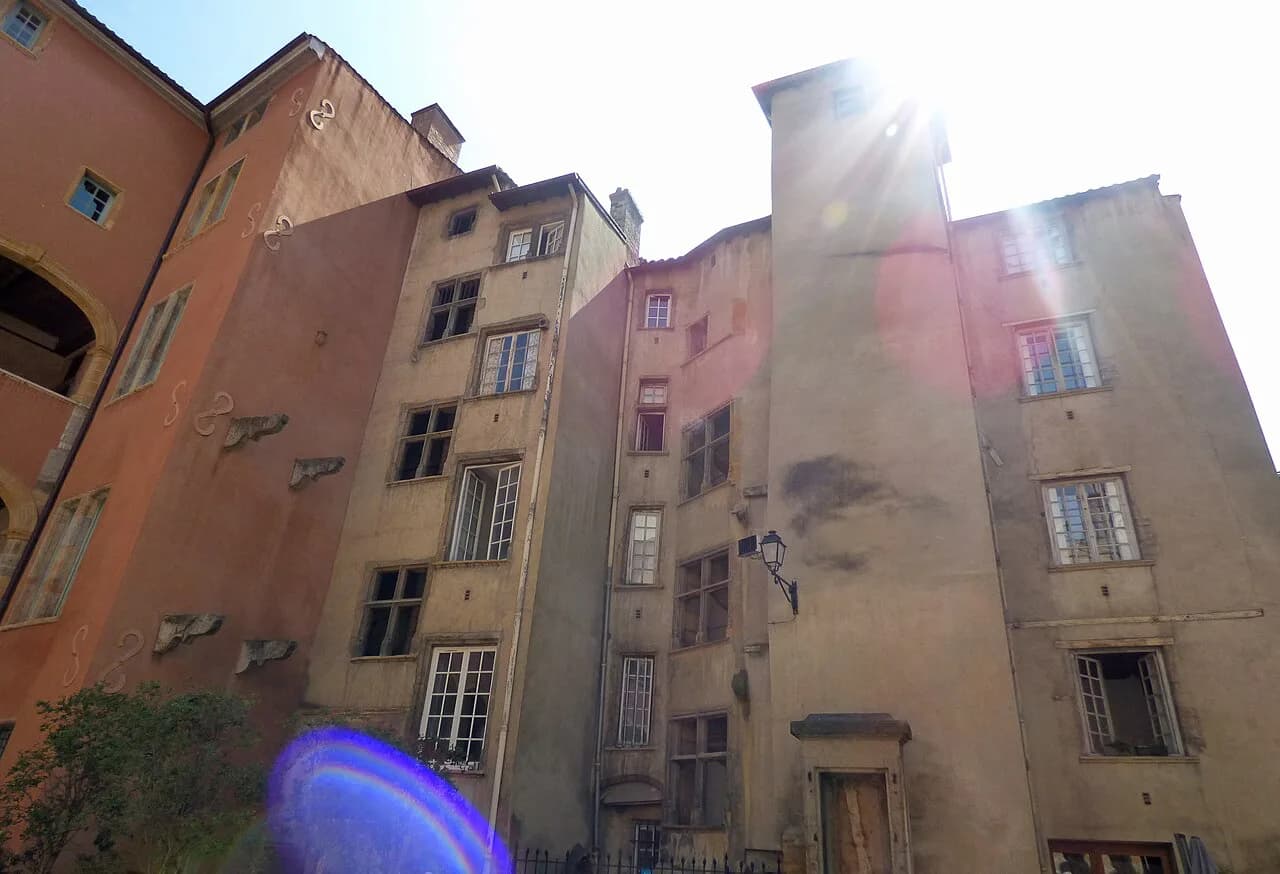
Canuts were the silk weavers who filled Croix-Rousse through the 19th century, drawn by lower taxes and cheaper workshop space than central Lyon offered. Croix-Rousse operated as its own independent commune until 1852, when it merged into the city of Lyon. Weavers ran Jacquard looms inside ordinary apartments rather than a single factory, an arrangement known locally as the Grande Fabrique. Those machines earned the nickname bistanclaques, an onomatopoeia for the racket they made while running. Canut labor unrest turned violent more than once. The 1831 revolt, fought under the motto Vivre en travaillant ou mourir en combattant, work while living or die fighting, ranks among the earliest organized worker uprisings anywhere. Further revolts followed in 1834 and 1848. These uprisings aren't depicted directly on the mural, but the Chant des Canuts statue at Place des Tapis and the nearby Mairie du 4e both reference them. For how Croix-Rousse compares to Lyon's other historic districts, see the Lyon Neighborhoods Guide 2026: Where to Stay in Every District.
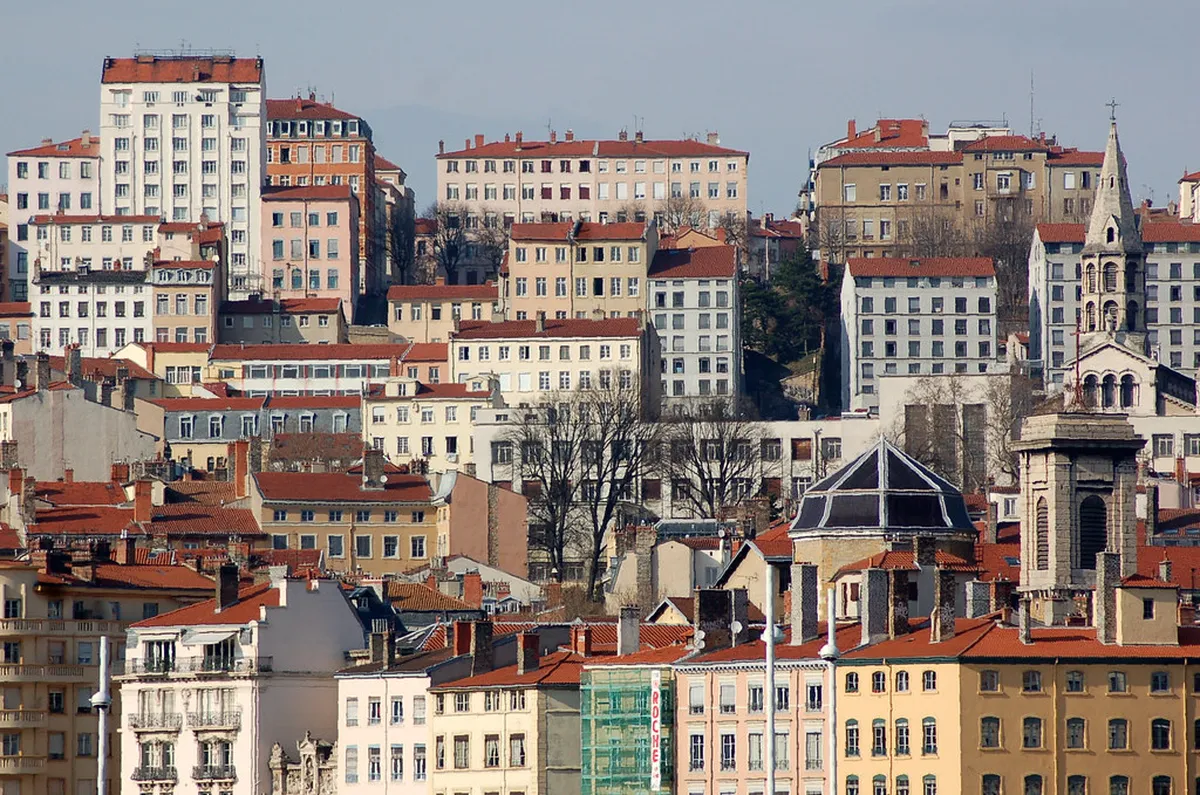
- Canut apartments needed roughly 4 meters (about 13 feet) of ceiling height to fit a working loom
- Each apartment typically housed two or three looms, not one
- Tall windows brought in the light silk work required
- That high-windowed silhouette is what the mural's painted facades reproduce
Hidden Details: What to Look For in the Fresco
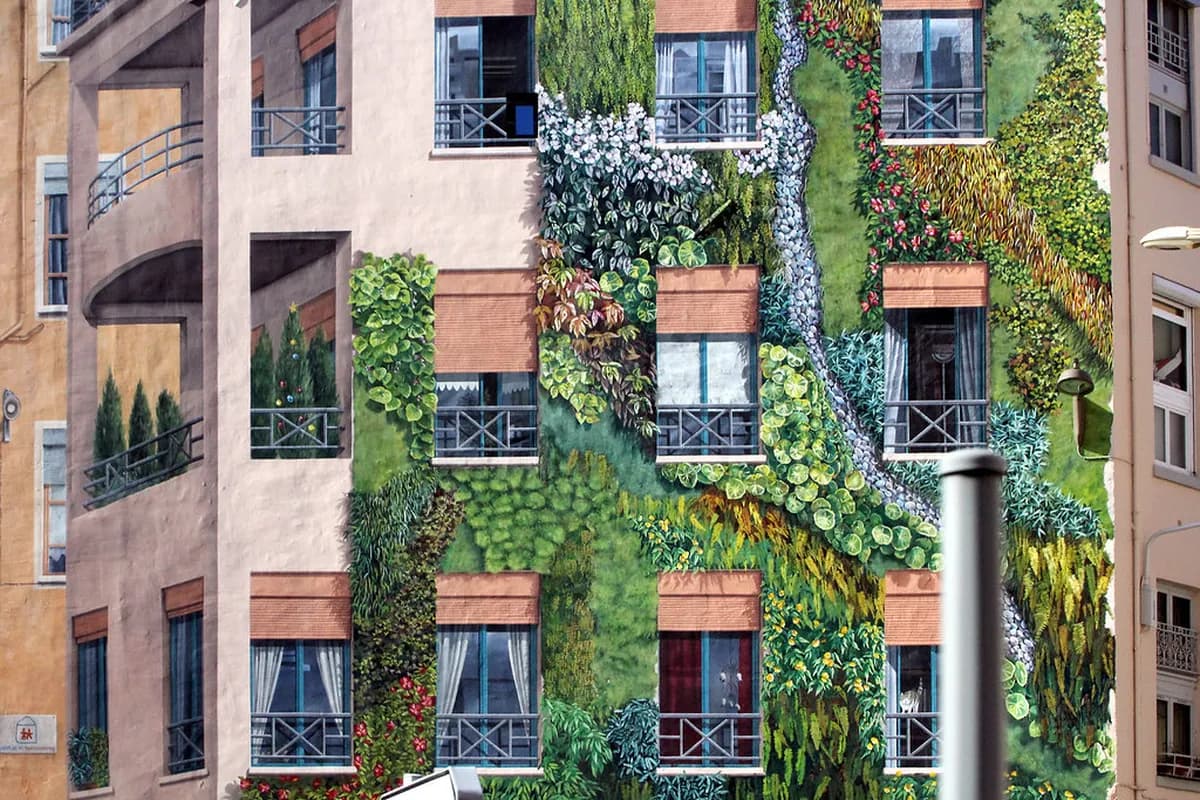
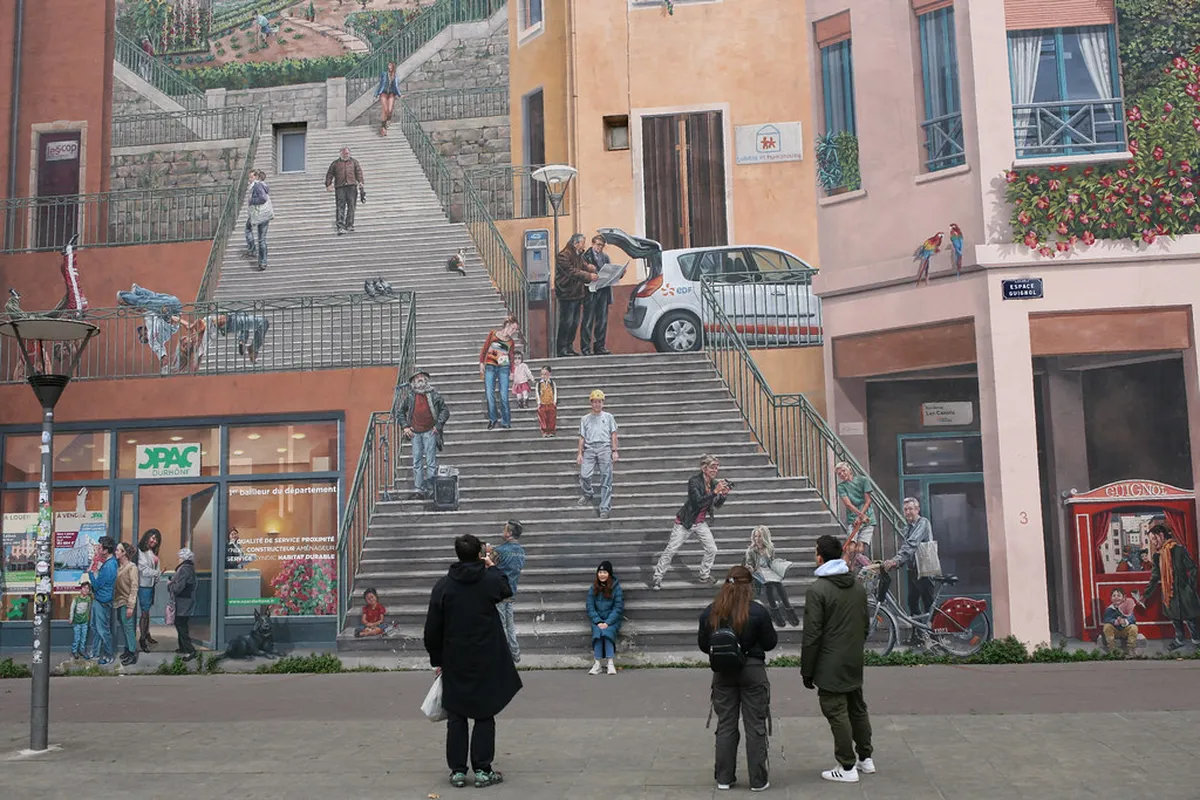
Beyond its size, the mural rewards a slow look because it has changed over time. CitéCréation repainted it in 1997 to track the Croix-Rousse renovation underway that decade, then again in 2013. Each update aged the painted residents rather than replacing them, tracking both the characters and the neighborhood's changes across nearly three decades. A passage beneath the wall displays the earlier versions, letting you compare how the depicted residents have aged across all three iterations. The painted facades echo the real Canut apartment blocks nearby, with the same tall windows built to fit the looms. That staircase illusion draws the most cameras, since the perspective makes a flat wall read as a real flight of stairs receding into the facade.
The mural's tall painted windows directly mirror the real apartments' 4 meters (about 13 feet) of ceiling height—a practical requirement to fit working Jacquard looms. By reproducing these proportions on the facade, the fresco encodes the engineering reality behind the silk trade rather than just depicting it.
- Guignol, Lyon's puppet character, painted among the crowd
- A Vélo'v bike worked into the street scene
- A family, a painter at an easel, and street singer Jean-Marc Le Bihan
- Silk spools, looms, and other weaving imagery worked into the facades
- A small plaque honoring the housing nonprofit Habitat et Humanisme, above a painted car near the first staircase
- A painted staircase that appears to climb straight into the building — the mural's signature trompe-l'œil trick
Beyond the Wall: A Croix-Rousse Walking Route
Building a short route around the mural makes the uphill trip worth the effort. Start at the Mur des Canuts, then walk to Place des Tapis, where a 1984 statue by sculptor Georges Salendre honors the Chant des Canuts. That 1894 song by Aristide Bruant became an anthem for the weavers. The statue originally stood in the garden next to the Mairie du 4e, at 119 Boulevard de la Croix-Rousse, before its move to Place des Tapis. The same square holds a smaller Salendre statue, Le Printemps, plus a separate street-art fresco by artist Keza, first installed around 2017; street art here rotates, so confirm what's currently on view. Several traboules, the covered passageways cutting through Croix-Rousse's apartment blocks, connect these stops without doubling back to the main streets. A guide to the traboules of Lyon maps the passages worth ducking into along this route. Save time for the Jardin Rosa Mir if your visit lands on the right day and season, since its narrow opening window is easy to miss. Near the Gros Caillou, a plaque at 4 Rue Calas honors novelist Frédéric Dard, known by the pen name San Antonio, who lived in the neighborhood.
- Mur des Canuts, Boulevard des Canuts — the fresco itself, free and outdoors
- Place des Tapis — Chant des Canuts statue plus a second street-art mural
- Maison des Canuts, 12 Rue d'Ivry — guided tours of working period looms, a paid visit pricier than the free mural
- Maison des Canuts hours run 11:00 to 15:30 Monday through Saturday, with tours lasting about 50 minutes; confirm current pricing and hours before visiting
- Gros Caillou, eastern end of Boulevard de la Croix-Rousse — a boulder locally said to date from the Quaternary era; kids climb it while adults stop at the café of the same name
- Jardin Rosa Mir — historically open Saturday afternoons from April to October only; confirm current hours before planning around it
Practical Tips and Mistakes to Avoid
The most common mistake is assuming the mural sits within easy walking distance of central Lyon landmarks like Vieux Lyon or the Presqu'île. It doesn't. Boulevard des Canuts is a genuine trip into the 4th arrondissement, uphill, worth planning as its own outing rather than a five-minute detour. Since the fresco costs nothing to see, it fits naturally into a wider day built around free Lyon activities. Pair it with other quieter corners of Lyon in the same district to make the climb worth a full afternoon.
- Mistake: treating this as a city-center stop — it requires a dedicated trip to the 4th arrondissement
- Mistake: skipping the passage beneath the mural, which shows the 1987, 1997, and 2013 versions side by side
- Tip: visit in the morning for even light on the trompe-l'œil stairs
- Tip: stop at Place des Tapis afterward for more street art and neighborhood cafés
- Tip: wear shoes suited to the pentes if you're walking up rather than taking Metro Line C
- Tip: check the official Ville de Lyon listing for the mural before your trip, since neighborhood access details can change
Further reading: Lyon on Wikivoyage · Lyon on Wikipedia
Frequently Asked Questions
What is the Mur des Canuts in Lyon?
It's a roughly 1,200-square-meter (12,900-square-foot) trompe-l'œil fresco on Boulevard des Canuts in the Croix-Rousse district. CitéCréation, a Lyon artist cooperative founded in 1978, painted it in 1987 and repainted it in 1997 and 2013.
Is the Mur des Canuts free to visit?
Yes. It's painted on a public wall facing the street, so there's no entry fee, gate, or set visiting hours. The only real cost is the transit needed to reach Croix-Rousse.
How do you get to the Mur des Canuts from central Lyon?
Metro Line C to Hénon station is the most direct route and avoids the climb. Velo'v cyclists and walkers can also reach it via the Croix-Rousse pentes from Hôtel de Ville, though both involve a steady uphill effort.
How much time should I plan for a visit?
Budget 15 to 20 minutes for the mural alone. Combining it with a short Croix-Rousse walking loop, including stops like Place des Tapis and Gros Caillou, stretches the visit to about two hours.
What's the difference between the Mur des Canuts and the Fresque des Lyonnais?
The Fresque des Lyonnais, in central Lyon, depicts historical figures from the city's past. The Mur des Canuts instead shows everyday Croix-Rousse residents and the neighborhood's silk-weaving history.
When was the Mur des Canuts painted, and why does it keep changing?
CitéCréation completed the original design in 1987, then repainted it in 1997 to track the Croix-Rousse district's renovation, and again in 2013. Each update ages the painted residents rather than replacing them, which is why the mural reads like a living document of the neighborhood.
When is the best time of day to photograph the mural?
Morning light works best, since the trompe-l'œil stairwell depends on shadow angles to read convincingly. Midday sun tends to flatten the illusion, making the painted stairs look less three-dimensional.
Can you combine the Mur des Canuts with other Lyon day trips?
Croix-Rousse pairs naturally with a fuller Lyon itinerary rather than standing alone as a single stop. For multi-day trips, the guide to 12 Best Day Trips From Lyon: A Local Logistics Guide covers options beyond the city center.
Continue exploring
More guides you'll find useful