Jardin Rosa Mir, Lyon: Visiting the Secret Shell Garden of Croix-Rousse
A guide to Jardin Rosa Mir in Lyon: 2026 opening hours, how to find the hidden Croix-Rousse entrance, and the story of Jules Senis's shell garden.
On this page
Visiting Jardin Rosa Mir in Lyon: Croix-Rousse's Hidden Shell Garden
Last updated July 2026. Jardin Rosa Mir in Lyon is a 400 m² mosaic garden built in secret inside a Croix-Rousse courtyard by Spanish mason Jules Senis between 1957 and 1983. It opens only on Saturday afternoons from April to October, and a 15-person capacity limit at the hidden entrance means early arrival pays off.
What Is Jardin Rosa Mir in Lyon?
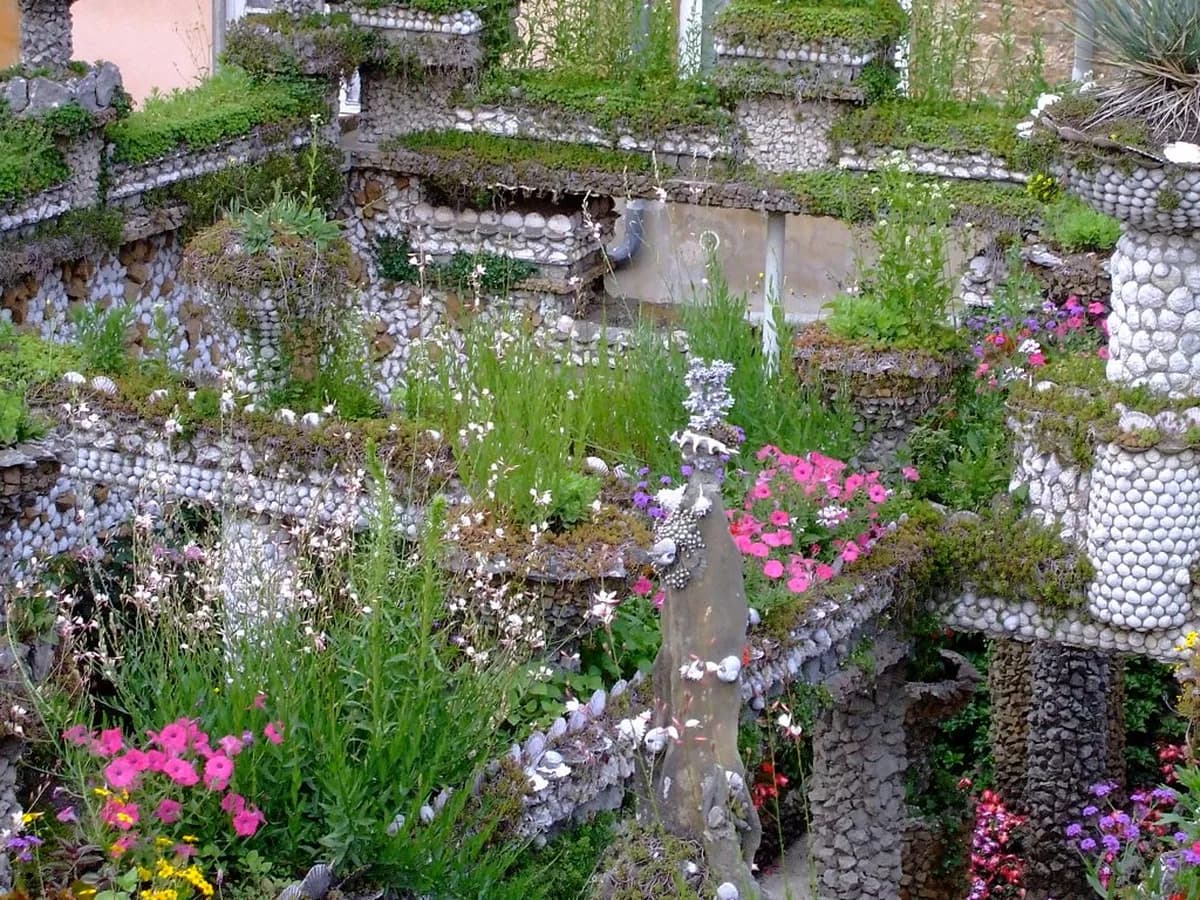
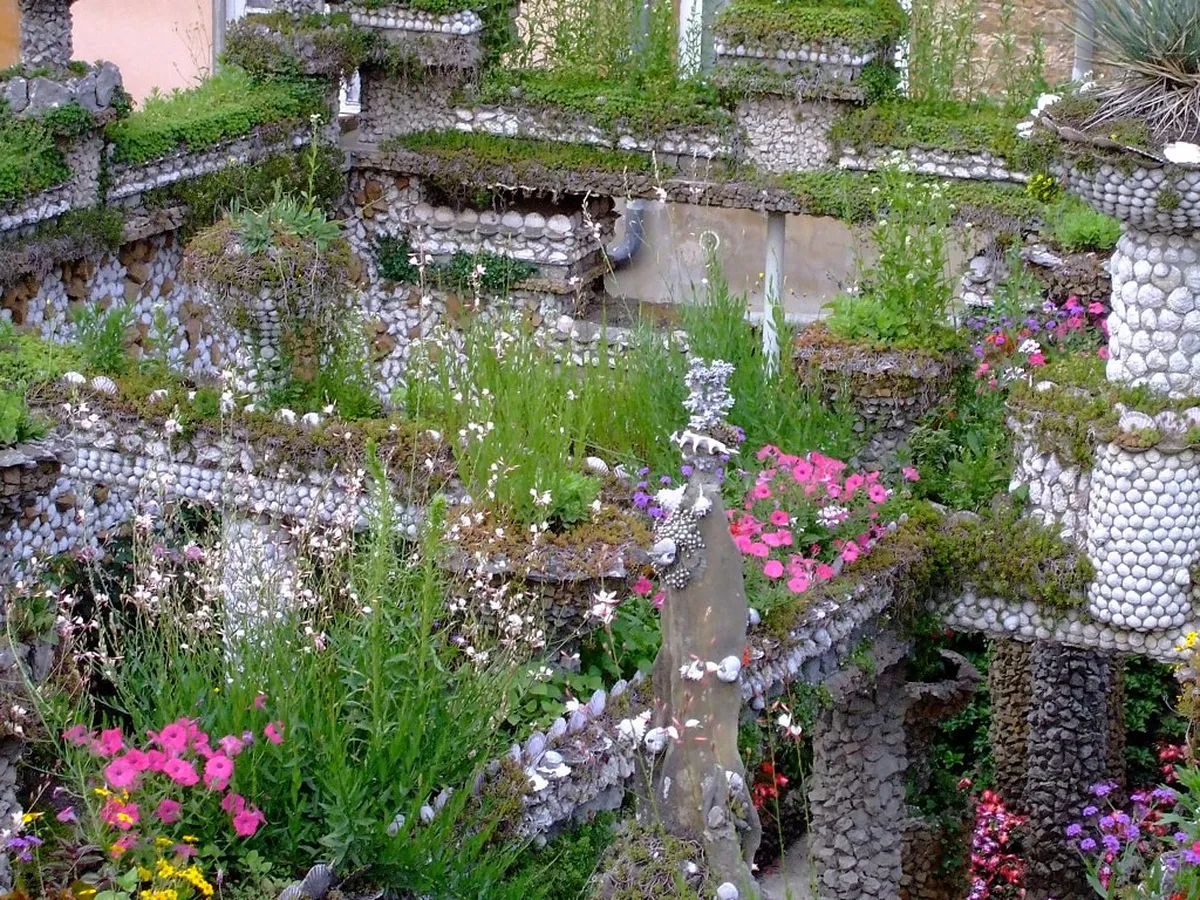
Jardin Rosa Mir is a 400 m² mosaic-and-shell garden built into a residential courtyard in the Croix-Rousse district, in Lyon's 4th arrondissement. Spanish mason Jules Senis built it by hand between 1957 and 1983, covering stone pillars, basins, and pergolas in seashells, pebbles, and volcanic rock. Journalist Pierrick Eberhard, quoted on Wikipedia, once described the result as a "kitsch masterpiece." The garden also carries France's Patrimoine du XXe siècle heritage label, recognizing it as a notable piece of twentieth-century design. Wikipedia notes that the garden draws visitors from around the world and has been featured in Japanese travel publications. For anyone building a list of 12 Hidden Gems in Lyon: Secret Spots Beyond the Tourist Trail (2026), this courtyard belongs near the top, mostly because so few visitors know it exists behind an unmarked door. It also turns up regularly on rounds of Secret Spots in Lyon: A Local's Guide to Hidden Corners (2026) compiled by residents of Croix-Rousse.
Jules Senis and the Vow Behind the Garden
Jules Senis (1913-1983) was a Spanish mason and tiler who fled to France during the Spanish Civil War, arriving with his wife and two children in 1951. He settled in Lyon, and the following year began treatment for throat cancer at Edouard Herriot hospital. Senis vowed that if he recovered, he would build a garden in gratitude, and he kept that promise once he was well. He bought the plot next to his apartment at 83 Grande Rue de la Croix-Rousse and spent close to three decades building on it, nicknaming his creation "le petit caillou," or the little pebble. Senis dedicated the finished garden to his mother, Rosa Mir Mercader, whose name is carved into the stone near the entrance, and to the Virgin Mary, honored inside with a statue of Notre-Dame de Lourdes. After Senis died in 1983, an association formed to keep the garden from being torn down. City of Lyon officials took over its care in 1987, the same year the garden was added to the supplementary inventory of Monuments Historiques.
Essential Logistics: Opening Hours, Capacity, and Cost
This is the detail most casual visitors miss: Jardin Rosa Mir keeps a single opening window each week. It's open only on Saturday afternoons, and only from April through October, so a weekday stop in Croix-Rousse will find the courtyard door locked. Published hours run from 2:00 pm, with closing reported as either 5:30 pm or 6:00 pm depending on the source, so it helps to allow a buffer rather than arriving after 4:30 pm. Because only 15 visitors are allowed inside the courtyard at a time, a short line often forms right at opening. Arriving around 15 minutes early improves the odds of getting into the first group. Entry is free, managed by the City of Lyon, which makes the garden a solid stop on any Saturday built around Free Things to Do in Lyon: The 2026 Budget Guide. Because the queue can eat into an afternoon, it's worth checking a best time to visit Lyon guide before slotting a Croix-Rousse walk around it.
- Season: April through October only
- Day: Saturdays only, closed the rest of the week
- Hours: from 2:00 pm, closing between 5:30 pm and 6:00 pm
- Capacity: 15 visitors inside the courtyard at a time
- Price: free, no ticket or reservation required
What to See Inside the Garden
More than 10,000 plants fill the garden today, according to local guides, from cacti and succulents to roses, oregano, and lemon trees. Inside the courtyard, stone pillars link into arches and hold shell-covered baskets full of plants, a construction style Senis worked out without any formal training. Local guides describe the overall decor as drawing on Arab-Andalusian motifs, mixed with the mismatched materials Senis gathered over decades. At the center of the garden stands a fountain around three meters high, covered in multicolored stones and pebbles. To the left of the main path, an altar holds a statue of Notre-Dame de Lourdes, and nearby, a stone wall is layered with rows of pale pink shells. A metal spiral staircase climbs to an upper deck, giving a clear view down over the pergolas and basins below. The overall effect draws comparisons to two very different visionary building projects. Within the region, guides point to the Palais Idéal du Facteur Cheval in the Drôme as a similar work of untrained, decades-long construction. Further afield, the shell-and-mosaic surfaces recall Antoni Gaudí's Barcelona projects, including Park Güell and the Sagrada Família.
- Upper basins: around 450 sun-loving plants, including agave and yucca
- Shell-covered pergolas: roughly 4,000 cacti and other airy plants
- Shaded basins: about 750 perennials
- Wall planters: over 2,000 bellflowers, impatiens, and cloves wedged between the stones
- Flowerbeds: close to 5,000 perennials, including oregano, roses, iris, and Senis's favorite, a lemon tree
Materials and the 2016 Restoration
Senis never worked from drawings, and the materials in the garden reflect that improvised approach. Pebbles came from riverbanks, stones came from local building sites, and shells came from restaurant kitchens around Lyon. Friends added seashells brought back from trips abroad over the years, part of why the mix of coral, desert roses, and volcanic rock feels so varied. That improvised base was also fragile. Safety concerns forced the garden to close to the public in 2011, and it stayed shut for five years. City of Lyon crews launched a restoration project in September 2015 that ran for about ten months, and the garden reopened to visitors in June 2016. Restoration work added thousands of Mediterranean plants alongside repairs to the original stone and shell structures. Photographs from before the renovation show cracked pergolas and loose shells, part of why the City of Lyon treated the 2015-2016 project as a structural repair rather than routine upkeep.
Built from decades of scavenged materials, Senis's 400 m² garden grew as a grateful response to his recovery from cancer, dedicated to his mother Rosa Mir and to faith.
Finding the Hidden Entrance in Croix-Rousse
Jardin Rosa Mir sits inside the courtyard of 83 Grande Rue de la Croix-Rousse, but that courtyard has no public door of its own. Visitors reach it through a passage a few steps up the street, at 87 Grande Rue de la Croix-Rousse. Metro Line C runs to Croix-Rousse station, within walking distance of the entrance. For GPS navigation, the courtyard sits at roughly 45.7808° N, 4.8324° E, per the SPACES art environment archive. Nothing on the street marks the garden, so it's worth saving the No. 87 address in a maps app before setting out. Once through the passage, the courtyard opens up and the shell-covered pillars come into view. For general orientation, a Croix-Rousse neighborhood guide covers the wider grid of streets and traboules around the garden. A Lyon Neighborhoods Guide 2026: Where to Stay in Every District places the 4th arrondissement in the context of the rest of the city.
Nearby: The Sister Facade and Other Croix-Rousse Landmarks
Senis left a second, smaller work in the neighborhood. He decorated the facade of a building at 7 rue d'Austerlitz, about a 10-minute walk from the garden, in the same stone-and-pebble style. That facade is visible from the street at any time, which makes it a useful backup for anyone who arrives on the wrong day or outside the Saturday window. Croix-Rousse holds other artisan-focused sights worth folding into the same walk. The Mur des Canuts covers a building wall with a large mural on the district's silk-weaving history. Covered passageways known as the Croix-Rousse traboules, once used by silk workers to move fabric between buildings, cut through several blocks nearby. Together, these three stops fill an Off the Beaten Path in Lyon: Where Locals Actually Go afternoon built around the garden.
With the garden limited to 15 visitors at a time and open only Saturday afternoons April to October, Senis's facade at 7 rue d'Austerlitz—about 10-minute walk away—offers a year-round alternative.
Who Should Visit, and Who Should Plan Around It
Jardin Rosa Mir suits travelers with a flexible Saturday and an interest in self-taught or visionary art. Slow travelers who don't mind a short wait at the door tend to get the most out of it. Anyone locked into a Monday-to-Friday schedule should treat the garden as optional, since there's no weekday workaround and no way to see the interior outside the posted hours. The real trade-off here is time, not money. Entry costs nothing, but the Saturday-only schedule and 15-person capacity limit mean the true cost is whatever else that afternoon slot could otherwise hold. Large groups should plan to arrive early and expect to be split into smaller batches at the door, since staff let visitors in only a few at a time. Photographers and fans of outsider art in particular tend to linger longest, since the shell mosaics reward a slow look at close range.
Mistakes to Avoid at Jardin Rosa Mir
A handful of planning missteps come up often enough to flag directly.
- Showing up on a weekday: the garden is closed Sunday through Friday, and closed entirely from November through March.
- Arriving right at 2:00 pm with a large group: the 15-person capacity limit means big groups often get split up or turned away.
- Skipping the spiral staircase: the upper deck view over the basins and pergolas is easy to miss from ground level.
- Assuming a sign marks the entrance from the street: the only marker is the address itself, at No. 87 Grande Rue de la Croix-Rousse.
Further reading: Lyon on Wikivoyage · Lyon on Wikipedia
Frequently Asked Questions
What are the opening hours for Jardin Rosa Mir?
As of the 2026 season, Jardin Rosa Mir opens on Saturday afternoons only, from April through October. Published hours run from 2:00 pm, with closing reported as either 5:30 pm or 6:00 pm depending on the source, so it's worth confirming the exact closing time before a visit. The garden is closed on all other days of the week and for the entire November-to-March off-season.
Is Jardin Rosa Mir free to visit?
Yes. Entry is free, and the site is managed by the City of Lyon with no ticket or advance reservation required. The only real cost is time, since the 15-person capacity limit can create a short wait at the door on a busy Saturday.
How do you find the entrance to Jardin Rosa Mir?
The garden sits in the courtyard of 83 Grande Rue de la Croix-Rousse, but visitors enter through a passage at 87 Grande Rue de la Croix-Rousse, a few doors up the same street. Metro Line C serves Croix-Rousse station within walking distance. No sign marks the entrance from the street, so it helps to save the No. 87 address before setting out.
What can you do if you miss the Saturday opening hours?
Jules Senis also decorated the facade of a building at 7 rue d'Austerlitz, about a 10-minute walk from the garden, in the same stone-and-pebble style. That facade is visible from the street at any time, which makes it a reliable backup for anyone visiting Croix-Rousse outside the garden's Saturday window.
How long does a visit to Jardin Rosa Mir take?
Most visitors spend well under an hour inside, given the compact 400 m² footprint and the 15-person capacity limit that keeps groups moving through the courtyard. Add extra time for the wait if arriving after the 2:00 pm opening.
Is Jardin Rosa Mir open all year?
No. The garden operates seasonally, opening only from April through October and only on Saturdays within that window. It's closed entirely from November through March, so a winter trip to Lyon won't include the interior, though the sister facade at 7 rue d'Austerlitz remains visible year-round.
Does Jardin Rosa Mir require advance booking?
No advance booking or phone reservation is described by local sources. Visitors simply queue at the passage entrance on No. 87 Grande Rue de la Croix-Rousse once the Saturday window opens. Because of the 15-person capacity limit, arriving close to the 2:00 pm start is the best way to avoid a long wait.
Continue exploring
More guides you'll find useful