The Secret Traboules of Lyon: Map, History & Access Guide
Discover the hidden traboules of Lyon: where to find the best secret passageways in Vieux Lyon and Croix-Rousse, plus hours, etiquette, and access tips.
On this page
The Secret Traboules of Lyon: A Complete Guide to the Hidden Passageways
Last updated July 2026, this guide to the traboules of Lyon maps out where to find the city's hidden covered passageways, how their push-button doors actually work, and which route rewards the effort. Around 500 of these silk-district shortcuts survive across Vieux Lyon, Croix-Rousse, and the Presqu'île, though only about 80 stay open for public walking under a standing agreement between the city and the buildings' owners. Use the neighborhood breakdown below to decide whether to start in Renaissance-era Vieux Lyon or climb the steeper Croix-Rousse silk-worker trail.
What Are the Traboules of Lyon?
Traboules are covered passageways that cut straight through Lyon's buildings, linking one street to another without a detour around the block. The name comes from the Latin transambulare, meaning to pass through, filtered down through vulgar Latin as trabulare. Each one hides behind an unmarked door, a heavy carriage gate, or a small plaque easy to miss at street level. Roughly 500 of these passages survive citywide, and about 80 are open for the public to walk through under the Convention des Traboules, the city's agreement with building owners. The rest sit behind private doors as apartment entrances, converted storage, or courtyards you can view but not cross, known locally as miraboules. Two neighborhoods hold almost everything worth seeing: Renaissance-era Vieux Lyon on the Saône's west bank, and the steeper Croix-Rousse hill where silk workers once lived and wove. The Presqu'île once had its own network too, but 19th-century urban renewal cleared most of the weaving workshops there, along with many of its traboules, so only a handful remain compared with the other two districts. Both districts fall inside the Historic Site of Lyon, a UNESCO World Heritage designation covering much of the city center. For more spots in this vein, the hidden gems guide rounds up other low-profile corners of the city.
A Brief History: From Roman Water Access to Wartime Resistance
The earliest traboules date to the 4th century, when residents on the hill needed faster access to the Saône River for water. Renaissance merchants adopted the shortcuts next, cutting travel time between courtyards and the riverside docks. By the 19th century, Croix-Rousse's silk workers, known as canuts, relied on the passages to move finished cloth from workshop to merchant without exposing it to rain. That same network became a stage for the Canut Revolts, three separate uprisings between 1831 and 1848 over pay and working conditions that still shape the district's identity. During World War II, French Resistance fighters used the traboules to move between streets undetected by occupying forces, carrying messages and weapons through doors that looked identical from the outside.
How to Visit: The Convention des Traboules and the Push-Button Door
Most open traboules operate under the Convention des Traboules, a standing agreement dating to 1990 between the city and the buildings' owners. Owners keep public access open roughly 7am to 7pm in exchange for the city funding maintenance, restoration, and lighting. That schedule is set per building, so treat it as a general rule and check the posted panel at each entrance for specifics. Many doors are not locked in the way they look. Some use a simple push-button or keypad release, sometimes labeled Vigik, that unlocks during daylight hours. Try the button before assuming a courtyard is off-limits. Passages that offer only a courtyard view rather than a through-route are called miraboules, usually because one of the two original entrances has since been sealed or converted into a private doorway. Visiting costs nothing beyond time and comfortable shoes, which makes the traboules one of the more rewarding free things to do in Lyon.
Traboules open roughly 7am to 7pm, but an early morning visit rewards explorers with better natural light through courtyards and fewer other visitors navigating the passages.
Vieux Lyon's Renaissance Traboules
Vieux Lyon holds the easiest traboules to find, dense along Rue Saint-Jean and Rue du Bœuf and generally well marked for visitors. For a full walking route through the district, see the Vieux Lyon walking route. Exiting onto Rue du Bœuf or Rue Saint-Jean puts you steps from several bouchons, the traditional Lyonnais restaurants covered in the local restaurants guide.
- La Longue Traboule: enter at 54 Rue Saint-Jean or 27 Rue du Bœuf. It crosses five courtyards and tunnels under four buildings, marked by a green door, and takes about five minutes to walk end to end. Nearest metro: Vieux Lyon - Cathédrale Saint-Jean, Line D.
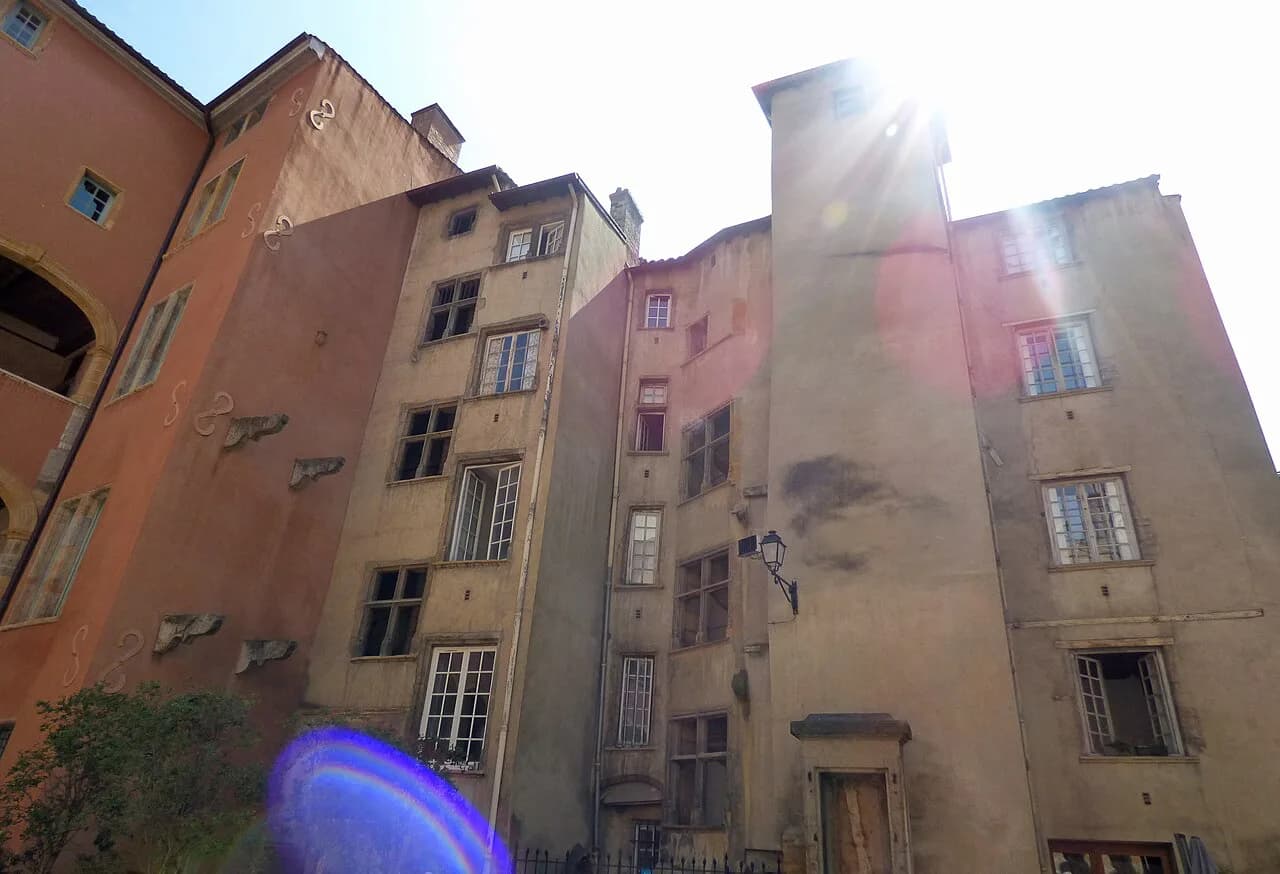
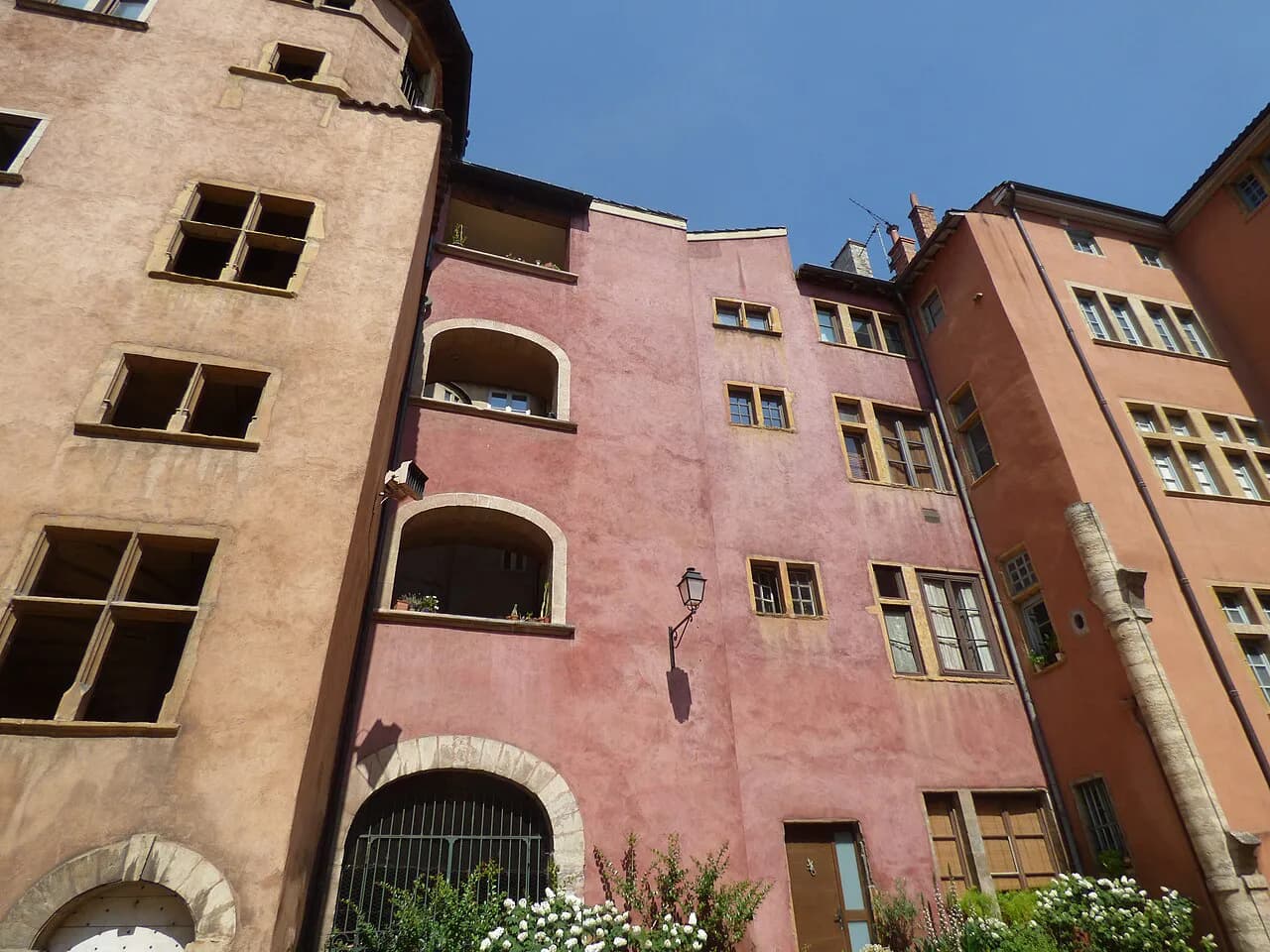
- Traboule de la Tour Rose: 22 Rue du Bœuf, a pink-toned Renaissance watchtower with a spiral staircase visible from the courtyard. The stairwell itself is closed to visitors, but the Food Traboule restaurant on site offers a view of it.
- 27 Rue Saint-Jean to 6 Rue des Trois Maries: a shorter traboule known for carved stonework and open-air sections partway through.
- Ô Passage: a small tea salon at 27 Rue du Bœuf with tables that look directly into La Longue Traboule, a good stop for lingering rather than just passing through.
Croix-Rousse's Silk-Worker Trail
Croix-Rousse feels less staged than Vieux Lyon, with steeper streets and fewer directional signs, part of the appeal for visitors chasing a quieter route. The district's guide covers the wider neighborhood: see the Croix-Rousse neighborhood guide for the full layout. If this style of exploring appeals to you, the off-the-beaten-path spots roundup has more options nearby. Walking down from the Croix-Rousse plateau toward the Presqu'île is easier on the legs than climbing up from the city center, so plan the route in that direction if stairs are a concern. Two nearby stops reward a short detour. Mur des Canuts mural tells the silk-weaving story in paint. Jardin Rosa Mir is a mosaic-covered garden a few streets over.
- Cour des Voraces: the most famous traboule in Lyon, winding through a series of buildings to connect three streets around a stairwell that's the oldest reinforced-concrete stairwell in the city. It served as a refuge during the Canut Revolts and is now a protected historical monument. Entrances: 9 Place Colbert, 14 Montée Saint-Sébastien (marked with a large sign), and 29 Rue Imbert Colomès. Nearest metro: Croix Paquet, Line C. The stairway has periodically closed for restoration, so confirm access locally before building a route around it.
- Passage Mermet: an uncovered passage linking upper Croix-Rousse to the lower town via the painted Escalier Mermet staircase, steep enough to skip if stairs are a concern. Entrances: 25 Rue René Leynaud and 25 Rue Burdeau. Nearest metro: Hôtel de Ville Louis Pradel, Lines A and C.
- Place des Terreaux: a good starting point before the climb, home to the city hall, the Museum of Fine Arts, and the Bartholdi Fountain. The traboule directly on the square, at 6 Place des Terreaux, was reported closed; use the entrance at the corner of the square and Rue Sainte-Marie-des-Terreaux instead, and confirm current status locally.
Guided Tours vs. Self-Guided Exploration
Self-guided walking costs nothing beyond a comfortable pair of shoes and a willingness to double back when a door turns out to be locked. A licensed guide adds a booking fee on top, but also adds context and access confidence in courtyards that can feel too private to enter alone. Audio-guided routes covering Vieux Lyon and Croix-Rousse separately offer a narrated but self-paced middle option. A citywide pass bundling skip-the-line access to museums and attractions is worth adding only if the day already includes paid sites beyond the traboules. Beyond the traboules, the unique things to do roundup covers more ground worth seeing. A companion secret spots guide adds more low-key stops nearby.
| Option | Cost | Best for | Trade-off |
|---|---|---|---|
| Self-guided walk | Free | Independent explorers with flexible time | Requires checking entrance hours yourself |
| Licensed guide walking tour | Paid booking fee | First-time visitors who want history explained on the spot | Fixed schedule and group pace |
| Audio-guided smartphone route | Paid download | Self-paced narration without a live guide | No one to answer questions in person |
| Citywide attraction pass | Bundled discount | Visitors combining traboules with paid museums same day | Only pays off with several ticketed sites |
Where to Stay Near the Traboules
Vieux Lyon puts the Renaissance traboules within walking distance but gets crowded by midday, especially near Rue Saint-Jean. Presqu'île sits between Vieux Lyon and Croix-Rousse, a practical base for a trip covering both traboule districts plus the rest of the city center. For a broader sense of how Lyon's districts differ, see the district-by-district breakdown. Travelers basing themselves further south, near the Rhône-Saône confluence, can check the Confluence district guide for what that area adds, though it sits further from both traboule districts than a Presqu'île base.
Planning a combined visit to both Vieux Lyon and Croix-Rousse requires two to three hours, which explains why basing yourself in Presqu'île—centrally located between both neighborhoods—streamlines the journey across town.
Etiquette: The Code of Silence
Every open traboule cuts through a building where people live, and the access agreement that keeps doors open depends on residents not regretting it. A quiet visit protects that arrangement for the next visitor too.
- Keep voices low, especially early morning and evening when residents are coming and going.
- Skip flash photography near windows and doors that face into the courtyard.
- Move through in pairs or small groups rather than filling a stairwell at once.
- Don't linger on landings or in doorways longer than it takes to look around.
- Leave no litter, and don't touch or lean on residents' doors, mailboxes, or bikes.
Mistakes to Avoid & Local Tips
A few habits separate a smooth traboule visit from a frustrating one.
- Only enter doors marked with an official traboule plaque or panel; an unmarked door is very likely a private residence.
- Skip loud groups. Residents notice repeat disruption fast, and unofficial closures can follow.
- Visit early morning for the best light through the courtyards and the fewest other visitors. Pair the trip with the best time to visit guide when planning the wider trip.
- Wear shoes with grip. Croix-Rousse's stairways, including the Escalier Mermet, get steep and can be slick after rain.
- Pick up a free traboule map from Lyon's Tourism Office at Place Bellecour rather than relying on phone signal alone, since courtyards can block GPS.
A Simple Self-Guided Traboule Route
Allow two to three hours for a route combining Vieux Lyon’s Renaissance courtyards with the silk-worker passages of Croix-Rousse. Start near Vieux Lyon–Cathédrale Saint-Jean metro station and finish by walking downhill from the Croix-Rousse plateau.
- Enter La Longue Traboule at 54 Rue Saint-Jean and exit at 27 Rue du Bœuf. Continue along Rue du Bœuf to the Tour Rose courtyard.
- Cross the Saône and reach Hôtel de Ville–Louis Pradel. Take Metro Line C uphill to Croix-Rousse to avoid the steepest climb.
- Walk downhill toward Passage Mermet, then continue to Cour des Voraces through the entrance at 9 Place Colbert.
- Finish near Croix-Paquet station or descend toward Place des Terreaux and the Presqu’île.
Check every entrance panel before entering because access can change by building. Keep an offline map available, since GPS reception weakens inside stone courtyards. If Cour des Voraces is closed for restoration, continue downhill rather than searching for an unofficial entrance.
Further reading: Lyon on Wikivoyage · Lyon on Wikipedia
Frequently Asked Questions
What does the word traboule mean?
Traboule comes from the Latin transambulare, meaning to pass through. It describes a covered passage that cuts through one or more buildings to connect two streets directly, rather than a route that goes around the block.
Are the traboules of Lyon free to visit?
Yes. The roughly 80 publicly accessible traboules cost nothing to enter. The only expense is time, since finding the unmarked doors takes some walking and occasional backtracking.
What is the difference between a traboule and a miraboule?
A traboule is a full through-route between two streets. A miraboule is a courtyard visible from a single entrance only, usually because the second original entrance has been sealed or turned into a private door, so you can look in but can't walk through.
What hours are the traboules open?
Most open traboules run roughly 7am to 7pm under the Convention des Traboules, but the exact schedule is set per building. Check the posted panel at each entrance rather than assuming a fixed citywide hour.
Is Vieux Lyon or Croix-Rousse better for traboules?
Vieux Lyon has denser, better-marked Renaissance traboules and suits a first visit. Croix-Rousse has steeper streets, fewer tourists, and a stronger tie to the city's silk-weaving history, including the Cour des Voraces.
Do you need a guide to see the traboules?
No. Self-guided walking works well with a free map from the tourist office at Place Bellecour, though a licensed guide adds historical context that's easy to miss on your own, especially on a first visit.
Continue exploring
More guides you'll find useful