Free Things to Do in Amalfi: What's Actually Free
Plan a low-spend day in Amalfi with free churches, harbour walks, viewpoints and a quieter neighbouring village, plus which sights still charge entry.
On this page
Amalfi rewards travellers who slow down and stay outdoors. The waterfront, the main street, the narrow lanes behind it and the small patch of open sand at the main beach cost nothing to use, and a climb to a hilltop watchtower buys one of the best views in town for the price of effort alone. The trick is knowing where free access stops and a ticket begins.
The single most useful detail before you go concerns the cathedral. Access to the Duomo di Sant'Andrea Apostolo is free only during two windows of the day, according to a Carnets Voyages guide published in March 2026, which lists worship-oriented free entry from 7:30 to 10:00 and from 17:00 to 19:30; outside those hours the route runs through the Cloister of Paradise on a paid ticket. Hours can change with the liturgical calendar, so confirm the day's arrangement at the church or with the tourist office before building your morning around it.
What Is Free and What Is Paid in Amalfi
It helps to think in layers. Streets, squares, the harbour promenade and the breakwater pier are public space, and walking them is the cheapest way to see the town. Interiors and collections are a different matter: the cathedral complex, the cloister and crypt route, and the Paper Museum all involve tickets or restricted access.
A simple rule for budgeting is to treat any doorway as a possible charge and any open-air route as free until proven otherwise. That keeps expectations honest and stops you from promising yourself a free morning that quietly turns into three paid entries. Our Amalfi Attractions hub breaks down the individual sights so you can pick one or two worth paying for.
Off-peak timing stretches the budget further, though not by cutting ticket prices. An Eagle Creek guide notes that April to June brings warm-enough water and flowers before the late-summer rush, when crowds swell and costs climb. Spring and early autumn are therefore the better-value windows for a low-spend visit.
The Cathedral Area: Free Worship Windows and the Paid Cloister Route
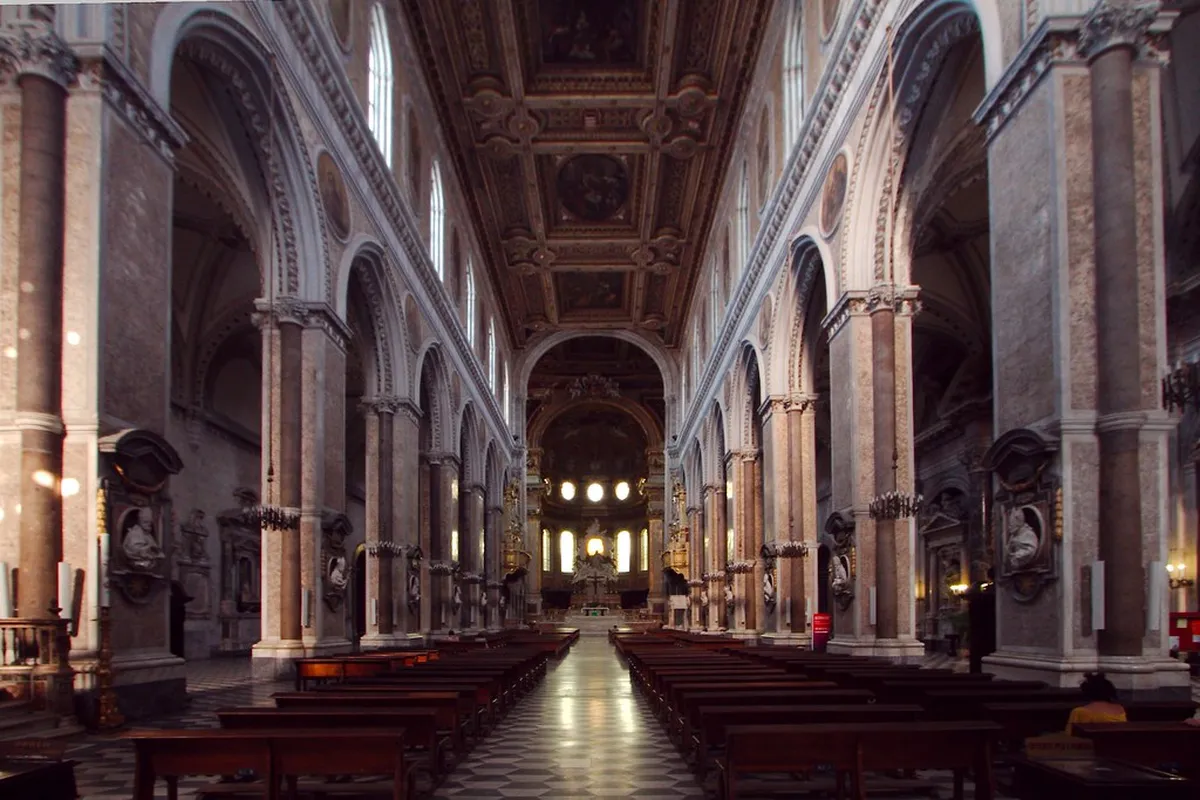
The Duomo di Sant'Andrea Apostolo is the reason many people come to Amalfi, and its facade is visible from the square without spending anything. The building rose in the 13th century, when Amalfi was a maritime power far larger than it is today, and its exterior mixes Arab-Norman, Neo-Moorish and Neo-Gothic elements after 19th-century rebuilding, while the marble-clad interior is Baroque.
Inside, the Cloister of Paradise was built between 1266 and 1268 to hold the tombs of noble families, with a palm garden ringed by Moorish-style arches on 120 marble columns. The same route continues to the Basilica del Crocefisso and the crypt holding the relics of Saint Andrew. The Carnets Voyages guide reports a charge for this combined route, with a reduced rate for children aged 6 to 17, and lists 9:00 to 19:00 as the cloister's hours; treat both as that blog's report rather than a guaranteed current schedule.
If your priority is a free visit, aim for the early-morning or late-afternoon window and behave as a worshipper rather than a sightseer. If you want the cloister, crypt and interior in one continuous visit, budget for it as your one paid add-on and check the price on arrival rather than relying on a blog figure.
Historic Centre on Foot: Via Lorenzo d'Amalfi and the Side Lanes
Via Lorenzo d'Amalfi is the spine of the old town, lined with shops, bars and restaurants, and walking it costs nothing even if the window-shopping does not. The Carnets Voyages guide suggests ducking into the small side streets that tourists overlook to find quiet, especially in high summer.
For a structured route through these lanes, our Amalfi self-guided walk strings the main street and back alleys into a single loop with no entry fees. Allow a relaxed hour, more if you stop for a coffee at the counter rather than a terrace table.
One long-standing landmark on Piazza Duomo is Pasticceria Andrea Pansa, trading at that address since 1830. Standing at the bar with an espresso is the traditional low-cost pause; a table on the terrace is the pricier version of the same break.
Harbour Promenade and Breakwater Pier: The Free Photo Stop
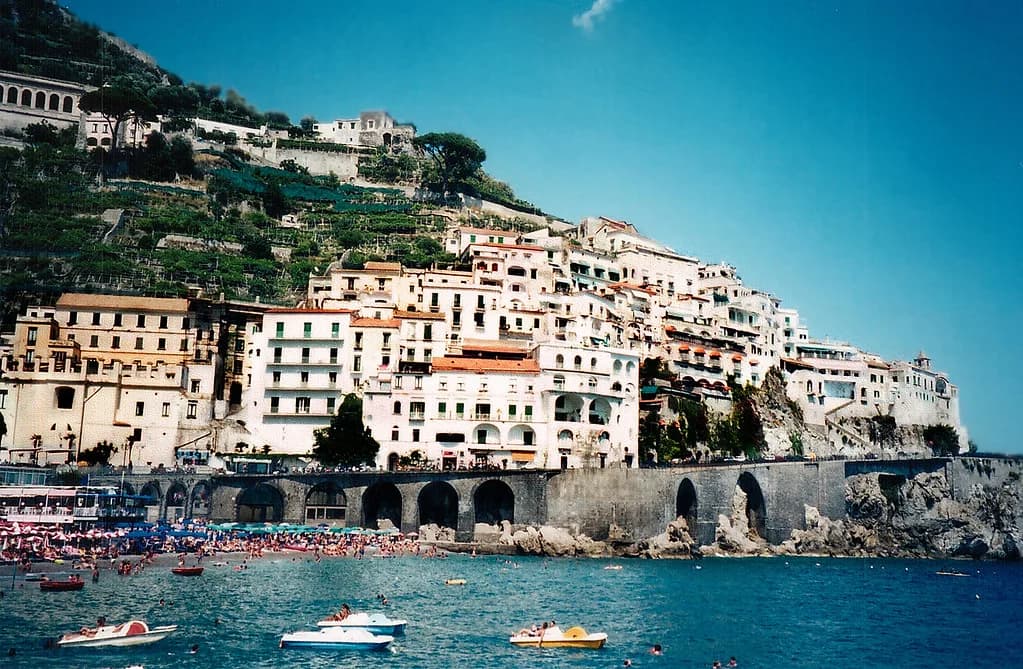
The port once symbolised Amalfi's maritime power; today it is where day-trippers arrive from Sorrento, Positano and Naples. The promenade along the water is free to walk and pleasant in the late afternoon, and the pier on the breakwater in front of the historic centre gives the classic view back toward the town.
This is a good place to spend nothing at all: no ticket, no queue, no timed slot. Arrive near sunset for the softest light, and keep an eye on ferry traffic if you plan to photograph from the pier.
Spiaggia Grande: The Small Free Strip of Sand
Spiaggia Grande sits directly in front of the historic centre, which makes it the easiest beach to reach on foot. In summer it is largely covered with sun loungers and umbrellas run by private beach clubs. The Carnets Voyages guide describes a narrow strip of sand, roughly ten metres wide, that stays free for anyone unwilling to pay, and reports a rate of about 35 euros for two loungers and one umbrella per day; treat that figure as the blog's reported price and check the current board at the beach.
The practical trade-off is space versus comfort. The free strip is small and fills early in peak season, so arrive before mid-morning or come late in the day. Outside high season, the guide notes that the concession stands may not yet be set up at all, which opens up more sand.
Climbing to Torre dello Ziro: Free but Physically Demanding
Torre dello Ziro is a 15th-century watchtower above the town, reached by roughly 900 steps, and it costs nothing but effort. The Carnets Voyages guide describes the climb as quite physically demanding and advises carrying plenty of water, particularly in summer.
The reward is a panorama over the village, the sea and the coastline. Go early to avoid the heat, wear shoes with grip, and turn back if the conditions or your fitness do not suit the climb; there is no official shuttle or shortcut documented.
Beyond the Centre: Walking in the Valle delle Ferriere
Hiking is the cheapest way to see the landscape around Amalfi. The Eagle Creek guide lists the Sentiero degli Dei, Valle dei Mulini and Valle delle Ferriere among the coast's top walks, and notes that walking shoes belong on any packing list for these routes.
The Valle delle Ferriere is the most accessible from the town centre. The Carnets Voyages guide describes a route of three to four hours starting from the historic centre, passing old mills, former ironworks and lemon terraces to a waterfall in the Monti Lattari Regional Park, and mentions that guided versions are available for a fee. Walking it independently is free, but you need to know the path; the tourist office is the sensible place to confirm current trail conditions.
Atrani Next Door: A Quieter Village Within Walking Distance
Atrani is the smallest village in southern Italy by area, built into a narrow valley beside Amalfi, and it costs nothing to wander. The Carnets Voyages guide notes that following the road east from the port brings you there in about ten minutes, and that it felt almost tourist-free when visited.
The Eagle Creek guide calls it perhaps the least touristy town on the coast and points to the bell tower of the Collegiata di Santa Maria Maddalena, the last remaining piece of Rococo architecture on the Amalfi Coast, plus meals on Piazza Umberto I. Come for the lanes, the small church and the beach rather than for sights with tickets.
Rainy-Day Alternative: Why the Paper Museum Is a Paid Option
When weather turns, outdoor freebies lose their appeal. The Museo della Carta occupies a former 13th-century paper mill about 800 metres, or ten minutes on foot, from the centre along the main street, and the Carnets Voyages guide treats it as a good rainy-day choice.
The visit is a guided tour in which the original press still operates, and the guide reports a per-person charge; because that figure comes from a blog rather than the museum, confirm the current rate at the entrance before committing. Treat it as the deliberate paid counterpoint to an otherwise free day.
Suggested Half-Day Free Itinerary and a Fuller Paid Version
The Carnets Voyages guide suggests half a day for the village itself, including the cathedral, a street wander, some shopping and lunch, and recommends the afternoon for a sunlit facade. For a zero-spend version, start at the harbour and pier, walk Via Lorenzo d'Amalfi and its side lanes, take the free sand strip at Spiaggia Grande, then climb to Torre dello Ziro if you have the legs for it.
For a fuller day, add one paid element: the cloister and crypt route, or the Paper Museum if it rains. Then walk to Atrani for the late afternoon. If you would rather have the sequence mapped hour by hour, our Amalfi in one day itinerary covers the same ground with timings.
Practical Budget Tips: Timing, Crowds and Transport Trade-offs
Timing is the biggest lever on cost and comfort. Spring and early summer bring warm water and flowers before the late-summer crowds push prices up, according to the Eagle Creek guide, so shifting your trip a few weeks can change both the atmosphere and the bill.
Transport is where budgets quietly leak. The Carnets Voyages guide notes that SITA Sud buses serve Amalfi and are inexpensive but not always punctual, and that ferries are faster in high season at a higher fare. It also warns that parking is complicated and costly, with only two car parks in the village; check current rates on site rather than relying on any published figure.
Eating like a local keeps costs down without missing the food. The Eagle Creek guide advises following Italian meal rhythms, avoiding menus with more photos than words, and remembering that the coast is known for seafood. Our Amalfi local food guide covers what to order and where the value lies.
Finally, use the official tourist office to confirm anything time-sensitive: cathedral access on your date, trail conditions and current transport arrangements. It is the right place to check before you build a day around a free window that may have shifted.
Plan Your Visit
Amalfi is expensive mainly when you sit down, go inside and pay for shade. Its streets, harbour, pier, side lanes, free beach strip and hilltop viewpoint remain open to anyone willing to walk, and Atrani offers a quieter extension for the cost of ten minutes on foot.
Build the day around free outdoor time, choose one paid interior if it matters to you, and verify the cathedral's free windows, the cloister charge and the beach concession rates on the day. For more overlooked corners, start with our hidden gems in Amalfi guide.
Frequently Asked Questions
What can you do for free in Amalfi?
Walking Via Lorenzo d'Amalfi and the side lanes, strolling the harbour promenade and breakwater pier, using the small free strip of sand at Spiaggia Grande, and climbing to Torre dello Ziro all cost nothing. Cathedral access is free only during limited worship hours, and the cloister, crypt and Paper Museum are ticketed.
Is the Amalfi Cathedral free to enter?
Only during specific windows. A March 2026 Carnets Voyages guide reports free worship access in the early morning and late afternoon, with a paid route through the Cloister of Paradise at other times. Hours can change with the liturgical calendar, so confirm the day's arrangement at the church or with the tourist office.
Is Spiaggia Grande beach free?
Part of it is. The beach in front of the historic centre is mostly covered by private beach clubs in summer, but a narrow strip of sand stays free. It is small and fills early in peak season, so arrive in the morning or late in the day.
Can you visit Amalfi on a budget?
Yes, if you keep the day outdoors and pick at most one paid interior. Walking, the harbour and pier, the free beach strip and the Torre dello Ziro climb involve no entry fee, and buses are cheaper than ferries if you accept slower, less punctual journeys. Parking is the biggest avoidable cost.
How long does it take to see Amalfi?
A Carnets Voyages guide suggests half a day for the village itself, covering the cathedral, a street wander, shopping and lunch. A free-only version of that route can be done in a few hours; add time for the Torre dello Ziro climb or a walk to Atrani.
Is Atrani worth visiting from Amalfi?
Yes, if you want a quieter contrast. It is about ten minutes on foot along the road east of the port, is the smallest village in southern Italy by area, and is described as barely touristed. The Rococo bell tower of the Collegiata di Santa Maria Maddalena is the main sight.
What should I do in Amalfi when it rains?
The Museo della Carta is the standard answer: a former 13th-century paper mill about ten minutes from the centre, with a guided tour showing the original press in operation. It is a paid visit, so confirm the current rate at the entrance before you go.
Sources
Continue exploring
More guides you'll find useful