
Amalfi in One Day: A Realistic Town Itinerary
Plan one day in Amalfi town with a sensible order: cathedral complex, old lanes, one local experience, lunch, and an easy coastal add-on.
On this page
Most visitors give Amalfi town an hour: a photo of the cathedral staircase, a lemon-flavored souvenir, and back to the ferry. A slower structure works better, because the town is small enough to walk but has more layers than the waterfront suggests, from the cathedral complex to paper-making history to the beach and the village next door.
Treat the order below as a suggested frame, not an official schedule. The one firm rule is to pick a single main extra for the late morning and a single afternoon choice, since stacking the Paper Museum, a lemon tour, Atrani, the beach and a boat trip turns a pleasant day into a rushed one.
At a Glance: A One-Day Structure for Amalfi Town
Morning begins in Piazza Duomo with the cathedral staircase and fountain, then moves into the cathedral complex itself. Leaving the square early helps with photos, since the space fills quickly once tour groups arrive.
Late morning belongs to the lanes behind the square plus one experience: either the Paper Museum on Via delle Cartiere or a short lemon and limoncello tasting in town. Lunch follows, then one afternoon choice such as the walk to Atrani, time on the pebbly Marina Grande beach, or a short boat trip along the coast.
Evening is deliberately light: gelato, a lemon delizia or an aperitivo near the water, with the ferry or bus timetable checked before the second drink rather than after it. Ferries are seasonal and coastal buses get crowded in summer, so the return leg deserves a look earlier in the day.
Why Amalfi Town Deserves More Than a Photo Stop
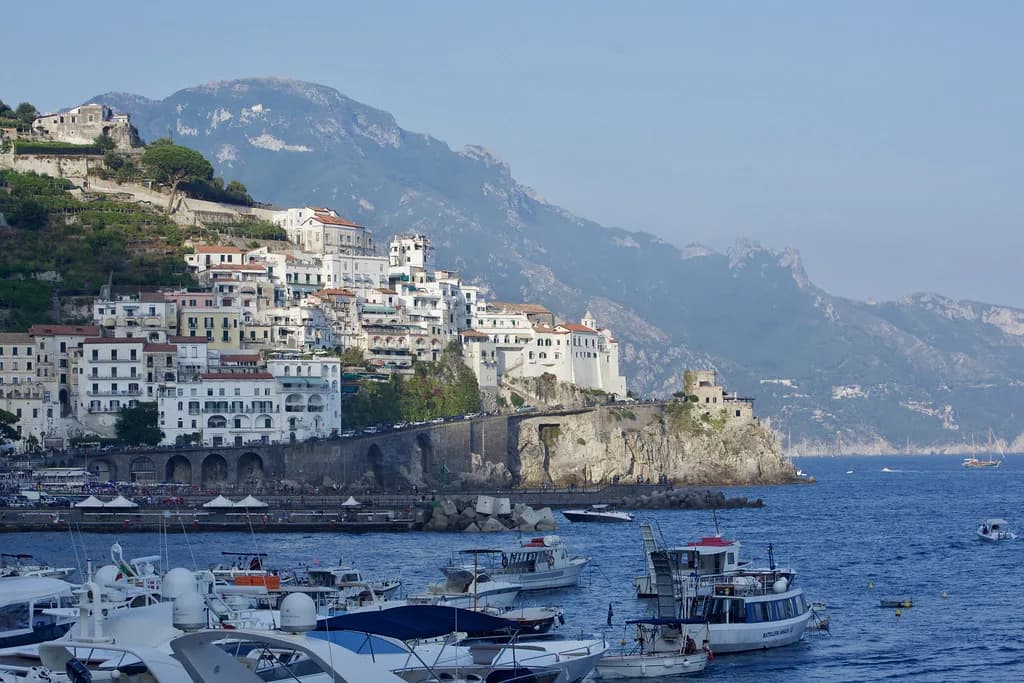
Amalfi was one of Italy's maritime republics, and the waterfront still shows that history in its piers, the Flavio Gioia statue and what one walking guide describes as a small maritime museum in vaulted stone chambers where ships were once built. Walking the piers gives a wider view of the town than the square alone. Further visitor details appear in Amalfi Italy One Day Walk.
Beyond the harbor, the town holds a cathedral complex with several distinct parts, a paper-making tradition and a compact beach, all within a short walk of each other. One published walking route covers roughly two miles and suggests three to four hours with stops for sightseeing, shopping and a meal — a useful gauge that a half-day is tight.
That compactness cuts both ways: distances are short but the terrain includes stairs, slopes and busy summer streets, so comfortable shoes and water matter more than a long checklist. If you want to see the less-obvious corners as well, our guide to hidden gems in Amalfi pairs naturally with this plan.
Start in Piazza Duomo Before the Groups Arrive
Piazza Duomo is the natural starting point: the cathedral staircase, the Fountain of Saint Andrew, cafes and the road down to the waterfront all meet here. The fountain, built in the eighteenth century, depicts the patron saint with sea nymphs and cupids, a reminder of how closely the town's identity is tied to the sea.
Arriving early is the one crowd tip that genuinely changes the day. One Italy-based writer photographed the square around 8 a.m. with nobody in front of the facade. A separate walking guide reports that Amalfi becomes very crowded between roughly 11 a.m. and 4 p.m. in most months, which argues for doing the headline sights first and saving indoor or shady stops for the busiest stretch.
The Cathedral Complex: Free Church, Paid Cloister and Museum
The Cathedral of Sant'Andrea is the town's main landmark, reached by a long flight of steps from the square, and entry to the church itself is free. The building mixes Norman, Byzantine, Arabic and other influences, which makes sense for a maritime republic that traded across the Mediterranean.
The complex is not one single free visit. One source reports a ticket of four euros covering the Cloister of Paradise, museum, crypt and cathedral route, while the church alone stays free; it also lists seasonal opening hours that change through the year. Treat both the figure and the hours as reported by that page rather than confirmed for your date, and check the cathedral's own published information before relying on them.
If you pay for the cloister, go for the contrast: a white-columned garden that feels calm even when the square outside is chaotic, with museum rooms of frescoes, sarcophagi and religious artifacts attached. Budget a focused half hour to an hour here rather than treating it as a quick doorway.
Wander the Lanes and the Paper-Making Quarter
From the square, Via Lorenzo runs inland as the town's commercial spine, lined with shops selling ceramics, leather, limoncello and lemon sweets. A self-guided walk of Amalfi old town is the easiest way to sense the layout, drifting off the main road into alleys behind the Duomo where souvenir density drops and residential balconies, staircases and small courtyards take over.
One hour of strolling is a fair allowance for the central lanes if you are not shopping seriously. If you want the full picture of how the town is laid out before you commit your afternoon, our Amalfi neighborhoods guide explains which quarter you are standing in.
Pick One: Paper Museum or a Lemon Experience
Late morning is when you choose. The Museo della Carta sits along Via delle Cartiere in an old paper mill and explains how handmade paper was produced here for centuries, with historic machinery on display; it suits anyone who prefers crafts and a quieter indoor stop. One source reports adult admission of four euros fifty and a guided tour ticket of seven euros with daily hours from March, but those figures come from that page and should be verified on site or on the museum's own information.
The alternative is a lemon experience. An in-town limoncello tasting of about half an hour fits most comfortably into a single day, while a terraced grove tour of one to two hours trades time for views and a closer look at how the lemons are grown, as one solo traveler's account of the grove visit describes. Pick the tasting if the day is already full, and the grove if lemons are the reason you came.
Whichever you choose, do not try to fit both. The two experiences tell different halves of Amalfi's story, and squeezing them together eats the hour you would otherwise spend sitting by the sea, which is part of the point of being here.
If You Choose the Lemon Grove Tour, Know the Terrain
A grove tour is the most physical option on this list. The terraces climb a hillside on steep stairs and slopes, so flat shoes and trainers are the sensible choice and heels are not; bring sunscreen, a hat and sunglasses, because the route is outdoors and exposed.
Getting there is part of the plan. The same account puts the farm about a ten to fifteen minute walk from the town center following the main road out of Cathedral Square, and reports that the provider has no parking and that town parking is very limited, so walking is the practical option. Pets are not permitted on that operator's walking tour because of the farm's own dogs.
Expect a structured visit: an introduction, a shaded stop with lemon slices eaten peel and all, a small rural-culture museum, the climb through the terraces, then a tasting of lemonade, lemon cake and limoncello. The descent uses steep stairs, so allow more time than the distance suggests.
Lunch: Quick Panini or a Proper Sit-Down Meal
Lunch is a scheduling decision as much as a culinary one. A small deli in Piazza dei Dogi suits a fast panini if you plan to walk to Atrani or join a boat trip afterwards, while a full restaurant menu with antipasti, pasta and wine deserves its own unhurried hour and a half.
If you want a slower meal in the high season, one writer advises booking a table ahead between June and September rather than assuming a table will be free at half past one in August. Read that as a sensible summer caution, not a stated booking requirement for any named restaurant.
Local dishes worth seeking out include pasta al limone and delizia al limone, a small sponge cake filled and coated with lemon custard that turns up in pastry shops and restaurants across town. Our Amalfi local food guide covers more of what to order and where the lemon repertoire goes beyond dessert.
Afternoon Option One: Walk to Atrani
Atrani is the simplest add-on because it needs no ticket, no ferry and almost no planning. The village sits immediately next to Amalfi, but the route passes through a pedestrian tunnel rather than following the coast road, and part of it runs along a public walkway through a restaurant, which looks odd but is legitimate, as one walker's route notes explain.
What you get for the walk is a change of register. Atrani is one of Italy's smallest towns and feels quieter and less polished than its famous neighbor, with a compact beach, churches and alleys that reward a slow half hour; the same walker notes it can feel tranquil even on a crowded afternoon in Amalfi.
If you have a second day, the Amalfi two-day itinerary reaches further out, including the Valle delle Ferriere above town, which is the kind of walk that needs a full morning rather than a spare hour.
Afternoon Option Two: Beach or a Short Boat Trip
Marina Grande, the town beach, is convenient rather than wild: pebbly, with water shoes useful for swimming, and a mix of free areas and paid beach clubs whose prices vary by season and by row. Because it sits right by the waterfront, it is the lowest-effort way to spend the hottest part of the day.
The water alternative is a short boat trip, which shows the coastline from a completely different angle and removes you from the crowds and the bus queues for a couple of hours. Trips of around two hours run past Atrani, Minori, Maiori, the Furore fjord and Praiano with a swim stop, which fits an afternoon without consuming the whole day.
Boat trips to the Emerald Grotto are a further option from the harbor, where the sea takes on a striking green color when the light enters the cave. Schedules and sea conditions decide whether any of this runs on your date, so confirm with the operator on the day.
The Optional Viewpoint Above Town
Belvedere Cimitero Monumentale, also called the San Lorenzo viewpoint, looks down over Amalfi from the site of an old Benedictine monastery. It is a genuinely good view, but it is a climb of roughly four hundred steps, which is atmospheric rather than casual, and it is the first thing to drop in peak summer heat.
A public elevator from near Piazza Municipio can shorten the climb, but whether it is running on your visit is something to confirm locally before you build the afternoon around it. Treat the viewpoint as a bonus if legs and weather allow, not a fixed stop.
Evening: Gelato, Delizia or an Aperitivo by the Sea
Finish where the town is at its easiest. Gelato from a historic pasticceria by the Duomo, a lemon delizia, or a drink on the waterfront all work; one Amalfi pastry shop has been trading since the 1830s, which makes it a reliable landmark even if you only stop for coffee.
The practical move is to confirm your last ferry or bus before you sit down, not after. Ferry schedules change by season and weather, and coastal buses are crowded in summer, so checking the timetable at the start of the evening avoids a sprint to the pier with a melting gelato.
Customise the Day and Handle the Logistics
For history, pair the cathedral complex with the Paper Museum. For food, swap the museum for the in-town limoncello tasting. For views, add the viewpoint if you accept the steps. For a slower day, spend longer in Atrani or on the beach and drop the boat, and in summer start early, book any activity you care about, and keep the hottest hours for lunch, shade or water.
Arriving is usually easiest by ferry when the season allows, since it is scenic and gentler than the twisty coastal road; buses are cheaper but crowded, and organized tours or transfers make sense from Naples, Rome or Sorrento. One coast guide notes that ferries run from places such as Salerno, Positano, Sorrento and Capri, with schedules that shift by season and weather. Check the day before, and leave luggage behind because stairs, slopes and crowds make a suitcase a burden.
If you are weighing a broader coast day against a town day, Positano pairs with Amalfi for those set on seeing both, while Ravello is a short hop by bus for gardens and villas. Both turn Amalfi into a stop rather than a day, so choose knowingly rather than by accident.
Plan Your Visit
Amalfi works best as a day with one clear extra and slack in the middle. Start at the cathedral square before the crowds, choose between paper and lemons, eat properly, then pick Atrani, the beach or a boat, and leave the evening for something sweet by the water.
Check the cathedral's published opening information, museum hours and ferry timetables close to your date, since these change with season and are the details most likely to derail a plan. Then keep the rest loose and let the town set the pace.
Frequently Asked Questions
Can you do the Amalfi Coast in one day?
You can see one or two towns in a day, but not the whole coast. Ferries and buses take time, and coastal roads are slow and crowded in summer. Treat a single day as Amalfi town plus at most one add-on, such as Atrani on foot or a short boat trip, rather than a checklist of villages.
What should you do in Amalfi town for a day?
Start in Piazza Duomo and visit the cathedral complex, wander the lanes behind the square, and choose one local experience, either the Paper Museum or a lemon tasting. After lunch, walk to Atrani, use the beach, or take a short boat trip, then finish with gelato or an aperitivo by the water.
Is Amalfi or Positano better for a day trip?
They suit different days. Amalfi has a cathedral complex, a paper-making history, a compact beach and the walk to Atrani, which fills a day comfortably on foot. Positano is steeper and more about views and shopping. If you want both, plan a coast day with a ferry between them and accept that each stop will be shorter.
Should you pick the Paper Museum or a lemon experience?
Choose the Paper Museum if you like crafts, old machinery and a quieter indoor stop. Choose a lemon experience if food and local produce appeal more; a short in-town tasting takes less time than a terraced grove tour, which involves steep stairs. Doing both in one day crowds out the afternoon.
How long do you need in Amalfi town?
A full day lets you cover the cathedral complex, the lanes, lunch, one experience and one afternoon add-on without rushing. A half day is enough for the square, the cathedral and a short stroll. One published walking route of about two miles suggests three to four hours with stops, which is a useful minimum.
Are there quieter corners near Amalfi?
Atrani, a short walk from Amalfi, feels calmer and less polished than its neighbor, and the alleys behind the Duomo thin out once you leave Via Lorenzo. The San Lorenzo viewpoint above town is another change of scene, but it involves roughly four hundred steps or a public elevator whose operation should be checked locally.
How do you get to Amalfi for the day?
Ferries are the most scenic option when they run, from ports such as Salerno, Sorrento, Positano and Capri, but timetables vary by season and weather. Buses are cheaper and often crowded on the coastal road, and tours or private transfers simplify the trip from Naples, Rome or Sorrento. Check the timetable the day before you travel.
Sources
Continue exploring
More guides you'll find useful





