
Cloister of Paradise, Amalfi: Visitor Guide to the Cathedral Cloister
Plan a visit to Amalfi's Cloister of Paradise: its 13th-century Arab-Norman arches, garden and sarcophagi, the cathedral complex, and how long to allow.
On this page
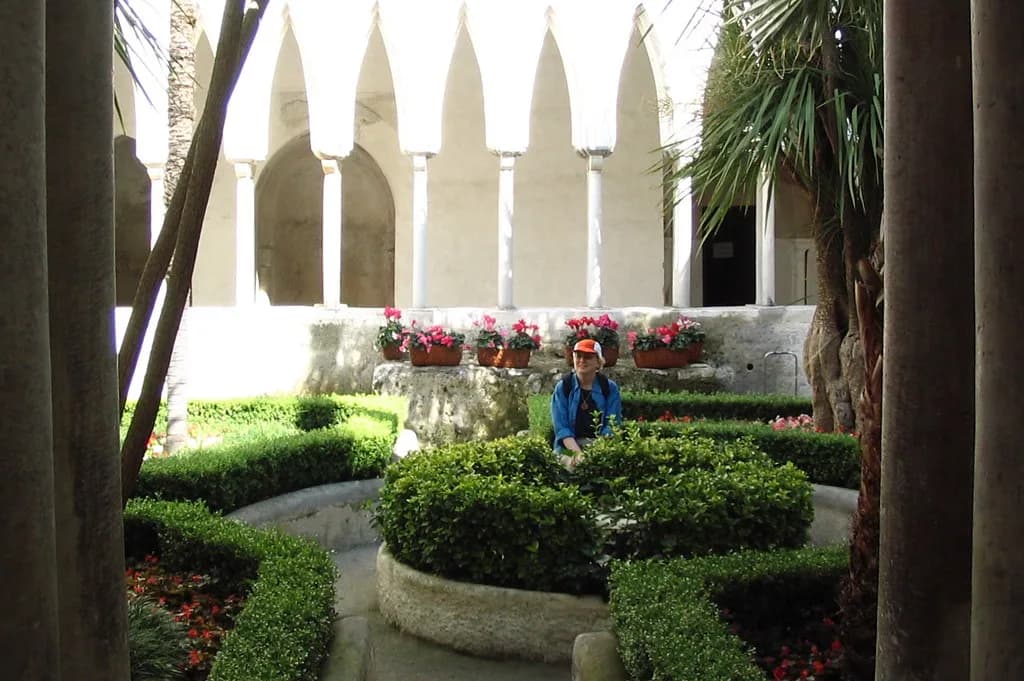
The Cloister of Paradise, or Chiostro del Paradiso, is a 13th-century courtyard attached to the Amalfi Cathedral complex, a few steps from Piazza del Duomo. It was built as a burial ground for noble Amalfitan families, and its white marble columns, pointed arches and planted central garden make it a compact, shaded contrast to the busy square below. Third-party descriptions highlight the blend of Arab and Norman styles, with around 120 slender columns supporting the arches.
Treat it as a short, focused stop rather than a half-day attraction: most visitors can see the cloister in well under an hour, then decide whether to add the crypt, cathedral interior or Diocesan Museum. This guide covers what is actually there, how access is reported to work, and what to confirm before you go, since hours and ticket details are published by the cathedral and tourist office rather than fixed here.
What the Cloister of Paradise Is and Where It Sits
The cloister forms part of the Amalfi Cathedral complex, entered from the top of the cathedral stairs, with the courtyard set to one side of the church. That position matters: you are not crossing town to find a separate monument but stepping off Piazza del Duomo into a quieter enclosure. Visitors describing the route note that you climb the cathedral steps and turn left at the top to reach the cloister entrance.
Because the cloister belongs to the cathedral complex, it helps to think of the visit as one segment of a single religious site rather than a standalone attraction. The cathedral itself is free to enter, while the cloister, crypt and museum are the parts that sources describe as ticketed. If you only have time for one paid element, decide in advance whether you want the courtyard's calm or the cathedral's gilded interior.
Why It Was Built: A Noble Burial Ground
The cloister dates to the 13th century and was originally intended as a cemetery for prominent Amalfi citizens, a role that explains the sarcophagi and inscriptions still visible around the courtyard. Many of the original tombs have been lost over the centuries, so what you see today is a partial record rather than an intact necropolis.
Knowing this changes how you read the space. The arcades and carved stonework were designed to frame burial monuments, not simply to look decorative, and the garden at the centre was a contemplative setting for remembrance. Keep that in mind as you walk the perimeter and the sarcophagi stop being background clutter.
Architecture: Columns, Arches and Shifting Light
The cloister is a striking blend of Arab and Norman styles, with around 120 slender marble columns supporting a series of graceful arches. The paired columns and pointed arches create a repeating rhythm around the courtyard, and the gaps between them throw changing patterns of light and shadow across the stone floor as the sun moves.
Third-party descriptions also mention intricate stonework and carved details on the columns and arches, and some refer generically to frescoes without identifying specific works. Since those attributions are not confirmed by an official source, look at what is physically in front of you rather than hunting for named artworks. The capitals, the arch mouldings and the inlaid patterns are the reliable pleasures here.
The Central Garden: A Cool Pause Off the Piazza
At the heart of the cloister lies a lush green garden with palms and other planting, which casts dappled shadows on the stone paving and softens the hard lines of the architecture. On a hot day it functions as a genuine refuge: the courtyard is enclosed, shaded in parts, and far calmer than the open square at the foot of the cathedral stairs.
Plan to sit for a few minutes rather than photograph and leave. The garden is the reason many visitors rate the cloister more highly than its size suggests, and it is also the easiest place in the complex to pause without blocking a passage or a pew. If you are travelling with someone who tires easily, this courtyard is a sensible rest stop between the stairs and the crypt.
What to Look at Closely
Start with the colonnade: the columns are slim, closely spaced and often paired, and their capitals vary enough to reward a slow circuit. Then look at the sarcophagi and wall inscriptions, which are the clearest surviving evidence of the cloister's funerary purpose. The stonework around the arches, including carved ornament and inlaid patterns, is where the Arab-Norman character of the design shows most clearly.
Avoid treating the cloister as a gallery of named masterpieces. Sources describe the columns, arches, garden and tombs in general terms, and beyond that the labelling on site is what should guide you. Read the panels where they exist, and if a specific work interests you, ask at the ticket desk rather than relying on secondhand claims.
How Access Works: The Cathedral Complex Ticket
Access is typically through the cathedral stairs, at the top of which you turn left for the cloister entrance. Third-party listings describe a combined ticket covering the Cloister of Paradise, the Diocesan Museum and the crypt of Saint Andrew, alongside access to the cathedral interior. Treat that package as reported rather than official, and confirm the current scope at the ticket desk before paying.
Prices quoted by third-party sites vary and are not reliable as current figures, so check the amount on the official cathedral or tourist office website, or at the entrance, on the day. The same applies to any family or reduced rate: ask rather than assume. If you only want the courtyard and not the crypt or museum, ask whether a smaller option exists before buying the full combination.
Practical Planning: Verify Hours and Ticket Scope Before You Go
Opening hours change with the season, and published ranges differ between third-party sources, so do not build your day around a time you read on a blog or listing site. Check the parish and tourist office pages shortly before your visit, and remember that religious sites can close or restrict access for services at short notice.
One older visitor review mentions an admission figure and describes the visit itself as free, which illustrates how confused ticket reporting can be. Ignore stale figures and ask a direct question at the desk: what does this ticket include, and does it cover the cloister, crypt and museum together? That single question resolves most of the ambiguity.
Suggested Time: A Short Stop You Can Extend
Allow roughly twenty to thirty minutes for the cloister and garden, which is a suggested pace rather than an official figure. That is enough for one full circuit, a few minutes seated in the courtyard and a closer look at the sarcophagi. Photography slows things down considerably, especially when the courtyard is busy.
If you buy the combined ticket, add time for the crypt and the Diocesan Museum, and decide separately whether to visit the cathedral interior. Visitors commonly describe the crypt as the visual highlight of the paid circuit, so budget for it if you have any interest in gilded ceilings and painted decoration. The cloister then becomes a calm interval between two more intense spaces.
Pairing the Cloister With the Rest of Amalfi
The cathedral sits on Piazza del Duomo, so the cloister slots naturally into the Amalfi self-guided walk: enter through the historic gateway, cross the square and climb the stairs. Beyond the cathedral, the Arsenal of the Republic of Amalfi is a medieval shipbuilding hall near the old centre that now houses a museum, and the Museo della Carta up the valley explains the town's paper-making history.
For something greener, the Valle delle Ferriere nature reserve above town offers waterfall paths and the remains of old paper mills and an ironworks, reached by a walk that starts from Pontone above Amalfi. It is a half-day undertaking rather than an add-on to a cathedral visit, so choose it instead of, not alongside, a packed museum morning.
Access Notes: What to Check Directly
Sources do not give a consistent, verifiable statement on step-free access to the cloister, and reaching it involves the cathedral stairs. If mobility is a concern, contact the cathedral or tourist office directly before your visit and describe your needs, rather than relying on a listing site's accessibility field. Ask specifically about the entrance route, not just the courtyard itself.
Inside the cloister, the ground is paved and largely level, but the interest is spread around a perimeter walk with tombs set into the walls. Budget more time if anyone in your group needs to rest, and use the garden seating as a natural break. For the rest of the complex, assume stairs until you have confirmed otherwise.
Plan Your Visit
The Cloister of Paradise rewards a deliberate, short visit: circle the colonnade, read the tombs, sit in the garden and then decide whether to extend into the crypt and museum. It is the kind of stop that works best when you are not rushing to the next sight on a list.
Before you go, confirm current hours and what the ticket covers on the cathedral or tourist office website, and check the price at the entrance rather than trusting older figures. With those details settled, the cloister is an easy, calm addition to a day built around Piazza del Duomo.
Frequently Asked Questions
Is the Cloister of Paradise free to enter?
Sources conflict on this, and third-party listings variously describe a paid entry and a combined ticket. Treat the cloister as part of the cathedral complex's ticketed area and confirm the scope and cost at the entrance or on the cathedral's official website before you pay.
Does one ticket cover the cloister, crypt and Diocesan Museum?
Third-party listings describe a combined ticket covering the Cloister of Paradise, the Diocesan Museum and the crypt of Saint Andrew, alongside cathedral access. This is reported rather than an official published rule, so ask at the ticket desk exactly what is included on the day.
How long does it take to visit the Cloister of Paradise?
Allow around twenty to thirty minutes for a slow circuit, a look at the sarcophagi and a few minutes in the garden. That is a suggested pace, not an official figure. Add time if you also visit the crypt, museum or cathedral interior.
When is the cloister quietest?
No source gives verified quiet hours, so plan around general patterns instead: early morning and late afternoon tend to be calmer than the middle of the day in high season. Check current opening hours first, since a quiet visit is only possible when the site is open.
Is the Cloister of Paradise wheelchair accessible?
Sources do not give a consistent, verified answer, and the route involves the cathedral stairs. If step-free access matters to you, contact the cathedral or the local tourist office directly and ask about the entrance route before travelling.
Sources
Continue exploring
More guides you'll find useful





