Amalfi Cathedral Visitor Guide: The Duomo, Crypt and Cloister
Plan a visit to Amalfi Cathedral with this guide to the Duomo complex, from the bronze doors and St Andrew's crypt to the Cloister of Paradise.
On this page
Amalfi Cathedral dominates Piazza del Duomo at the centre of town, and its staircase is the natural meeting point for anyone arriving by ferry, bus or on foot. What many visitors do not realise is that the Duomo is a monumental complex rather than one nave and an altar, so a little preparation changes what you notice inside.
This guide breaks the site into its named parts and points out the details worth slowing down for. It also states plainly where the organiser has not published firm logistics, so you know exactly which questions to settle before you set out.
Why Amalfi Cathedral Anchors Piazza del Duomo
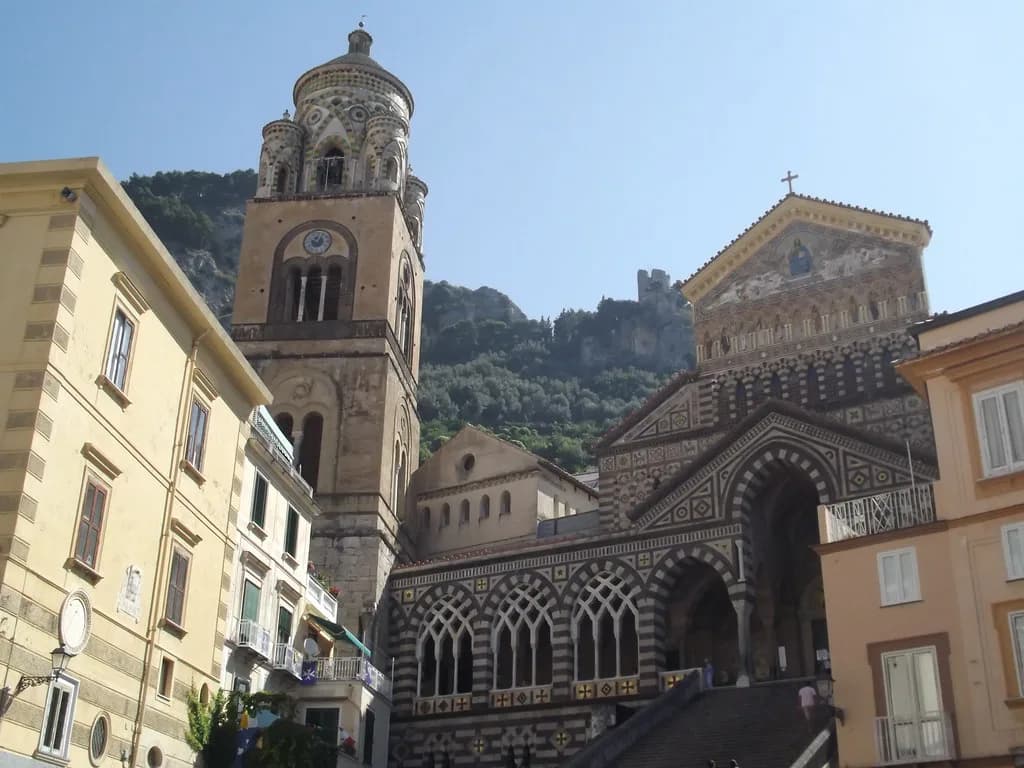
The cathedral sits on Piazza del Duomo in the heart of Amalfi, the small Campania town that gives the Amalfi Coast its name. Its façade and wide staircase close the square on one side, which makes the church the easiest landmark to orient yourself by after stepping off a ferry or a coast bus.
Because the complex includes a crypt, two communicating basilicas, an atrium staircase, a bell tower and the Cloister of Paradise, a short stop easily becomes a proper visit. Decide in advance whether you want a quick look at the exterior or time inside the church and cloister, since that choice shapes how much of your day in Amalfi is left.
The Monumental Complex at a Glance
The Italia.it entry describes the site as a group of connected structures: the crypt, two communicating basilicas, the staircase up to the atrium, the bell tower and the Cloister of Paradise. Knowing this list helps you read the building as an accumulation of phases rather than a single design.
Architectural styles stack up across the centuries, from Romanesque work to Byzantine-influenced mosaic and a Baroque ceiling inside, according to Sorrento Review. Look for those transitions as you move through the spaces; they explain why the interior feels less uniform than the striped façade outside.
Reading the Façade and Its Mosaics
The current façade dates to the late 19th century and deliberately evokes a medieval look, with Byzantine-style mosaics set into it. The original front collapsed and was rebuilt in 1891 using marble and stone arranged in a striped pattern, which is why the surface looks so graphic from across the square.
Step back towards the piazza before climbing the stairs, because the mosaic and the colour banding read best at a distance. The piazza itself is open public space, but the interiors and any ticketed areas require you to confirm current access terms with the parish rather than assume them.
The 62 Steps and the Bronze Doors from Constantinople
Sixty-two steps lead up to the cathedral entrance, a climb that is part of the experience but worth planning for on a hot afternoon. Sorrento Review notes that the bronze doors were cast in Constantinople around 1066, which makes them a rare point of contact with the town's maritime trading past.
Pause at the doorway and look closely at the door panels before entering, since they are easy to walk past in a crowd. If stairs are a concern, ask the parish about the practical options before travelling, as no reliable published guidance on step-free access exists here.
Basilica of the Crucifix: The 9th-Century Core
The oldest element is the Basilica of the Crucifix, which dates back to the 9th century. Columns and capitals in the complex were taken from ancient Roman buildings and brought here by sea, a detail that reflects Amalfi's reach as a maritime republic.
Sorrento Review records that this earlier basilica now serves as a museum, with steps leading down into the Crypt of Saint Andrew. Treat these as separate spaces with their own character instead of one continuous nave, and check current access on arrival.
The Crypt of St Andrew: Relics and the Manna Tradition
St Andrew is the patron saint of Amalfi, and his relics are kept in the crypt after being brought from Constantinople in 1206. The atmosphere there is quieter and more intimate than the upper church, which makes it the part most worth slowing down for.
On special days, tradition holds that the relics exude a liquid called Saint Andrew's Manna, which many believers consider miraculous. Whether you visit for devotion or curiosity, keep your voice low and give others room, since this is an active place of worship rather than a museum gallery.
The Cloister of Paradise: Sarcophagi and Palm Shade
The Cloister of Paradise was originally built as a burial ground for local nobility and contains five richly decorated sarcophagi with classical scenes and family crests. In the centre, an Arab-style palm grove offers shade and a bench, making it the calmest corner of the whole site.
The cloister is distinctive enough to deserve its own visit, so read a dedicated Cloister of Paradise Amalfi visitor guide before you go. Sorrento Review dates its construction to around 1266 with restoration in 1908, which helps you place the arches and marble work in time.
Corsa del Santo: The Feast Day Processions
Two dates stand out in the cathedral calendar: 27 June and 30 November, when the Corsa del Santo takes place. A silver bust of St Andrew is carried through the village on the shoulders of devotees, who run up the cathedral steps, a ritual that transforms the piazza into a crowded, energetic scene.
If your dates are flexible, these feast days are a reason to visit; if you want quiet interiors, they are a reason to choose another day. Confirm the year's programme with the parish before booking around a specific date, since published schedules can change.
Practical Planning: Hours, Tickets and Dress
Neither the parish nor the tourism sources reviewed here publish confirmed opening hours, ticket prices or a combined ticket covering the crypt and cloister. Rather than rely on outdated figures, check the parish website and the local tourist office for the current terms shortly before you travel.
Assume nothing about which parts are free: the exterior and piazza are open public space, while interiors and collections may have their own conditions. Sorrento Review mentions a small entrance fee for the interior, but that wording is not a current quoted price, so treat it as a prompt to verify rather than a budget figure.
Dress respectfully, since this is a working church, and ask the parish about photography, accessibility and bag rules if those matter to you. Carry water for the staircase climb in summer and keep an eye on ferry times, because the last boats from Amalfi shape how long you can linger.
Where the Cathedral Fits in a One-Day Amalfi Itinerary
For a short stop, see the façade and the piazza first, then decide on the spot how much time the interiors deserve. A slower day pairs the cathedral with the town's quieter corners, which is where a guide to hidden gems in Amalfi can help you step off the main drag between ferry arrivals.
If you enjoy craft history, the Museo della Carta Amalfi visitor guide covers the paper mills that made the town's name in another trade entirely. Keep the cathedral as the anchor of the morning and build the rest of the day around it rather than dashing between sights.
Travellers based further along the coast can compare options across the Amalfi Attractions hub before committing a day to the town centre. A short boat trip may also fit: the Emerald Grotto Amalfi visitor guide explains a nearby sea cave that pairs well with a half-day in Amalfi.
Common Mistakes to Avoid
The most frequent slip is assuming one ticket covers the whole site, including the crypt and cloister. No source reviewed here confirms a combined ticket, so ask at the entrance or check the parish site before you count on it.
The second is rushing the crypt and cloister to catch a ferry, which leaves no time for the detail that makes them memorable. The third is skipping the exterior: the mosaic façade and the bronze doors reward a few unhurried minutes before you climb the stairs.
Plan Your Visit
Amalfi Cathedral rewards a little preparation: know the parts of the complex, pick the spaces that matter to you, and check current access terms with the parish before travelling. The exterior and piazza you can enjoy freely; the interiors need confirming on the day.
Frequently Asked Questions
What is the main church in Amalfi?
Amalfi Cathedral, also called the Duomo di Amalfi, is the town's principal church, standing on Piazza del Duomo. It is dedicated to St Andrew the Apostle, whose relics are kept in the crypt beneath the church.
What should I see inside Amalfi Cathedral?
Prioritise the bronze doors cast in Constantinople, the 9th-century Basilica of the Crucifix, the Crypt of St Andrew and the Cloister of Paradise with its carved sarcophagi and palm garden. The late 19th-century mosaic façade is best seen from the piazza before you climb the 62 steps.
Is Amalfi Cathedral free to enter?
The piazza and exterior can be viewed without charge, but the sources reviewed here do not confirm which interiors are free and which are ticketed. Check the parish website or ask on arrival, and treat older mentions of an entrance fee as unverified rather than current.
How long does a visit to Amalfi Cathedral take?
No official visiting duration is published. As an editorial suggestion, allow around an hour for the church, crypt and cloister, and longer if you want to read the detail or attend a service.
What happens on the feast days of St Andrew in Amalfi?
On 27 June and 30 November the Corsa del Santo takes place, when a silver bust of St Andrew is carried through the village and up the cathedral steps by devotees. Confirm the year's programme with the parish, as schedules can change.
Can I visit the Cloister of Paradise separately?
The Cloister of Paradise forms part of the cathedral complex, but the sources reviewed here do not confirm whether separate tickets exist. Ask at the entrance or check the parish website, and read a dedicated guide to the cloister before you go.
Sources
Continue exploring
More guides you'll find useful