Chiesa di San Domenico Arezzo: Gothic Church and Cimabue Crucifix
A visitor guide to the Chiesa di San Domenico in Arezzo: its Gothic architecture, the Cimabue crucifix, frescoes, free entry and how to time a calm visit.
On this page
San Domenico is one of Arezzo’s free sights, which makes it easy to add to a day that is already full of ticketed museums. It is a functioning church rather than a gallery, so your visit depends on respecting services and avoiding the busiest moments. The building itself is a calm, austere space, and the Cimabue crucifix gives it a rare focal point.
This guide is about visiting the church itself: what you are looking at, why the building feels so plain, and how to see the art without treating worship as a backdrop. For the wider city, use the Arezzo Attractions hub to compare this stop with the churches, museums and squares around it.
Where San Domenico Sits in Arezzo
The church stands on Piazza San Domenico in the historic centre, within walking distance of the main streets visitors already cover. Traveller accounts describe it as a short walk from the central lanes, so it works as a stop on foot rather than a separate excursion.
Because it lies inside the tangle of the old town, it pairs naturally with a walk between Piazza Grande and the surrounding lanes. The Arezzo old town neighbourhood guide is a useful way to see how those streets connect before you set out.
A Dominican Church Begun Around 1275
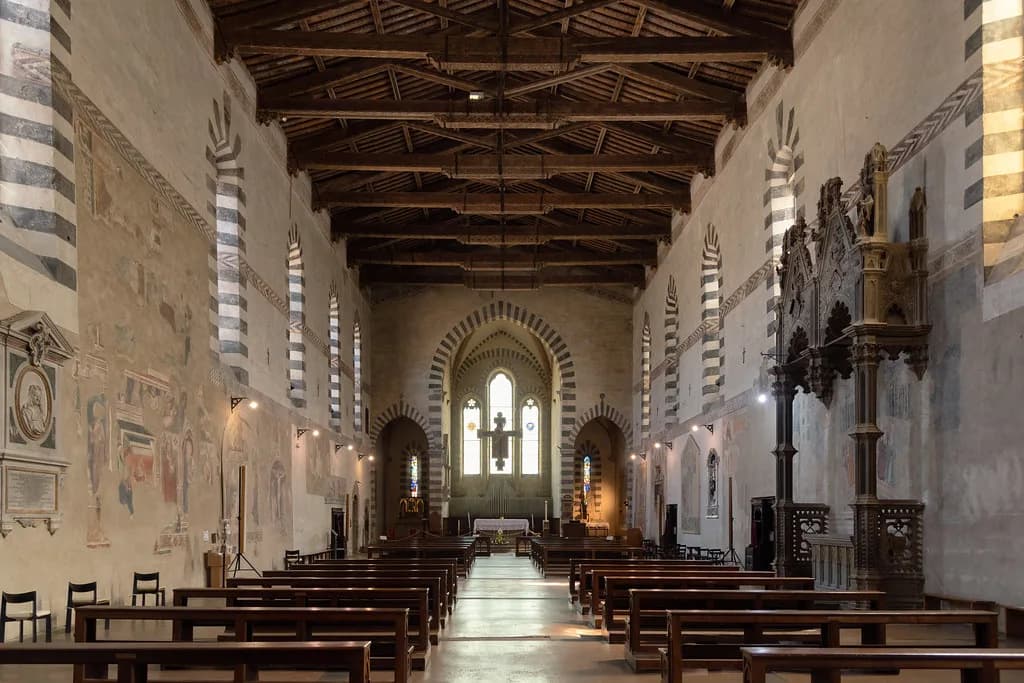
Construction began in 1275 and was completed in the early fourteenth century, according to Travelitalia, which calls the building a good example of linear thirteenth-century Gothic. That gives you a useful anchor for the visit: the church belongs to the first flowering of Gothic in Arezzo. The church was built for the Dominican order, whose preaching shaped its severe, undecorated character.
Understanding the Dominican context explains why the interior feels austere. The emphasis falls on clean stone surfaces, proportion and listening rather than on lavish carving. Look at the vaulting and the nave before you fix on individual works, because the architecture is part of the experience.
Reading the Exterior Before You Go In
Visitors often note the asymmetric stone facade and the bell tower, which give the church an uneven silhouette. Walking the length of the piazza helps you see how the massing changes from different angles. The plain exterior is a fair clue to the interior you are about to see.
Morning light tends to catch the stone, and visitor accounts mention the contrast between sunlit windows and shaded interiors as a striking quality of the church. Arriving early also means fewer people in the frame and a calmer atmosphere inside.
Inside: The Cimabue Crucifix
The painted crucifix is the reason many people come. Visitor sources attribute it to Cimabue and place it in the later thirteenth century, and it remains in the church as a devotional object. Give it time from a seated position rather than a quick pass.
Reading the work in place changes the experience. Visitors describe the interior as peaceful and the crucifix as commanding the altar area, and the right approach is to keep voices low and let others have their moment in front of it.
Frescoes and Other Art to Look For
Beyond the crucifix, the walls carry frescoes attributed to Spinello Aretino, Parri di Spinello and Giovanni d’Agnolo Baldùccio, though many are worn and fragmentary. The attributions come from visitor-oriented sources rather than an official catalogue, so treat the names as a starting point for looking rather than a definitive label on every panel. Half the pleasure is in spotting what survives.
Walk the side chapels slowly and look at what remains rather than what has been lost. If you want a comparison with Arezzo’s better-known fresco cycle, the Basilica di San Francesco Arezzo visitor guide covers Piero della Francesca’s Legend of the True Cross, which is a very different experience.
Entry, Hours and How to Check
Entry is generally described as free, with donations welcomed for upkeep. There is no ticket desk and no shared ticket with Arezzo’s museum circuit, so do not budget this as a paid stop. If you are combining it with ticketed sites, the church is the easy, spontaneous part of the day.
Opening hours are the weak point in any printed guide, because sources disagree and seasonal changes are common. The official tourism body for the city, Fondazione Arezzo Intour, publishes visitor information and contacts that are the most reliable place to confirm before you travel. Do not rely on an old blog post’s schedule.
Visiting Etiquette in an Active Church
This is a working church, so dress respectfully with shoulders and knees covered and keep conversation to a murmur. Photography is generally allowed according to visitors, but flash should be avoided and you should never photograph people at prayer. Step aside if a service begins. Further visitor details appear in 2026 San Domenico Church | Arezzo Достопримечательность: гайд, рекомендации и фото туристов | Trip Moments.
Mass times are the main scheduling constraint: even a short sightseeing stop can be interrupted by a service. If you arrive and find one starting, wait outside or come back later rather than walking through the nave. Check the notice board at the entrance for the day’s schedule.
Best Time of Day and Season
Spring and autumn are generally more comfortable for walking the old town, and visitor sources recommend those seasons for the church as well. Summer mornings are the practical compromise if you are travelling in July or August, since the stone facades absorb heat and the piazza offers little shade. Carry water either way.
Inside, the middle of the day is often the quietest because most tour groups are at lunch. Late afternoon is the other good window, though light through the windows is softer then. Avoid arriving just before a likely Mass.
Practical Tips for the Walk
The streets around the church are cobbled, so comfortable shoes matter more than a detailed plan. The piazza has limited shade, which is worth remembering if you visit in summer with children or older travellers. Water fountains in the old town are a useful refill option.
Arezzo itself rewards slow wandering, and the hidden gems in Arezzo guide is a good companion for the lanes between the main sights. Pick one or two quieter corners rather than trying to cover everything in a single day.
Pairing San Domenico With Nearby Sights
Piazza Grande is the obvious next stop, a short walk away and home to the Giostra del Saracino festival each year. From there, the Basilica di San Francesco and its Piero frescoes are a natural continuation for anyone following an art-focused day. Casa Vasari is another option for those interested in the Renaissance architect’s own home.
If you want a quieter alternative to the major basilicas, the Badia di Arezzo visitor guide covers a church with its own character and far fewer visitors. Build in time between stops rather than rushing from one to the next.
How Long to Stay and a Slow Half-Day
A realistic visit is twenty to forty minutes for most travellers: long enough to sit with the crucifix and walk the chapels, short enough that you do not tire of the plain interior. If you only have twenty minutes, prioritise the Cimabue crucifix and a quick look at the frescoes. A suggested half-day could combine San Domenico, a coffee on the piazza, and one of the nearby churches.
That structure keeps the visit proportionate: San Domenico is a quiet emphasis in a day, not its centrepiece. Save the longer stops for the Piero frescoes or the museum circuit.
Plan Your Visit
San Domenico is the sort of church that rewards a small amount of preparation: know roughly where it is, check the current opening arrangements with the city’s tourism office, and arrive ready to slow down. Entry is free, but the experience depends on timing around services.
If you only have a short window, go straight for the Cimabue crucifix and then let the building do the rest. For the wider city, start with the Arezzo Attractions guides and build the day from there.
Frequently Asked Questions
Is entry to the Chiesa di San Domenico free?
Yes. Visitor sources describe entry as free, with donations welcomed for the upkeep of the church. There is no shared ticket with Arezzo’s paid museum sites, so you can step in without booking.
What is the Cimabue crucifix and why does it matter?
It is a painted crucifix attributed to Cimabue and generally dated to the later thirteenth century. It is one of the major early works associated with the artist and remains in the church as a devotional object rather than in a museum.
What are the opening hours?
Sources conflict and hours can change with the season, so the responsible answer is to check locally. The city’s tourism body, Fondazione Arezzo Intour, publishes visitor information and contact details that can confirm current opening times before you travel.
How long should I spend inside?
Most visitors need twenty to forty minutes to see the crucifix, walk the chapels and absorb the building. If you only have twenty minutes, focus on the crucifix and the surviving frescoes rather than trying to see every corner.
Can I take photographs inside the church?
Photography is generally permitted according to visitor accounts, but flash should be avoided and you should never photograph people at prayer. Dress respectfully and keep quiet, since this is an active place of worship.
Is San Domenico close to Piazza Grande and the Basilica di San Francesco?
It sits within the historic centre, within walking distance of both. That makes it easy to fold into a half-day that also takes in the Piero della Francesca frescoes at San Francesco or a wander through the streets around Piazza Grande.
Sources
- FONDAZIONE AREZZO INTOUR - AREZZO DMO TUSCANY » Fondazione Arezzo Intour - DMO Arezzo ( Tuscany )
- Chiesa di San Domenico, Arezzo: Guida per il visitatore 2026
- 2026 San Domenico Church | Arezzo Достопримечательность: гайд, рекомендации и фото туристов | Trip Moments
- Basilica di San Domenico, Arezzo - Travelitalia.com
Continue exploring
More guides you'll find useful