Teatro Antico di Taormina: What to Know Before You Go
Planning a visit to Taormina's ancient theatre? How seasonal hours work, what recent ticket figures covered, what to check with the park, and how to pace it.
On this page
The Teatro Antico is the sight most Taormina days are built around: a Greek theatre later reworked by the Romans, set on the hillside above the town. One concrete planning point up front: recent published information described a usual pattern of opening at 9:00 and closing about an hour before sunset, with the caveat that times can shift according to the needs of the museum and theatre. Treat that as a pattern to verify, not a fixed schedule. The site address is Via del Teatro Greco, 1, on the hill side of the walkable centre.
What follows covers how the seasonal timing works, the ticket and concession figures published for the 2025 season and its free-entry dates, how the visit fits into a day on foot, and where the sources leave gaps. Where the evidence is silent — an official recommended duration, the precise gate, the state of the scene-building interior — this guide says so and points you to the archaeological park. For wider town orientation, start with the Taormina Attractions hub.
Where the Theatre Sits Above Town
The site is listed at Via del Teatro Greco, 1, on the hill side of central Taormina, so you approach it on foot from the pedestrian spine rather than by driving to a gate. The lane climbs, and the paving and steps are uneven in places, so allow more time than the straight-line distance suggests and wear shoes that cope with gradients.
Use the address as an orientation point rather than a promise of a particular doorway. The exact entry gate and any internal route are managed locally and are not documented in the sources consulted, so follow the signage on the lane and ask at the ticket point if anything is unclear. For how the theatre slots into a walking route through town, see Taormina Attractions.
Opening Hours: A Pattern That Moves With the Season
The season page published for 2025 stated the usual pattern as opening around 9:00 and closing roughly an hour before sunset, and it explicitly warned that opening hours may change depending on the needs of the museum and theatre. Because the closing point is tied to daylight, the same late-afternoon clock time leaves far more margin in midsummer than in spring or autumn.
The practical takeaway is to confirm the day's hours with the Parco Archeologico Naxos Taormina shortly before you go, especially if you are aiming for the last slot of the day or travelling outside high summer. Special events, including performances in the theatre, can also affect access, so check the notices section of the park's site. If you are deciding when to travel rather than what to do on the day, our guide to the best time to visit Taormina covers how seasons and crowds shift.
Tickets and Concessions: The 2025 Figures, Read as History
For the 2025 season, the published listing gave a full ticket of €14 and a reduced ticket of €7, the reduction applying to visitors aged 18 to 25 and to FAI members. Under-18s, people with disabilities together with a helper, teachers and various other listed categories were admitted free. These are historical figures from that season, not a current price list: check the price in force for your own dates at the ticket office or through the park's official ticketing channels before formatting a budget.
Do not assume that buying a theatre ticket opens anything else on the same ticket. The sources consulted do not confirm whether the Antiquarium or any nearby archaeological collection is included, so if a separate museum entry matters to you, ask specifically at the ticket point or consult the park's own pages for each site before planning a day around it.
Free-Entry Dates Listed for the 2025 Season
The same 2025 listing named free admission on the first Sunday of each month and on three national holidays: 25 April, 2 June and 4 November. It added that on first Sundays, entry to sites in eastern Sicily is free and tickets are issued only on site, at the ticket offices. It also stated that tickets can only be used on the date and time chosen at purchase, which matters if your plans may shift.
Free days tend to concentrate demand, so an early arrival suits a slow visit better than a midday one, and it also matches the daylight-driven closing pattern. Because free-date lists are published season by season, re-check the current position with the park rather than working to the 2025 dates.
Before You Travel: What to Verify and With Whom
The Parco Archeologico Naxos Taormina is the authority for current hours, ticket scope and temporary notices, and the 2025 listing directed readers to the official channels for both information and ticketing. Rather than relying on any single secondary page, read the park's site close to your travel date and check the notices for anything that changes access.
Whether you can or should book ahead is not something the consulted sources establish as a general rule, so treat advance purchase as a question to put to the park rather than an assumption. On free-entry dates, plan to obtain tickets on site, as the 2025 listing required.
Getting There on Foot
Most visitors reach the theatre on foot from the town centre, since it sits within the walkable core rather than on a separate excursion route. Coming up from the main streets means a short but steady climb; approaching from the upper lanes means less backtracking once you leave the site.
Third-party directions pages exist, but specific bus lines, journey times and parking arrangements are exactly the details that change and that are not verified here. For the wider picture, see our guide to getting to and around Taormina, watch for local signage, and allow more time than a map suggests because of the gradients.
What to See Inside the Site
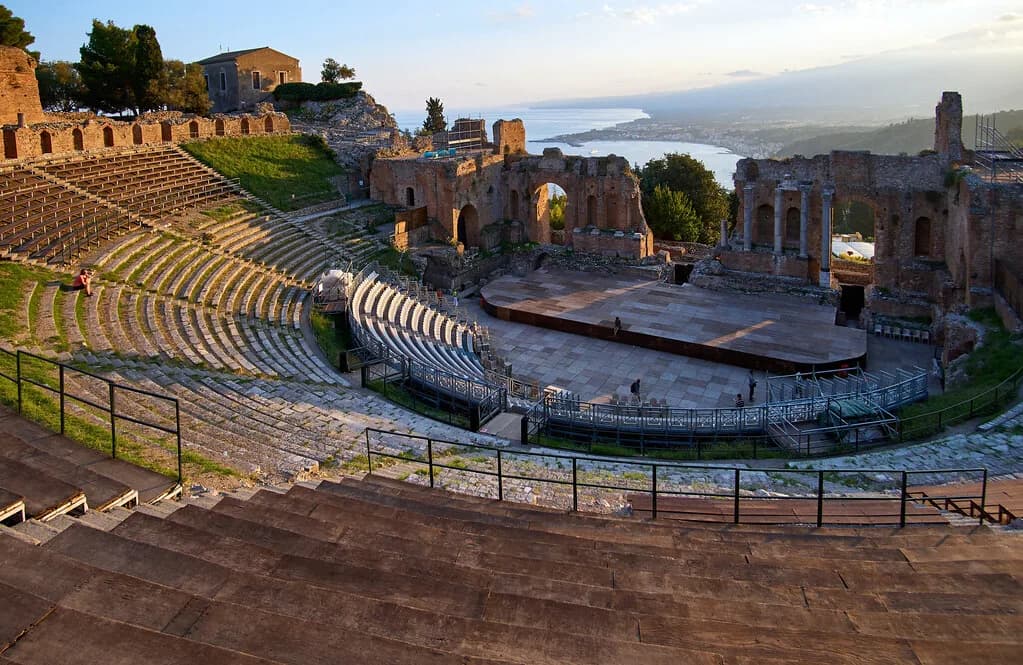
The monument is typically described as Greek in origin and later reworked by the Romans, and that layering is the reason to look carefully: you are reading more than one building phase in a single structure. Begin in the seating area to grasp the scale and the curve of the cavea, then look at the stage zone, where the surviving masonry shows how the performance space was framed.
The interior of the scene building and precisely what survives there are not documented in the sources used here, so let the on-site information panels do the explaining instead of arriving with a fixed picture. The same caution applies to the entry gate and internal routes, which are managed locally and best confirmed at the entrance.
The View Is Half the Experience
The setting is what lifts this theatre above many ancient monuments: with Mount Etna inland and the coast falling away toward Isola Bella and Giardini Naxos, the panorama does as much work as the masonry. Treat the view as part of the visit rather than a bonus, and give yourself time to sit in the upper rows instead of photographing only from the first tier.
Sightlines depend on where you stand and on the weather, so no source allows a precise description of what a given day will show. Clear mornings tend to give the cleanest long views, while haze can soften the coastline later in the day.
How Long to Allow
No official recommended duration is published in the material consulted, so any figure here is a suggestion rather than guidance from the site. A reasonable plan is about an hour for the monument itself, and up to ninety minutes if you read the panels, sit in the cavea and take the views slowly.
Photographers, and anyone visiting while a performance is being set up, should add time for slower movement through the site. If your day is tight, do the theatre first and keep the rest of the town for afterwards; the Taormina one day itinerary slots the theatre into a compact walking route.
Audio and Interpretation
An audioguide resource for the ancient theatre is published through the That's Taormina map site, which also covers other town landmarks such as the Odeon, Palazzo Ciampoli and Trevelyan's Park. It is a useful supplement if you prefer to move at your own pace, but it is an independent resource rather than an official park product.
If you want authoritative interpretation of the archaeology, combine the audio with the site's own information panels and ask at the entrance whether guided visits are running on your dates. That combination covers both the story and the timeline without depending on any single source.
Combining the Theatre With the Rest of Town
Because the theatre sits inside the walkable centre, it pairs naturally with Palazzo Corvaja, the Corso Umberto and the town's small churches over the same afternoon. Build it in as the anchor of a half day rather than a separate trip, and check each church's own opening arrangements before counting on interiors; our guide to Corso Umberto I covers the main spine.
A Taormina two day itinerary works well if you also want the coast and a hill village without rushing, and it keeps the theatre from swallowing the whole morning. Save Castelmola or the beach for a different part of the day, and if you prefer quieter lanes away from the main axis, look at the hidden gems in Taormina.
Plan Your Visit
The Teatro Antico rewards preparation more than most sights. Know that closing tracks sunset, that the ticket figures and free-entry dates published for the 2025 season are now history rather than a promise, and that the ticket's scope beyond the theatre is not confirmed. Check the park's site for the current position, then give the monument an unhurried hour or two.
Go early for the cleanest views, keep the theatre as the anchor of a walking day in town, and leave coastal excursions for later. That order keeps the practical details simple and the experience focused on the stone, the sea and the mountain behind it.
Frequently Asked Questions
What does it cost to visit the Teatro Antico di Taormina?
Prices change by season, and the figures published for the 2025 season should be treated as historical rather than current. In that season a full price and a reduced price applied, with the reduction tied to specific age bands and membership categories, and several groups entered free. Confirm the price in force for your dates on the archaeological park's official site or at the ticket office before you budget.
When is the ancient theatre open, and why does it close before sunset?
Recent published information described a pattern of morning opening until roughly an hour before sunset, with the explicit caveat that hours can change according to the needs of the museum and theatre. Because closing moves with daylight, a late visit leaves much less margin outside summer. Check the day's hours with the park before travelling.
Is entry free on the first Sunday of the month?
Recent published information listed the first Sunday of each month as free, along with certain national holidays, and noted that on those first Sundays tickets for sites in eastern Sicily are issued only at the on-site ticket offices. Free-date lists are published season by season, so confirm the current policy with the park.
Do I need to book tickets in advance?
The sources consulted do not establish a general booking rule or describe online purchase mechanics, so treat advance booking as something to ask the park about rather than assume. On free-entry dates, the 2025 listing required tickets to be collected on site. Check the park's site or the ticket office for your date.
Is an audioguide available for the theatre?
An audioguide covering the ancient theatre is published through the That's Taormina map site, which also covers other town landmarks. It is an independent resource rather than an official park product, so pair it with the site's own information panels if you want authoritative archaeological interpretation.
Where do you enter the site from Via del Teatro Greco?
The site is listed at Via del Teatro Greco, 1, above the town centre, and the approach is made on foot. The exact gate and internal routes are managed locally and not documented in the sources used here, so follow the signage on the lane and ask at the ticket point if anything is unclear.
Sources
Continue exploring
More guides you'll find useful