Baptistery of Padua Visitor Guide: Frescoes, Tickets & Tips
Plan a visit to Padua's Baptistery of San Giovanni Battista: Giusto de' Menabuoi's dome frescoes, timed entry, audio guides and booking checks.
On this page
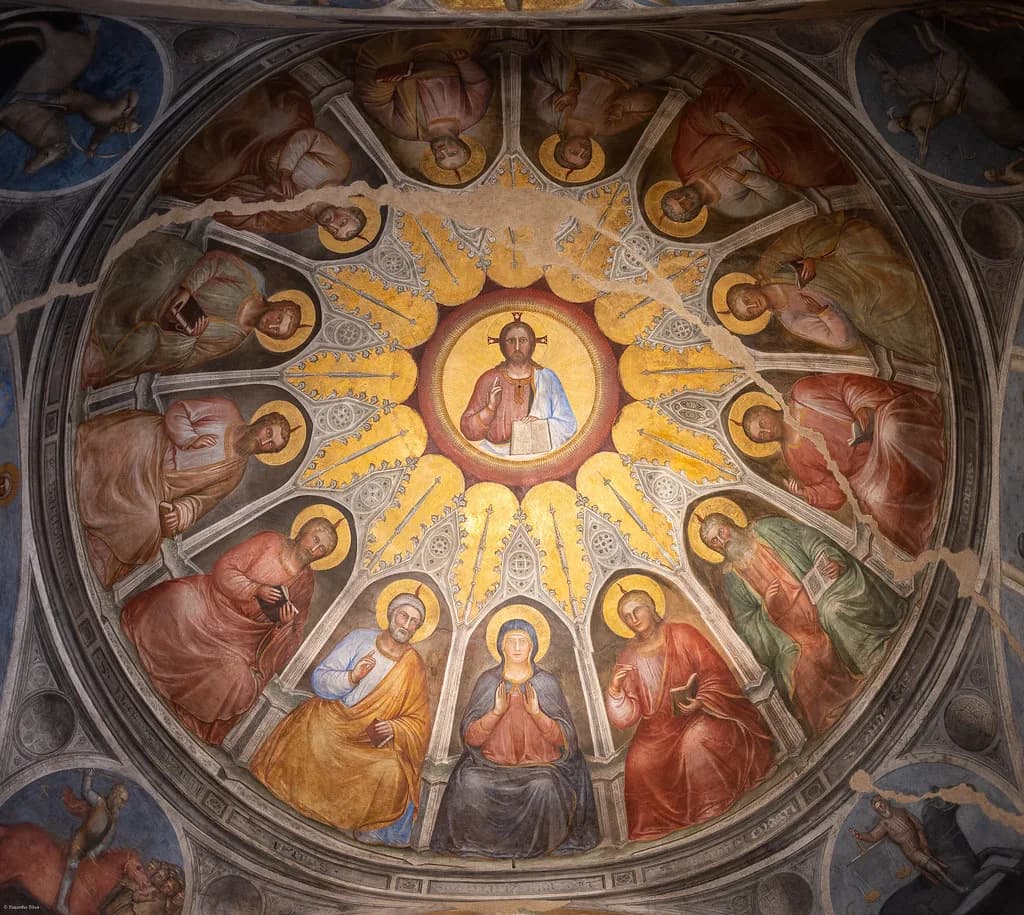
The Baptistery of San Giovanni Battista sits at Piazza Duomo beside Padua Cathedral, and its plain Romanesque exterior hides one of the city's most concentrated works of medieval art. Inside, the dome and walls carry a fresco cycle by Giusto de' Menabuoi, with a central Christ Pantocrator surrounded by angels and saints. It is often described by travellers as an overlooked highlight compared with Padua's more famous painted sites. This guide is aimed at the decisions that matter: what to look at, how to fit the visit into your day, and what to verify before paying.
Why the Baptistery Deserves a Slot in Your Padua Day
For a building of such modest size, the interior feels unexpectedly grand: the painted dome lifts the eye and the scenes unfold in tiers around the walls. The scale is intimate, so the painted world wraps around you rather than stretching into a vast nave. That intimacy is part of why travellers who go often rate it alongside Padua's better-known fresco sites.
One practical appeal is that the visit is compact and easy to slot between nearby sights on Piazza Duomo. Traveler reviews collected on Wanderlog describe the 14th-century frescoes by Giusto de' Menabuoi and the Pantocrator as the heart of the experience, and note the building's quieter, more intimate atmosphere. Use that as a visitor impression, not a guarantee that you will find it empty at any given hour.
What You Are Looking At: Giusto de' Menabuoi's 14th-Century Cycle
Giusto de' Menabuoi painted the baptistery interior in the 14th century, covering the dome and walls with a coherent narrative program. At the centre of the dome is a monumental Christ Pantocrator, ringed by angels and saints, giving the space a clear upward focal point. Around it, biblical scenes and heavenly ranks are arranged so that the whole room reads as a single visual system.
The effect comes from the way the scale and placement work together: the dome's crowded hierarchy dominates first, then the details reward closer looking. Because the building is a baptistery rather than a basilica, the painted surface feels continuous and close. Traditional art histories often place Giusto de' Menabuoi among the significant northern Italian painters of his period, so the cycle is more than a decorative footnote.
Look for the faces and gestures in the lower registers, where the narrative panels do much of the storytelling. The condition of the frescoes is frequently praised by visitors, which helps the colours and expressions remain legible without interpretation. If you visit with children or people new to medieval art, start with the dome: it gives everyone an immediate orientation before the wall scenes ask for sustained attention.
Where the Baptistery Sits in Padua's Art Map
Padua's best-known fresco experience is the Scrovegni Chapel, where Giotto's cycle draws visitors under a tightly controlled entry system. A third-party guide notes that entry to the Scrovegni Chapel is regulated, the number of visitors per time slot is limited, and a visit generally lasts about 30 minutes. Those facts are worth knowing when you are deciding how to sequence a day between painted interiors.
The Scrovegni and the baptistery are different experiences rather than substitutes: one is a famous, slot-managed chapel, the other a smaller structure whose whole interior is painted. That difference makes them easy to combine without duplicating what you have already seen. The Padua attractions page collects guides to the city's main sights and can help you decide how many painted interiors fit comfortably into your schedule. For wider planning, see Padua Attractions: Visitor Guides to 12 Sights.
How Entry Works: Time-Slot Visits and Structured Pacing
Information published online for the baptistery points to structured access, and travelers describe a visit organized in defined segments rather than free wandering. Wanderlog's visitor information lists adult tickets for an audio-guided visit to the Baptistery combined with the Diocesan Museum and Bishop's Hall, and describes a structured tour with limited time allotted to each section. Treat those details as a clue about how the visit is organized, not as confirmed official policy; the operator still decides daily rules.
An audio guide is a sensible choice if you want context without joining a group. A guided tour makes more sense if you prefer questions and a human narrative, and a basic entry is enough if you already know the cycle and want to study it yourself. Before paying, read what the ticket includes, which language the audio guide uses, and whether the Diocesan Museum is part of the same product.
Ticket Options and What to Check Before You Pay
This guide cannot state current baptistery prices or opening hours, because those details change and should come from the operator. The Diocese of Padua's website is the official reference for the churches and institutions it administers, and the baptistery sits within the cathedral area it covers. Check the Diocese site and the booking page linked for the experience before deciding anything, then compare what is included rather than comparing headline totals alone.
Third-party listings can help you understand the shape of the offer, but they are not the authority for your day. A listed package that includes the Diocesan Museum and the Bishop's Hall is a different product from a plain baptistery entry, so check the scope before you assume one ticket covers everything. Confirm on the day of booking whether a time slot is assigned, whether there is a reduction for children or students, and whether changes or cancellations are allowed.
One common error is assuming that a city pass automatically includes every painted interior in Padua. A general travel guide notes that some tourist passes may include the Scrovegni Chapel, but that the terms of each pass should be checked. Apply the same caution to the baptistery: look for the site by name in the pass conditions, and do not assume inclusion because it is near the Duomo.
Churches Versus Ticketed Interiors in Central Padua
Padua's historic centre mixes free places of worship, ticketed painted interiors and museum collections, and the distinctions matter for planning. The Basilica di Sant'Antonio in Padua is a working pilgrimage church with its own visitor arrangements, and its visitor guide explains which parts need a ticket. Treat each interior as its own product rather than assuming that a church building and a fresco cycle share an access rule.
The baptistery is a painted interior where structured visits are the norm, while the surrounding cathedral square can be explored without falling into a paid circuit. If you want a church interior without a time slot, plan on visiting places of worship during their public hours and keep small change for donations where offered. Always read the notice inside the building: local rules on photography, quiet and dress can differ from what a ticket page says.
The wider city rewards a slower stroll between these interiors, and a 2-Hour Route through the centre pairs well with a timed baptistery slot. If you want to slow down further, the hidden gems in Padua guide steers you towards quieter corners that do not depend on a timed ticket.
How Long to Allow, and When in the Day to Go
Allow roughly 30 to 45 minutes for the baptistery itself, including time to look up at the dome and read the panels. That is a suggested planning figure, not an official duration: Wanderlog's listed audio-guide format suggests a very short window for the painted interior, but the operator sets the actual slot. If you add the Diocesan Museum and Bishop's Hall, budget the visit as a longer combined outing.
Mornings tend to suit the interior's natural light pattern and leave the rest of the day free for the Duomo and nearby squares. High season usually means tighter availability, and a travel guide on Padua's ticketed sites recommends booking ahead rather than arriving without a slot. Check the operator's availability for your date instead of relying on an assumption that the baptistery can be entered at any hour.
Practical Planning: Booking Logic Borrowed From Padua's Timed-Entry Sites
A visit to the Scrovegni teaches the local habit: choose a time, check what is included, and let the painting set the rhythm. The same discipline helps with the baptistery, where audio-guided or structured visits may be the default product. Book the slot early in your day when the painted interiors are the reason for the trip, and keep the rest of the itinerary flexible.
Keep the confirmation email with you and check the meeting point before entering the cathedral area. If you are travelling with a group, note the language of the audio guide or tour at the time of booking, and ask whether the slot can be changed. For the wider itinerary, the Padua attractions page helps you compare timings and nearby options.
What to Notice in the Frescoes: Hierarchy, Panels and Scale
The dome is the first thing to read: the Pantocrator anchors a hierarchy of angels and saints that answers the question of what is most important in the room. Below the dome, the narrative scenes work more like a strip of panels, each with a focused moment of action. The painted borders and backgrounds keep the story moving, so it is worth stepping back to see the pattern before going close.
Giusto de' Menabuoi gives the cycle a calm, ordered feel rather than high drama, which can make the details easy to miss on a first pass. Look for the expressions of minor figures and for the architectural settings that frame the stories. On a second loop, the relationship between the dome and the narrative panels is the thread that ties the whole room together.
Photography rules and the amount of light inside can affect what you see, and neither is something to assume. Check any posted instructions before taking out a camera or phone, and put it away for the dome if you want the room to reveal itself without the distraction. If you plan to combine this with nearby sights, the 2-Hour Route keeps the painted interior as a natural midpoint.
Pairing the Visit With the Duomo and the Wider City
Because the baptistery is on Piazza Duomo, it pairs naturally with the cathedral and with a walk through the centre. The Basilica di Sant'Antonio in Padua lies in a different part of the city and can fill the rest of a half-day if you want a second, more monumental church interior. Keep the two experiences separate in your planning so that each gets enough time.
The area around the cathedral has a calmer street rhythm than the main market squares, making it a good place to slow down with a coffee before or after your slot. If you want a second, quieter painted interior, the Abbazia di Santa Giustina in Padua belongs to a different complex on the city's southern edge.
For a more intimate 16th-century turn after the medieval frescoes, the Loggia and Odeo Cornaro in Padua offers a small, decorative ensemble a short walk from the cathedral area.
Common Mistakes: Arriving Without a Slot and Assuming One Pass Covers Everything
The two most common planning errors are treating the baptistery as a walk-in stop and believing that a single city pass covers every interior. Traveler descriptions of structured, timed visits make the first mistake costly if your day is tight. The second mistake is easy to avoid by checking the pass conditions against the site name before you commit.
A third error is to arrive without context and then hurry through the painted interior because the next stop is already booked. Read about Giusto de' Menabuoi and the dome before you go, or plan on an audio guide, so that the 30 to 45 minutes are spent looking rather than decoding. That preparation makes the visit lighter on the day.
Plan Your Visit
Build your Padua day around a reserved slot for the painted interior, then let the rest of the cathedral square flow around it. Confirm the ticket scope, the audio-guide language and the meeting point with the operator, and treat third-party listings only as clues to the offer. The dome's Pantocrator is the fixed point; from there, the nearby churches and the 2-Hour Route make a natural, unhurried sequence.
Frequently Asked Questions
Do I need to book the Baptistery of Padua in advance?
Visitor descriptions point to structured, time-limited access, so advance booking is the safer habit. Check current availability with the operator for your date, and remember that no booking page guarantees same-day entry. If your day is tight, treat a reserved slot as part of the itinerary rather than an optional extra.
How long does a visit to the baptistery take?
A reasonable planning figure is 30 to 45 minutes for the painted interior, but that is a suggestion, not an official duration. A combined ticket with the Diocesan Museum and Bishop's Hall takes longer. Check the slot length when you book so that you do not schedule the next stop too tightly.
Is the baptistery included in Padua tourist passes or combined tickets?
Do not assume inclusion. Look for the baptistery by name in the conditions of any Padua pass or combined ticket, and read the details of a ticket that mentions the Diocesan Museum. Passes can cover different selections of sites, and the operator's own wording is the final check.
What frescoes will I see inside the baptistery?
You see a 14th-century cycle by Giusto de' Menabuoi, with a monumental Christ Pantocrator in the dome surrounded by angels and saints. The walls carry biblical and sacred scenes arranged around the dome's hierarchy. The compact room makes the whole cycle feel close rather than distant.
Is the baptistery worth visiting if I am already seeing the Scrovegni Chapel?
Yes, if you enjoy medieval painting: the two interiors are different experiences, one intimate and fully painted, the other a famous chapel with limited per-slot entry. They reward comparison rather than repetition. If your time is short, choose one and give it proper attention instead of rushing both.
Can I visit the baptistery on a day trip from Venice?
It is feasible as part of a Padua day, but the structure of your visit matters more than the train schedule, which this guide does not cover. Reserve a slot and pair it with the cathedral square so that a short trip is not spent waiting. Check transport and return times separately with the train operator before you set the rest of the day.
Sources
Continue exploring
More guides you'll find useful