Scrovegni Chapel Visitor Guide: Booking, Frescoes and Tips
Plan a Scrovegni Chapel visit in Padua: advance booking and timed entry explained, November fresco-check closure, combined ticket scope and Giotto highlights.
On this page
The Scrovegni Chapel is a compact brick building on the edge of Padua's historic centre whose plain exterior hides a complete interior painted by Giotto between 1303 and 1305. The first practical point is that same-day reservations are not possible: the operator states you cannot book for the current day, so the visit must be planned ahead. This guide covers the booking sequence, the annual fresco-check closure, ticket scope and how to approach the cycle once you are standing inside.
Why the Scrovegni Chapel Matters
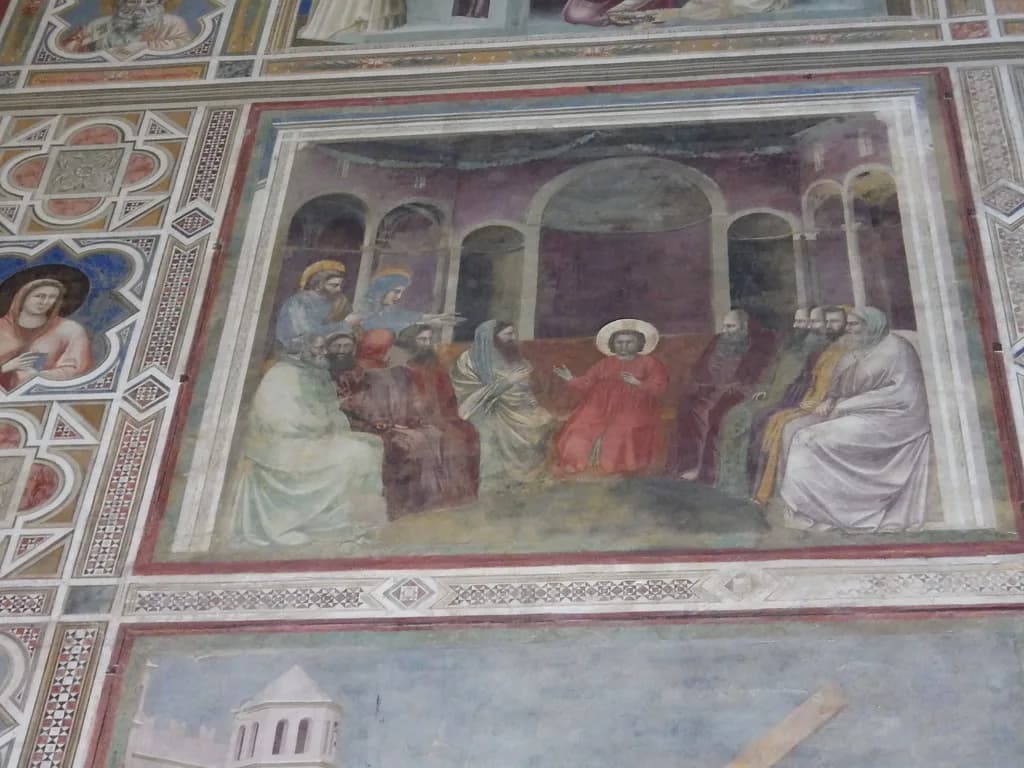
Enrico Scrovegni commissioned the chapel as a private oratory and family funerary monument, and the official site explains that Giotto painted the whole interior in two years, from 1303 to 1305. The programme runs along the nave walls and the triumphal arch with the lives of the Virgin and Christ, includes the Vices and Virtues in the lower register, and culminates in the Last Judgment on the entrance wall. A sculpture group of the Madonna and Child with two angels by Giovanni Pisano remains in the presbytery.
The official site describes the cycle as Giotto's fresco masterpiece and a turning point in Western art, with spatial effects that anticipate Renaissance ideas by a century and an unusual attention to human feeling. In 2021 the frescoes were inscribed on the UNESCO World Heritage list as part of the serial site covering Padua's 14th-century fresco cycles, which also includes seven other locations in the city. That listing makes a single chapel visit the anchor of a wider art day.
Plan for a short, concentrated viewing rather than a long museum wander. The chapel is a single room and the narrative is dense. Picking two or three scenes in advance and reading the sequence from the Vices and Virtues to the Last Judgment gives the painted programme a clear shape without turning the visit into a checklist.
Where the Chapel Sits in Padua
The chapel stands in the Giardini dell'Arena area near the Eremitani museum complex. The official site gives public transport directions from the main railway station and names car parks for drivers arriving from the motorway exits, so you can decide the approach before booking a slot.
Padua's fresco sites cluster within a walkable centre. The Baptistery holds Giusto de Menabuoi's 14th-century cycle, the Oratory of San Giorgio was built on a similar architectural model to the Scrovegni Chapel, and the Palazzo della Ragione anchors Piazza delle Erbe. For quieter corners to balance a ticketed art morning, see this guide to hidden gems in Padua.
If weather shapes your day, keep the chapel as the fixed point and let the rest flex. A timed reservation does not care about rain, but outdoor squares do. Padua on a Rainy Day suggests indoor alternatives that pair well with a morning slot.
Timed Entry: Book Ahead, Same-Day Not Possible
The decisive rule is that same-day reservations are not possible. The official booking information states that you cannot book for the current day, so turning up to buy a ticket is the most common way travellers miss this visit. Choose your date, then a slot, then build the rest of the day around it. Further visitor details appear in Home.
Booking runs well ahead. The operator announced that from midday on 24 September 2026 reservations would open for daytime slots through 10 February 2027, with evening sessions sold separately under the Giotto Sotto le Stelle label. Treat those dates as a snapshot of what was published and check the notices again before committing, since availability moves in blocks.
A third-party guide reports that capacity per slot is small and that peak periods fill first. That is consistent with a controlled environment, but the operator's calendar is the only reliable source for what remains open. If your dates are fixed by flights or a hotel, book as soon as your window opens.
Ticket Collection and Arrival Timing
The operator advises collecting tickets well ahead of the visit time and recommends that groups present themselves at the ticket office at least 45 minutes before the slot. For a 9:00 entry, collection is not possible before 8:30. Build that buffer into your morning, especially if you are arriving by bus or parking a car.
A contact centre handles reservations by phone, operating on weekday and Saturday hours but closed on public holidays; the official site publishes the number. If the online form fails from abroad, the call centre is the fallback rather than the ticket desk on the day. Keep your booking reference accessible offline in case mobile data is patchy.
Visitor reports describe a staged entry with a wait in a climate-controlled antechamber before the chapel doors open, intended to stabilise humidity on clothing and skin. Those accounts are not operator rules, so treat the exact duration as approximate, but expect to wait before entering. Being on time matters more here than at a large museum with continuous admission.
Closures and Booking Windows to Check
The chapel closes each year while the Istituto Centrale del Restauro in Rome carries out checks on the state of the frescoes. The official site has published a closure from 16 to 27 November for this work, which is exactly the kind of notice to verify against your travel dates before fixing anything non-refundable. If you are in Padua in the second half of November, check the current notice first.
Evening openings are sold under a separate label and released on a different schedule from daytime slots, so a search that shows no daytime availability does not mean the chapel is closed to you. Check both. The operator also publishes notices when maintenance affects access, so read the news section rather than relying on a cached booking page.
Inside the Chapel: How to Read the Cycle
The painted programme is best read as two routes rather than one. The first follows the lives of the Virgin and Christ along the nave walls and the triumphal arch; the second starts with the Vices and Virtues in the lower register and finishes with the Last Judgment filling the entrance wall. Knowing that the two paths meet at the exit turns a room of panels into a coherent argument about salvation.
Giotto's innovations here are spatial and emotional at once. The official site notes that the scenes use overlapping figures and architectural settings to suggest depth a century before Renaissance perspective theory, and that the human drama is unusually direct for the period. The vaulted ceiling, painted as a blue starry mantle with roundels of Mary, Christ and the prophets, ties the room together.
Key Scenes and Details Worth Seeking Out
Start with the Meeting at the Golden Gate, where Joachim and Anna embrace at the city gate; the tenderness of that kiss is one of the most cited passages in the cycle and a clear break from stylised convention. In the Massacre of the Innocents, the grief of the mothers is rendered with a bluntness that still lands on modern viewers. Give each a minute rather than photographing the room.
The Vices and Virtues are painted as grisaille figures in the lower register, each with a label, and they reward a slow pass because they frame the moral reading of everything above. Keep an eye out too for the small architecture that stages the scenes: the rooms, porches and walls are Giotto's way of testing how solid space behaves.
Visitor accounts mention that photography inside the chapel is restricted, and that the room is shared with a timed group. Confirm the current rules on site rather than assuming, and bring a small notebook if you want to record details.
Combined Tickets and the Civic Museums
The chapel sits within Padua's civic museum system, and the official site explains that entry to the Museo Eremitani and Palazzo Zuckermann is included in the Scrovegni Chapel ticket, with Monday as the exclusion. That makes a combined art day economical and logical, but plans change, so confirm the exact inclusions when you book.
Because the ticket scope crosses several buildings, plan your slot so the chapel is the anchor and the museums follow or precede it without a rush. The Musei Civici agli Eremitani Visitor Guide: Tickets & Art sets out what the archaeological and medieval collections hold, which helps decide how much time to allow.
Not everything in Padua is bundled. The Palazzo della Ragione has its own admission and closure pattern, and the Baptistery and Oratory of San Giorgio are separate visits even though they belong to the same UNESCO serial site. Budget for those separately and check each site's notice independently.
Etiquette and Mistakes That Cost You the Slot
The biggest mistake is assuming you can add the chapel to an unscheduled afternoon. The operator does not accept same-day bookings, late arrivals jeopardise the slot, and a timed entry cannot be casually rescheduled. Build a margin around the booking, and keep the 45-minute collection advice in mind if you are travelling with a group.
Treat the chapel as a conservation space rather than a photo opportunity. Follow staff instructions about bags, food and phones, and move through when asked so the next timed group can start. Visitor accounts describe the antechamber wait as a way to stabilise conditions for the paintings, even if it feels like a delay.
Check the date twice. The November fresco-check closure, the booking horizon and the distinction between daytime and evening sessions are all moving parts. A quick look at the operator's notices the week before you travel prevents the most avoidable disappointment in Padua.
Extending an Art-Focused Day in Padua
The Scrovegni Chapel is a natural first stop because it is intense and compact, leaving the rest of the day for the wider fresco circuit. Walk south into the old centre and use the self-guided historic-center walk as a spine, slotting the Baptistery and the Oratory around it. For wider planning, see Padua Historic Center Self-Guided Walk.
If you want to stay with religious art, the Abbazia di Santa Giustina in Padua offers a calmer scale and a connection to the city's early Christian history. The Abbazia di Santa Giustina Visitor Guide: History & Art explains what to see without pretending it rivals Giotto.
Finish with a slow evening in Prato della Valle or the market squares, where the day's paintings have room to settle. The Padua Attractions collection covers the other sights in the same UNESCO group, so you can build a second day without repeating Giotto.
Plan Your Visit
Book first, then sightsee. Choose a date outside the autumn fresco-check closure, take a daytime or evening slot, and allow collection time before it. The operator publishes the practical notices; treat any cached booking page as out of date.
Inside, read the cycle as two connected routes and give two or three scenes real attention rather than trying to hold all of it at once. That approach makes a short visit feel generous and gives the rest of Padua's frescoed sites something to answer to. For related planning, see Padua on a Rainy Day.
Frequently Asked Questions
Do I need to book the Scrovegni Chapel in advance?
Yes. Entry is controlled and the operator does not accept reservations for the same day, so book before you travel. Reserve your date and slot through the official site or the published contact centre, and re-check availability if you are travelling in a peak period.
Can I buy Scrovegni Chapel tickets on the same day?
No, same-day reservations are not available. A walk-up attempt is unlikely to work because the booking system controls entry. Plan the chapel as a fixed point around which the rest of the Padua day is arranged.
How early should I arrive for a Scrovegni Chapel visit?
The official site recommends collecting tickets well ahead and advises groups to reach the ticket office at least 45 minutes before the visit; collection does not start before 8:30 for a 9:00 slot. Arrive with that margin, particularly if you are arriving by public transport or parking a car.
Why does the Scrovegni Chapel close in November?
The chapel typically closes for a period in November while the Istituto Centrale del Restauro carries out checks on the frescoes. The operator has published a closure from 16 to 27 November for this purpose, but verify the current notice for your dates before committing.
What is included in the Scrovegni Chapel ticket?
According to the official site, the chapel ticket also covers entry to the Museo Eremitani and Palazzo Zuckermann, with Monday as the exclusion. Other sites such as the Palazzo della Ragione have separate admission. Confirm the exact inclusions and any Monday closures when you book.
Sources
Continue exploring
More guides you'll find useful