Basilica di Sant'Antonio in Padua: What to See and How to Plan
Plan a visit to Padua's Basilica di Sant'Antonio. Learn how to see St Anthony's tomb, the relics chapel and cloisters, and how to check official hours and entry.
On this page
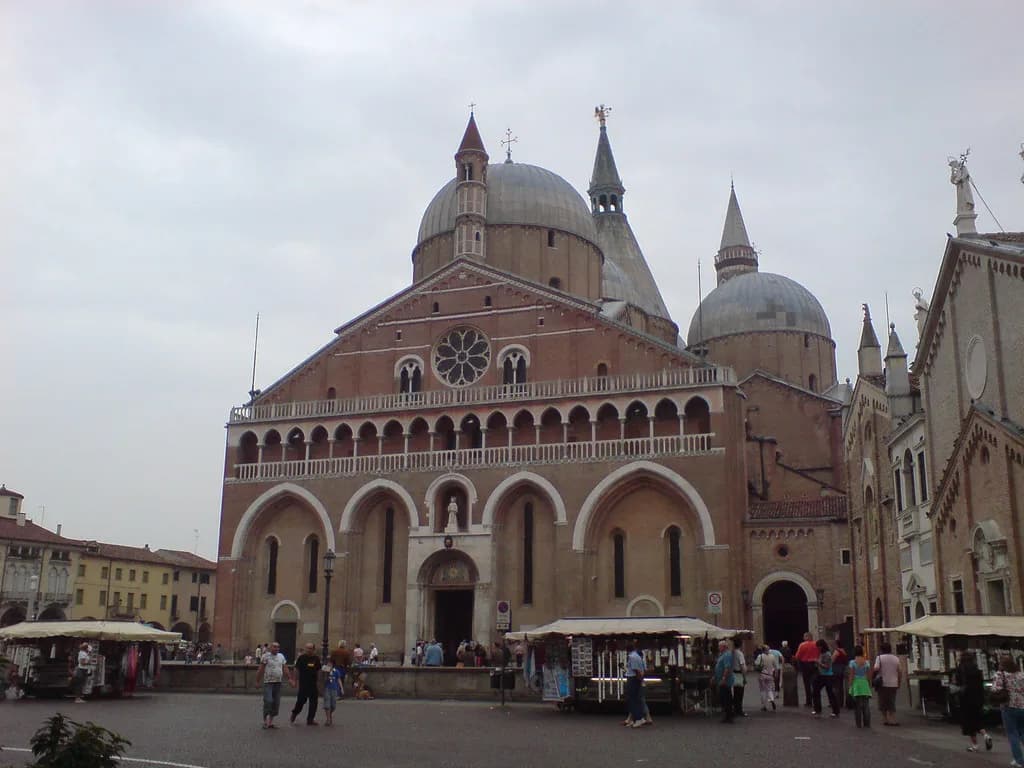
The Basilica di Sant'Antonio is the reason many travellers step off the train in Padua. Begun in 1232, a year after the saint's death, it holds his tomb and has drawn pilgrims ever since; its eastern domes and Gothic brickwork sit at the edge of Piazza del Santo.
This is a working shrine rather than a museum, so plan around devotion as well as art. The core sights inside — the tomb chapel, the relics chapel, several frescoed side chapels and the attached cloisters — fit comfortably into a half day, and the wider city rewards a slower stay.
The single most useful thing to know before you go is that published timetables and entry arrangements change. The basilica's own website is the place to confirm current access, and this guide deliberately avoids quoting hours or prices that may already be out of date.
Orientation: Piazza del Santo and the Surroundings
Il Santo faces Piazza del Santo, a broad square lined with porticoes and busy with pilgrims, students and Padovani going about their day. Arriving on foot from the historic centre, you approach through these arcades, which give the first view of the church a theatrical quality.
The basilica occupies a handy position between two of Padua's best-known open spaces. South-east lies Prato della Valle, one of Europe's largest squares and home to the Abbey of Santa Giustina; north-west, toward the old centre, the streets lead on to the university quarter.
Trams run along the edge of the square to the Santo stop, which makes the basilica an easy first or last stop of a day in the city. If you are combining several sights, the University of Padua publishes details of its own ticketed heritage sites, including Palazzo Bo and the Botanical Garden, which are separate from the basilica.
Tickets and Entry: What the Sources Confirm
Practical guides to the basilica describe it as open to visitors and free to enter, but the safest approach is to treat any specific claim as something to verify. The church is a place of worship first, and access to the building can be affected by Masses, feast days and restoration work.
Separate from the church itself is the Museo Antoniano, the museum attached to the complex. Its opening arrangements and any admission charge are not settled by general travel descriptions, so check the basilica's official website before you plan a visit around it.
If you are travelling on a tight budget, think of the basilica as one free anchor of a cheap day rather than a ticketed attraction. Pair it with public squares, porticoed streets and the exterior sights of the centre, and save paid interiors for the places whose current terms you have confirmed.
Opening Hours and the Best Time to Visit
Opening hours for the basilica are not fixed year-round in the way a museum's are, because the building serves a parish and a pilgrimage. Rather than relying on a blog or an old listing, check the official site in the week of your visit and again on the morning itself.
Crowds follow the pilgrimage calendar rather than the tour-bus calendar. The feast of St Anthony on 13 June brings large numbers of worshippers, and one source notes that the basilica attracts many pilgrims on that day, so anyone wanting a calm look at the art should avoid it or expect to share the space.
For general weather and seasonal crowd patterns across the city, a separate guide can help you choose a month. Early mornings and the quieter hours around midday are commonly calmer, but the basilica's own schedule should always take precedence over guesswork.
Dress Code and Visiting Respectfully
As at most Italian churches, modest dress is expected: cover shoulders and knees, and avoid beachwear. This is a general convention rather than a published rule for this basilica, so treat it as a sensible default rather than a quoted regulation.
Inside, keep voices low, step aside from processions and do not enter roped-off areas. Photography and filming rules are not established by the sources consulted here, so look for signage at the entrance or ask a steward before using a camera.
Because Il Santo is an active pilgrimage site, visitors and worshippers share the same spaces. The most considerate approach is to let people praying at the tomb pass first, and to save detailed looking at the art for the chapels where there is room to stand aside.
Inside: St Anthony's Tomb and the Lombardo Reliefs
The heart of the visit is the Cappella del Santo in the left transept, where pilgrims queue to approach the tomb of St Anthony. The chapel is a light-filled Renaissance space lined with nine relief panels depicting scenes from the saint's life, attributed to the Padua-born Lombardo brothers and completed around 1510.
The tomb itself is covered with requests and thanks left by pilgrims seeking the saint's intercession, a detail that changes how you read the chapel. Give the queue time and space, and return later if you want a closer look at the relief carvings.
The Relics Chapel and the Ambulatory
Behind the high altar, a broad ambulatory is punctuated by nine radiating chapels. At its centre is the Cappella delle Reliquie, the Relics Chapel, where the relics of St Anthony are kept. Walk the curve slowly; the architecture is designed to draw you toward this point.
This part of the church is often busy with worshippers, so treat it as a place of devotion rather than a gallery. If a service is under way, wait or move on to the side chapels and come back when the space has cleared.
Art Worth Slowing Down For
Several works reward a deliberate search. In the frescoed Cappella di San Giacomo, look for Altichiero da Zevio's lifelike crucifix of the 1360s. In the sacristy, a 1528 fresco of St Anthony preaching to fish, by a follower of Girolamo Tessari, is an unusual and memorable image.
Donatello's 15th-century reliefs on the high altar are among the basilica's treasures, but access can be restricted. Ask the guards whether the area is open when you visit, and be prepared to accept that it may not be. Further visitor details appear in Basilica di Sant’Antonio | Padua, Italy | Attractions - Lonely Planet.
The Cloisters and the Chiostro della Magnolia
Through the south door of the basilica you reach the attached monastery and its five cloisters. The oldest, the 13th-century Chiostro della Magnolia, takes its name from the magnolia tree at its centre and is notably peaceful after the crowds of the church.
The complex also holds a large gift shop selling icons and St Anthony souvenirs to pilgrims, useful if you want a small keepsake or a gift. Check signs for which parts of the monastery are open, as not every area may be accessible at all times.
A Suggested Visit Shape
Allow around two hours for the basilica and cloisters if you want to read the art and sit with the atmosphere. This is a suggested duration, not an official figure; guided groups and feast days will stretch it, while a quick devotional stop may take far less.
A practical order is to start with the nave to orient yourself, then the Cappella del Santo before the queue grows, followed by the relics chapel and the side chapels. Finish in the cloisters, where the pace drops and you can end the visit calmly.
Combining the Basilica With Nearby Padua
The basilica sits within easy walking distance of several other worthwhile stops. The Abbey of Santa Giustina, at the edge of Prato della Valle, is a vast Benedictine complex with a tomb of St Luke; the city's tourism office lists it as open daily with free entry, though you should confirm times before relying on them.
A short walk from the Santo brings you to the Loggia and Odeo Cornaro, a Renaissance ensemble built from 1524 for the writer Alvise Cornaro. The city tourism office publishes seasonal opening hours and modest admission charges, and describes it as open on weekend afternoons; check the current details before setting out.
Beyond these, Padua is known for its fresco cycles, most famously Giotto's in the Scrovegni Chapel. That visit is separately ticketed with timed entry and limited places, so book it through the official channels rather than assuming you can walk in.
If you have a full day, the city's less-visited corners make a good counterweight to the basilica's crowds. Our guide to the hidden gems in Padua covers churches, cloisters and quiet streets that reward a slower wander. For wider planning, see Padua Attractions: Visitor Guides to 12 Sights.
A Short History of Il Santo
St Anthony died in Padua in 1231, and construction of the basilica began the following year to accommodate the pilgrims who came to his tomb. The building was completed in the early 14th century, though it has been expanded and enriched over the centuries.
Its architecture mixes Byzantine, Romanesque and Gothic elements, with rising eastern domes above a Gothic brick structure. One source gives 1310 as the completion date, but accounts vary, so treat precise dates as approximate.
What to Check Before You Go
Before travelling, confirm the basilica's opening hours and any access restrictions on its official site, as these can change with the liturgical calendar. Check whether the Museo Antoniano is open if you plan to include it, and note that it is a separate visit from the church.
If you are visiting around 13 June or during major religious seasons, look for notices about crowds and any changes to normal visiting. For nearby sites such as the Abbey of Santa Giustina or the Loggia and Odeo Cornaro, check the city tourism pages for current hours and admission.
Plan Your Visit
The Basilica di Sant'Antonio is both a masterpiece of art and architecture and a living place of pilgrimage. Go with a rough route in mind — tomb chapel, relics chapel, side chapels, cloisters — but leave room for the queues and quiet that make the visit what it is.
Use the official website to confirm hours and entry, and pair the basilica with the squares and hidden corners of Padua for a day that feels unhurried. The city rewards those who look beyond the obvious stops.
Frequently Asked Questions
Do you need tickets for the Basilica di Sant'Antonio?
The basilica is a working church, and general visitor information describes it as free to enter. Separate areas such as the Museo Antoniano may be ticketed, so check the official site before relying on any specific arrangement.
How long does a visit to the Basilica di Sant'Antonio take?
Allow around two hours for the church and cloisters if you want to see the main chapels and art at a relaxed pace. This is a suggested duration, not an official one; busy days and special services will change it.
What are the opening hours of the Basilica di Sant'Antonio?
Opening hours can change with the liturgical calendar and are not fixed year-round. Check the basilica's official website in the week of your visit rather than relying on old listings.
What should you wear when visiting the basilica?
Modest dress is the general expectation at Italian churches: cover shoulders and knees, and avoid beachwear. There is no published set of specific rules for this basilica, so dress respectfully and follow any signage at the entrance.
Can you visit St Anthony's tomb?
Yes, the tomb is in the Cappella del Santo, in the left transept. Pilgrims queue to approach it, so be prepared to wait and to give space to those praying.
What is there to see near the Basilica di Sant'Antonio?
The Abbey of Santa Giustina and Prato della Valle are within walking distance, as are the Loggia and Odeo Cornaro. Each has its own opening arrangements, which you should confirm with the city's tourism office before visiting.
Sources
- Basilica di Sant’Antonio | Padua, Italy | Attractions - Lonely Planet
- Saint Anthony’s Basilica and Pilgrimages – Padoue
- Basilica di Sant'Antonio
- Official event website
- Abbazia Benedettina of Santa Giustina
- Tickets for the Scrovegni Chapel: Which One to Choose and How to Book
- Visiting the University | Università di Padova
- Loggia and Odeo Cornaro
Continue exploring
More guides you'll find useful