Santa Maria Forisportam Lucca: Visitor Guide to Santa Maria Bianca
Plan a look inside Lucca's Santa Maria Forisportam, the white Romanesque church known as Santa Maria Bianca, with Guercino paintings and a solar meridian.
On this page
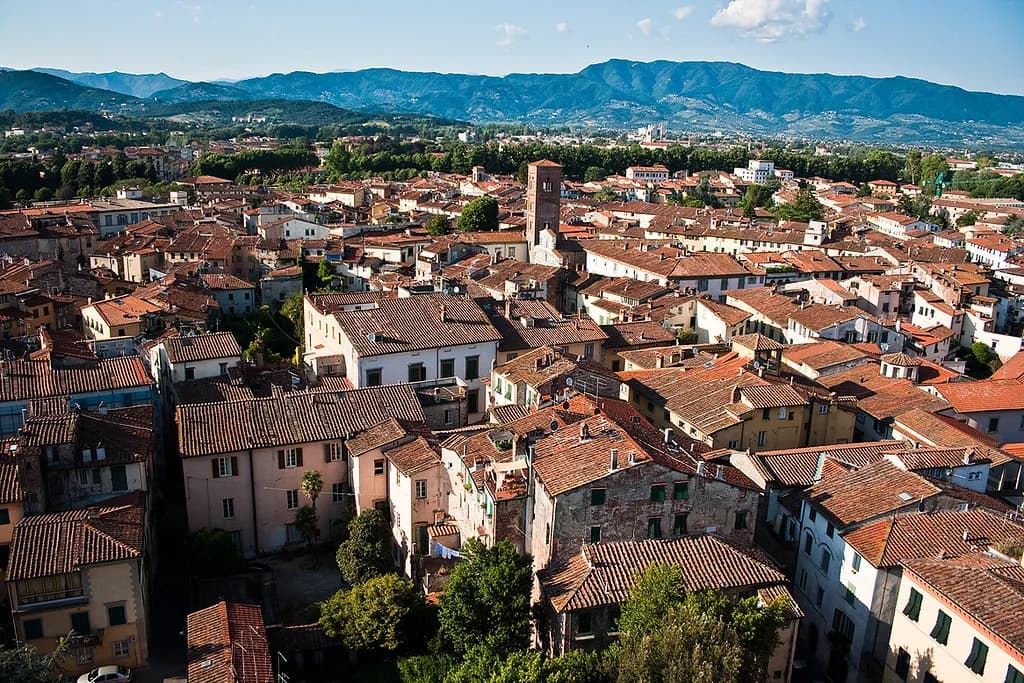
Santa Maria Forisportam sits in the heart of walled Lucca, yet its name insists it stands outside a gate. That contradiction is the best entry point to the building: a church founded beyond the old Roman defenses, then swallowed by the city as Lucca grew. Expect a working church rather than a ticketed monument, with a plain white facade and a modest interior.
Allow roughly twenty to thirty minutes as a personal suggestion, not an official figure, and add more time if you want to study the paintings or wait for the sunlight to reach the meridian line. Because the organiser of any given visit is the parish rather than a museum, confirm access locally before making it the centrepiece of a day; the city tourism office is the sensible first check.
Why 'Foris Portam' Means Outside the Gate
Archival documents cited in local travel writing record a church on this site as early as 768, when it and a small hospice stood just beyond Lucca's Roman-era defenses near the eastern gate. That position explains the Latin phrase foris portam, literally outside the gate. When the city expanded in the twelfth century, new medieval walls were drawn around the growing settlement and the church found itself comfortably inside them.
Reading the name correctly matters for orientation. Visitors who expect a suburban church on the edge of town should instead look for a building deep within the historic centre, close to the everyday street grid rather than the ramparts. The same sources note that it carries the popular name Santa Maria Bianca, a reference to the pale stone that still defines its facade.
If you are assembling a short church circuit, treat this one as a compact stop that rewards attention rather than a broad survey. It pairs naturally with other Romanesque interiors nearby, and a wider list of options is kept in the Lucca attractions hub. Plan the sequence by neighbourhood so you are not crossing the centre repeatedly on foot.
The White Limestone Facade and Blind Arcades
The exterior is a classic example of the Luccan Romanesque style, with a facade built largely of white limestone and animated by blind arcades and columns. Pisan Romanesque influence is visible in the arcading, which gives the flat surface a rhythmic, almost layered quality in raking light. SmartGuide's description also notes that the church has a rectangular plan without a transept, slightly unusual for a Romanesque building.
Look for the contrast between pale stone and later brickwork. After the church passed to the Canonici Regolari of San Salvatore of Bologna in 1512, restoration work partly funded by the Lucchese benefactor Giovanni Guinigi raised the central nave and transept in brick. Those brick elevations remain visible above the older white masonry, so the facade reads as a record of change rather than a single design moment.
The bell tower was completed around 1619, and cruise-oriented listings describe the church as retaining a somewhat unfinished look after later restorations. That is a useful expectation to carry: this is not a polished showcase but an accumulated building. Photograph the facade from the piazza in soft morning or late afternoon light, when the arcades cast readable shadows.
Inside: Guercino Paintings and the Chiara Matraini Chapel
The interior is calm and relatively free of heavy Baroque ornament, which makes the artworks easier to pick out. Two seventeenth-century paintings are attributed to Giovanni Francesco Barbieri, known as Guercino: a Saint Lucy dated 1642 and an Assumption with Saints Francis and Alexander dated 1643. Both hang in a church that visitors often pass through quickly, so give them a few minutes each.
The church also preserves a chapel associated with Chiara Matraini, a Renaissance poet from Lucca, whose burial is recorded there. That detail connects the building to the city's literary history rather than only its religious and architectural record. Carry the names with you if you want to read the labels and side chapels with purpose.
Because these attributions and dates come from secondary accounts, treat them as the received description rather than something to verify on the spot. What you can confirm is what you see: canvas, chapel, stone and inscription. A short written note on your phone before entering helps you avoid consulting a screen in a space used for prayer.
The Camera Oscura Meridian and Lucca's Clocks
The feature most likely to surprise visitors is a camera oscura sundial. A small aperture admits a single beam of sunlight that lands on an engraved hour line set into the pavement before the main altar. When the beam crosses that line, the moment of local solar midday is marked.
Historically, accounts describe this solar meridian as an instrument for regulating the city's clocks, which gives the floor line a practical role beyond ornament. Whether the beam is visible during your visit depends on the season, the weather and the sun's angle, so do not expect a performance. If the church is dim or overcast skies intervene, look at the engraved line itself and the geometry of the aperture.
Piazza Santa Maria Bianca and the Severed Column
Outside, the square is known as Piazza Santa Maria Bianca and locally nicknamed Piazza della Colonna Mozza, the square of the severed column. The nickname comes from the remains of a Roman granite column standing here, which sources say marked the finish for knights in medieval palio races. It is an easy detail to walk past, so look down and around before leaving the square.
Treat the piazza as a pause rather than a destination in itself. The church front, the column remnant and the surrounding streets form a coherent ten-minute look, and the square's small scale makes it a reasonable place to reorganise a walking route. Note that at least one commercial tour page places the church just outside the walls, a contradiction to the documented history of Lucca's medieval expansion; trust the street pattern in front of you.
Visiting a Working Church: Practical Expectations
Santa Maria Forisportam functions as a church, not a museum with a ticket desk, and sources consulted here do not publish verified opening hours, Mass times or an entrance fee for it. Do not build a day around the assumption that the doors are open at a particular hour. Instead, check the parish notice board on the door and the city's tourism pages before setting out, and keep the visit flexible.
Etiquette follows from that status. Dress modestly, keep voices low, avoid flash photography during services, and step out if a liturgy begins. If a guardian or volunteer is present, ask before wandering into side chapels; if the church is closed, accept it and return another time rather than treating the closure as an inconvenience.
Budget for uncertainty rather than for a ticket. Since no reliable source in this guide confirms a price or a booking system, plan your spending around other Lucca stops and treat this visit as an unbooked pause. The municipality's site is the place to confirm any city-wide notices that might affect access.
Nearby Stops to Pair With the Church
A short walk brings you to other Romanesque interiors that reward comparison, including the Church of San Frediano in Lucca, whose mosaic facade and different plan make the white arcading here easier to read. Pairing two churches rather than racing through five keeps the attention on detail; our Church of San Frediano Lucca visitor guide covers what to look for there.
If you want a longer loop, head north-east towards the Guinigi Tower (Torre Guinigi) for a rooftop view over the rooftops you have been walking beneath. The tower involves a climb, so save it for a dry slot rather than squeezing it between two church visits. Our Guinigi Tower (Torre Guinigi) visitor guide explains the layout and the rooftop garden.
For gardens and greener pauses, the Orto Botanico di Lucca, founded in 1820, offers a change of register from stone interiors. The garden's own site lists contact details and seasonal information, which is the right place to confirm whether it fits your day.
Palazzo Pfanner combines a Baroque palace with an eighteenth-century garden attributed to Filippo Juvarra, and its official pages give the current visiting arrangements. It makes a sensible complement if you are already interested in how Lucca's families shaped the city's interiors and green spaces.
A Sensible Half-Day Route Through Central Lucca
Start with Santa Maria Forisportam while the streets are still calm, then walk to San Michele in Foro, whose marble facade fills its piazza and offers a natural next comparison. From there, continue to Piazza dell'Anfiteatro, built on the footprint of a Roman amphitheatre, for a coffee and a look at the elliptical square before looping back.
Finish on the walls if the weather holds. Lucca City Walls form a broad tree-lined circuit that is used as a pedestrian park and hosts cultural events at different times of year, so check what is happening before you plan a quiet stroll. Walking a section rather than the full ring keeps the half-day realistic.
If your interests run to overlooked corners, extend the day with the city's smaller squares and quieter churches rather than adding another major monument. Our guide to hidden gems in Lucca suggests alternatives that suit a slower pace, and it is a useful counterweight to a checklist of headline sights.
Plan Your Visit
Santa Maria Forisportam rewards a short, attentive stop: read the name, compare the white limestone with the later brick, find the Guercino canvases, and look for the meridian line on the floor. Step into the piazza afterwards and locate the severed column that gave the square its nickname.
Because confirmed opening hours and entry arrangements are not published in the sources used here, check the parish notice and the city tourism office before you go, and keep the visit flexible within a walking route. That approach protects you from a closed door and leaves room for the details most visitors miss.
Frequently Asked Questions
Why is the church called Foris Portam if it is inside Lucca's walls?
The name is historical. A church is documented here as early as 768, when the site lay outside Lucca's Roman defenses; when the city expanded in the twelfth century and new medieval walls were built, the church was enclosed within them. The Latin phrase foris portam, meaning outside the gate, stuck even after the geography changed.
What can I see inside Santa Maria Forisportam?
Expect a calm interior with two seventeenth-century paintings attributed to Guercino, a Saint Lucy and an Assumption with Saints Francis and Alexander, plus a chapel associated with the Lucchese Renaissance poet Chiara Matraini. The camera oscura meridian line is set into the pavement before the main altar. Display and access can change, so treat the list as a guide to what to look for.
What is the camera oscura sundial in the church?
A small aperture in the wall lets a single beam of sunlight fall onto an engraved hour line on the floor. When the beam reaches the line, it indicates local solar midday. Historical accounts describe the instrument as a way of regulating the city's clocks, which is why the floor marking is more than decoration.
Why is the square called Piazza della Colonna Mozza?
The nickname means square of the severed column, after the surviving fragment of a Roman granite column in the piazza beside the church. Sources say the column once served as the finish point for knights in medieval palio races. The square is also known simply as Piazza Santa Maria Bianca.
Is Santa Maria Forisportam worth visiting in Lucca?
It suits travellers who enjoy Romanesque architecture, quiet interiors and specific details rather than large set-piece monuments. The combination of the white limestone facade, later brickwork, the Guercino paintings and the meridian line gives a short visit real substance. Check access before you go, since this is a working church and published opening information is limited.
Do I need a ticket or a reservation?
The sources consulted here do not publish a verified entrance fee or a booking system for this church, so do not assume either. Check the parish notice at the door and the city tourism pages before setting out, and keep the visit flexible within your walking route.
Sources
- Santa Maria Foris Portam: A Lucca Landmark - Lucca, Italy | Ciceru - Travel Stories & Adventure Guides
- Audio guide for Church of Santa Maria Forisportam, Lucca | SmartGuide
- The Church of Santa Maria Forisportam | Escape Tours
- Churches in Lucca to visit on a cruise to Livorno Port in 2023
- Official event website
- Official event website
- Orto Botanico di Lucca, Il giardino più prezioso di Lucca, fondato nel 1820
- Palazzo Pfanner - Lucca
Continue exploring
More guides you'll find useful