Lucca City Walls Guide: Walking & Cycling the Mura di Lucca
Walking and cycling Lucca's Renaissance walls: where to get on, how long the 4.2 km loop takes, which bastions to linger on, and when the light is best.
On this page
Lucca is defined less by any single building than by the ring around them. The Renaissance Mura form a loop of roughly four kilometres that you walk or cycle on top of, above the rooftops and the streets, rather than merely admire from below. Because it is a public promenade rather than a ticketed monument, it can be the first and last thing you do in the city on the same day.
This guide covers the practical layer most short descriptions skip: where you actually get onto the walls, how a full loop differs on foot and by bicycle, which stretches reward a limited afternoon, and how the fortification's history explains its park-like present. The free promenade and the paid sights nearby are treated separately, so you do not budget for the wrong thing. For the wider set of sights around it, the Lucca Attractions hub puts each monument in context.
Why the Mura Are Lucca's Defining Monument
The walls today read as a tree-lined park in the sky, but their form is military. According to one detailed guide to the Mura, the circuit runs 4.2 kilometres around the entire historic centre, wide enough at the top for pedestrians and cyclists to share. The promenade is lined with a double row of plane trees that shade it in summer and turn gold in autumn.
Two figures explain the shape: eleven projecting bastions and a base up to thirty metres thick. That low, heavy profile was engineered against artillery rather than arrows, which is why the ramparts feel like a raised embankment instead of a castle wall. The same guide describes the promenade as free and accessible at all hours, but because access arrangements can change, check current visitor information from the city's tourism office before you build a plan around an early-morning or late-night visit.
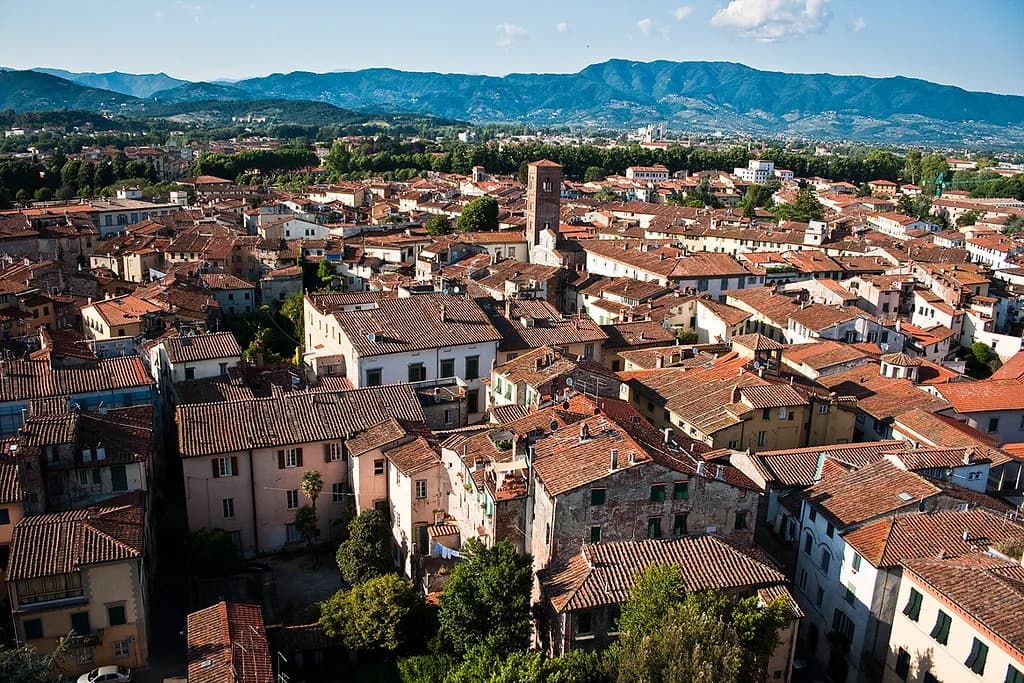
For most visitors the walls are simply the best orientation tool in Lucca. From the top you can look inward over tiled roofs and bell towers, or outward toward the Apuan Alps and the hills of the Lucchesia. Doing a first lap soon after arrival makes every later street-level walk easier to place.
A Short History of the Mura
The current fortification is usually dated to a long construction campaign, with work beginning in 1504 and finishing in 1645 according to the same published guide, a span of about 140 years. The same source says it replaced earlier medieval defences, part of a layered history that also reaches back to Roman Lucca. Tuscany's official tourism site describes the walls differently, placing construction between the mid-1600s and early 1800s, so treat precise dates as a matter of which account you follow rather than a settled single line.
The most striking historical point is that the walls were reportedly never tested in battle. The threat they were built for did not materialise, and the city was absorbed into the Duchy of Tuscany without a shot fired, according to that guide. That is one explanation for their unusually intact state: a fortification with no siege damage to repair became, in time, a public promenade almost by default.
Today there are six main city gates, and the bastion posterns known as sortite, once direct routes to the moat for soldiers, have largely reopened as pedestrian ways. That detail matters for planning: the gates and the posterns are not interchangeable entry points, and the distinction is explained further below.
How to Get Up on the Walls
The most popular entry points are Porta Santa Maria in the north, near the main tourist office, and Porta San Pietro in the south. Both have ramps suitable for bicycles and pushchairs, according to the published guide, which is why they are the sensible choice if you are riding or pushing wheels. Arriving at a gate without a ramp means carrying the bike or turning around, so pick your gate before you set off.
The bastion posterns, or sortite, were originally direct accesses to the moat for soldiers and are now mostly reopened as pedestrian walkways. That makes them convenient for a quick way up on foot from the streets below, but they are historically pedestrian passages rather than designed cycle ramps. On a bike, head for one of the main gates instead.
For a rough orientation, the tourist office near Porta Santa Maria is a logical first stop if you want a city map and current local information before committing to a route. The city's own portal is the other place to check for any temporary changes affecting access or events on the ramparts.
Walking the Full Loop
A complete circuit of 4.2 kilometres takes roughly 45 minutes to an hour at a relaxed walking pace, according to the published guide. Most people take considerably longer, because the views over the rooftops and the benches at various points invite stops. Treat the hour as a minimum for a brisk walk and two hours as a realistic half-day if you pause for photographs and coffee.
The surface is flat and well maintained, and the double row of plane trees makes midday walking in summer tolerable, though early morning is more pleasant. Where the trees thin out, the outward views open toward the Apuan Alps and the hills of the Lucchesia, which is the reward for the stretches without shade.
Because the loop is circular, you can leave it wherever it suits you and step back into the historic centre. That flexibility is worth remembering if you are combining the walk with a timed visit elsewhere, such as the Guinigi Tower (Torre Guinigi) visitor guide, where climbing is best done in cooler hours.
Cycling the Walls
Cycling is arguably the ideal way to use the ramparts: the surface is flat, car-free and continuous, and a single relaxed lap takes around 20 to 25 minutes at a gentle pace. Rental shops are clustered near the main gates, with the highest concentration around Porta Santa Maria in the north and Porta San Pietro in the south, according to the published guide. Compare a few shops before committing, because bike quality varies.
Rental rates are not published in a form you should rely on here, so ask at the counter rather than budgeting from older figures you may have read. The flat, traffic-free circuit also makes the walls one of the safer places in Tuscany to ride with children, and tandems and children's bikes are widely available. For more routes beyond the loop, the Lucca cycling guide covers the ground outside the walls.
Early morning or late afternoon are the better cycling windows, when the light is softer and the promenade less busy. A single lap is short enough that most riders do two or three with stops, which is an easier sell for companions who are not keen cyclists.
Which Stretch to Pick If Time Is Short
If you only have an afternoon, skip the idea of a full circuit. Take in the northern stretch for sunset, when the light fades over the rooftops with the mountains as a backdrop, according to the published guide. Enter at Porta Santa Maria with a bicycle or pushchair and walk or ride as far as you like before turning back.
Otherwise pick a bastion as your destination rather than the whole loop. Baluardo San Regolo on the south side gives particularly good views toward the surrounding hills, and Baluardo San Donato near Porta San Donato has a small garden that functions as a rest stop. Both are reasons to walk a leg rather than commit to the full four kilometres.
In summer, note that parts of the walls and city turn into open-air concert venues during the Lucca Summer Festival, which changes the atmosphere and the crowd pattern. If your visit coincides with an event, plan the walk either side of it rather than expecting an empty promenade.
Beyond the Promenade: The Underground Layer
Beneath the ramparts are cool, quiet passages that tell the story of sixteenth-century engineering: tunnels, casemates, cannon chambers and secret passages behind the brick galleries of some bastions. These are not open to casual wanderers, and you should not expect to duck into them from the promenade above.
Access to the underground areas comes through a guided itinerary operated by the private tour provider Turislucca, which descends into areas normally closed to the public. The same source notes that some bastion interiors were restored through conservation work involving the Municipality of Lucca and the Fondazione Cassa di Risparmio di Lucca.
Treat the underground as a separate booking decision with its own schedule, rather than an extension of your wall walk. If it matters to you, confirm operating days, meeting point and price directly with the operator before you travel, since these details are not stable enough to plan from a secondary article. For above-ground sights with fixed visitor information, keep the Lucca Attractions hub handy.
Seasonal Timing and Crowd Patterns
Spring, roughly April and May, and autumn, October and November, are the most rewarding seasons on the walls, when the plane trees are bright green and then golden. Summer shade makes midday walking possible but early morning is far more pleasant, and weekday mornings are significantly quieter than weekend afternoons in the tourist season.
Winter is quiet and atmospheric, sometimes frosted, with clear views toward the Apuan Alps, so the walls work as a cold-weather outing as long as you dress for open ground. Whatever the season, build in a plan B for rain, because the promenade offers little shelter once you are above street level.
Events also reshape timing. The city's event calendar lists periods such as Lucca Comics & Games, which the cave operator notes stages on the walls, and the half marathon starts right on them. Check the calendar for your dates so a promenade stroll does not collide with a crowd surge.
Where the Walls Fit a Wider Lucca Itinerary
Inside the walls, the obvious companion sights are close together. Piazza dell'Anfiteatro follows the oval of a second-century Roman amphitheatre, with buildings on the ring of the former arena and the square now filled with cafes and shops. It makes a natural stop on the way down from the eastern stretch of the walls.
The Orto Botanico, founded in 1820, occupies a quiet corner of the historic centre and is best timed to its published visiting hours, which you should check on the garden's own site rather than assume. Spring is when its camellias, wild peonies and handkerchief tree draw the most attention, one local guide notes.
Palazzo Pfanner sits between the walls and the medieval streets, with a baroque garden attributed to Filippo Juvarra and a museum inside. The garden's own site gives seasonal opening information and ticket details, so check there before planning a timed entry.
If you want to go beyond the obvious, the hidden gems in Lucca guide picks out quieter corners and overlooked churches that reward a slower second day. The Puccini Museum Lucca visitor guide is the counterpart for anyone planning a music-focused stop near Piazza San Michele.
Practical Checklist for the Promenade
Bring water, sun protection and something for rain, because the promenade is exposed once you are up there. Dogs are allowed on a lead according to the published guide, and ramps at the main gates make pushchairs and wheelchairs workable there, but do not assume step-free access at every entry point, especially the bastion posterns.
The walls are free to access, so there is nothing to reserve in advance, but bear in mind that the free promenade is not the same as the paid sights around it. Churches, gardens, towers and palaces have their own ticketing and hours, and none of those are included in the walk itself.
For anything time-sensitive, including temporary closures, event setups and the current guided underground schedule, verify with the tourist office or the city. Printed maps and local advice at Porta Santa Maria are the quickest fix if your plan changes on arrival.
Plan Your Visit
The Mura work best not as a single sight but as a frame for the whole city: an elevated loop you return to between churches, gardens and squares. Do one full lap early to orient yourself, then use short sections for sunset, a coffee stop or a breather between ticking off the historic centre.
If you are travelling with limited time, pick a gate with a ramp, choose one bastion as a destination and let the rest of the circuit wait. If you have a day, walk one half and cycle the other, and treat the underground passages as separate guided experiences rather than part of the loop.
Frequently Asked Questions
How long does it take to walk the city walls in Lucca?
A complete circuit of roughly 4.2 kilometres takes about 45 minutes to an hour at a relaxed pace, according to published guides. Most visitors take longer because of the views, photo stops and benches along the way. A bicycle lap takes around 20 to 25 minutes at a gentle pace, and you can leave the walls at any gate on the way round.
Is it free to walk the walls of Lucca?
Yes, the promenade on top of the walls is a free public park rather than a ticketed monument. There are no admissions to buy for the walls themselves, and no guided tour is required to get up there. Paid sights inside the city, such as gardens, palaces and towers, are separate and have their own tickets.
Where can you rent bikes to cycle the Lucca walls?
Rental shops cluster around the main gates, with the highest concentration around Porta Santa Maria in the north and Porta San Pietro in the south. Both gates have ramps suitable for bicycles and pushchairs. Bike availability and rates vary, so check quality and current prices at the counter rather than planning from older figures.
What is the best time of day to walk the Lucca walls?
Early morning before the streets fill up gives the quietest walk and good light, while sunset on the northern stretch is particularly beautiful, with views over rooftops toward the Apuan Alps. In summer, midday is hot but workable under the plane trees' shade. Weekday mornings are significantly quieter than weekend afternoons in the tourist season.
How old are the Lucca city walls?
Most accounts place construction of the current Renaissance walls in a long campaign spanning much of the sixteenth and early seventeenth centuries, with work starting in 1504 and finishing in 1645 according to one published guide. Tuscany's official tourism site instead describes a period from the mid-1600s to the early 1800s. Treat exact dates as a matter of which historical account you follow, and ask at the tourist office if precision matters to you.
Can you walk the walls with a pushchair or wheelchair?
Ramps at the main gates, including Porta Santa Maria and Porta San Pietro, are documented and make wheeled access workable, and the surface on top is flat and well maintained. Do not assume that every entry point is step-free, however, since the bastion posterns are historically pedestrian passages. Ask the tourist office about current conditions if you rely on specific access arrangements.
Are there tunnels under the walls of Lucca you can visit?
There are genuine underground passages, casemates and cannon chambers inside some bastions, but they are not open to casual visitors from the promenade. A guided itinerary operated by the private tour provider Turislucca descends into areas normally closed to the public. Confirm operating days, meeting point and price directly with the operator, since these details are not stable enough to plan from third-party articles.
Sources
- Beneath the Walls of Lucca and Inside the Grotta del Vento
- Lucca City Walls: The Complete Guide to Walking and Cycling the Mura | Emilia Delizia
- Official event website
- Official event website
- Historic walls in Lucca
- Orto Botanico di Lucca, Il giardino più prezioso di Lucca, fondato nel 1820
- SPRING TREASURES: DISCOVER LUCCA’S BOTANICAL GARDEN IN FULL BLOOM - Paola Moschini
- Palazzo Pfanner - Lucca
- Tourist Attractions - Palazzo Pfanner - Via degli Asili, 33, LUCCA, ,
- Squares - Piazza Anfiteatro (Amphitheatre Square in Lucca) - Piazza dell'Anfiteatro, Lucca, ,
Continue exploring
More guides you'll find useful