Puccini Museum Lucca: A Guide to the Composer's Birthplace
Visit the Puccini Museum in Lucca's Casa Puccini: the exhibition route, the collection, accessibility supports, the free app and nearby Puccini sites.
On this page
The Puccini Museum in Lucca occupies the Corte San Lorenzo house where Giacomo Puccini was born in 1858, while the ticket office is listed on Piazza Cittadella, so the entrance and the ticket desk are not the same point. The museum also lists an audioguide, a tablet and a video in Italian Sign Language among its visitor supports. Schedules change through the year, so match the museum's latest dated notice to your travel dates before setting out.
A suggested half-day is realistic: one focused pass through the house, the nearby statue on Piazza Cittadella, a coffee at Caffè Di Simo and a short stretch of the walls. That is editorial advice, not an official timing. The sections below separate the Casa natale in Lucca from the separate Villino at Viareggio, and they flag where you should check directly rather than rely on older blogs.
What the Puccini Museum is and where it sits
The museum describes the birth house as the heart of a broader complex that also takes in the Villino at Viareggio, the collection and an online archive. The website presents these as related places, but they are not all in Lucca. Plan the Corte San Lorenzo house as your Lucca visit and treat Viareggio as its own outing. Further visitor details appear in Home - Puccini Museum.
A travel guide to Puccini's Lucca notes that the birthplace sits at number 9 of Corte San Lorenzo, a few steps from Piazza San Michele. That piazza is the simplest orientation point in the compact streets behind it.
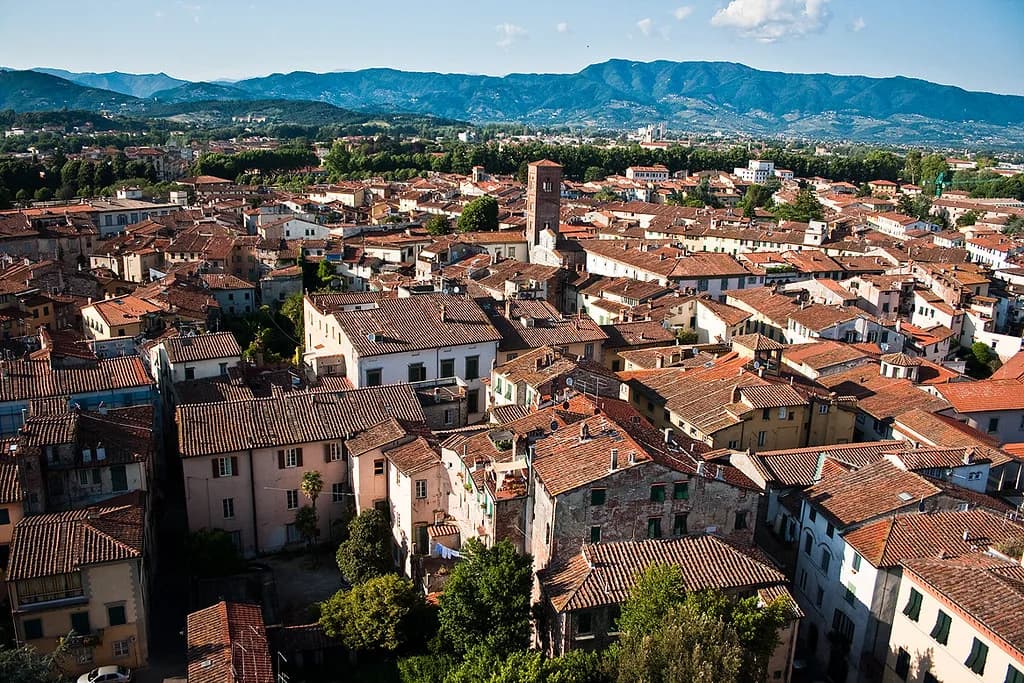
For the wider city context, the Lucca Attractions hub gathers the sights that sit comfortably around a museum stop. A museum visit plus a wall walk plus a square or two is already a full half-day rather than a quick errand.
The exhibition route through the birth house
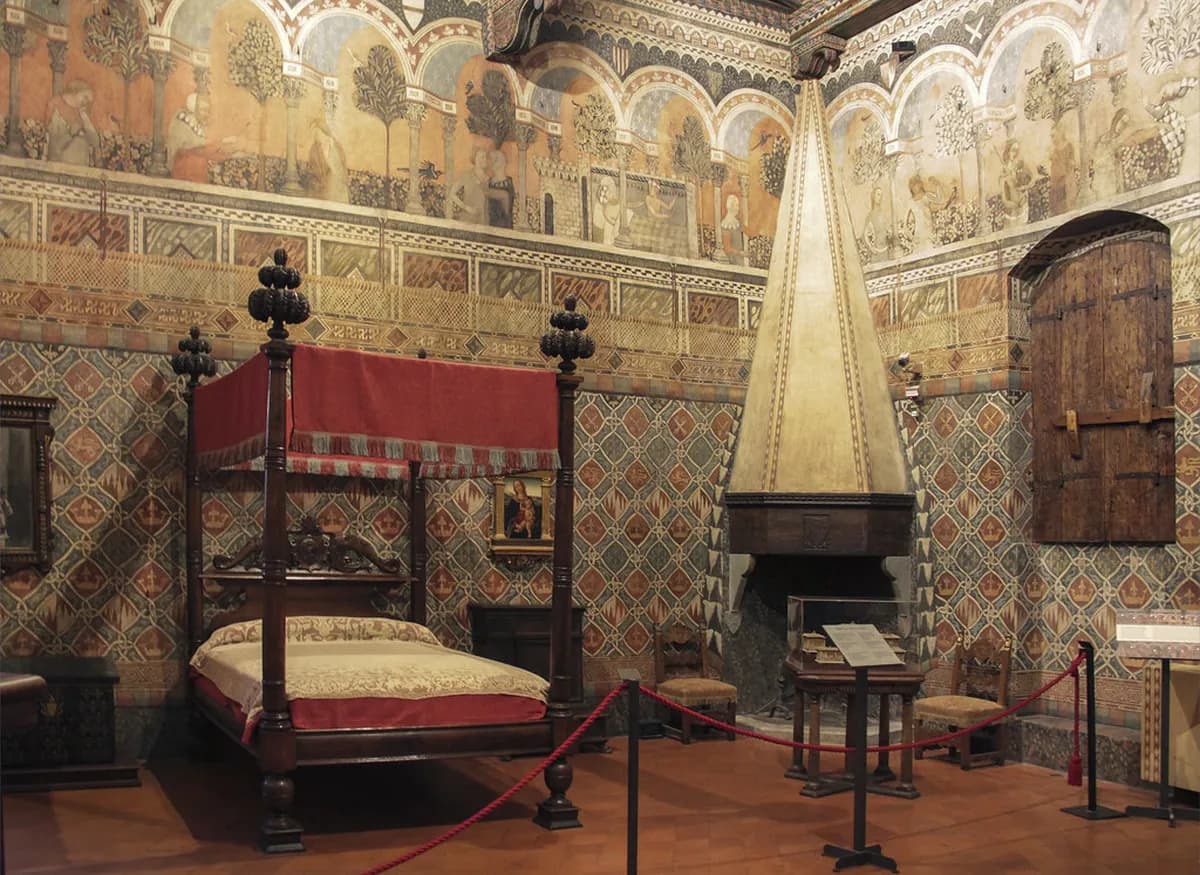
The museum's own account of the itinerary explains that the rooms are presented as they were when the young Puccini lived there. Wall surveys revealed painted decorations from the composer's period, and later work reopened two doors and rebuilt a wall demolished in the mid-twentieth century, so the rooms are a careful reconstruction.
Family furniture and paintings sit alongside period pieces acquired when the museum opened, and glazed cases hold documents in the two rooms set aside for them. The result mixes domestic atmosphere with documentary display, which is worth knowing before you go in expecting a conventional picture gallery.
A separate travel account describes preserved interior decor alongside letters, paintings, photographs, sketches and early manuscript drafts. Those categories are the most useful preview for a first visit: the appeal is personal paper and objects, not a gallery-scale art collection.
The collection, the archive and the piano
The museum describes a collection that began around fifty years ago with the museum's founding and that continues to grow through donations, loans and long-term placements of memorabilia and documents. New material keeps being folded into the story, so the rooms are not a sealed time capsule.
The same travel account names the Steinway and Sons piano Puccini used to compose Turandot and other works. If that instrument is your priority, look for it early and circle back, because the rooms are small.
The foundation has put its documentary archive online, which helps if you want to research a work or an episode before or after the visit. The house and the digital archive complement each other rather than duplicating the same material.
The Villino di Viareggio is a separate site
The Villino at Viareggio, Puccini's last residence, belongs to the same museum complex, and the foundation reports that restoration work on its exteriors has been completed. It is not in Lucca. Nothing in the official material reviewed here supports treating it as part of a single Lucca admission.
The museum's news pages describe free visits to the Villino on particular occasions such as Carnevale and European Heritage Days. That points to controlled rather than routine public access, so check the official site for current arrangements instead of assuming the house is open when you arrive.
Practical planning: schedules, tickets and exhibitions
The official site publishes seasonal schedules as separate dated news items, with notices for spring, summer, autumn and winter periods. Open the latest notice and match it to your travel dates rather than trusting times copied into older blogs. Confirm what a ticket covers at the same moment, since the complex does not present every site as one admission.
The museum listed a Turandot exhibition running from 24 April to 1 November 2026, with related October visits and meetings. Those dates have passed, so look for the current temporary display rather than planning around that listing.
For city-level context on what else falls during your stay, the official Lucca tourism site carries events and visitor information alongside attraction listings. It is worth a check if a festival might fill the centre on your museum day.
Accessibility and inclusion at the museum
The museum's accessibility page names a ramp, a stair lift, a tablet, an audioguide and a video in Italian Sign Language among its supports. These are listed amenities rather than a guarantee for every part of the building, so if you have a specific requirement, contact the museum before booking and ask about the exact room or any guided visit.
The tablet and audioguide also suit anyone who prefers to read or listen at their own pace in rooms that can become busy. Ask at the ticket office on Piazza Cittadella about availability on the day, since equipment is shared.
The free app and Puccini places across the province
The foundation offers a free Puccini Museum app for Android and iOS that works as a virtual guide to Puccini-related places in Lucca's historic centre and across the province. It is a sensible download before you leave home if your trip extends to countryside sites linked to the composer.
Because the app is free and covers the province, it pairs better with an unhurried day than with a checklist. Use it to decide which outlying places genuinely interest you, then confirm each site's opening arrangements directly.
Nearby Puccini traces in Lucca
A statue of Puccini on Piazza Cittadella near the museum shows him seated in a chair with a cigarette in hand. It is an easy landmark while you find the ticket office and a natural first photograph before going in.
Caffè Di Simo, once Café Caselli, was a meeting place for Puccini and the city's artists and intellectuals, and you can still sit inside as a customer. Pair it with the Istituto Boccherini, the music school he attended from 1872 until his graduation in 1880, if you want his student years to follow the family house.
The Cathedral of San Martino and the Teatro del Giglio complete the set: Puccini sang in the cathedral choir and later held its organist post, and he managed operas at the theatre. Both are working buildings, so check separately whether interiors or performances are open when you are in town.
Fitting the museum into a slow day in Lucca
The most comfortable pairing is the museum with a walk on the Lucca City Walls, whose tree-lined circuit gives you air and distance after the intimacy of the house. A stretch of rampart is enough if you have already spent time indoors.
Piazza dell'Anfiteatro keeps the elliptical plan of the Roman amphitheatre that once stood there, and its cafés make a natural lunch stop. It is a popular square rather than a hushed one, so choose an early or late hour if you want room to look at the buildings.
For greenery, the Orto Botanico di Lucca was founded in 1820 and holds living collections across glasshouses, a pond and an arboretum. It is a calm counterweight to the museum, and its own site carries the visiting information.
If you want more odd corners after the house, the hidden gems in Lucca guide covers places that reward a slower pace. Keep the day flexible: one ticketed interior, one square, one green space and a wall walk is a realistic plan.
Plan Your Visit
Start with the museum's official site to confirm the current schedule, ask what your ticket covers, and check whether a temporary exhibition runs during your dates. Then build the rest of the day around the walls, a square and one green space rather than trying to see everything.
If Puccini's last home at Viareggio matters to you, treat it as its own outing and verify access with the museum before travelling. In Lucca, the birth house, the statue, the café, the music school and the theatres tell a coherent story without any need to rush.
Frequently Asked Questions
Do I need to book the Puccini Museum in advance?
Check current booking arrangements on the museum's official site, since they can change with exhibitions and seasons. If you need a support such as the tablet, audioguide or LIS video, ask about availability when you book or arrive.
How long should I allow for Puccini's birthplace?
The house is compact, so a focused visit fits comfortably into a morning or afternoon, and the document cases reward extra time. Adding the statue, a café stop and a stretch of the walls turns it into a half-day suggestion.
Is the Villino di Viareggio included in the same visit?
No. The Villino is a separate building at Viareggio within the wider museum complex, and its opening arrangements should be checked on the official site. Do not assume a Lucca ticket covers it or that it is routinely open.
What can you see inside the Puccini Museum?
Expect restored family rooms with period furnishings, painted decorations uncovered during wall surveys, display cases of documents, and objects including the Steinway piano linked to Turandot. Letters, photographs and early drafts complete the picture.
Is the Puccini Museum accessible for wheelchair users?
The museum lists a ramp, a stair lift, a tablet, an audioguide and a video in Italian Sign Language among its inclusion measures. For your specific needs, contact the museum directly rather than relying on a general description.
Which other Puccini sites can I see in Lucca?
The statue on Piazza Cittadella, Caffè Di Simo, the Istituto Boccherini, the Cathedral of San Martino and the Teatro del Giglio all connect to the composer. Check each building's own visiting arrangements before you go.
Sources
Continue exploring
More guides you'll find useful