Torre delle Ore Lucca: A Practical Guide to the Clock Tower
Plan a climb up Torre delle Ore, Lucca's tallest tower. This guide covers the 207-step stairway, the clock, the legend, the rooftop view and ticket scope.
On this page
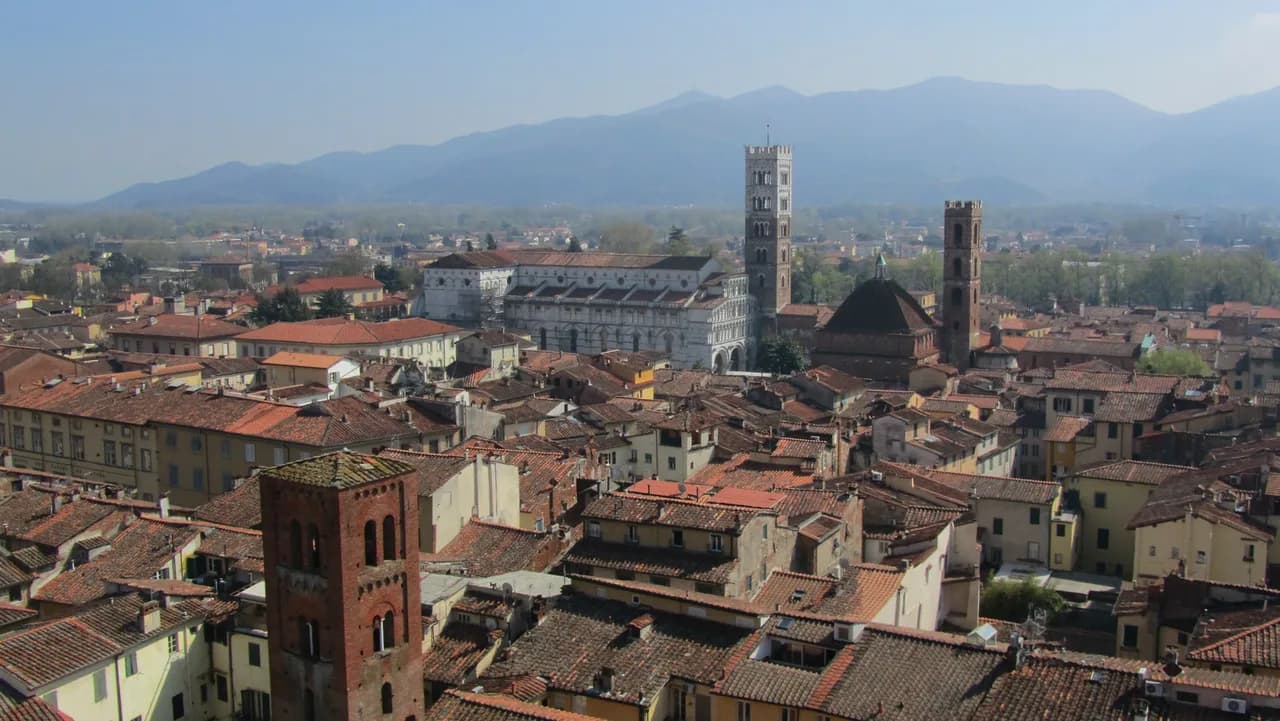
Torre delle Ore stands on Via Fillungo, the main street inside Lucca's walls, and it is the city's tallest tower. The climb runs up roughly 207 steps of wooden interior stairway before opening onto views of Lucca's reddish rooftops and the hills beyond. The tower has been a timepiece for the city since the Middle Ages, and the clock mechanism is the reason most people linger at the top. For context on the wider city, see the Lucca Attractions hub.
The clock is also the source of one of Lucca's most repeated stories: the legend of a resident who sold her soul to the devil and tried to stop time at the top of the tower. Treat the tale as folklore, not history. What is verifiable is more modest: a tower, a clock, a stairway and a view over the old town.
What You Are Visiting
Torre delle Ore sits on Via Fillungo, the long street that cuts through the historic centre from Piazza San Michele toward the northern gates. The address listed for the tower is 4 Piazza dell'Arancio, Lucca 55100, though its visible face is on Via Fillungo. Because it is inside the walls, it fits easily into a walking day rather than needing its own trip. If you are mapping a route, the hidden gems in Lucca guide is a good place to start.
The tower is a medieval structure that became a clock tower in 1390, according to the local blog Two Parts Italy. The clock face is visible from the street below, and the mechanism inside is the piece visitors most often mention. The structure itself is brick and stone, with the wooden staircase that carries you up the interior.
Clock Tower vs Guinigi Tower: How to Tell Them Apart
Lucca has two towers that visitors can climb, and they are easy to confuse. Torre delle Ore is the clock tower on Via Fillungo, the taller of the two. Torre Guinigi is the one with oak trees growing from its rooftop, and it sits a few minutes' walk away on Via Sant'Andrea. If you are picturing trees on top, you are thinking of Guinigi; if you are picturing a clock face, you are thinking of Torre delle Ore. The Guinigi Tower (Torre Guinigi) visitor guide lays out the differences in detail.
The two climbs differ in character. The Guinigi climb is about 230 steps and ends at a rooftop garden, while the Torre delle Ore climb is about 207 steps and ends at a clock face and a full circuit of the old town. If you only have time for one, choose Guinigi for the novelty of trees at the top and Torre delle Ore for the clock and the sweep of the rooftops. Neither is a substitute for walking the walls, which give you a different view entirely.
The Clock: How the Tower Became Lucca's Timepiece
The tower became a clock tower in 1390, and the clock has been the city's public timepiece ever since. The mechanism you see today is not the original: sources disagree on its date. The SmartGuide listing describes an 18th-century mechanism, while Wanderlog's summary mentions a 17th-century clock. Both are plausible; what matters for a visitor is that the mechanism is old and locally made, not a modern replica.
The clock's chime is part of the experience of standing near the tower, and the sound carries over the street below. Do not plan your day around it: no reliable timetable of chimes is published, and the timing can vary. If hearing the bell matters to you, linger on Via Fillungo rather than rushing to the top.
The Legend of the Paused Hand
The most famous story attached to the tower is the legend of a local woman who supposedly sold her soul to the devil in exchange for youth. In the version Two Parts Italy recounts, the devil came for her in August 1623, and she climbed the tower to try to stop time. The story is a legend, not a documented event, and it should be told as such. Account versions differ on the woman's name, so treat names in modern retellings with caution.
Some accounts link the legend to the clock's hands, which a local observer described as moving only sometimes. That is a personal observation, not a mechanical fact, and it cannot explain why any particular clock might pause or skip. If you see the hands in an unexpected position, enjoy the story without treating it as proof of anything supernatural.
The Climb: Wooden Stairs and What to Expect
The climb is about 207 steps, mostly on wooden stairs inside the tower. The staircase is narrow and uneven in places, and no source in this guide mentions a lift, so treat it as a stairs-only ascent. Wear shoes with grip and leave bulky bags behind if you can.
The time it takes to climb varies with fitness and how many people are on the stairs. Allow more than you think you need if you plan to stop for photographs on the way up, and remember that the descent is harder on the knees than the ascent. A short rest at the top before coming down is worth it.
The View: Rooftops, Hills and How It Compares
From the top of Torre delle Ore you look out over Lucca's reddish rooftops and the hills that ring the city. Because the tower is the tallest in Lucca, the view is less obstructed than from lower vantage points, and you can pick out the Duomo and the walls. The top is open and exposed, so bring a layer even on a warm day.
The Guinigi Tower gives you a different view: trees frame the shot, which is why it is more photographed. Torre delle Ore is about the clock and the uninterrupted sweep of the old town. If you climb both, do the Guinigi first and save the clock tower for the clearer panorama. The Lucca City Walls offer a third perspective, at ground level and for free.
Tickets and Hours: What Is Published and What to Re-Check
The SmartGuide listing gives seasonal opening hours for the tower: closed from November to February, open from 9:30 am with a closing time that stretches later as the season warms, from 5:30 pm in March and October to 7:30 pm in June to September. Admission is listed as €4 for adults and €3 for children aged 6 to 14 and seniors aged 65 and over. Treat these figures as source-dated and confirm them before you travel, because hours and prices can change.
No official municipal page in this guide confirms current prices or booking channels, and no combined ticket with Torre Guinigi is documented. Do not assume that a ticket to one tower covers the other. Check the tower's own information or Lucca's tourism website before you go, and ask at the ticket desk whether timed entry is required.
Practical Logistics: Location, Address and Getting There
The tower is at 4 Piazza dell'Arancio, Lucca 55100, and its listed telephone number is +39 583 316846. It is inside the walls and within walking distance of Piazza dell'Anfiteatro, the Guinigi Tower and Piazza Napoleone. If you arrive by train, the station is outside the walls, so plan a walk through one of the gates rather than expecting to drive to the tower.
Lucca's historic centre is compact, and most visitors cover the main sights on foot. The tower is a short detour from Via Fillungo, which makes it easy to fold into a shopping or coffee stop. If you are planning a full day, pair the tower with a walk on the walls and a visit to one of the churches nearby, such as the Chiesa di San Frediano.
A Suggested Half-Day Route on and Around Via Fillungo
Start at Piazza San Michele and walk north along Via Fillungo, which puts you at the tower's base without any backtracking. Climb Torre delle Ore first thing, before the street fills with shoppers, then continue north toward the Guinigi Tower or turn east for the amphitheatre square. The amphitheatre is a free public square, and its cafes make a good stop after the climb. If you want more structure, the Lucca one-day itinerary shows how the tower fits a wider day.
For a slower afternoon, walk the walls after the tower, then drop into the Orto Botanico, which was founded in 1820, for a quiet contrast to the stone streets. If you are visiting in spring, the garden's camellias and wild peonies are the reason to time your visit. Check the garden's own site for current opening hours before you go, because they change by season.
Palazzo Pfanner is another good addition if the garden is open: its baroque garden is a short walk from the walls, and the palace has a museum of medical instruments. The garden is normally open from mid-March to the end of December, but confirm current access on the palace's site. Pair it with the tower only if you have a full day, since both deserve unhurried time.
Is the Torre delle Ore Worth It?
Torre delle Ore is worth the climb if you want the best view over Lucca's rooftops and a close look at a clock that has been part of the city since the Middle Ages. It is not the choice for anyone who struggles with stairs or who wants the tree-topped novelty of the Guinigi Tower. Go for the clock, the legend and the panorama, and check the opening hours and ticket price before you set out.
If you have time for only one tower, decide based on what you want to see: trees on a rooftop at Guinigi, or a clock face and a full sweep of the old town at Torre delle Ore. Either way, the walk along Via Fillungo and the nearby squares will fill the rest of your day.
Frequently Asked Questions
How many steps are there up the Torre delle Ore?
The climb is about 207 steps, mostly on wooden stairs inside the tower. It is a narrow, uneven staircase, so wear grippy shoes and allow more time than you think you need if you stop for photographs.
Is the Torre delle Ore the same as the Guinigi Tower?
No. Torre delle Ore is the clock tower on Via Fillungo, the taller of the two. Torre Guinigi is the tower with oak trees growing from its rooftop, a short walk away.
What is the legend of the ghost in Lucca's clock tower?
The story says a local woman sold her soul to the devil for youth, and when he came for her in August 1623 she climbed the tower to try to stop time. It is folklore, not a documented event.
How much is the ticket for the Torre delle Ore?
Ticket prices vary by source and season, so check the tower's own information or Lucca's tourism website before you go. The SmartGuide listing cited in this guide gives a specific source-dated price that may not reflect current rates.
When is the Torre delle Ore open?
The tower's opening hours vary by season, and it has been listed as closed during the winter months. Hours can change, so confirm on the day you plan to visit rather than relying on any single published schedule.
Is the climb worth it compared with the Guinigi Tower?
The Guinigi Tower is the one with trees on top, and it is more photographed. Torre delle Ore is the taller tower and gives a clearer sweep of the old town, so choose based on whether you want the rooftop garden or the clock and panorama.
Sources
Continue exploring
More guides you'll find useful