Basilica di San Fedele Como: Visitor Guide to the Romanesque Church
Plan a visit to Como's Basilica di San Fedele: its dragon portal, layered Romanesque interior, market square, and how to fit it into an old-town walk.
On this page
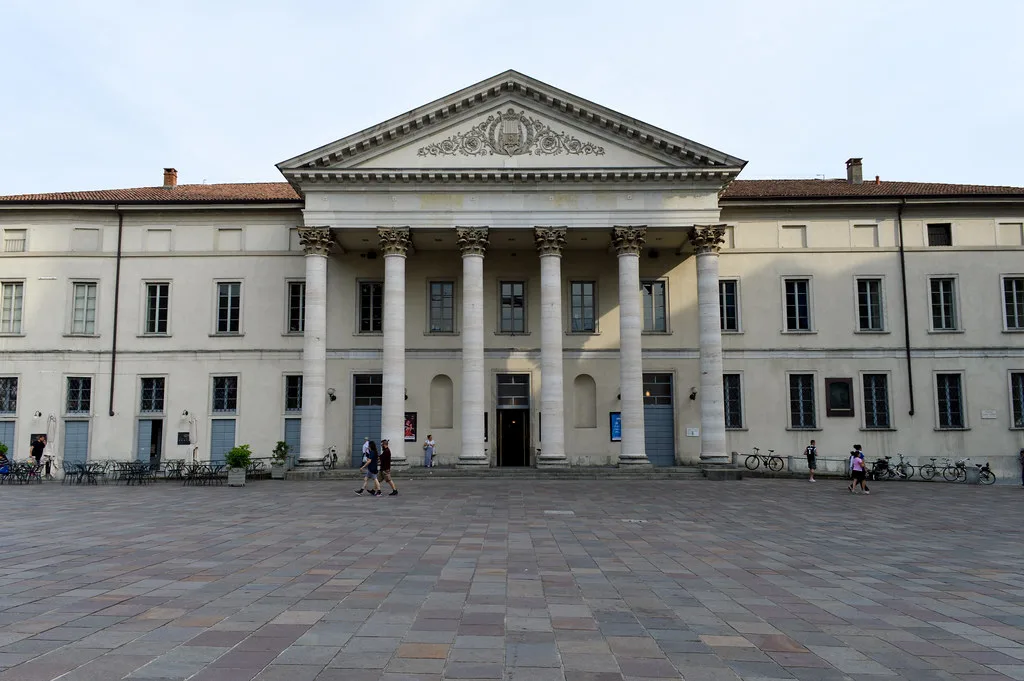
Basilica di San Fedele sits on the small piazza of the same name in the heart of Como, a few minutes on foot from the Duomo and the Broletto. It is a working parish church rather than a museum, so the visit is short and best folded into a walk through the historic centre. A suggested 20 to 30 minutes inside is enough to read the main features, though that is our editorial estimate rather than an official visit duration.
Ask before you plan around a timetable. The parish and the city's tourist information service publish the arrangements that matter, and a church that hosts daily services can change access at short notice. Build your day so San Fedele is one stop among several nearby sights, not a timed appointment.
Why San Fedele Is Worth a Stop
The church stands where Como's Roman forum and later grain market once were, which explains why such a substantial building sits in a modest square rather than on a grand axis. That position made it part of civic life as well as religious life for centuries, and people were baptised here who later shaped the city and the church. It is the kind of monument you notice while crossing the square rather than a destination you queue for.
What sets San Fedele apart from Como's cathedral is scale and consistency. The Duomo is vast and stylistically mixed on a grand plan; San Fedele is compact, and its Romanesque bones remain legible despite later additions. If you have limited time in the old town, this is the church that lets you read a single building's history in twenty minutes rather than an hour.
Its reputation rests on one feature above all: the sculpted stonework around the northern doorway, known as the Portale del Drago. Carvings of this quality, made by local masters, are why architecture-minded visitors detour here at all. Come for the doorway, then stay for the apse and the layered interior that most casual passers-by miss.
Where Piazza San Fedele Sits in the Old Town
The basilica faces Piazza San Fedele, a small open space ringed by pastel houses and medieval lanes. From the Duomo and the Broletto you can walk here in a few minutes without crossing a major road, which makes it an easy addition to any central itinerary. Treat the piazza as a junction rather than a sight in itself: you pass through it on the way between the cathedral quarter and the streets towards the lake.
The city's tourist information point occupies the ground floor of the Palazzo del Broletto and hands out city maps, event calendars and advice on itineraries, transport and markets. The Comune di Como lists its hours as Monday to Sunday, 9:00 to 13:00 and 14:00 to 18:00, so a midday pause is built into the day. That makes it a sensible first stop if you want current information on church access before walking over to San Fedele.
If you would rather follow a route than improvise, a self-guided walk through the centre can link the cathedral, the Broletto, San Fedele and the lakefront in a logical loop. The distances are small, but the sequence matters: start inland and finish at the water so the lakefront opens up at the end.
Reading the Layers: Early Christian Roots to the Twelfth-Century Rebuild
The site's Christian history reaches back to the fifth or sixth century, when a church stood here connected with Como's earliest bishopric. In the tenth century the relics of Saint Fedele were brought here, a martyr of the Diocletian persecutions, a shift that changed the building's standing and turned it into a pilgrimage focus. That move is why the church carries his name rather than its earlier dedications.
Around 1120 the church was rebuilt in the Lombard-Romanesque manner, with a Latin-cross plan, three aisles and a central dome over the crossing. The design shows influences from the Palatine Chapel at Aachen and from San Lorenzo in Milan, and local workshops supplied the carved stonework. This twelfth-century structure is what you are effectively walking through today, even where later decoration covers it.
Later centuries added Renaissance and Baroque elements rather than replacing the whole: an altarpiece dated 1504, a Baroque high altar, frescoed chapels. Restoration campaigns in the nineteenth and twentieth centuries revived the medieval character, including the neo-Romanesque facade and the mosaic in the lunette. The result is a building that reads as a stack of periods rather than a single style, which is precisely why it rewards a slower look.
The Portale del Drago and the Sculpted Doorway
The northern portal is the highlight. Its jambs and archivolts carry reliefs of biblical scenes and symbolic creatures, including the dragon that gives the doorway its name, carved by the Magistri Cumacini workshops. Read it from the bottom up: the supporting figures and scenes first, then the arch bands above, before you step inside. The programme mixes scripture with legend, so you do not need a theological key to enjoy it.
Look specifically for the Daniel in the lions' den relief beside the door. It is one of the scenes that lets you trace how the carvings were assembled, since slabs of different dates sit side by side and leave the left jamb visibly asymmetric. That irregularity is not damage but evidence of how the portal was built up over time. Photographing the detail in flat daylight is easier in the morning than under hard afternoon sun.
Facade, Rose Window and the Freestanding Bell Tower
The facade you see is largely a modern recreation in neo-Romanesque rhythm, with a large rose window and mosaic work in the lunette above the portals. The hanging arches and the sober stone surface read as medieval, but much of the exterior was reworked in the twentieth century. Knowing that helps you separate what survives from the twelfth century and what was restored.
The bell tower has its own story. It partly collapsed in the 1117 earthquake, stood dangerously tilted, and was demolished and rebuilt between 1903 and 1907 under the engineer Giussani. It now rises as a separate body from the church, with four orders of openings and bells cast in the nineteenth and twentieth centuries. Even at a glance, its detachment from the nave is unusual and worth noticing.
Inside: Naves, Apse and the Chapels Worth Pausing For
Inside, three naves lead towards the apse and its ambulatory, with an octagonal lantern above the crossing that lifts natural light into the centre of the church. The columns mix Roman spolia with medieval capitals, so no two bays look quite alike. Walk the side aisles before settling in the nave; the votive frescoes of the fourteenth and fifteenth centuries in the ambulatory are easy to overlook from the centre.
The chapels hold most of the later art. The Chapel of the Crucifix carries a fresco by Isidoro Bianchi from 1623 and Passion scenes by Carlo Innocenzo Carloni, while the Chapel of the Virgin preserves frescoes from 1613 alongside fragments of medieval painting. The high altar frames the marble sarcophagus of Saint Fedele above a Venetian-style mosaic floor. Give the chapels ten minutes and the doorway rather more.
Visiting Logistics: Confirm Hours and Admission Before You Go
San Fedele is an active parish church, and access depends on the service schedule rather than a fixed tourist timetable. Sources describe a general pattern of daytime opening on weekdays and shorter hours on Sundays and holidays, but those are not a guarantee on any given day. Check with the parish or the city's tourist information point before making a special trip, especially around mass times.
This is a place of worship rather than a ticketed monument. If donations are invited, they go towards upkeep rather than an admission system. Guided visits, where they run, are usually arranged separately through the parish or local operators, so ask about them directly rather than expecting a desk at the door. The nearby civic museums have their own arrangements and are not covered by any church visit.
Accessibility questions are best put to the parish in advance. Older churches often have steps at the main entrance and uneven floors inside, and any ramp or assistance will depend on current arrangements. The city tourist office can also advise on step-free routes between the Duomo, the Broletto and the lakefront.
Etiquette and Photography in a Working Church
Dress as you would for any place of worship: shoulders and knees covered, hats off for men, and a quiet voice inside. If a service is underway, stay behind the last pew or come back later rather than walking the aisles. These are respectful norms rather than a published rulebook, so follow any instructions posted at the door or given by staff.
Photography is generally tolerated outside services, but flash and tripods are intrusive in a small, dim interior. Ask before photographing people or anyone praying. If you want good images of the portal carvings, flat daylight outside serves you better than a flash inside.
The Piazza as Context: Market and Medieval Lanes
Piazza San Fedele has long been a market square, and a Saturday crafts and antiques market is reported here. It is a reported pattern rather than a guaranteed weekly event, so check with the tourist information point or local listings if the market is the reason for your visit. When it runs, it fills the square and changes the pace of a San Fedele visit entirely.
The lanes around the piazza are worth ten minutes on their own. Pastel facades, small workshops and a surviving medieval street plan make this a quieter corner than the lakeside promenade. The fragmentary early baptistery of San Giovanni in Atrio, once part of the same religious complex, is remembered in the courtyard of one of the surrounding houses.
Fitting San Fedele Into a Short Old-Town Route
A sensible half-day starts at the Duomo, moves to the Broletto, then crosses to San Fedele before finishing on the lakefront. The order keeps you inland during the busiest morning hours and delivers you to the water when the light softens. Allow 20 to 30 minutes at San Fedele itself as an editorial suggestion, more if you want to study the portal properly.
The lakefront promenade, known as the Passeggiata Lino Gelpi, continues the walk south from the old town towards Villa Olmo. It is a flat, paved path along the shore rather than a hike, and it makes an easy contrast to the stone and shadow of the churches. Save it for after San Fedele rather than before, so the crowds of the centre do not eat into your time by the water.
If you want height as well as water, the Como-Brunate funicular climbs from a lower station near the lake to the village above in about seven minutes, with cars departing roughly every fifteen minutes. The line is 1,084 metres long and climbs a 55% gradient, according to a 2026 practical guide. Fares change, so confirm the current rate at the ticket window rather than relying on old figures. Queues build at sunset, so descend before the day-trippers do.
Optional Add-Ons Nearby
The Pinacoteca Civica and the Museo Archeologico Paolo Giovio sit within a few minutes' walk and hold separate collections spanning local archaeology and art. Both are civic museums with their own tickets, so treat them as separate visits rather than extensions of the church. The archaeological museum's material runs from prehistory to the Roman period and gives context to the forum site beneath San Fedele.
For a different Romanesque experience, the Basilica di Sant'Abbondio lies outside the historic centre and rewards the extra walk with a quieter setting and a distinguished apse. If you are collecting Como's early churches, pair it with the city centre rather than trying both in one rushed hour.
A legacy of a different kind stands on the lakefront: the Monumento ai Caduti, a 30-metre rationalist tower inaugurated in 1933 and designed by the Terragni brothers after an idea attributed to Filippo Tommaso Marinetti. According to Italia.it, it commemorates the 650 citizens of Como who died in the First World War, and its concrete and stone form makes a striking contrast with the Romanesque churches.
Practical Tips for a Smoother Visit
Go early or late. The square and surrounding lanes are busiest around weekend market hours, and mid-morning weekday visits tend to be calmer inside the church. Carry a light layer, since stone interiors stay cool even in summer, and wear shoes suited to cobbles rather than smooth pavement.
Check the parish and city tourist information before you go for any change to access, and treat any online timetable as a guide rather than a promise. If the church is closed when you arrive, the piazza, the lanes and the nearby museums still fill the time. That flexibility is the real advantage of visiting a central monument on foot.
Plan Your Visit
San Fedele rewards a short, deliberate stop rather than a long tour. Read the dragon portal slowly, walk the side aisles, and save time for the market square and the lanes around it. Then continue to the Duomo, the Broletto or the lakefront while the old town is still within easy walking distance.
Confirm the practical details close to your travel date: parish and tourist office sources are more reliable than any fixed schedule. With an hour in the centre and a little flexibility, San Fedele becomes one of the clearest windows into Como's long history. For related planning, see A Self-Guided Walk Through Como.
Frequently Asked Questions
Is the Basilica di San Fedele free to visit?
San Fedele is a working parish church rather than a ticketed monument, so there is no admission desk at the door. Any donations go towards the upkeep of the building. Check with the parish or the city tourist information point for current visiting arrangements.
How long should I spend at San Fedele in Como?
We suggest around 20 to 30 minutes for the church itself, including the Portale del Drago, the side aisles and the chapels. That is an editorial estimate, not an official duration. Add time for the piazza and the surrounding lanes if the market is running or you want to photograph the carved doorway in daylight.
What is the Portale del Drago and what does it show?
It is the sculpted northern doorway of the basilica, carved by local Magistri Cumacini workshops. It combines biblical scenes with symbolic creatures, including the dragon that gives it its name, and includes a relief of Daniel in the lions' den. Read the carvings from the jambs upwards.
Should I combine San Fedele with Como Cathedral in one walk?
Yes. The two churches are a few minutes apart in the old town, so a single walk can take in the Duomo, the Broletto and San Fedele before finishing on the lakefront. They are separate buildings with separate visiting arrangements, so check access for each.
Sources
Continue exploring
More guides you'll find useful