
Como Cathedral Guide: Planning a Duomo Visit
A practical plan for Como's Duomo: operator-published tourist-visit windows, Mass-time suspensions, what to look for on the facade and inside, and nearby sights.
On this page
Como Cathedral, the Cattedrale di Santa Maria Assunta, stands on Piazza del Duomo in the middle of the old town, a few minutes' walk from the lakefront and from the Broletto. According to the cathedral's operator, tourist visits run Monday to Friday 10.30–17.30, Saturday 10.45–16.30 and Sunday 11–11.45 and 13–16.30. Those windows are the starting point, not a guarantee: liturgies and diocesan events regularly displace them. This guide separates what the cathedral and Diocese of Como state from what travel pages merely describe, and builds a sensible visit around both.
Where the Duomo Sits in Como's Old Town
The cathedral's address is via Maestri Comacini 6, in the pedestrian heart of Como, with the lakefront squares a short walk downhill. You reach it on foot from the train stations and from Piazza Cavour, which makes it an easy first stop or a natural pause in a city walk. The Como Attractions hub covers the surrounding sights in more depth if you want to plan the rest of the day without guesswork.
Position matters because the Duomo is not an isolated monument: it shares its square with the Broletto and the civic tower, so the facade is best read as part of a tight medieval-and-later ensemble. Arrive from the Broletto side and the alignment of the buildings explains itself better than any description. The Broletto also houses the city's tourist information point, which the municipality lists at ground-floor level, open daily from 9 to 13 and 14 to 18.
The Building in Brief: From 1396 to the Renaissance
Construction began in 1396, roughly a decade after work started on Milan Cathedral, and continued over several centuries. That long build is the reason the Duomo reads as a blend rather than a single style: the Gothic skeleton is unmistakable, but later phases pulled the design toward the Renaissance. Third-party guides describe it as the last of Lombardy's Gothic cathedrals, an epithet worth treating as description rather than official title.
If you only have a passing interest in architectural history, the practical takeaway is still useful: look at the facade for what belongs to which phase, then look at the interior for the dome and the later decoration. That single contrast tells the story of the building more clearly than a timeline does.
Published Tourist-Visit Windows, and Why You Must Re-Check Them
The operator publishes tourist-visit windows separately from the Mass timetable, and they differ by day, as noted in the introduction. Treat those windows as published guidance, not a guarantee: they can be shortened or suspended on days with liturgies, ordinations or diocesan events. Check the cathedral site shortly before you travel, then check again on the morning of your visit.
The cathedral's online calendar is the document that actually governs your visit, because it lists liturgy, events and the days on which tourist visits are suspended or shifted. It also flags special evening openings. Reading one week of it tells you more about your chances than any generic opening-hours listing.
The Diocese of Como's own site is the second layer, since city-wide liturgical events and processions can affect the cathedral and the surrounding streets. If a diocesan celebration is listed for your dates, plan the cathedral visit for another slot rather than hoping the doors stay open to tourists.
Reading the Calendar: Mass, Events and Suspensions
Como's cathedral is a working place of worship first, and its calendar shows the consequences: on some days tourist visits are suspended for the whole day, on others they start only in the afternoon, and in the evening there are liturgical celebrations that close the building to visitors. Holy Thursday, Good Friday and Holy Saturday are listed on the cathedral calendar as days when tourist visits are suspended for the whole day. None of this is fixed months in advance in a single static list, so the calendar page is where you confirm.
A practical routine: pick two candidate mornings, confirm both against the calendar, and keep one as a fallback. If a suspension hits, the Broletto, the lakefront and the rest of the old town fill the gap without any replanning.
What to Look For on the Facade
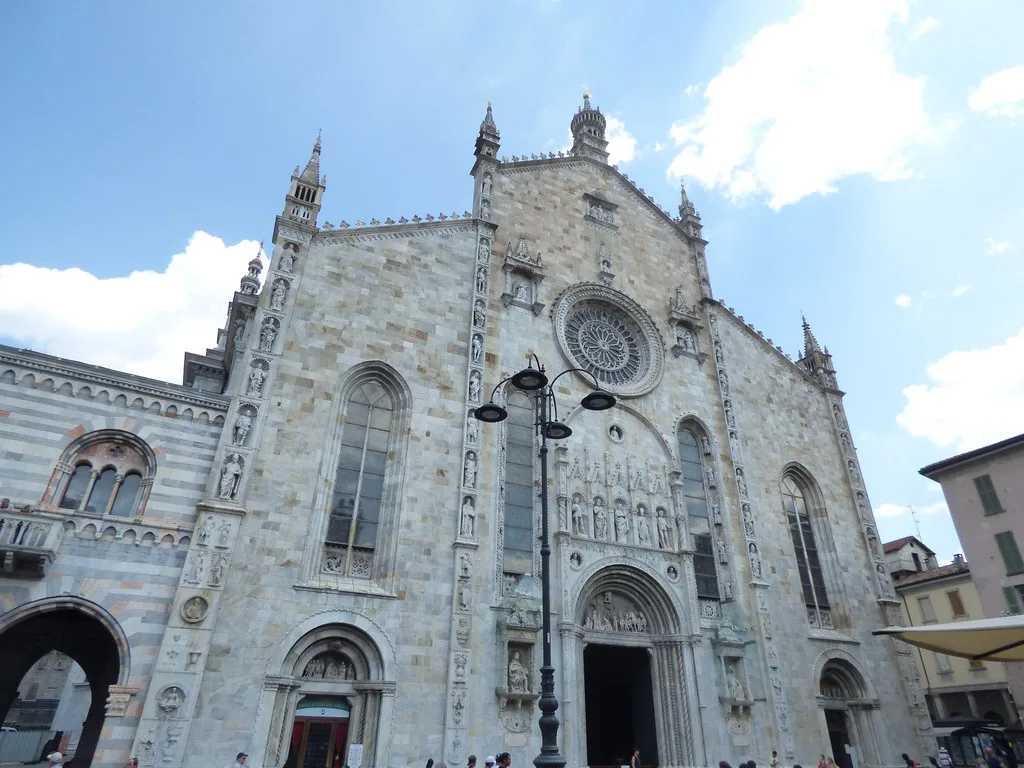
From the piazza, scan the upper registers first: third-party descriptions mention sculpted saints and a rose window with figures around it, which is the part best read from across the square rather than from the doorway. Later descriptions note a dome added in the eighteenth century, worth keeping in mind as you move from the facade to the interior.
These are descriptive travel-page observations rather than an official catalogue, so use them as pointers. If a detail catches your eye, check the caption or a cathedral leaflet rather than relying on a blog description.
Inside: Three Naves, the Dome and the Paintings
Third-party guides describe a Latin-cross plan with three naves, a Renaissance transept and a dome above, with paintings attributed to Bernardino Luini and Gaudenzio Ferrari among the works to look for. Use those attributions as pointers, not as labels on a wall; where a work catches your eye, read the caption inside the building.
Keep the liturgy in view while you look: on days with celebrations the building's furniture and lighting change, and the atmosphere is different from a purely touristic hour. That is a reason to build flexibility into your timing, not a reason to skip the interior.
Free Visit or Paid Ticket? Untangling What You Are Buying
Several travel pages describe the Duomo as free to enter, but the cathedral's own site does not publish an entry fee, and a one-euro figure circulating in visitor tips is not confirmed by any operator source. The honest position is that the church visit should be verified on the cathedral's site, and any ticket window there is not the same thing as the city's museum ticketing.
Separately, the Comune di Como's online ticket service names the Pinacoteca civica, the Tempio Voltiano and the Cattedrale among the city's museums and monuments. That listing tells you those sites have entry arrangements, not that a single purchase covers all of them. Check each site's current terms individually rather than assuming a combined pass.
How Long to Allow: A Suggested Pacing
No official visit duration is published, so treat any figure as our own suggestion. Forty-five to sixty minutes lets you read the facade, walk the three naves, find the dome and pause at two or three works without rushing; extend it if you want to spend longer in the side chapels. If you are visiting on a day with liturgy, trim the plan rather than the visit.
If you have only half an hour, pick one thread: the facade registers from the piazza, then the dome, then out. If you are travelling slowly, pair the cathedral with the surrounding streets and treat it as a longer pause rather than a stop on a list. The hidden gems in Como guide helps you fill the rest of the day without repeat visits.
Etiquette, Timing and Crowds
As a working cathedral, dress and behaviour expectations follow church norms rather than museum ones: covered shoulders, quiet voices, no flash during services. The calendar shows how readily liturgy takes over the building, so plan around it rather than against it.
Weekday mornings usually give the calmest visit, while weekends and diocesan feast days are busier and more likely to see suspension of tourist visits. Because the operator publishes those patterns and suspensions itself, timing your visit is mostly a matter of checking the calendar rather than guessing.
Beyond the Duomo: Broletto, Lakefront and Volta
After the cathedral, the Broletto and the lakefront make an easy continuation. The municipality's information point at the Broletto is useful for same-day maps, event calendars and transport questions within its published opening hours, listed as every day from 9 to 13 and 14 to 18.
The Volta thread runs through Como: the Tempio Voltiano on the lakefront gardens is a separate museum with its own ticketing and access arrangements, and the war memorial tower modelled on a Sant'Elia sketch stands nearby on the same waterfront. For the memorial, the national tourism board's page gives the context in a few sentences.
If you have a second day, the Lake Como shoreline and the hills above the city reward a slower pace; the villa neighbourhoods on the lakefront and the funicular to Brunate are the obvious extensions. None of that needs to crowd the cathedral visit itself, which works best as a calm stop in the old town rather than a box to tick. For wider planning, see Hidden Gems in Como.
Plan Your Visit
The short version: check the cathedral's calendar for your dates, plan around the operator-published tourist-visit windows, keep a fallback morning, and read the facade before you step inside. Confirm entry conditions and any city museum tickets separately rather than assuming one purchase covers everything.
Build the rest of the day from the Broletto and the lakefront, and use the Como Attractions hub when you want to plan the next site without guesswork. A well-checked visit takes less planning than a rushed one.
Frequently Asked Questions
When can tourists visit Como Cathedral?
The cathedral's operator publishes separate tourist-visit windows for weekdays (10.30–17.30), Saturday (10.45–16.30) and Sunday (11–11.45 and 13–16.30). These can be shortened or suspended on days with liturgies or diocesan events, so check the cathedral's online calendar for your exact dates shortly before travelling and again on the morning of your visit.
Is entry to Como Cathedral free?
Some travel pages describe the interior as free to enter, but the cathedral's own site does not publish an entry fee, and figures circulating in visitor tips are not operator-confirmed. Treat the question as open and confirm the current arrangement on the cathedral's website or at the door rather than relying on a blog.
Can tourist visits be suspended for Mass or events?
Yes. The cathedral's published calendar lists days when tourist visits are suspended for the whole day or start only in the afternoon, and periods such as Holy Week are closed to visitors outright. Mass and diocesan celebrations take priority, so plan a fallback slot.
How long should I allow for the Duomo?
No official duration is published. As our own suggestion, allow 45–60 minutes to read the facade, walk the nave and side aisles, find the dome and look at a few works; less if you only want the facade and the interior at a glance.
What should I look for inside Como Cathedral?
Third-party guides point to the Latin-cross plan with three naves, the Renaissance transept and dome, and paintings attributed to Bernardino Luini and Gaudenzio Ferrari. Use those as pointers, then read the captions in the building, since the attributions are not officially catalogued on the cathedral's site.
Does the Como city museum ticket include the Duomo?
The Comune di Como's online ticket service names the Pinacoteca civica, the Tempio Voltiano and the Cattedrale among the municipal museums and monuments, but that is not the same as a single combined ticket. Each site has its own access rules, so confirm conditions with each site rather than assuming one purchase covers everything.
What else is there to see near the Duomo in Como?
The Broletto next door houses the municipal tourist information point, open daily from 9 to 13 and 14 to 18 according to the Comune. The lakefront with Piazza Cavour, the Tempio Voltiano and the war memorial tower is a few minutes' walk away. Each has its own access rules, so check hours and tickets for the museums separately.
Sources
Continue exploring
More guides you'll find useful





