Como-Brunate Funicular Guide: Tickets, Timings and Brunate Views
Ride the Como-Brunate funicular with confidence: how long it takes, how fares and returns work, timing the crowds, and what to see in Brunate at the top.
On this page
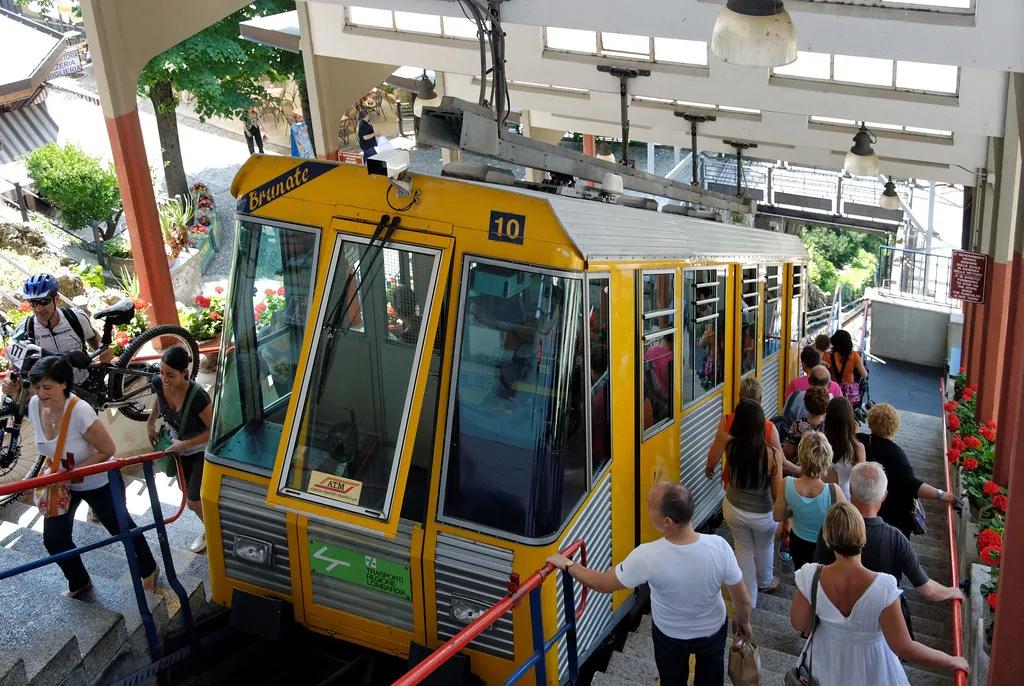
The funicular is the simplest way to swap Como's lakefront for Brunate, the village roughly 500 metres above the water. The ride itself takes about seven minutes, and cars reportedly leave around every fifteen minutes, so the climb rarely eats into a day. The decision worth planning is the return leg: how you time the descent so the trip down feels as calm as the ascent.
Where the Lower Station Is and How to Reach It
The lower station sits at Piazza Alcide de Gasperi 4, on the lake side of Como's old town. It is a short walk from the waterfront and also within easy reach of Como Lago station, the line that brings visitors in from Milan. Arriving on foot keeps the logistics simple: walk the lakefront, then follow the signs to the base station rather than planning a separate bus transfer.
If you are coming from the cathedral or the main square, the station is a natural final stop on a morning walk through the centre. The base station is compact, so you buy your ticket, step into the car and ride up without a long terminal walk. Arriving a few minutes before you intend to travel gives you room to read the fare board and check the current timetable.
Tickets: One-Way Versus Return
Buy your ticket at the station window rather than relying on figures you find online. A 2025 visitor report lists a single at 3.60 euros and a return at 7.20 euros, but that is a dated visitor figure, not an official tariff, so treat it as a rough guide and confirm the current rate before you pay. Fares and ticket categories change, and the official operator site is the place to check what applies on your travel date.
The one-way versus return question depends on how you plan to come down. A return bought at the window is the straightforward choice for a half-day trip, but if you intend to walk down one of the hillside trails, a single makes more sense. Decide before you board: buying a return and then choosing a walking descent wastes the difference.
Do not assume online booking is available or necessary. Sources do not confirm online purchase options, and the station window is the reliable route for most travellers. If you are visiting on a peak summer weekend, arrive early enough that a queue at the window does not upset your plan.
The Ride Itself: Tunnel, Gradient and Machinery
The line runs 1,084 metres, and the first 130 metres pass through a tunnel before the track opens up over the city. After that the car climbs a 55% gradient, which is why the ride feels steep underfoot and why the views arrive so suddenly. Knowing this in advance helps: the tunnel section is short, and the open climb is the part worth watching.
At the upper station, a gallery lets you watch the haulage machinery turn through the cables. It is a small detour that explains how the whole system works, and it takes only a few minutes. The line dates to 1894, originally steam-powered before switching to electric traction in 1911, which the operator's own history records.
Frequency, Timing and the Sunset Crunch
Cars reportedly leave every fifteen minutes, so most waits are short. The plan that matters is the descent: end-of-day demand builds at the upper station as day-trippers head back together, and reports describe the cars as cramped when full. Ride down in the early or mid-afternoon instead of joining the sunset rush, and you keep the calm you came for.
Hours vary through the year, with reduced service reported on Christmas Day and longer days in some seasons, but exact first and last departures are not fixed facts you should plan around. Check the last descent time at the station before you wander into the village. Missing the final car turns a relaxed afternoon into a long walk down.
Accessibility: What to Confirm Before You Rely on It
Visitor sources report that the cars are wheelchair accessible, with a ramp and a special gate for boarding, and one wheelchair carried per car. That is a visitor report rather than a confirmed rule, and accessibility needs vary widely. Confirm the current arrangement with the operator before you build a day around it, especially if you travel with a larger group or a powered chair.
If you do ride with a mobility need, board when the platform is quieter rather than at the busiest return hour. The lower station is compact, so space at the gate can tighten quickly when a queue forms. A phone call ahead of your visit is the simplest way to remove the uncertainty.
What to Do at the Top in Brunate
Right behind the funicular station is a small church with a soft pastel façade, frescoes and woodwork inside, and many hurried visitors walk straight past it. It costs nothing to step in and takes only a few quiet minutes before you head uphill. From there, the village lanes lead toward the lighthouse dedicated to Alessandro Volta, the Como-born scientist who invented the electric battery.
The lighthouse stands in San Maurizio above the village, and you can climb to the circular balconies at the top. On clear days the panorama reaches the Alps, Monte Rosa, the Apennines and even the Milan skyline, which is why Brunate earned its nickname as a balcony over the Alps. Allow time to actually stand there rather than photographing and leaving.
Extending the Day: Trails, Villas and Lunch
Brunate is a starting point for trails into the hills, and the village is dotted with Art Nouveau holiday villas built by noble families from Como and Milan. Walking these lanes is the slow pleasure of the visit, and it pairs naturally with the funicular ride. Wear shoes you can climb in if the trails tempt you beyond the village centre.
For lunch, trattorias and cafés near the top of the funicular serve food with the town spread out below. Booking is rarely needed at lunchtime, but the busiest tables fill when a car arrives full. Eat before the afternoon crowds build, then walk your meal off on the way to the lighthouse.
A Realistic Half-Day Itinerary
Start in Como's old town in the morning, when the cathedral and main square are at their calmest. Walk the lakefront, then make your way to the funicular station for a late-morning ascent so you reach Brunate in time for lunch. This sequencing keeps the busy middle of the day up in the village rather than in the city queues.
After lunch, take the village church and the lighthouse walk, then descend by mid-afternoon before the return crush forms. Back in Como, you still have the evening for the lakefront or one of the quieter corners covered in our guide to hidden gems in Como. Two halves of the day, one calm rhythm, and no rushing between them.
Best Time of Day for Light and Crowds
Mornings bring clearer air and softer crowds, while late afternoon gives warm colour over the water as the sun drops behind the mountains. Those two rewards pull in opposite directions, because the golden hour also draws the longest descent queues. Choose based on whether you want calm or colour, and plan the ride down accordingly.
Carry a light layer whatever the season. Brunate sits higher than the lakeshore and runs cooler, and the difference is noticeable the moment you step out of the upper station. In summer that is a relief; in spring and autumn it is the difference between a comfortable walk and a short one.
Practical Pitfalls to Avoid
Three small decisions make the day smoother: check the last descent time before exploring, expect the car to be full at peak return hours, and wear footwear suited to climbing if you plan to walk the trails. None of these are complicated, but each is easy to forget when the view distracts you. Confirm hours and fares at the station rather than relying on an old blog post.
Plan Your Visit
The funicular works best as one half of a slow day: Como's old town and lakefront in the morning, a late-morning climb, lunch and a lighthouse walk in Brunate, then an early-afternoon descent before the crowds gather. Treat fares as something to confirm at the window, hours as something to check with the operator, and accessibility as something to verify before you rely on it. For related planning, see Como Viewpoints: Brunate, Lakefront and Hill Views Compared.
Frequently Asked Questions
How much does the Como-Brunate funicular cost?
Fares change, and figures published by visitors can be out of date. Check the current single and return prices at the ticket window in Como or on the operator's site before you travel, and decide whether you need a return or only a single for a walking descent.
How long is the funicular ride from Como to Brunate?
The ride takes about seven minutes over a line of 1,084 metres, including an opening tunnel section and a climb at a 55% gradient. Cars reportedly leave every fifteen minutes, so the wait is usually short.
How often does the Como-Brunate funicular run?
Visitor reports put departures at roughly every fifteen minutes, but timetables change with the season. Check the current schedule and the last descent time at the lower station before you head up, so the return leg does not catch you out.
Is the Como-Brunate funicular wheelchair accessible?
Visitor sources report that the cars are wheelchair accessible, with a ramp and a special gate, and that one wheelchair rides per car. Treat that as a report rather than a confirmed rule and contact the operator to verify the current arrangement for your needs.
What is there to do at the top in Brunate?
Step into the small pastel church behind the station, walk to the Volta lighthouse in San Maurizio and climb its balconies for the panorama, eat at a trattoria near the upper station, or follow the hillside trails past Art Nouveau villas.
When is the best time to ride the Como-Brunate funicular?
Mornings offer clearer air and softer crowds, while late afternoon brings warm light and the longest queues for the descent. Ride up late morning, eat in the village, and come down before the end-of-day rush if calm matters more than golden light.
Do I need to book Como-Brunate funicular tickets in advance?
Sources do not confirm online booking options, so the station window is the reliable route. Arrive a little early on peak summer weekends, buy your ticket there, and confirm current fares and service times at the same time.
Sources
- FUNICOLARE COMO-BRUNATE ----------------------------------------------------------------------------------funicolare, como, brunate, impianto funicolare, funicolare terrestre como, consorzio pubblici trasporti, regione lombardia, trasporto pubblico, persone, servizi, biciclette, mountain-bike, handi
- Como Brunate Funicular Review | Free-Attraction-Reviews.com
- Brunate Funicular: A Practical Guide to the Como Climb
Continue exploring
More guides you'll find useful