Day Trips from Ragusa: Baroque Towns, Transfers and City Anchors
Plan day trips from Ragusa to Modica, Scicli and Noto, with in-city anchors in Ibla and honest advice on checking transport before you travel.
On this page
Ragusa is split into two levels that visitors treat as one city at their peril: Ragusa Superiore on the plateau and Ragusa Ibla on the rocky spur below, both rebuilt after the 1693 earthquake that reshaped south-eastern Sicily. That history is exactly what makes the city a practical base for the UNESCO-listed Late Baroque Towns of the Val di Noto, since Modica, Scicli and Noto all sit within the same south-eastern corner of the island.
Before booking any excursion, spend a suggested half-day on foot in Ragusa Ibla itself; that duration is our recommendation, not an official itinerary. Start high at the staircase by Santa Maria delle Scale, walk down through the stepped lanes toward Piazza del Duomo, and finish at the Giardino Ibleo belvedere overlooking the valley. The gardens and public lanes cost nothing to wander, while church interiors and any museum collections are separate, ticketed or donation-based spaces that you should confirm locally.
Why Ragusa Works as a Base
The 1693 earthquake destroyed much of medieval Ragusa, and the population then divided between rebuilding on the original spur and starting again on the higher plateau. The result is a city where you switch between two urban fabrics by descending a long staircase or driving around the gorge, which is why Ibla and Superiore deserve separate visits rather than a single rushed walk. The Visit Sicily regional tourism page frames the city in the same terms, as a place with two distinct souls.
Ragusa's position in the Iblean hills means the surrounding Baroque towns are the natural day-trip targets, and many travellers pair the city with Modica, Scicli or Noto rather than treating it in isolation. A transfer operator's guide to the area describes the historic centres as best explored on foot, with private services recommended for links between the town, the coast and nearby villages. Treat that as practical orientation rather than a transport timetable, because no schedules are fixed here.
In-City Anchors Worth Doing First
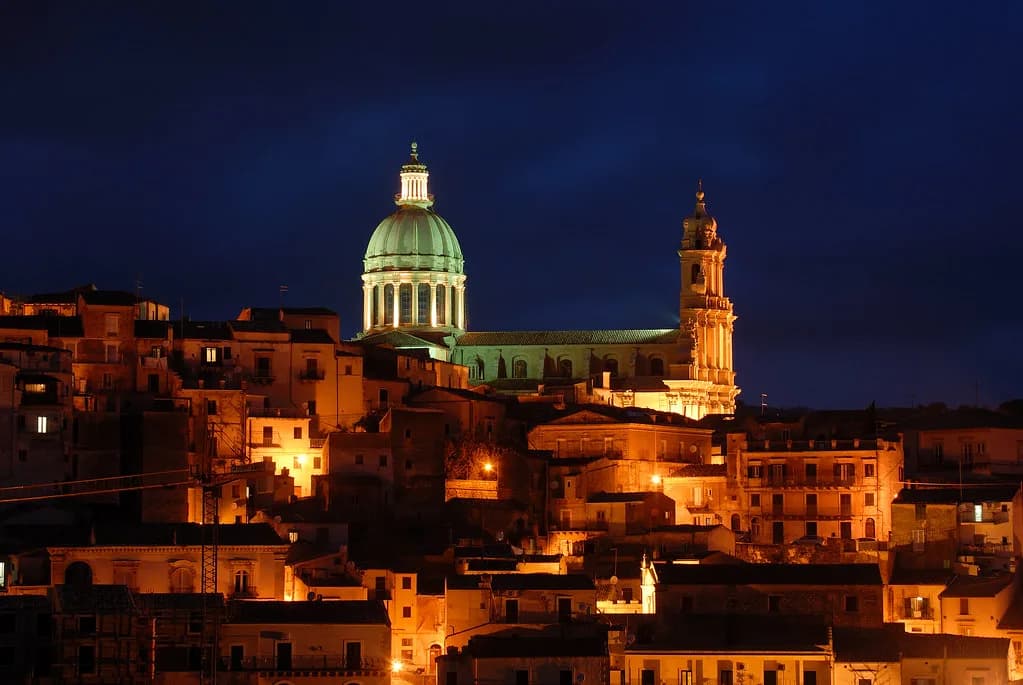
The Duomo of San Giorgio is the symbol of Ragusa Ibla and one of the defining works of Sicilian Baroque, commissioned from Rosario Gagliardi in 1738 with its facade completed in 1775 and a neoclassical dome added in 1820. Its convex facade and staircase have also appeared on screen in the Inspector Montalbano television series, which is part of why the square draws steady foot traffic. Do not assume published hours hold on the day you arrive; churches operate on their own calendars and the Ragusa tourism office publishes dated opening lists rather than permanent timetables.
The church of Santa Maria delle Scale sits between the two levels and is one of the oldest religious buildings in the city, with Gothic-Catalan elements surviving the earthquake in its right aisle. Reaching it involves a long flight of steps, and the effort is repaid by one of the best-known views over Ibla's rooftops. The local tourism office lists it among the city's visitable churches, so check their current openings page rather than relying on a blog from an earlier year.
The Giardino Ibleo is the oldest of Ragusa's four gardens, laid out from 1858 on a rocky outcrop above the Irminio valley, with palm-lined avenues, fountains and three churches inside its grounds. It makes a sensible end point to an Ibla morning because the belvedere gives you the whole gorge in one view before you turn to transport planning. For more overlooked corners in the city, our guide to the hidden gems in Ragusa pairs naturally with this walk.
Modica: Chocolate and a Compact Baroque Centre
Modica is the closest and easiest of the three Baroque towns to fold into a Ragusa stay, and its historic centre climbs two converging valleys in a way that rewards slow walking rather than a checklist. The town's chocolate tradition is its signature: it is made by a cold process that leaves the sugar granular, and the technique is traced to Spanish transmission rather than being a straightforward survival of an Aztec recipe. Shops along Corso Umberto I offer tastings and bars in flavours from cinnamon to chilli, which makes a short stop feel substantial without requiring a museum ticket.
Realistically, a half day covers a walk along the main corso, one or two chocolate shops and a church or two, but not the full climb to every upper terrace. If you want the chocolate history in depth, budget for a shop visit with time to talk to staff rather than a rushed purchase, and confirm current opening hours for any individual shop or church on arrival since these change seasonally.
Scicli: Quieter Baroque and a Climb
Scicli is the least known of the three Val di Noto towns commonly visited from Ragusa, which makes it a good choice when you want Baroque architecture without the press of a larger stop. Palazzo Beneventano is the highlight for many visitors, its facade carved with grotesque masks and fantastic figures that stand out from more restrained neighbouring palaces. The Church of San Matteo sits on one of the hills above town, and reaching it involves a climb that trades time and effort for a panoramic view back over the rooftops.
That climb is the central trade-off at Scicli: on a tight schedule you can see the palazzi and lanes on the flat, but the San Matteo viewpoint asks for extra time you might otherwise spend in Noto. Fans of the Montalbano series will also recognise parts of Scicli from the television adaptation, which adds interest without changing the practical arithmetic of a short visit.
Noto: The Rebuilt Baroque Grid
Noto was rebuilt on a new site after the 1693 earthquake, and that decision gave it something the other towns lack: a planned grid of wide, straight streets lined with gilded facades. Corso Vittorio Emanuele is the spine of the centre, and the sequence of churches, palaces and staircases along it reads almost like a stage set. Because so much is concentrated along one axis, Noto rewards a longer block than a quick photo stop, and trying to squeeze it into an hour alongside two other towns usually means seeing the street and little else.
Ragusa Ibla, Modica, Scicli, Noto and four further towns together form the UNESCO site of the Late Baroque Towns of the Val di Noto, inscribed in 2002. Nothing about that listing means a shared ticket or a single pass across the towns; each church, museum and palace sets its own entry arrangements, and many public squares and streets are free to walk. Plan your budget around the specific interiors you want rather than assuming one admission covers the circuit.
Combining Stops: Two Towns or Three
Two towns is the realistic shape for most day trips from Ragusa: Modica plus Scicli works well because they sit close together and share a similar scale, while Modica plus Noto gives you contrast between a valley town and a planned grid. Three towns in one day is possible only if you accept short stops, skip interior visits and treat the day as an orientation rather than a proper look at each place. Decide in advance which town gets the long block and which get the walk-through.
If you are building the whole stay rather than a single day, our itinerary for Ragusa in two days shows how to sequence Ibla and Superiore before adding an excursion, so you are not leaving the city half-seen. Travellers with more time often add a coastal afternoon at Marina di Ragusa or a countryside stop at Castello di Donnafugata, both of which trade Baroque sightseeing for landscape and sea.
Transport Reality Check
Private day tours linking Noto, Modica and Ragusa do exist, but the packages published by operators typically start from Catania or Siracusa rather than from Ragusa itself. One Sicily tour operator advertises a private full-day excursion covering Noto, Modica and Ragusa Ibla from Catania with an English-speaking driver and local guide not included, so read the inclusions carefully before booking anything. Another operator runs a similar Ragusa, Modica and Noto day tour departing from Siracusa.
Do not assume a tour page from Catania includes pickup in Ragusa, and do not treat any published tour price as current without confirming it directly with the operator, since rates change by season and group size. For buses and trains between Ragusa and the neighbouring towns, check the Sicilian transport operators' own timetables for the week you travel; journey times and line numbers vary and are not fixed facts you can safely copy from a blog. Our guide to getting around Ragusa covers arrival logistics and the practicalities of moving between the two levels of the city. For wider planning, see Getting Around Ragusa.
Food Worth Planning Around
Ragusan food is one good reason not to spend every day out of town. Scacce are thin stuffed flatbreads baked with fillings such as tomato and onion or ricotta and sausage, sold in bakeries and delis as inexpensive street food. Caciocavallo Ragusano DOP, made from Modicana cow's milk, ranges from buttery when young to sharp when aged, and pairs well with honey or fig jam. Pane cunzato, a loaf dressed with olive oil, tomato and oregano, appears in traditional trattorias and at markets, and a coffee granita with a brioche is the standard local breakfast.
For an authentic lunch in Ibla, look for trattorias tucked into the side lanes away from the main squares, and expect the best ones to have limited seating rather than an online booking system. Food markets are the practical place to buy cheese, cured meats and produce directly from producers before a day trip, and asking vendors what is in season is a reliable way to choose. If you want an evening walk and dinner recommendations after a day out, our guide to Ragusa at night covers where to eat in the centre. For wider planning, see Ragusa at Night.
What to Skip or Defer
When time is short, defer any town that requires a long climb or a museum interior, because the value of those stops depends on unhurried attention. Scicli's San Matteo ascent and the deeper chocolate history in Modica are both worth doing properly rather than skimming. Noto is the hardest to compress, so either give it a full block or save it for a separate trip rather than adding it as a third stop with an hour to spare.
Summer heat is the other constraint. The Visit Sicily guide to the area suggests avoiding the middle hours of the day in hot months and visiting churches or shaded cafes instead, which fits the Ragusa pattern of a morning walk in Ibla followed by a siesta and a late-afternoon excursion. Our guide to the best time to visit Ragusa explains how the seasons change the experience of the city and its surroundings.
Plan Your Visit
Treat Ragusa as a two-level city first and a base second. Give Ibla a suggested half-day on foot through Santa Maria delle Scale, Piazza del Duomo and the Giardino Ibleo, then choose Modica, Scicli or Noto as a single well-covered excursion rather than a rushed circuit of all three.
In the week before you travel, confirm church openings on the Ragusa tourism office's dated lists, re-check any tour operator's departure point and inclusions, and look up current bus and train timetables from the operators themselves. The city council site also carries local notices that can affect traffic and access, so a quick look before setting out is worthwhile.
Frequently Asked Questions
Can you visit Modica, Scicli and Noto in one day from Ragusa?
It is possible only as a rushed orientation. Three towns in one day means short walks along the main streets, no interior visits and no time for a chocolate tasting or a hilltop climb. A two-town day with one longer block gives a far better sense of the Val di Noto Baroque.
Is Modica or Noto better for a half day from Ragusa?
Modica suits a half day because its centre is compact and its chocolate shops give the stop a clear focus. Noto rewards longer because its rebuilt grid and long corso are best walked slowly. If you only have half a day, choose Modica; if you have a full day, give Noto the larger block.
Do day tours to Noto, Modica and Ragusa depart from Ragusa?
The published packages found in our research start from Catania or Siracusa, not Ragusa. Confirm the pickup point, inclusions and current price directly with any operator before booking, and do not assume a Catania departure covers a Ragusa hotel.
How long do you need in Ragusa Ibla before heading out of town?
A suggested half day on foot covers the stepped descent from Santa Maria delle Scale, Piazza del Duomo with the Duomo of San Giorgio, and the Giardino Ibleo belvedere. Add time if you want to enter church interiors or the cathedral museum, and check those openings locally.
What are the best day trips from Ragusa without a car?
Without a car, the practical options are organised tours, private transfers or public buses and trains, and each requires checking the operator's own timetable for your dates. Confirm departure points and return times before committing, since schedules change by season.
Sources
- Comune di Ragusa
- Full Day Tour to Noto, Ragusa and Modica from Catania - Tour of Sicily
- Ragusa, Modica and Noto Day Tour from Siracusa with ...
- Church of Santa Maria delle Scale in Ragusa - Sicily
- Complete Tourist Guide to Ragusa and Ragusa Ibla
- Visit the churches in Ragusa
- Ragusa Ibla: the Baroque heart of the city - Visit Sicily
- The Duomo of San Giorgio in Ragusa Ibla: A Masterpiece of Sicilian Baroque - Slow Sicily
- Giardino Ibleo, Tourist Attraction in Sicily, Italy
Continue exploring
More guides you'll find useful