Free Things to Do in Siena: Squares, Churches and Views
Plan a low-cost day in Siena with free squares, churches and city views, plus clear advice on which ticketed interiors are actually worth your money.
On this page
Siena packs an unusual amount of free sightseeing into a small, walkable historic centre. The main square, several churches and the city's panoramic edges cost nothing to enter, while the Duomo complex and civic museums sit firmly behind ticket desks. Knowing which is which before you arrive is the difference between a relaxed day and an expensive one.
Our suggestion for a half-day route is simple: start at Piazza del Campo, walk downhill to Fontebranda, double back up to the Basilica of San Domenico, then finish with the open grounds of the Fortezza Medicea. Treat that sequence as our recommendation rather than an official itinerary, and adjust it to the weather and your energy.
Why Siena Suits a Low-Cost Day
The historic centre is compact, pedestrian-heavy and built around a handful of public spaces that anyone can use without paying. That density means you can see a great deal on foot in a few hours and spend money only where you choose to. Siena's centre is listed as a UNESCO World Heritage Site, and much of what makes it remarkable is visible from the street.
The city itself publishes its cultural programming through the municipal site, including exhibitions and seasonal events, so it is worth a look before you travel to see what happens to be free during your dates. Do not assume an event is free just because it appears on a city calendar; check the individual listing.
Piazza del Campo: Free to Enter, Rich in Detail
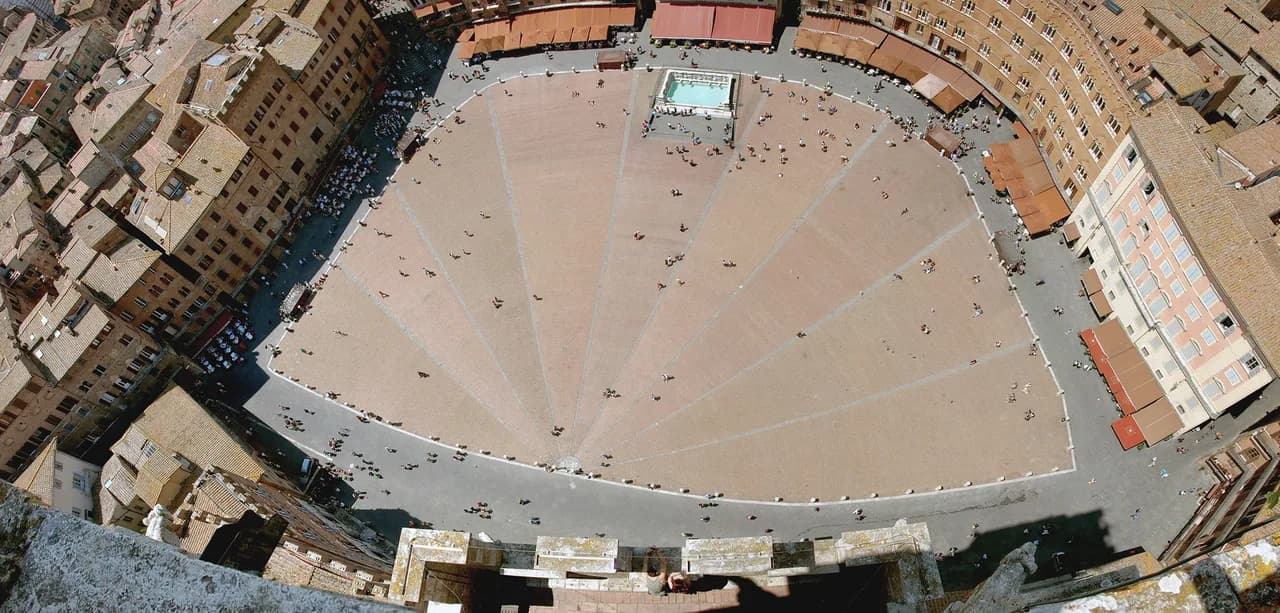
Piazza del Campo is free to walk into at any time and needs no ticket. Its shell shape and red-brick paving are divided into nine sections, a design that recalls the nine governors who once ran the city. Read the square as civic architecture rather than a photo backdrop and it rewards a slower look.
The Palazzo Pubblico and Torre del Mangia rise directly from the square, and walking into the ground-floor courtyard of the palace gives you a free upward view of the tower. Sitting on the sloping paving with a coffee or a picnic is a legitimate way to spend an hour. Buying nothing is entirely acceptable.
Fonte Gaia: A Replica in the Square, Originals Elsewhere
The marble fountain at the top of the square is not the Renaissance work it appears to be. What stands in Piazza del Campo is a 19th-century replica carved by Tito Sarrocchi, based on Jacopo della Quercia's original completed in 1419. Knowing this prevents a sense of being short-changed when you arrive expecting the original.
The original marbles were moved indoors for conservation, and they contain details the copy does not reproduce, including two female figures linked to the Roman myth of Romulus and Remus. If the fountain's symbolism interests you, plan a paid museum stop rather than expecting the full story from the square.
Free Churches: San Domenico and Beyond
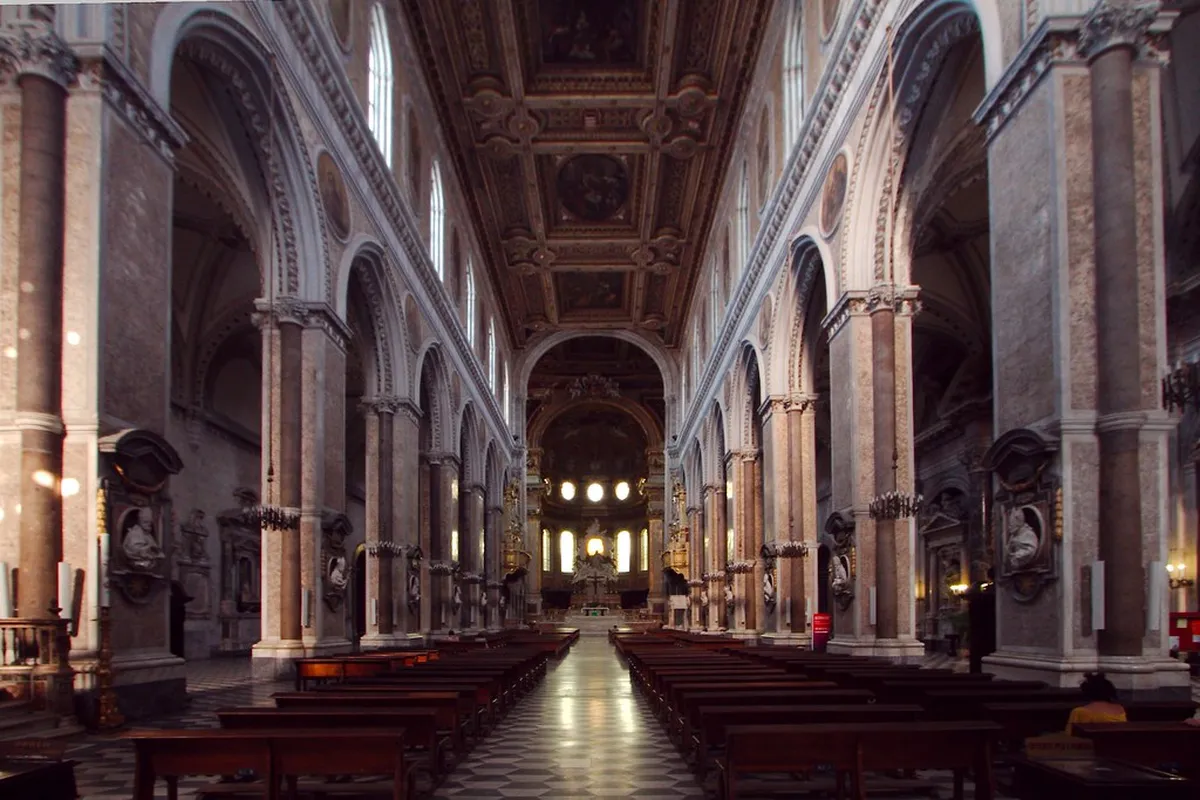
The Basilica Cateriniana di San Domenico is one of the clearest free-entry wins in the city. The austere brick Gothic interior holds a fresco cycle by Sodoma and the chapel of St Catherine of Siena, and visitors are not charged to enter. Dress respectfully and keep voices low, as this remains an active place of worship.
Free entry to a church does not mean every church interior is open or unrestricted. Some spaces close for services or restoration, so treat any single visit as something to confirm on the door rather than a guaranteed part of your day.
Fortezza Medicea: Free Grounds and City Views
The Fortezza Medicea is best approached as a walk rather than a monument visit. Its grounds and the views over the city and surrounding hills are open without an admission fee, which makes it a good late-afternoon stop when the light softens. Bring water and wear shoes that cope with uneven surfaces.
Framing the fortress as breathing space rather than a headline sight is realistic: there is not a great deal to 'do' there beyond walking, looking and sitting. That is precisely why it works well on a low-cost day.
Wandering the UNESCO Historic Centre
The medieval street grid is free to explore and is arguably Siena's main attraction. Streets fan out from Piazza del Campo and climb steeply between brick buildings, and the contrade districts give the wandering structure: each neighbourhood has its own emblem, church and identity.
Surviving city gates make useful orientation landmarks. Porta Camollia sits on the northern edge and carries a Medici shield added in the early 17th century along with an inscription welcoming travellers to the city. Use gates like this to fix your bearings rather than as destinations in themselves.
Fontebranda: A Free Stop on a Downhill Walk
Fontebranda is the oldest surviving fountain in Siena and one of the most atmospheric free stops in the city. Its three basins once had separate purposes: drinking water, watering animals and washing clothes. The structure is tied to St Catherine, whose family drew water here for their dyeing trade.
The fountain is reached by walking downhill from the centre, which means a climb back up afterwards. Treat it as a short detour with a reward rather than a quick photo stop, and check locally before drinking anything from historic fountains.
Free Green Space: Orto de' Pecci
The Orto de' Pecci offers a green pause just behind Piazza del Campo, with gardens and a quieter atmosphere than the square. It is listed among the city's free places to visit, but treat it as a suggested break rather than a guaranteed open facility, since gardens can close or change use.
For families or anyone walking with children, this kind of space matters more than another church interior. Build it into the middle of your day, when legs and patience are running low.
Where Free Ends: The Duomo Complex
Siena's cathedral is a ticketed monument, and the Opera della Metropolitana sells a single combined pass, the OPA Si Pass, covering its museum sites. Buy through the official operator rather than a reseller, and read exactly which buildings your pass includes before you commit.
Two details catch people out. The Gate of Heaven rooftop route is a separate guided experience rather than something you can simply walk into, and the cathedral's inlaid marble floor is only uncovered during set periods that the Opera publishes well in advance. Check the current schedule on the official site before planning a visit around either.
Paid Interiors Worth Considering
If you spend money on one interior, the Museo Civico inside the Palazzo Pubblico is a strong candidate. It holds Ambrogio Lorenzetti's Allegory of Good and Bad Government, a fresco cycle that makes far more sense after you have walked the square it was painted for.
The Torre del Mangia climb is the other obvious splurge, rewarding those who want rooftop views of the city and hills. Sources disagree on how many steps are involved, so do not plan around a specific number; check with the operator what the climb currently involves before buying.
Timing Your Free Day Around Crowds
Early morning and late afternoon are the kindest times for the square, when groups thin out and the light is better. Midday in high season concentrates visitors in the same few free spaces, so shift your walking to the steeper side streets then.
Siena's Palio races are run on 2 July and 16 August each year, and the days around them transform the city's logistics and crowd levels. Spectator arrangements are managed locally, so do not plan around assumptions about access; check official information if your dates overlap.
Practical Low-Cost Logistics
Most visitors arrive on foot from outside the walls, and the historic centre is genuinely walkable once you are inside. Leave bags light, wear shoes with grip for steep brick streets, and treat any transport, parking or restricted-traffic detail as something to verify locally rather than a fixed rule you read once.
If rain sets in, the free plan collapses quickly because so much of it is outdoors. Have one indoor paid option in reserve, and keep a flexible mindset about swapping the order of your day.
A Free-First Plan for Siena
Build your day around what costs nothing: the square, the free churches, the fortress grounds and the medieval streets. Then choose one ticketed interior you genuinely care about, whether that is Lorenzetti's frescoes or the cathedral complex, and accept that the rest can wait for another visit.
That approach keeps the budget honest and the pacing human. Siena rewards looking rather than spending, and the free version of the city is not a compromise.
Frequently Asked Questions
Is Piazza del Campo free to visit?
Yes. The square is a public space you can walk into without a ticket at any time, and sitting on the paving costs nothing. The buildings around it, including the Museo Civico and the Torre del Mangia, are separate ticketed attractions.
Are churches in Siena free to enter?
Some are, and the Basilica Cateriniana di San Domenico is a reliable example of free entry. Others may close for services or restoration, so confirm at the door rather than assuming every church interior is open and free.
Do you need a ticket for Siena Cathedral?
Yes. The Duomo is part of a ticketed monumental complex sold through the Opera della Metropolitana, and the combined pass covers its museum sites. The rooftop Gate of Heaven route and the seasonal unveiling of the marble floor are separate matters to check with the operator.
Can you watch the Palio for free?
The Palio is held twice a year, on 2 July and 16 August. Spectator arrangements are managed locally and change with crowd controls, so check official city information for your dates rather than assuming access.
Where can you find free views in Siena?
The open grounds of the Fortezza Medicea give panoramic views over the city and hills without an admission fee. Free views also come from the streets themselves, particularly where lanes drop away toward the edges of the historic centre.
Is the Fonte Gaia in Piazza del Campo the original?
No. The fountain in the square is a 19th-century replica by Tito Sarrocchi after Jacopo della Quercia's 1419 design. The original marbles were moved indoors for conservation and are not on open-air display.
Sources
- Homepage | Comune di Siena
- How To Explore Siena In One Day: The Top Things To Do
- An Insider’s Guide to Siena: Best Things to See & Do
- What to See Beautifully in Siena for Free - Hotel Minerva Siena
- Fonte Gaia – Siena’s Historic Fountain of Beauty and Symbolism
- The secrets of the Fonte Gaia of Siena: on the original 15th century fountain's trail - Michele Busillo
- Opera Duomo Siena – Siena Opera della Metropolitana
- Fontebranda - Santa Caterina
- Visit Porta Camollia Siena in Sienna | Live the World
Continue exploring
More guides you'll find useful