Ravenna Two Days Itinerary: Old Town Mosaics, Then Classe
A two-day Ravenna plan: day one walking the central mosaic monuments and Dante's quarter, day two out to Classe, with ticket and timing advice.
On this page
Ravenna rewards a slower pace than most Italian art cities, and the geography helps. One traveller's account describes it as small, mostly flat and very walkable, which is the most useful fact for planning two days: you will spend your time looking up at ceilings, not negotiating buses.
This plan is a suggestion, not an official route. It splits the trip into a first day on foot through the old town's mosaic sites and a second day out to Classe, the district south-east of the centre where Sant'Apollinare in Classe stands, so you are not trying to absorb every gold tessera in a single afternoon.
For a wider menu of sights beyond the mosaics, our guide to the hidden gems in Ravenna covers the quieter corners worth folding into either day.
Before You Book: How Ravenna's Mosaic Tickets Work
The five monuments in the historic centre — the Mausoleo di Galla Placidia, Basilica di San Vitale, Basilica di Sant'Apollinare Nuovo, Battistero Neoniano, and the Cappella di Sant'Andrea with the Museo Arcivescovile — are run by the Opera di Religione della Diocesi di Ravenna. That grouping is the reason this itinerary treats them as one coherent day rather than five separate errands.
Do not assume one ticket covers everything. Ravenna's UNESCO listing includes eight early Christian monuments, and the other three — the Battistero degli Ariani, the Mausoleo di Teodorico and Sant'Apollinare in Classe — sit outside this group and are ticketed separately. Budget and plan for them individually.
Prices and ticket combinations change, so check the current combined-ticket cost and any concessions on the Opera di Religione site before you travel rather than relying on older figures quoted in travel blogs. The same pages publish opening hours, evening openings and advance-booking options.
Orientation: Three Walking Clusters in the Old Town
The five central monuments fall into three clusters that sit roughly a ten-minute walk apart in a loose triangle. Group A pairs the Mausoleo di Galla Placidia with the Basilica di San Vitale, sharing one garden setting on Via San Vitale.
Group B is the episcopal complex around Piazza Arcivescovado: the Battistero Neoniano and the Museo Arcivescovile with the Cappella di Sant'Andrea. Group C is the Basilica di Sant'Apollinare Nuovo on Via di Roma, towards the railway station and close to the Dante area.
Treat the clusters as anchors and let the streets between them do the rest. Much of the centre is pedestrianised and flat, so the connecting walks are part of the visit rather than dead time, and you can drift into side lanes without losing your bearings.
Day One, Morning: San Vitale and Galla Placidia
Start with the pair in the same garden, because the small Mausoleo di Galla Placidia is the one that can disrupt your timing. It has historically been managed with allocated entry slots for crowd control, while the neighbouring Basilica di San Vitale has not, so book or accept a slot first and build the morning around it rather than the reverse.
Inside San Vitale, the famous portraits of Justinian and Theodora sit high on the apse walls, and the church interior is otherwise fairly spare. That contrast is exactly why the Mausoleo works so well next: its cobalt-blue vault of golden stars is small, dim and intimate, and it takes only minutes to see but lingers much longer.
Because the Mausoleo and its larger neighbour are steps apart, resist the temptation to book them back to back with no margin. Leave generous space between a timed slot and whatever follows, so a delayed entry does not cascade through the day.
Day One, Midday: Pace Yourself, Not the Sights
Mosaic fatigue is real, and it is physical: you spend hours looking up. Break the middle of the day deliberately rather than squeezing in a sixth monument. Sit down, eat properly, and come back with fresh eyes for the afternoon.
The Mercato Coperto, Ravenna's covered market in the centre, has been restyled into a food hall with stalls and places to eat, and according to one guide it is open all day. It is a practical, low-commitment stop when you do not want to research restaurants.
If you would rather keep moving, split the crawl across two half-days the way one visitor did: four sites on day one and the fifth the next morning. It keeps interest levels up and leaves room to return to a favourite space.
Day One, Afternoon: Baptistery, Museum and St Andrew's Chapel
Walk to Piazza Arcivescovado for the Battistero Neoniano, whose ceiling mosaic shows the baptism of Christ in the Jordan ringed by apostles. Like the Mausoleo, it has historically used timed entry, so pair a reservation here with the museum next door and allow a comfortable gap between the two slots.
The Museo Arcivescovile holds the carved ivory of the Cattedra di Massimiano and, tucked inside, the tiny Cappella di Sant'Andrea. Visitors often pass it without noticing, which makes it the quietest of the five — and for many, the highlight.
Small spaces such as the chapel and parts of the museum may be subject to short visit limits at busy times, so go with the flow and let staff manage the flow of people. It is a reason to travel light and not plan a fixed minute-by-minute schedule.
Day One, Late Afternoon: Sant'Apollinare Nuovo and Dante
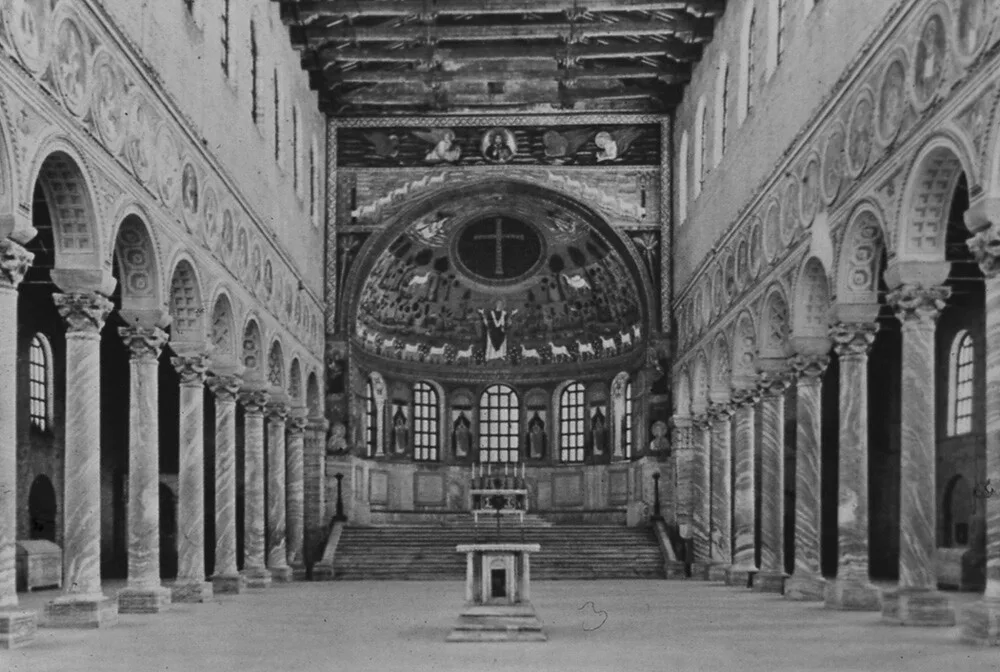
Finish the mosaic circuit at the Basilica di Sant'Apollinare Nuovo on Via di Roma, where the long processions of virgins and martyrs run the length of the nave. One visitor found it seemed quieter than some other sites, and it sits conveniently close to the station end of town.
End the day with the Dante corner. The poet's tomb sits on a quiet pedestrianised street beside a small garden, and the nearby Basilica of San Francesco is worth a look even if you are not chasing mosaics. Our guide to the hidden gems in Ravenna suggests other modest detours in the same quarter. For wider planning, see Hidden Gems in Ravenna.
Late afternoon is a deliberate tactic: the light softens, school and cruise groups thin out, and you can sit in the garden by the tomb without feeling processed. Treat it as a suggestion and adjust to the season you visit in.
Day Two, Morning: Getting Out to Classe
Classe is a district of Ravenna, not a separate town, and Sant'Apollinare in Classe sits south-east of the centre on Via Romea Sud. Local buses serve the direction, and the tourist office on Piazza San Francesco is the sensible place to confirm current lines and timings, since the picture changes seasonally.
Decide between bus, bike and car on three criteria: how much you value flexibility, whether you are continuing to the coast afterwards, and whether you mind the drive into the outskirts. A car is convenient only if you are already mobile; otherwise the bus avoids parking decisions and the ZTL restrictions that apply inside the old centre.
Avoid treating Classe as a quick walk from the centre; the distance is significant and the route is not especially scenic. Use the official Classe site or the tourist office to check current access and site information before committing.
Day Two: Sant'Apollinare in Classe and Its Separate Ticket
Sant'Apollinare in Classe is a vast, near-empty basilica with a mosaic apse showing the Transfiguration and Saint Apollinaris at prayer in a green meadow. The scale is completely different from the intimate city-centre monuments, and the near-silence is part of the point.
This is emphatically not part of the five-monument combination. Expect to buy a separate ticket here, and check the current price and any joint offers that include the Classis museum on the official Classe site rather than assuming your city ticket carries over.
Allow a proper hour or more inside and around the grounds rather than treating it as a quick photo stop after a bus ride. If you are collecting all eight UNESCO monuments, the Battistero degli Ariani and Mausoleo di Teodorico can be folded into a slower return to the centre.
Day Two, Options: Beach or a Slower Centre
Ravenna's coastline is close: the lidos — Punta Marina, Marina di Ravenna, Lido Adriano and others — sit within a short drive of the centre. Beach clubs charge for umbrellas and loungers, while the free spiaggia libera stretches offer sand without facilities, so pick according to whether you need a shower and a coffee bar.
The more culturally minded alternative is to return to the centre and revisit a favourite monument at a quieter hour, or pick up the two UNESCO sites you missed. Late-in-the-day visits tend to be calmer, and the Mausoleo di Galla Placidia in particular feels different without a crowd.
Whichever you choose, keep the evening loose. Ravenna's centre is pleasant to wander at dusk, and leaving space for an unplanned aperitivo is more rewarding than racing to one more ticketed interior.
What to Skip or Defer If You Only Have 48 Hours
With only two days, defer anything that requires a long detour unless it genuinely interests you. The Mausoleo di Teodorico and the Battistero degli Ariani are the easiest UNESCO sites to drop, and the beach can wait for a warmer, slower trip.
Also resist packing in day trips. San Marino is technically reachable from Ravenna by train to Rimini and then a connecting bus, but it eats an entire day and is best saved for a three-day visit.
Our Ravenna Attractions hub gathers individual guides to the monuments so you can decide which interiors deserve your limited hours. Read it before you book anything time-sensitive.
Practical Guardrails: Verify Before You Travel
Opening hours, seasonal evening openings, last admission times and whether timed entry is in force all change. Confirm each on the Opera di Religione site for the five central monuments and the Classe site for Sant'Apollinare in Classe before you fix your days.
Ravenna's station is a short walk from the centre, so a Bologna day trip is feasible, but two days rewards you with the slower second look that the mosaics really demand. Arriving by train also frees you from the parking problem inside the ZTL.
Finally, treat any specific price or timetable quoted on a blog, including this one, as a prompt to check rather than a guarantee. The operator pages are the authoritative source, and they are updated more often than any itinerary.
Make Two Days Work for You
The shape of this itinerary matters more than the exact order: one day on foot through the five central monuments, one day out to Classe, and deliberate gaps in between. That structure absorbs a delayed timed entry, a long lunch or a sudden downpour without collapsing.
Book the two reservable spaces first, confirm current hours and ticket scope on the official pages, then let the rest of the day breathe around them. Two days is enough to see Ravenna properly if you resist the urge to see everything. For related planning, see Basilica di Sant'Apollinare in Classe: Visitor Guide.
Frequently Asked Questions
Is two days enough for Ravenna?
Two days is a comfortable minimum. Day one covers the five central mosaic monuments plus the Dante area on foot, and day two handles Sant'Apollinare in Classe and either the coast or the remaining UNESCO sites. If you have only one day, prioritise the San Vitale and Galla Placidia pair and Sant'Apollinare Nuovo.
Can you see Ravenna's mosaics in one day instead?
Yes, in a rushed way. The five central monuments sit close together and can be walked in a single long day, but timed entry at the Mausoleo di Galla Placidia and the Battistero Neoniano, plus the physical strain of looking up for hours, make one day tiring. Splitting them across two half-days is calmer.
Do all eight UNESCO sites in Ravenna share one ticket?
No. The Opera di Religione sells a combined ticket for its five central monuments: the Mausoleo di Galla Placidia, San Vitale, Sant'Apollinare Nuovo, the Battistero Neoniano and the Museo Arcivescovile with the Cappella di Sant'Andrea. Sant'Apollinare in Classe, the Battistero degli Ariani and the Mausoleo di Teodorico are ticketed separately.
Which Ravenna mosaic sites need a timed reservation?
Historically the Mausoleo di Galla Placidia and the Battistero Neoniano have used allocated entry slots because the spaces are small, while the larger basilicas have not. Confirm whether timed entry is currently in force and how to book it on the Opera di Religione site before you travel.
How do you get from central Ravenna to Sant'Apollinare in Classe?
Sant'Apollinare in Classe lies south-east of the centre on Via Romea Sud. Local buses serve the direction, and driving or cycling is possible, though you cannot take a car into the pedestrian centre. Check current lines and timings at the tourist office on Piazza San Francesco or on the official Classe site.
Is Ravenna worth two days or better as a day trip from Bologna?
It works as a day trip from Bologna by train, but two days is better. The second day lets you reach Classe without rushing and return to a favourite monument at a quieter hour, which is where Ravenna's mosaics really start to register.
What should you prioritise if you only have 48 hours in Ravenna?
Prioritise San Vitale and the Mausoleo di Galla Placidia, the Battistero Neoniano with the Archiepiscopal Museum, Sant'Apollinare Nuovo and Sant'Apollinare in Classe. Defer the Mausoleo di Teodorico, the Battistero degli Ariani and any day trip to San Marino until you have a third day.
Sources
Continue exploring
More guides you'll find useful