Hidden Gems in Ravenna: Quieter Places Beyond the Mosaics
Look past Ravenna's famous basilicas at quieter finds: a flooded crypt, an underground Roman villa, a museum of villa reconstructions and a storied library.
On this page
Most visitors arrive in Ravenna with the same shortlist: San Vitale, the Galla Placidia mausoleum, Sant'Apollinare Nuovo and the baptisteries. Those are genuinely extraordinary, and nothing here suggests skipping them. The point of this guide is what happens afterwards, when you have an afternoon left and no fixed plan.
Ravenna's historic centre is compact enough that the second-tier stops do not demand a separate trip. Travel writer Jan Skovajsa notes that after leaving a monument from around 500 AD you can walk five minutes to the next one, which is precisely why quieter corners fit neatly between the famous ones.
Treat the suggestions below as pairings rather than a checklist. Two or three well-chosen detours, each given unhurried time, usually beat racing through a dozen sites.
How to Use This Guide
Group stops by area rather than by ranking. The Dante cluster, the Domus beneath the Church of Saint Euphemia and the central piazzas sit within easy walking distance of each other, while Classe sits outside the centre and works better as its own excursion. If you want the full inventory of sights with visitor detail, start with the Ravenna Attractions hub before choosing your quieter stops.
Every duration mentioned here is a suggestion based on how these places are typically visited, not an official visiting time. Decide your own pace and leave slack, because small sites can absorb more attention than expected.
Finally, check current opening arrangements before you build a day around any single small site. Several of these places are churches or museums with their own calendars, and a phone-free assumption that everything is open is the most common way a Ravenna detour goes wrong.
The Flooded Crypt at the Basilica of San Francesco
The Basilica of San Francesco is modest next to the city's UNESCO stars, but its basement holds something most visitors do not expect: a flooded crypt where fish swim among ancient columns. Wandering Educators describes descending into that crypt as a slightly spooky experience, and it is the single best reason to step inside this otherwise quiet church.
That account describes the basilica as free to enter, though access to the crypt itself is best confirmed on arrival, since a waterlogged lower level can be managed differently at different times of year. Plan a short stop, perhaps twenty minutes, and let the crypt be the centrepiece rather than a footnote.
Pair it with the adjacent Dante site rather than treating either as a standalone destination. The two sit close enough that one visit naturally flows into the other, which makes this the most efficient of the quieter combinations in the centre.
Dante's Tomb and the Zona del Silenzio
Dante Alighieri spent his final years in Ravenna and finished Paradiso here, and his tomb is a small, free monument that draws a steady but manageable stream of visitors. Wandering Educators notes that both the tomb and a nearby Dante museum sit within the Zona del Silenzio, an area designated for quiet and respect around the poet's places. Further visitor details appear in Unusual things to see and do in Ravenna | Wandering Educators.
That designation matters practically. Arrive prepared for a hushed environment rather than a bustling photo stop, keep conversations low and give other visitors room. If you are travelling with children, explain the quiet expectation before you arrive rather than after.
The same account mentions a nominal museum fee, so treat any figure you read as historic and confirm the collection's current arrangements before counting on it. Budget a little extra time if the museum is open when you visit.
Domus of the Stone Carpets Beneath the Church of Saint Euphemia
Underneath the Church of Saint Euphemia lies an excavated Roman villa known as the Domus of the Stone Carpets, complete with preserved floor mosaics including a depiction of Saint Peter. The same source suggests around half an hour there and notes that the church above dates to the fifth or sixth century, which layers early Christian Ravenna directly over the Roman city beneath it.
This is a separate ticketed site rather than part of the church's free visit, so do not assume entry to the church above covers the excavation below. Check the current arrangement at the entrance, because small subterranean sites often run their own ticket desk and their own seasonal rhythm.
Half an hour is enough to see the mosaics properly if you read the panels, but the space rewards a slower look at the villa layout. Pair it with the Dante cluster, which is a short walk away, and you have a compact half-day built on two of Ravenna's less obvious stops.
Classis Ravenna: Context Before the Mosaics
Classis Ravenna is a modern museum that walks visitors through the city's history, from its founding through the Roman and Byzantine peak, using interactive exhibits and reconstructions of Roman villas. If the mosaics elsewhere leave you wanting the story behind them, this is where that story is told clearly. The museum is ticketed separately, and a combined option with the nearby basilica at Classe is sometimes offered, so confirm the current arrangement at the desk.
The museum sits in Classe, some kilometres from the centre, which makes it a deliberate excursion rather than a casual drop-in. The same area holds the Basilica of Sant'Apollinare in Classe, the only one of the major mosaic sites outside the historic core.
One sensible sequencing puts Classis first and the basilica second. You absorb the chronology and the villa reconstructions while fresh, then walk into the basilica's vast mosaic programme with the right vocabulary. Allow an hour at the museum and treat this as a half-day block rather than squeezing it between central stops.
Why Starting With Context Changes the Day
A highlights itinerary usually rushes from monument to monument, which works when time is genuinely short. A context-first day works differently: you begin at Classis to understand who built what and why, then move into the famous sites with that framework in place.
This approach costs you time upfront and pays it back in attention. It also protects against mosaic fatigue, which is a real phenomenon after the fourth or fifth ceiling of gold tesserae. The museum's Roman villa reconstructions give your eyes a break from mosaic close-reading while still building the story.
If you only have one day, the conventional route across the centre remains the sensible choice. Save the context-first version for a two-day visit, where the Classe excursion fits without forcing you to skip the Galla Placidia mausoleum.
The Classense Library, a Quiet Detour
Ravenna's Istituzione Biblioteca Classense is an active library with frescoes, a Dante hall and historic holdings, including a copy of the first book printed in Italy and one of the surviving copies of Aristophanes' comedies. A library-loving travel account singles it out as an extraordinary place to spend time, and points out the resident cats as an added draw.
This is a working library, not a ticketed attraction, so approach it as a reader would. Check current public access arrangements before turning up, keep your voice down in reading rooms, and do not treat the frescoed halls as a photo studio. Access to specific rooms can vary with the library's own schedule.
Give it somewhere between twenty and forty minutes if you are passing through, more if you genuinely want to sit and read. On a hot afternoon it functions as a cool, calm pause between outdoor stops, which is often exactly what a slower Ravenna day needs.
Theatres and Performance in Ravenna
Ravenna has two notable theatres, the Teatro Alighieri and the Teatro Rasi, and both appear in accounts of the city's cultural life. The Alighieri is described as an opera house that opened in 1852, while the Rasi occupies a former church that has served as a riding school, a school and now a theatre.
Do not build a trip around an assumed season. Older descriptions of performance calendars in Ravenna refer to a November-to-April run in a particular year and cannot be read as current programming, so check the theatres' own listings and the festival's official pages for what is actually on during your dates.
If a performance happens to align with your visit, an evening at either venue can be the highlight of a stay. If nothing is scheduled, walking past the buildings still adds a layer to the city's cultural map, and costs nothing.
Everyday Ravenna: Markets and Piazzas
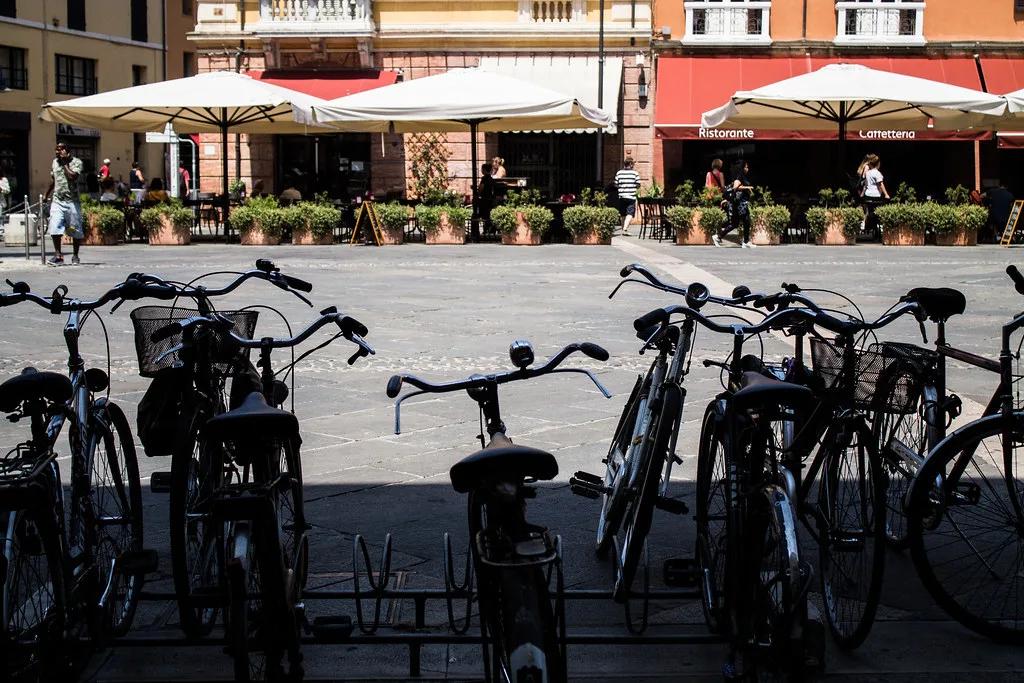
Beyond the monuments, Ravenna's ordinary pleasures are worth planning around. The covered market is the practical stop for cheese, bread, fruit and salumi, making a picnic or a light lunch easy to assemble, while Piazza del Popolo anchors the pedestrian streets that radiate from it for shopping, coffee and lingering.
Settle into a piazza with a drink rather than treating it as a transit point. This is the kind of hour that does not appear on an itinerary but often becomes the part of Ravenna people remember, and it costs you nothing but time.
Market days and individual traders' hours vary, so check before making the market your lunch plan. A quick look at the stalls on arrival will tell you whether a picnic is realistic that day.
Beyond the Centre: Classe, the Coast and Family Add-Ons
Classe deserves separate treatment because it is not a walk from the historic core. Both Classis Ravenna and the Basilica of Sant'Apollinare in Classe sit out there, and the basilica's mosaics are among the most striking in the city, so this excursion pays off if you allocate real time to it.
The Adriatic coast is the other obvious extension. Wandering Educators mentions beaches and accessibility programmes along the coast, but specific arrangements and transport options should be confirmed locally rather than assumed from an older article.
Families with children have options too, including theme parks and miniature-village attractions in the surrounding area, though these are separate days rather than additions to a mosaic-focused visit. Choose one or the other, not both, if your time in Emilia-Romagna is limited.
A Realistic Half-Day or Full-Day Quieter Route
For a half-day, start at the Basilica of San Francesco and its flooded crypt, then walk to Dante's Tomb and the surrounding quiet zone. Continue to the Domus of the Stone Carpets beneath the Church of Saint Euphemia, and finish with a coffee in Piazza del Popolo. That sequence keeps you on foot and gives each stop room to breathe.
For a full day, begin at Classis Ravenna and the Basilica of Sant'Apollinare in Classe, return to the centre for lunch, then take in the Domus and the Dante area in the afternoon. Slip into the Classense library if it is open and you want a seated pause.
Resist adding a third major monument to either plan. The value of these quieter stops comes from unhurried attention, and the fastest way to lose that is to schedule six places into four hours.
Tickets and Hours: What to Verify
Ravenna's ticketing is not uniform. The main mosaic monuments are sold through combined arrangements, while smaller sites such as the Domus and the Mausoleum of Theodoric have their own separate admission. Do not assume one purchase covers all of the UNESCO-listed sites, because it does not.
Prices and times quoted in older travel accounts should be treated as historical rather than current, and several sources in circulation describe arrangements from past years. Check the official Ravenna tourism pages or the ticket office on arrival for what applies during your visit, especially if you plan around a timed entry.
Bookable guided options also exist in the city, including private walking and photography tours. Those figures change with the operator and season, so compare current listings rather than relying on any single quoted number.
Practical Mistakes to Avoid
The most common error is assuming a single ticket unlocks everything. Others include over-scheduling, skipping the out-of-centre stops because they look inconvenient, and arriving at small churches during services when visitors are not welcome.
A second mistake is treating the flooded crypt or the Domus as a quick photo opportunity. Both reward a few minutes of quiet looking, and both are small enough that a rushed group can fill the space.
Finally, build in verification time. A two-minute check of a site's current status before leaving your accommodation prevents a wasted walk and is the single most useful habit for this kind of slow, small-scale sightseeing. If you enjoy this style of travel, the approach to hidden gems in Venice follows similar logic of pairing one major sight with one quiet one.
The same principle of pairing applies elsewhere in Italy. Bologna, an easy rail hop from Ravenna, rewards a comparable mix of one headline sight and a quiet side street, as this guide to hidden gems in Bologna shows.
Pick Two and Leave Room to Wander
Ravenna does not require a frantic schedule. Choose two or three of the stops above that match your interests, whether that is a submerged crypt, an underground villa or a library with frescoes, and give them real time.
Then leave the rest of the afternoon open. The city's compact centre means a wander between piazzas will produce its own discoveries, and those unplanned hours are usually what makes a Ravenna visit feel unhurried rather than dutiful. For related planning, see Ravenna Mosaics Explained: Byzantine and Early Christian Art.
Frequently Asked Questions
What are the best lesser-known places to visit in Ravenna?
The flooded crypt at the Basilica of San Francesco, the Domus of the Stone Carpets beneath the Church of Saint Euphemia, Classis Ravenna museum and the Classense library are all quieter stops that reward attention. None of them replaces the famous mosaics; they complement them and suit a slower second half of the day.
Is the flooded crypt at San Francesco worth seeing?
If you like the unusual, yes. A waterlogged crypt with fish swimming among columns is genuinely memorable, and it takes only a short time to visit. The basilica above is modest, so go for the crypt rather than expecting a mosaic spectacle.
What is there to see at the Domus of the Stone Carpets?
The site preserves an excavated Roman villa beneath a church, with floor mosaics including a depiction of Saint Peter. Around half an hour is a sensible allowance. It is ticketed separately from the church above, so check admission arrangements at the entrance.
Should I visit Classis Ravenna before the mosaics?
It helps if you have the time. The museum lays out the city's Roman and Byzantine history and includes villa reconstructions, which makes the later mosaics easier to read. Pair it with the Basilica of Sant'Apollinare in Classe nearby and treat it as a half-day excursion.
Can you visit the Classense library in Ravenna?
It is a working library rather than a tourist attraction, so access to specific rooms varies. Check current public access before you go, keep noise to a minimum in reading rooms, and treat any visit as a chance to sit quietly rather than to tour.
How many days in Ravenna is enough?
One full day covers the central highlights at a brisk pace. Two days lets you add the Classe excursion and one or two quieter stops without rushing. Three days allows for the coast or a family attraction as well.
Is Ravenna a walkable city?
The historic centre is compact and easy on foot, which is why the central quieter stops pair so naturally. Classe is outside the centre and needs transport, so plan it as a separate leg rather than part of a walking loop.
Do all of Ravenna's UNESCO sites share one ticket?
No. Ticketing varies between sites, with some sold through combined arrangements and others requiring separate admission. Confirm current options at the ticket office or on the official tourism pages before assuming one purchase covers everything.
Sources
Continue exploring
More guides you'll find useful