Padua in One Day: A First-Timer's Walking Itinerary
Plan one day in Padua with a walkable route from the Scrovegni Chapel to Prato della Valle, plus booking tactics and first-timer mistakes to avoid.
On this page
Padua sits on the mainland within easy reach of Venice, and its compact, flat centre makes it one of the simplest day trips in the Veneto. The catch is that the city's headline sight runs on timed entry, so the day works best when you treat one booking as fixed and arrange everything else around it.
This itinerary is a suggestion for first-time visitors, not an official schedule. It assumes you arrive by train in the morning, spend roughly a full day on foot, and either return to Venice in the evening or stay overnight to see the squares lit up after dark.
Why Padua Works as a One-Day Stop
Padua is a working university city rather than a polished tourist stage set, which is exactly why it suits a slower day of walking. The historic centre is small enough to cross on foot in about twenty minutes, and arcaded streets keep you sheltered whether it rains or the sun is strong. First-timers should prioritise the fresco cycle, the market squares, the basilica and the big southern square, then add interiors only if time and opening days allow.
One day is enough for the highlights, but two days would let you spread the museums and churches out without watching the clock. If you only have a single day, accept that you are choosing a handful of interiors rather than touring every ticket desk in the centre. Our hidden gems in Padua guide is useful if you decide to stay longer and want to slow the pace.
The One Booking That Shapes the Day: Scrovegni Chapel
Giotto's fresco cycle in the Scrovegni Chapel is the reason most visitors come, and entry is by timed slot with numbers capped. Travel writers consistently advise booking online in advance through the official booking channel rather than turning up and hoping, especially in summer. Choose a slot that leaves a comfortable margin after your train, because the rest of the route hangs off that time.
Allow more than the time you spend in front of the frescoes. Visitors pass through a climate-controlled preparation room before entering, and the in-chapel visit itself is short, so the total appointment runs longer than the headline minutes. Rules on photography and flash can change, so check the operator's current instructions before you travel rather than relying on older blog posts.
Tickets are normally bundled with the Eremitani Civic Museums next door, so the chapel is not a standalone stop. Build in time for the archaeology rooms and picture gallery rather than dashing off, and note that combined-ticket scope and any reduced conditions should be confirmed on the official site.
Arrival Logistics: Train from Venice and Where to Start
Trains between Venice and Padua are frequent enough that you do not need to plan around a timetable, and the station sits at the northern edge of the centre. From there the Scrovegni Chapel and Eremitani area are a short, flat walk, which makes the chapel the logical first stop. Fares and journey times vary by service, so check current options with the train operator when you book.
If you fly into Venice Marco Polo, a direct bus connection to Padua exists alongside the train option via Venezia Mestre. Confirm the timetable against your flight before committing, since departure times matter more than the route itself on arrival day. Once in Padua, everything in this itinerary is walkable and you will not need local transport.
Morning Route: Chapel, Eremitani Area and the Bundled Museums
Start with your chapel slot, arriving early enough to collect tickets and settle into the preparation room. Afterwards, walk through the Eremitani museums included with the ticket, then cross to the Eremitani Church, which is free to enter and holds the fragments of Mantegna's frescoes damaged in a wartime bombing. Give the church a short pause rather than a full visit if the museums have already used your morning.
The gardens around the chapel hold the low remains of the Roman arena the Scrovegni family built beside, a quiet spot to sit before heading south. From here the old centre unfolds under arcades, and you can walk to the market squares without needing a map. If you prefer a structured route, our Padua Historic Center Self-Guided Walk pairs naturally with this morning.
Midday: Market Squares, Sotto il Salone and Palazzo della Ragione
Piazza delle Erbe and Piazza della Frutta sit on either side of the Palazzo della Ragione and host a daily produce market. This is where the city eats and shops, so it is the right place to stop for a stand-up lunch or a plate of fresh pasta from the stalls under the hall. The covered market beneath the palace has traded for centuries and makes a cheaper, quicker lunch than a sit-down restaurant.
Inside the Palazzo della Ragione, the upper hall known as Il Salone is a single vast medieval room with a curved wooden roof and an astrological fresco cycle. Step out onto the roof loggia for a view over the market stalls, then continue to Piazza dei Signori to see the astronomical clock tower. The hall has closing days, including ordinary Mondays, so check the calendar before you build your day around it.
Afternoon South Loop: Prato della Valle and the Basilica
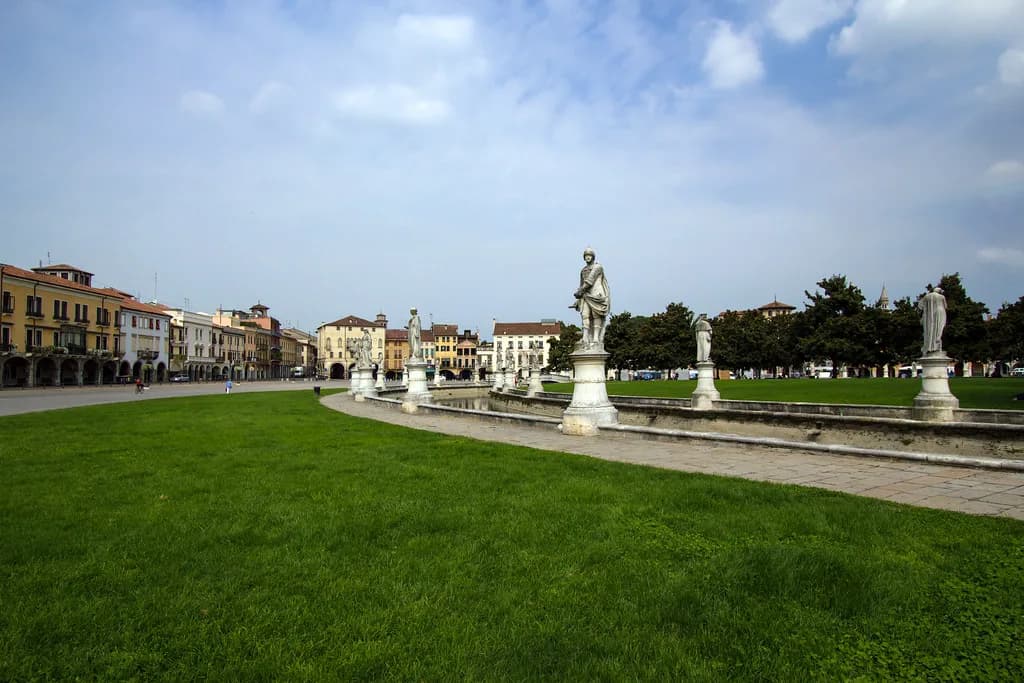
Walk south down Via Roma to Prato della Valle, a very large oval square ringed by a canal and lined with dozens of statues. It is free, photogenic in any light, and the natural pause point before the basilica. On Saturdays a big market fills the square, which is lively but makes quiet photographs harder.
The Basilica of St Anthony is free to enter and is the one sight most writers would not skip after the chapel. It is a working pilgrimage church holding the saint's tomb, so dress modestly and give it the better part of an hour. Our Basilica di Sant'Antonio Visitor Guide: Tickets, Hours & What to See covers the interior in more detail.
On the edge of the same square, the Abbey of Santa Giustina is a second major pilgrimage church with free entry, though it closes over the middle of the day. Time your arrival outside that window and keep the visit short if you still want an aperitivo back in the centre. More overlooked corners of the city are collected in our hidden gems guide.
Optional Add-Ons and How to Cut Them
The Orto Botanico is the oldest university botanical garden still on its original site and makes a calm, green counterpoint to a day of churches. Entry is ticketed and the garden closes on some days, so check before walking south. If you are short on time, the garden is the easiest thing to drop without damaging the shape of the day.
MUSME, the Museum of the History of Medicine, is interactive and takes at least an hour, with a last admission in the late afternoon. The Museum of Geography opens only on limited afternoons, so treat it as a bonus rather than a fixture. Both are university-affiliated and close on ordinary Mondays, which matters if your day falls at the start of the week.
For a slower day, cut the second museum and the Baptistery rather than the chapel or the basilica. Twelve tickets in one day turns the walk into a queue, and Padua's squares are free. Our Padua Attractions hub lists the sights if you want to choose your own combination.
Palazzo Bo: Deciding Whether a Set-Time Tour Fits
The University of Padua's Palazzo Bo holds a historic anatomical theatre, but you can only see the interior on a guided tour at set times, mostly on weekdays. That makes it a scheduling decision rather than a walk-in stop, so check the university's current tour schedule before you commit. If the times do not fit around your chapel slot, pass by the courtyard and move on.
Tour prices and availability are not published consistently across travel sources, so confirm directly with the university rather than budgeting from a blog. If a tour fits, it is worth the detour for the anatomy theatre alone. If not, the market squares and the southern loop will fill the day comfortably.
Caffè Pedrocchi and the Evening Question
Caffè Pedrocchi has anchored Padua's social life since the nineteenth century, and it is worth a stop even if you only order coffee. The signature drink is a mint-flavoured coffee served with cream, and the historic rooms are part of the experience. Prices are higher than a neighbourhood bar, so treat it as a small splurge rather than a lunch stop.
Many travellers catch an evening train back to Venice, which works if you have an early start the next day. Staying overnight, however, lets you see the squares lit up after dark and gives you a calmer morning. If you are weighing the two, read our Best Time to Visit Padua: Avoiding Crowds for seasonal context before booking.
Pass or No Pass: Deciding Whether a Card Pays Off
Padua has offered city cards over the years, and their names, prices and coverage have changed, so older blog advice cannot be trusted. The decision rule is simpler than the marketing: add up the ticketed interiors you genuinely plan to enter and compare that with the card price at the official ticket office. A card rarely pays off for a day built around the chapel, the free basilica and a couple of squares.
Cards are most useful when you plan to visit several fresco sites in the same circuit or stay for two days. Confirm current validity and what is included at the ticket office before buying, since coverage of the university sites and the botanical garden has varied. Free churches and squares never need a card.
Common First-Timer Mistakes
The most common error is arriving without a chapel slot, which can cost you the one sight you came for. The second is forgetting that several museums close on ordinary Mondays and public holidays, so a Monday visit should lean on the chapel, churches and squares. The third is overpacking the day with interiors and then rushing the basilica.
Dress modestly for the Basilica of St Anthony, which is an active place of worship rather than a museum. Carry a light layer for the climate-controlled chapel preparation room, and wear shoes suited to cobbles. If your day falls in high summer, start earlier and use the arcades for shade.
Suggested One-Day Plan at a Glance
This is a suggested shape for the day, not an official timetable. Morning: chapel slot and the Eremitani museums and church. Midday: market squares, a stall lunch and the Palazzo della Ragione hall. Afternoon: Prato della Valle, the Basilica of St Anthony and optionally the Abbey of Santa Giustina. Evening: coffee at Caffè Pedrocchi and a train back, or an aperitivo in the squares if you are staying.
Build in a buffer after your train and before your chapel slot, and keep one optional stop flexible in case a museum is closed. If you want more depth, the padua-scrovegni chapel guide and the basilica guide cover the two headline interiors separately.
Plan Your Visit
Padua rewards a single well-planned day if you treat the Scrovegni Chapel slot as fixed and let the rest of the walk flex around it. Book early, check Monday and holiday closures, and accept that you cannot see every interior in one visit. The city's free squares, churches and arcades fill the gaps beautifully.
Before you travel, confirm current ticket scope, opening days and tour times with the official operators, since travel blogs date quickly. Then pack light, wear comfortable shoes and leave room for an unplanned coffee in a square. That is usually the part of Padua people remember. For related planning, see Getting Around Padua: Transport and Arrival Tips.
Frequently Asked Questions
Is one day enough for Padua?
Yes, one full day covers the headline sights if you book the Scrovegni Chapel slot first and walk the compact centre. Two days would let you add more museums and church interiors at a relaxed pace.
Should you book the Scrovegni Chapel before leaving Venice?
Book online in advance through the official booking channel rather than relying on walk-in availability. Slots are capped and summer dates can sell out, so choose a time that leaves a buffer after your train.
What should first-time visitors skip in Padua?
On a single day, the easiest things to cut are the second or third museum, the Baptistery and the botanical garden. Keep the chapel, the market squares, the basilica and Prato della Valle as the spine of the day.
What can you see in Padua for free?
The Basilica of St Anthony, the Abbey of Santa Giustina, the market squares, Prato della Valle and the Caffè Pedrocchi interior are free to enter. Ticketed interiors such as the chapel and Palazzo della Ragione are separate.
Should you visit Padua on a Monday?
Several museums, including the Palazzo della Ragione hall, MUSME and the botanical garden, close on ordinary Mondays. A Monday visit can still work if you focus on the chapel, the churches and the squares, but check each site first.
Is it better to stay in Padua or return to Venice?
Returning to Venice suits travellers with an early start the next day, while staying overnight lets you see the squares lit up and gives a calmer morning. Padua hotels are generally cheaper than Venice ones.
How do you get from Venice to Padua?
Frequent trains run from Venezia Santa Lucia and Venezia Mestre, with regional and high-speed options. Check current fares and journey times with the operator, and allow a buffer before your chapel slot.
Sources
Continue exploring
More guides you'll find useful